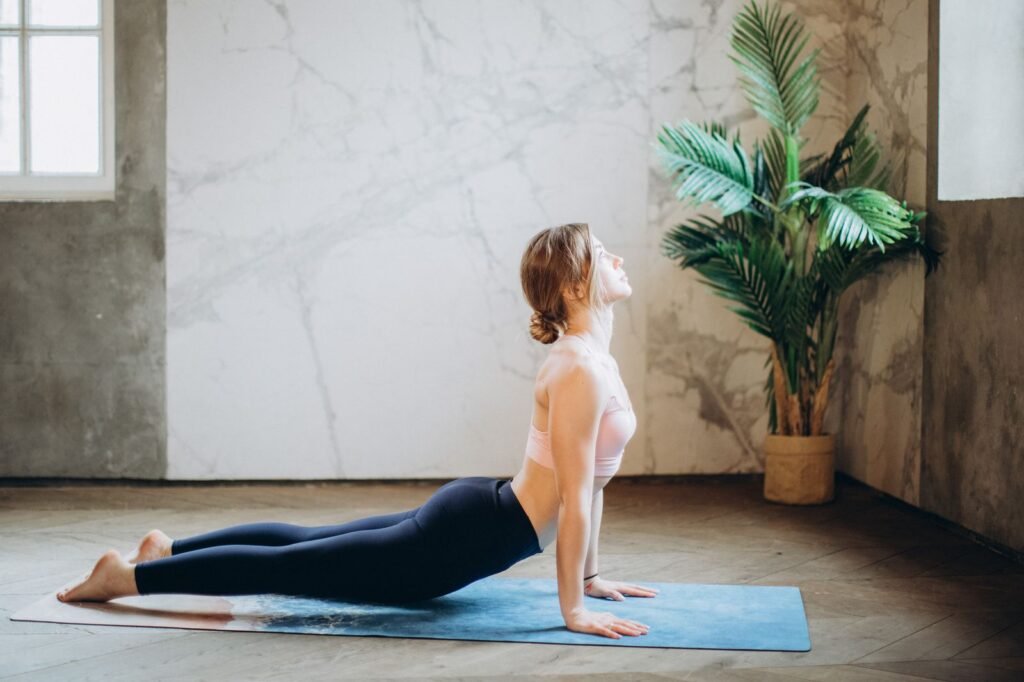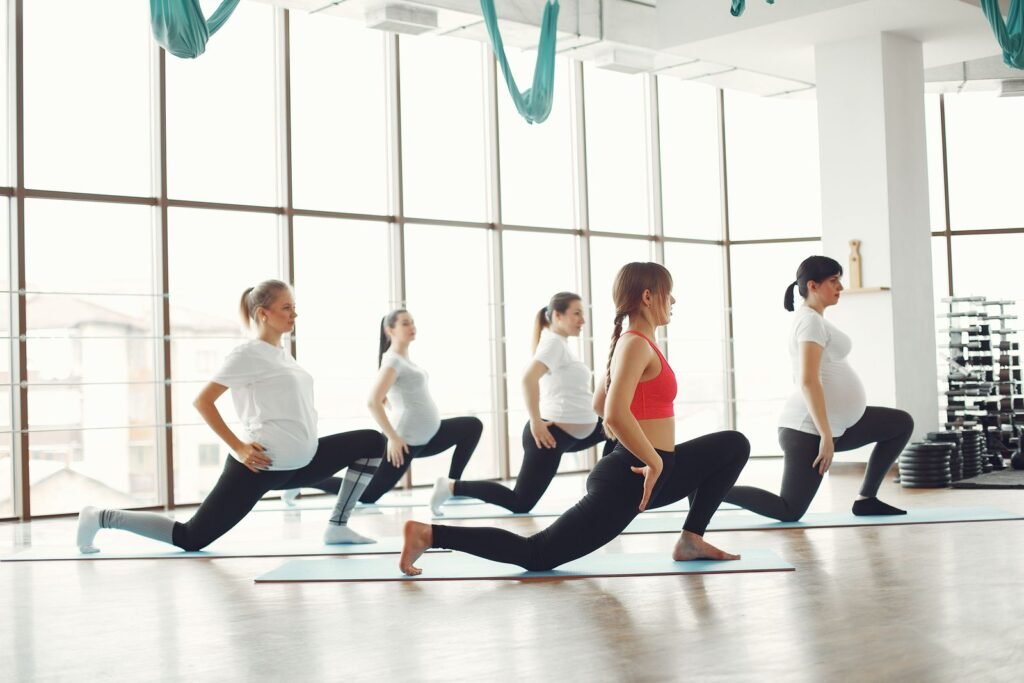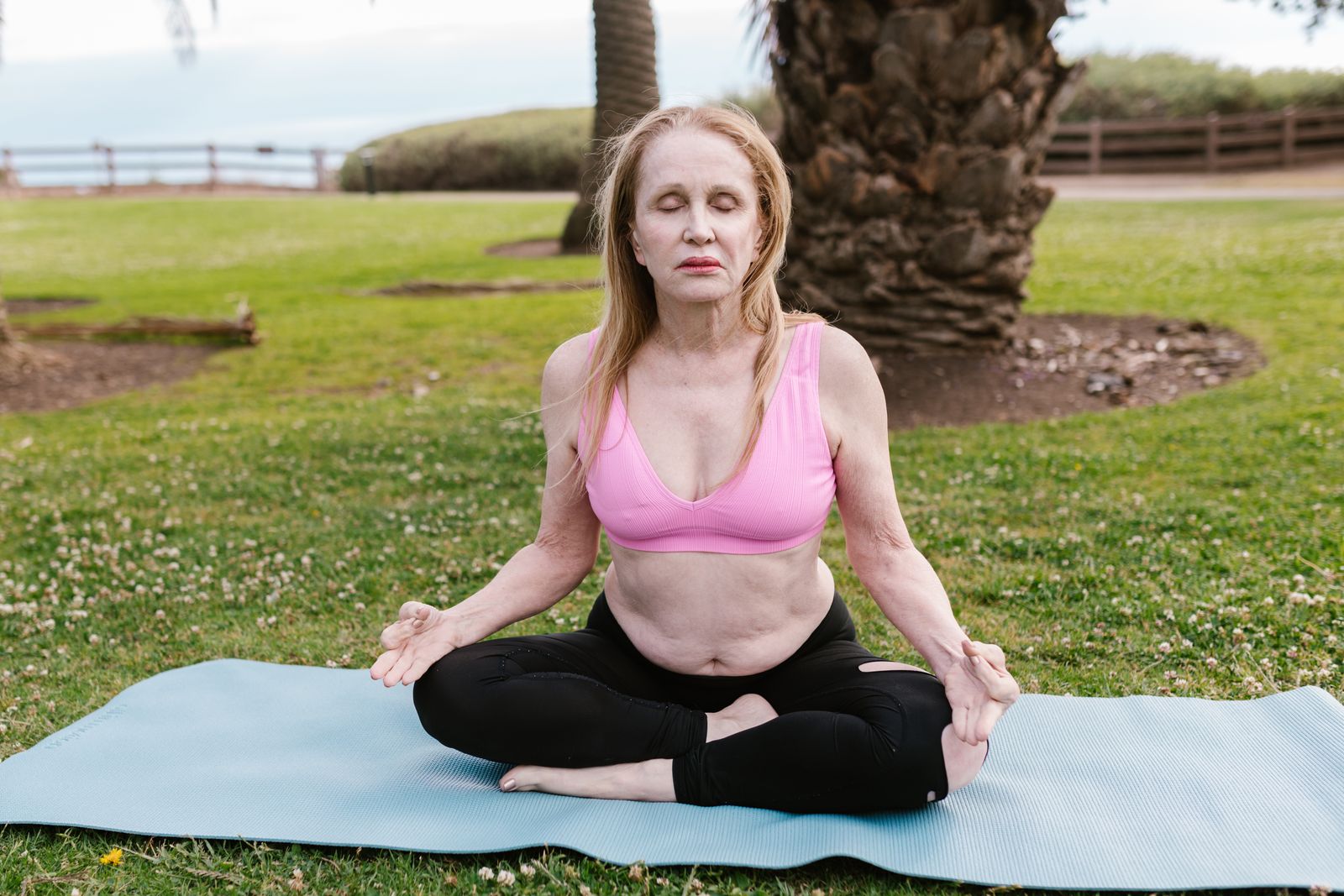
Yoga for menopause means using slower, restorative styles of practice, think supported forward folds, gentle twists, cooling breathwork, and hip-opening poses, to help manage hot flashes, disrupted sleep, mood swings, and joint stiffness as estrogen levels decline. Research on yoga and menopausal symptoms has found it can improve sleep quality and reduce the frequency of vasomotor symptoms like hot flashes and night sweats for some women, likely by calming the sympathetic nervous system that tends to intensify during the menopause transition. It isn’t a replacement for medical care, especially for severe symptoms, but as a daily or near-daily habit it’s one of the more consistently studied movement-based approaches for this stage of life.
This guide covers which poses target which symptoms, what perimenopause changes about your practice, which styles work best, and how to build a routine that adapts as your body changes. If you’re newer to yoga altogether, it helps to start with the fundamentals in this yoga for beginners guide before layering on the menopause-specific adjustments below.
What Exactly Happens to the Body During Menopause and Perimenopause?
Menopause is clinically defined as the point when a woman has gone 12 consecutive months without a menstrual period, marking the end of natural fertility. In the United States, this typically happens around age 51, though the range varies by individual and genetics. Perimenopause is the transition leading up to that point, often starting in the mid-to-late 40s and lasting anywhere from a few years to closer to a decade, during which estrogen and progesterone fluctuate unpredictably rather than declining in a straight line.
This distinction matters because the two stages often call for different yoga approaches. Perimenopause tends to bring irregular cycles and unpredictable mood swings, while post-menopause symptoms like vaginal dryness, bone density loss, and lingering hot flashes stem from consistently lower estrogen. Both stages benefit from a gentler, more restorative practice than a high-intensity flow, but the poses and pacing that help most can shift between phases. For a deeper look at hormone-driven cycle changes, see this guide on yoga for irregular periods.
Does Yoga Actually Help With Menopause Symptoms?
There is a real, growing body of clinical research here, though results are mixed enough to warrant precision about what’s actually been studied. Several randomized controlled trials and at least one systematic review and meta-analysis have examined yoga’s effect on menopausal symptoms, including hot flashes, sleep quality, and overall quality-of-life scores. Findings generally point toward yoga improving self-reported sleep quality and reducing the perceived severity of vasomotor symptoms like hot flashes and night sweats, alongside modest improvements in mood and anxiety. Some trials found no significant reduction in the objective frequency of hot flashes even when women reported feeling less bothered by them, suggesting yoga may work more by changing how the nervous system responds to a hot flash than by preventing one from happening.
The proposed mechanism lines up with yoga research on other hormone-related conditions: slow, breath-led movement appears to reduce sympathetic nervous system activation, the “fight or flight” response that seems to amplify how intensely hot flashes, anxiety, and sleep disruption are experienced. Yoga works best as one part of a broader menopause management plan that may include medical guidance, not as a standalone treatment for severe symptoms.
Which Yoga Poses Help Most With Hot Flashes and Night Sweats?
Restorative and cooling poses come up repeatedly in yoga-for-menopause guidance because they lower physical exertion while still stretching and calming the body.
- Reclined Bound Angle Pose (Supta Baddha Konasana): A supported, lying-down hip opener that encourages slow breathing and is widely used to ease the physical tension that builds around a hot flash.
- Legs-Up-The-Wall (Viparita Karani): A gentle inversion that reduces lower-body swelling and is one of the most commonly recommended poses for calming the nervous system during a flash.
- Seated Forward Fold (Paschimottanasana): Folding forward is traditionally associated with a cooling, introspective effect in yoga philosophy, and the gentle spinal stretch also eases tension that tends to accumulate with poor sleep.
- Cat-Cow (Marjaryasana-Bitilasana): Rhythmic spinal movement paired with breath helps release upper-back and shoulder tension that often builds from disrupted sleep.
- Child’s Pose (Balasana): A grounding, low-effort pose that’s easy to return to whenever a hot flash strikes mid-practice.
Pairing any of these with a cooling breath technique, covered below, tends to help more than the pose alone.
Which Breathing Techniques Help Cool Down a Hot Flash?
Breathwork, or pranayama, is arguably the most practical tool in a menopause yoga practice because it can be used anywhere, not just on a mat.
Sitali breath (cooling breath): Curl the tongue lengthwise and inhale through it as though sipping through a straw, then exhale through the nose. Traditionally used to create a literal cooling sensation, this is one of the most frequently recommended breathing techniques specifically for hot flashes.
Sitkari breath: A variation for those who can’t curl their tongue, inhaling through clenched teeth with the tongue pressed to the roof of the mouth, then exhaling through the nose.
Extended exhale breathing: Inhaling for a count of four and exhaling for a count of six to eight activates the parasympathetic nervous system more directly than even breathing, which is useful in the moments right before or during a flash. For a broader foundation in breath control, see this guide to pranayama breathing techniques.
What Are the Best Yoga Poses for Perimenopause Specifically?
Perimenopause brings a different symptom mix than post-menopause, more mood volatility, irregular cycles, and unpredictable energy swings tied to fluctuating rather than uniformly low hormone levels. A slightly different pose emphasis tends to help.
- Bridge Pose (Setu Bandhasana): A gentle backbend that can help with the fatigue and low mood some women notice during perimenopausal hormone dips, without the intensity of a full backbend.
- Supported Fish Pose (Matsyasana): Opens the chest and can help counter the shallow, anxious breathing pattern that often accompanies mood swings.
- Wide-Legged Forward Fold (Prasarita Padottanasana): A calming inversion-adjacent pose that’s gentler than a full headstand but still shifts blood flow and can ease tension headaches, which are common during hormone fluctuation.
- Standing or Seated Twists: Gentle twists can help with the bloating and digestive changes some women report during perimenopause.
Because perimenopause can still involve periods, even irregular ones, it’s worth cross-referencing a practice that also supports cycle-related symptoms. The yoga for periods guide covers pose adjustments for cramping and PMS that often still apply during this transition.
Can Yoga Help With Menopause-Related Sleep Problems?
Sleep disruption is one of the most consistently studied benefits in yoga-for-menopause research, and it’s also one of the more clinically significant, since poor sleep tends to worsen every other symptom, mood, focus, and how intensely hot flashes are perceived. Trials examining yoga alongside other movement interventions for menopausal women with hot flashes have found associated improvements in actigraphy-measured sleep parameters, meaning objectively tracked sleep quality, not just self-reported rest.
A short, consistent evening practice tends to work better than an occasional long session. Ten to fifteen minutes of restorative poses, Legs-Up-The-Wall, Reclined Bound Angle, and a supported Savasana, paired with extended-exhale breathing about an hour before bed, gives the nervous system time to downshift before sleep. Screens and stimulating conversation right after a practice like this tend to undo much of the benefit, so pairing the sequence with a broader wind-down routine matters as much as the poses themselves.
Does Yoga Help With Menopause-Related Mood Changes and Anxiety?
Mood swings, irritability, and increased anxiety are among the most commonly reported menopausal symptoms, and they’re closely tied to fluctuating estrogen’s effect on serotonin regulation. Yoga research in this area consistently shows improvements in self-reported anxiety and mood scores among menopausal women who maintain a regular practice, generally attributed to the combination of physical movement, controlled breathing, and the parasympathetic nervous system activation that yoga reliably produces across studies.
Poses that open the chest and shoulders, like Supported Fish Pose and gentle backbends, are often paired with longer breath holds specifically for mood support, since chest-opening postures are associated with reduced feelings of physical tension that can accompany anxiety. A slower-paced Hatha yoga practice, rather than a fast vinyasa flow, tends to suit this goal better, since the extra time in each pose allows for longer, more intentional breathing.
What Poses Should You Be Careful With During Menopause?
Bone density naturally declines as estrogen drops, and this is one of the more medically significant considerations for a menopause-adapted yoga practice, since lower bone density can increase fracture risk during certain poses.
- Deep, fast forward folds: Especially with a rounded spine, these can put excess pressure on vertebrae if bone density has already declined. A flat-back, hinge-from-the-hips version is generally safer.
- Full inversions like Headstand: These carry more fall risk and neck-loading concern for anyone with joint changes or balance shifts, both of which can develop during this stage.
- Aggressive spinal twists: Gentle, supported twists are fine, but deep, forceful twisting can be uncomfortable if joint flexibility has changed.
None of this means avoiding movement, quite the opposite. Weight-bearing yoga poses like Warrior II, Tree Pose, and Chair Pose are commonly recommended for supporting bone density specifically, since they load the bones in a controlled way. The safest approach is adjusting intensity and form rather than avoiding practice altogether, and checking with a doctor if you have a known bone density concern before starting a new pose category.
How Is Yoga for Menopause Different From a General Yoga Practice?
The core poses often overlap with any beginner or general practice, but the pacing, sequencing, and intention shift meaningfully. A general vinyasa yoga class is often built around building heat and stamina, which can actually aggravate hot flashes and night sweats if practiced during an active flare of symptoms. Menopause-adapted practice tends to prioritize:
- Longer holds with slower transitions, giving the nervous system time to settle rather than staying activated.
- Cooling breathwork woven throughout, not just at the start or end of a session.
- Weight-bearing standing poses for bone support, balanced against gentler floor-based restorative poses for symptom relief.
- Flexibility to skip or modify poses on a given day, since symptom intensity can vary significantly day to day during this stage.
This is also where yoga for women as a broader topic connects in, since practice adjustments across the menstrual cycle, pregnancy, postpartum, and menopause all follow a similar principle: matching intensity to what the hormonal stage actually calls for rather than following a fixed routine regardless of symptoms.
What Yoga Styles Work Best for Menopause?
Not every style suits this stage equally well, and choosing the right one can make the difference between a practice that helps and one that feels like it’s working against your symptoms.
- Restorative yoga: Long-held, fully supported poses using props like bolsters and blankets. Widely considered the best entry point for managing hot flashes and sleep disruption.
- Yin yoga: Slow, deep holds targeting connective tissue, useful for joint stiffness that can increase as estrogen, which supports joint lubrication, declines.
- Hatha yoga: A moderate pace with enough time in each pose to breathe deeply, without the cardio demand of a flow-based class.
- Gentle online yoga: Many women prefer a guided online yoga class during this stage specifically, since symptoms can be unpredictable and practicing from home allows flexibility around a bad sleep night or an active hot flash.
High-intensity styles like power yoga or hot yoga aren’t off-limits if you’re already comfortable with them and your symptoms are mild, but many women find they aggravate hot flashes and should be approached cautiously, especially on days when symptoms are already active.
How Do You Build a Weekly Menopause Yoga Routine?
Consistency tends to matter more than intensity for symptom management during this stage. A simple weekly structure that balances bone support with symptom relief looks like this:
- 2-3 sessions per week of weight-bearing standing poses: Warrior II, Tree Pose, Chair Pose, and Triangle Pose, held for several breaths each, to support bone density and balance.
- 2-3 sessions per week of restorative practice: Reclined Bound Angle, Legs-Up-The-Wall, and supported Child’s Pose, ideally in the evening to support sleep.
- Daily breathwork, even on rest days: Five to ten minutes of Sitali or extended-exhale breathing, which can be done seated anywhere and doesn’t require a mat.
Adjusting this week to week based on how symptoms are actually showing up, more restorative work during a rough sleep stretch, more standing poses when energy allows, tends to work better than rigidly following the same plan regardless of how you feel.
When Should You See a Doctor Instead of Relying on Yoga Alone?
Yoga is a reasonable, low-risk complementary practice, but it isn’t a substitute for medical care, and it’s worth being direct about where the line sits. Severe hot flashes that disrupt daily functioning, significant bone density loss, unusual bleeding patterns during perimenopause, or mood changes that resemble clinical depression or anxiety all warrant a conversation with a doctor. Hormone therapy, targeted medication, and other clinical interventions have stronger, faster-acting evidence for moderate-to-severe symptoms than yoga does on its own. Yoga tends to work best as a complement to medical guidance, supporting sleep, stress, and mild-to-moderate symptom management, rather than as the sole strategy for a difficult menopause transition.
Questions People Ask About Yoga for Menopause
What is the best yoga pose for menopause hot flashes?
Legs-Up-The-Wall (Viparita Karani) is one of the most commonly recommended poses for hot flashes, since it’s a gentle inversion that calms the nervous system without generating heat. Pairing it with Sitali cooling breath tends to be more effective than the pose alone, especially when practiced during an active flash rather than only as prevention.
How often should you do yoga for menopause symptoms?
Most guidance points toward a near-daily habit rather than occasional long sessions, roughly 15-20 minutes most days, mixing restorative poses for symptom relief with a couple of weight-bearing sessions weekly for bone support. Consistency appears to matter more than any single session’s length or intensity.
Can yoga replace hormone therapy for menopause?
No. Yoga is a complementary approach that can help with sleep, stress, and how intensely symptoms like hot flashes are perceived, but it isn’t a substitute for hormone therapy or other medical treatment, especially for moderate-to-severe symptoms. It works best alongside medical guidance rather than as a standalone replacement.
Is hot yoga bad for menopause symptoms?
Hot yoga can aggravate hot flashes and night sweats for many women, since it deliberately raises body temperature in a room that’s already heated. Cooler, slower-paced styles like restorative or yin yoga tend to be a better fit during active menopausal symptoms, though this varies by individual tolerance.
What’s the difference between yoga for perimenopause and yoga for menopause?
Perimenopause yoga tends to focus more on mood swings, irregular cycles, and energy fluctuation tied to unstable hormone levels, while post-menopause practice shifts toward consistently lower estrogen concerns like bone density, joint stiffness, and ongoing hot flashes. Many poses overlap, but the emphasis and pacing shift as you move from one stage to the other.
Can yoga help with menopause weight gain?
Yoga alone is unlikely to significantly change weight, but it can support the broader factors that influence menopausal weight changes, better sleep, lower stress hormones, and improved consistency with movement generally. Combining a restorative yoga practice with some strength-focused weight-bearing poses tends to be more useful than restorative poses alone for this specific concern.
Try This for Yourself
Reading about poses only goes so far when symptoms are unpredictable day to day. If you want real-time guidance on modifying poses for an active hot flash, pacing breathwork for better sleep, and building a routine that actually adjusts to where you are in the menopause transition, a live instructor makes a measurable difference. Try an online yoga class with FitStrot and get a session built around your actual symptoms, not a generic routine.
Related reading: Yoga for Women, Yoga for Periods, Yoga for Irregular Periods, Yoga for Beginners, and FitStrot’s online yoga classes for personalized guidance.