Yoga for headache relief works by calming the nervous system, releasing tension held in the neck, shoulders, and scalp, and improving blood flow to the head through slow, controlled breathing. Gentle forward folds, seated twists, and restorative poses like Child’s Pose and Legs-Up-The-Wall reduce the muscular tightness that drives most tension-type headaches, while pranayama practices like alternate nostril breathing calm the overactive stress response that can trigger both tension headaches and migraines. A short 10 to 15 minute sequence, practiced consistently rather than only during an active headache, tends to produce the most reliable results.
Headaches are one of the most common reasons people search for a natural, drug-free way to feel better, and yoga keeps showing up as a recommended option because it addresses several root causes at once: muscular tension, shallow breathing, poor posture, stress hormones, and disrupted sleep. This guide walks through exactly which poses help, why they work, how to modify your practice for different headache types, and what to avoid if you’re prone to headaches after yoga. If you’re also dealing with related concerns, our guides on yoga for migraine and yoga for back pain cover overlapping territory worth exploring.
Why Do Headaches Respond to Yoga?
Most everyday headaches, particularly tension-type headaches, are closely linked to muscular tightness in the neck, shoulders, jaw, and scalp, combined with poor posture and stress. Sitting hunched over a screen for hours shortens the muscles at the base of the skull and along the upper trapezius, which can refer pain up into the head. Yoga interrupts this cycle in three ways. First, gentle stretching lengthens the muscles of the neck and upper back that pull on the scalp. Second, slow diaphragmatic breathing activates the parasympathetic nervous system, lowering the stress hormones that keep muscles clenched. Third, inversions and forward folds increase blood flow to the head and can ease the sensation of pressure that often accompanies sinus and tension headaches. A 2019 systematic review and meta-analysis published in the Journal of General Internal Medicine found that yoga, used alongside conventional care, was associated with improvements in headache frequency and pain intensity compared to usual care alone, though the researchers noted more high-quality trials are still needed. Treat yoga as a complement to your existing care, not a replacement for medical advice.
What Are the Best Yoga Poses for Headache Relief?
The most effective yoga asanas for headache relief target the neck, shoulders, and upper back while calming the nervous system:
- Child’s Pose (Balasana) – gently stretches the lower back and shoulders while encouraging slow breathing and a sense of surrender that helps quiet racing thoughts.
- Seated Forward Bend (Paschimottanasana) – lengthens the spine and hamstrings while folding the torso forward, which can relieve pressure in the head for some practitioners.
- Cat-Cow (Marjaryasana-Bitilasana) – mobilizes the cervical and thoracic spine, loosening the tight junction between the neck and upper back where tension headaches often originate.
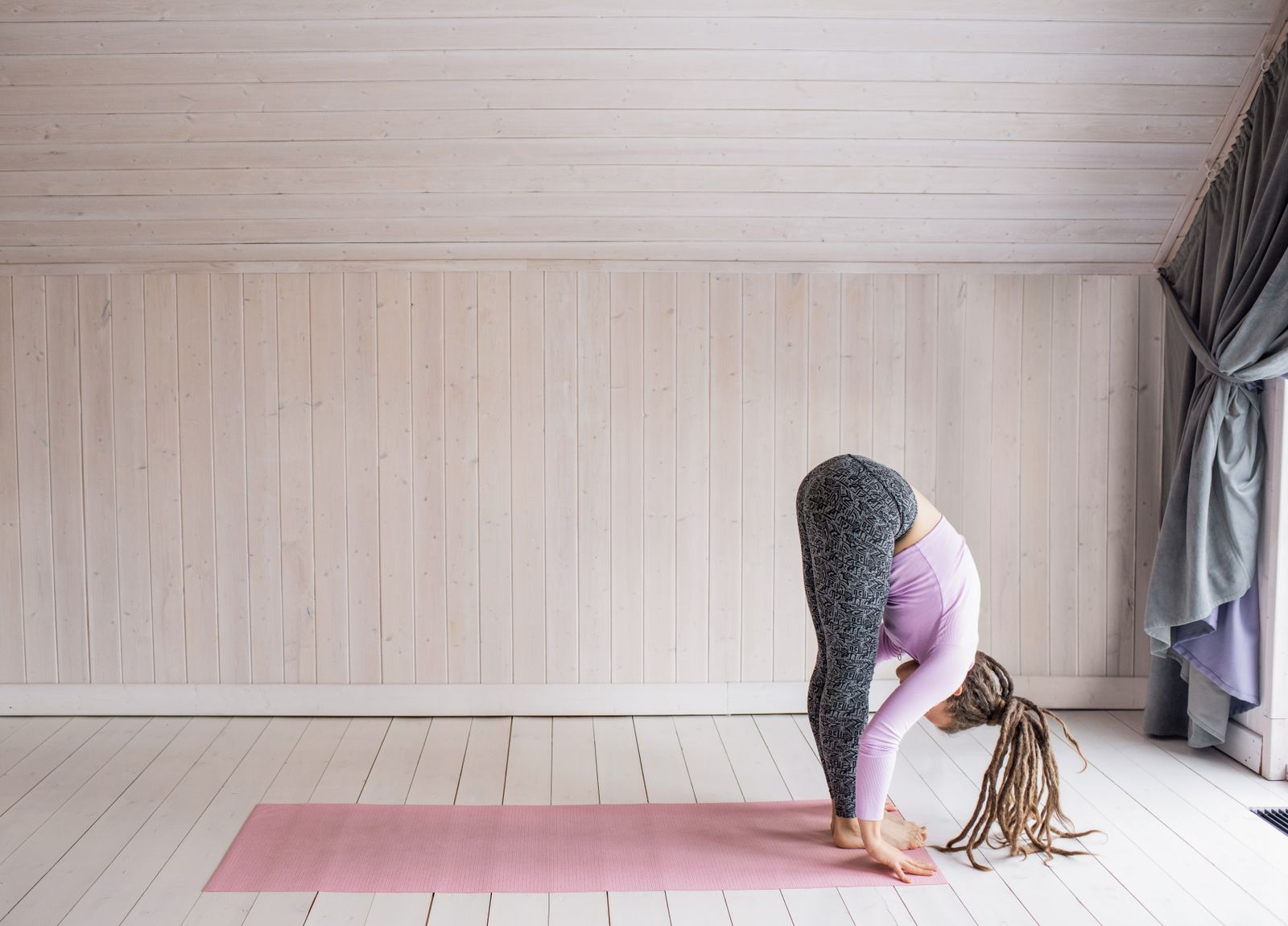
- Standing Forward Bend (Uttanasana) – increases blood flow to the brain and releases the hamstrings and lower back.
- Legs-Up-The-Wall (Viparita Karani) – a restorative inversion that calms the nervous system without straining the neck, making it one of the safest options during an active headache.
Each pose pairs well with slow nasal breathing; holding for five to eight full breaths works better than rushing through a sequence.
How Do You Sequence a Yoga Routine Specifically for Headaches?
A headache-focused sequence should move from gentle neck and shoulder mobilization into calming forward folds and finish with a restorative pose. Start with two minutes of Cat-Cow to loosen the spine, followed by seated neck rolls and shoulder shrugs to release surface tension. Move into Child’s Pose for one to two minutes, breathing into the lower back. Transition to Seated Forward Bend, holding for five breaths, then Standing Forward Bend for another five breaths, letting the head hang heavy to encourage passive traction on the neck. Close with eight to ten minutes of Legs-Up-The-Wall combined with slow, even breathing. The entire sequence takes 15 to 20 minutes and can be practiced daily as a preventive routine or during the early, milder stages of a headache. If you’re newer to structured practice, our beginner yoga poses guide is a useful primer before layering in headache-specific sequences.
Which Yoga Asanas Help With Tension Headaches Specifically?
Tension headaches, the most common type of headache, are driven primarily by muscular tightness in the neck, jaw, and scalp rather than vascular changes. For yoga for tension headaches, prioritize poses that release the suboccipital muscles at the base of the skull and the upper trapezius. Thread the Needle stretches the shoulder and upper back on each side individually, which is useful because tension headaches are often asymmetrical. Supported Fish Pose, using a bolster or rolled blanket under the upper back, opens the chest and counteracts the forward-head posture common in desk workers. Neck stretches done slowly, tilting the ear toward the shoulder and holding for 20 to 30 seconds per side, directly target the levator scapulae and sternocleidomastoid muscles implicated in tension-type pain. Combining these stretches with jaw relaxation, since many people unconsciously clench their jaw during stress, rounds out a tension-headache-specific practice.

Can Yoga Help With Sinus Headaches?
Yoga for sinus headache relief focuses on encouraging drainage and reducing facial pressure rather than stretching muscles. Forward folds like Standing Forward Bend and Child’s Pose use gravity to help loosen congestion in the sinus cavities. Simhasana, or Lion’s Breath, involves a forceful exhale through an open mouth that can help clear nasal passages when practiced gently. Alternate nostril breathing, known as Nadi Shodhana, is particularly relevant here because it can help balance airflow between the nostrils and has traditionally been used to support clearer breathing. Twists such as a seated spinal twist can stimulate circulation around the sinuses and upper chest. It’s worth noting that a true sinus headache linked to an active sinus infection needs medical treatment, and yoga should be viewed as a supportive practice for pressure relief and easier breathing rather than a treatment for infection itself.
Is There a Difference Between Yoga for Headaches and Yoga for Migraines?
Yes. Tension headaches and migraines have different underlying mechanisms, so the yoga approach shifts accordingly.
| Factor | Tension Headaches | Migraines |
|---|---|---|
| Best yoga approach | Active stretching and muscle release | Calming, restorative, low-stimulation practices |
| What to avoid | Long periods of complete stillness without any mobilization | Inversions, fast-paced vinyasa flows, hot yoga, and rapid head movement, since these can worsen light sensitivity and nausea |
| What to favor | Active neck, shoulder, and spine stretches | Slow breathing, Legs-Up-The-Wall without excessive neck strain, and gentle supported forward folds |
For a deeper, condition-specific breakdown, see our dedicated guide on yoga for migraine, which covers trigger management and migraine-safe sequencing in more detail.
What Breathing Techniques Reduce Headache Frequency?
Pranayama, the yogic practice of controlled breathing, is one of the most consistently recommended tools for headache prevention because it directly downregulates the stress response. Nadi Shodhana (alternate nostril breathing) balances the nervous system and is commonly practiced for five minutes before bed or during a stressful workday. Bhramari (humming bee breath) creates a gentle vibration that some practitioners find soothing for pressure-type headaches, though it should be done softly rather than forcefully. Dirga Pranayama, or three-part breath, simply lengthens the inhale and exhale using the belly, ribs, and chest in sequence, which lowers heart rate and reduces the shallow, rapid breathing pattern common during stress-triggered headaches. None of these techniques require special equipment, and each can be practiced in under ten minutes, making them realistic additions to a busy day.
How Does Stress Trigger Headaches, and How Does Yoga Interrupt That Cycle?
Chronic stress keeps the sympathetic nervous system, the body’s fight-or-flight response, in a state of low-grade activation. This raises cortisol, tightens muscles preemptively, and disrupts sleep, all of which are established headache triggers. Yoga interrupts this cycle through the relaxation response, a term coined to describe the physiological opposite of the stress response, characterized by lowered heart rate, reduced muscle tension, and slower breathing. Regular practice, even short daily sessions, appears to train the nervous system to recover from stress more efficiently over time. This is one reason why consistency matters more than intensity: a 10-minute daily practice is generally more useful for headache prevention than an occasional 90-minute class. If stress is a major factor for you, pairing this with our guide on yoga for stress relief can help build a broader toolkit.
Can Yoga Actually Cause Headaches?
Yes, in some cases. A headache after doing yoga usually stems from one of a few identifiable causes rather than the practice itself being harmful. Holding inversions like headstand or shoulder stand for too long, especially without proper alignment, can increase pressure in the head and neck. Overexerting the neck in poses like plow pose or forcing a deep backbend can strain cervical structures. Dehydration during a vigorous or hot yoga class is a common and often overlooked trigger. Breath-holding, rather than steady breathing, during challenging poses can also spike tension. If headaches consistently follow your practice, the fix is usually technique-based: soften your effort in backbends, keep breathing steady throughout, stay hydrated before and after class, and avoid long inversions if you’re prone to head or neck sensitivity. This is one reason working with a qualified instructor, especially early on, is valuable; our online yoga classes pair practitioners with instructors who can adjust alignment in real time.
How Often Should You Practice Yoga for Headache Prevention?
For prevention rather than acute relief, most practitioners benefit from a short daily practice rather than infrequent long sessions. A realistic target is 10 to 20 minutes most days of the week, focusing on neck and shoulder mobility, a few calming forward folds, and five minutes of breathwork. Research on yoga as an adjunct therapy for headache disorders generally involves programs lasting six to twelve weeks with sessions several times per week, suggesting that consistency over a period of months, not a single session, is what produces measurable changes in headache frequency. If you miss a day, resuming the next day matters more than trying to make up for lost time with a longer session. Pairing this with good sleep hygiene, regular hydration, and posture awareness during work hours tends to compound the benefits.
What Lifestyle Habits Should Accompany a Headache-Relief Yoga Practice?
Yoga works best as part of a broader headache-management approach rather than in isolation. Hydration matters because even mild dehydration is a recognized headache trigger; aim to drink water consistently through the day rather than only when thirsty. Posture at a desk directly affects neck and shoulder tension, so setting your screen at eye level and taking movement breaks every hour reduces the muscular buildup that yoga then has to release. Sleep consistency, going to bed and waking at similar times, helps regulate the nervous system patterns tied to headache frequency. Reducing caffeine dependency, or at least keeping intake consistent rather than erratic, avoids the withdrawal headaches that inconsistent caffeine use can cause. If you’re building a broader wellness routine, our guides on yoga for better sleep and yoga for posture address two of the most common contributing factors.
Which Yoga Styles Are Best Suited for Headache Sufferers?
Not all yoga styles are equally appropriate when headaches are a concern. Restorative yoga and yin yoga, which involve long, supported holds with props, are excellent for calming the nervous system without overexertion. Hatha yoga, practiced at a moderate pace, allows time to focus on alignment and breath rather than rushing between poses. Gentle vinyasa can work well once you’re headache-free, but fast-paced or hot vinyasa classes carry more risk of triggering a headache through dehydration, breath-holding, or overheating. If you’re new to structured styles, our overview of types of yoga breaks down the differences in pacing and intensity so you can choose a style suited to your current headache pattern. For those managing frequent tension headaches, many instructors specifically recommend starting with Hatha yoga or restorative yoga before progressing to more dynamic sequences.
How Does Yoga Compare to Other Natural Headache Remedies?
Yoga is one of several evidence-informed, non-pharmacological approaches to headache management, alongside things like adequate hydration, magnesium-rich diets, regular sleep schedules, and stress-reduction techniques such as meditation. What sets yoga apart is that it combines several of these mechanisms in a single practice: physical stretching, breath regulation, and a meditative, stress-lowering component. Compared to standalone stretching routines, yoga’s breathwork component adds a nervous-system-calming layer that static stretching alone doesn’t provide. Compared to meditation alone, yoga adds the physical release of muscular tension that meditation by itself doesn’t address as directly. This combination is likely why yoga shows up so frequently in both clinical research and anecdotal recommendations for headache management, though individual results vary and severe or persistent headaches always warrant a conversation with a healthcare provider.
When Should You See a Doctor Instead of Relying on Yoga?
Yoga is a supportive, complementary practice, not a substitute for medical evaluation when headaches are severe, sudden, or unusual. Seek medical attention promptly for a headache described as “the worst of your life,” a headache accompanied by fever, stiff neck, confusion, seizures, double vision, weakness, or numbness, or a headache that follows a head injury. Headaches that steadily worsen over days, that wake you from sleep, or that begin after age 50 for the first time also warrant evaluation. For chronic migraines or frequent tension headaches that are already medically diagnosed and managed, yoga can be a reasonable complementary addition to discuss with your doctor, particularly given the research suggesting benefits when yoga is combined with standard care rather than used as a replacement for it.
Questions People Ask About Yoga for Headache
How quickly does yoga relieve a headache?
Some people feel relief within 10 to 15 minutes of gentle stretching and slow breathing, particularly for mild tension headaches caused by muscle tightness. For migraines or more severe headaches, relief tends to be gradual and works better as a preventive daily practice rather than an instant fix during an active, severe episode.
Can beginners safely practice yoga for headache relief?
Yes. Most headache-relief poses, such as Child’s Pose, seated forward bends, and Legs-Up-The-Wall, require no prior experience and involve minimal strain. Beginners should avoid inversions like headstand until they’ve built strength and alignment awareness, ideally with guided instruction.
Is it better to do yoga during a headache or only for prevention?
Both have value, but gentle, restorative poses during a mild headache can ease symptoms, while a short daily practice for prevention tends to reduce how often headaches occur in the first place. Avoid vigorous or inverted poses during an active, more severe headache or migraine.
Why do I sometimes get a headache after yoga class?
This is usually linked to dehydration, holding inversions too long, straining the neck in backbends, or breath-holding during difficult poses. Adjusting technique, staying hydrated, and easing off intense inversions typically resolves this without needing to stop yoga altogether.
Which single pose helps the most for a sudden headache?
Legs-Up-The-Wall is widely recommended as the single most calming and low-risk option, since it requires no neck strain, promotes relaxation, and can be held for as long as feels comfortable while breathing slowly.
Does yoga help with headaches caused by screen time and desk work?
Yes, particularly neck and shoulder-focused sequences. Desk-related headaches often stem from forward-head posture and shoulder rounding, and poses like Cat-Cow, Thread the Needle, and supported chest openers directly counteract that pattern when practiced consistently through the workday or after it.
Try This for Yourself
Reading about yoga for headache relief is useful, but the real benefit comes from consistent, guided practice tailored to your specific headache pattern and body. If you’d like a structured, expert-led routine rather than piecing together poses on your own, explore FitStrot’s online yoga classes, where certified instructors can build a headache-relief sequence around your schedule, experience level, and specific triggers.
Related reading: yoga for migraine, yoga for back pain, yoga for weight loss, yoga for varicose veins, and FitStrot’s online yoga classes.