Yoga for hairfall reduction works primarily by improving scalp blood circulation, lowering stress hormones linked to shedding, and balancing the nervous system functions that regulate the hair growth cycle. Poses like Adho Mukha Svanasana (downward dog), Uttanasana (standing forward bend), and Sarvangasana (shoulder stand) send extra blood flow to the scalp, while pranayama practices such as Anulom Vilom and Bhramari calm the stress response that dermatologists associate with excess shedding. Yoga is not a cure for medical hair loss conditions like androgenetic alopecia, but as a daily habit it addresses two of the most common non-medical triggers of hairfall: chronic stress and poor circulation. Combined with basic nutrition and gentle hair care, a consistent 20-30 minute practice can measurably support thicker, calmer hair growth over 8-12 weeks.
Why Does Hair Fall Happen in the First Place?
Hair grows in cycles: an active growth phase (anagen), a short transition phase (catagen), and a resting phase (telogen) that ends in shedding. Losing 50-100 strands a day is normal. Problems start when too many follicles get pushed into the resting phase at once, a condition dermatologists call telogen effluvium. Common triggers include chronic stress, poor sleep, iron or vitamin D deficiency, thyroid imbalances, crash dieting, and hormonal shifts after pregnancy or illness. Genetic pattern hair loss (androgenetic alopecia) is a separate issue driven by hormones and genetics, and yoga will not reverse it. But for the stress-and-circulation type of hairfall that affects a large share of people at some point, yoga addresses the root triggers directly rather than just treating the scalp topically.
Can Yoga Actually Regrow Hair, or Just Slow Hairfall?
Yoga is best understood as a support system, not a regrowth treatment. It does not deliver active ingredients to the follicle the way minoxidil or PRP therapy might. What it does is remove two of the biggest obstacles to healthy growth: chronically elevated cortisol and sluggish scalp circulation. Research on pranayama and yoga-based stress reduction has repeatedly linked regular practice to lower stress-hormone markers, and dermatology literature consistently connects chronic stress with increased telogen effluvium. So the honest framing is this: yoga reduces the two most common non-genetic causes of thinning hair, which in turn slows fall and creates better conditions for the strands already in an active growth phase. Think of it as clearing the runway rather than being the plane.
Which Yoga Poses Are Best for Hairfall Reduction?
Inversions and forward bends are the core of any hair-focused yoga routine because they temporarily increase blood flow to the scalp and face. Here are the poses most commonly recommended, along with why each one earns its place in the sequence.
Adho Mukha Svanasana (Downward-Facing Dog)
This foundational inversion lowers the head below the heart, increasing circulation to the scalp while also stretching the hamstrings, calves, and shoulders. It’s accessible to almost every fitness level and is a staple in vinyasa yoga sequences. Hold for 5-8 breaths, keeping the spine long rather than rounded.
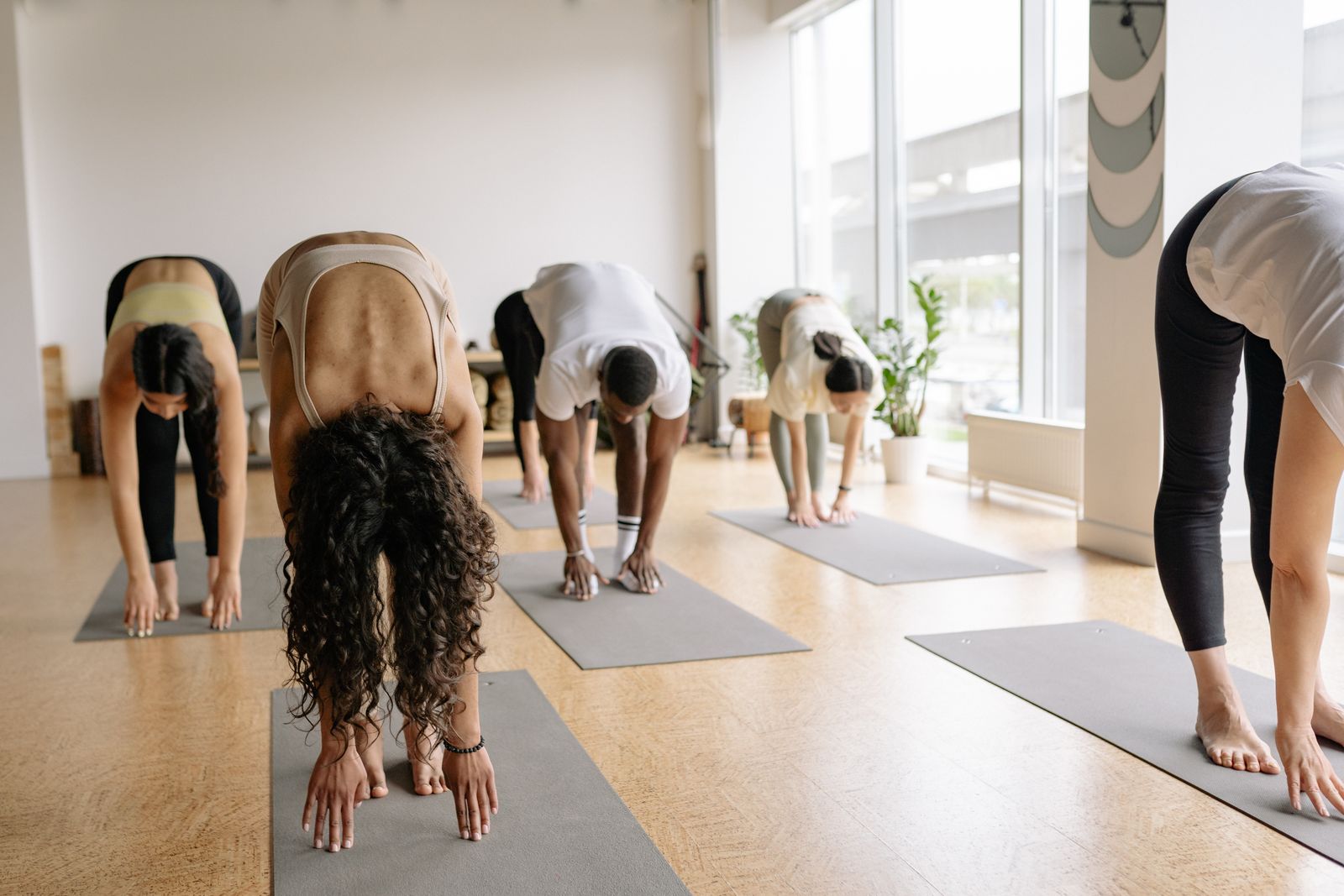
Uttanasana (Standing Forward Bend)
A gentler alternative to full inversions, Uttanasana folds the torso over the legs, again bringing the head below heart level. It also relieves tension in the neck and upper back, areas where stress commonly accumulates and can indirectly affect scalp tightness.
Sarvangasana (Shoulder Stand)
Often called the “queen of asanas” in traditional hatha yoga texts, shoulder stand is considered one of the most direct ways to reverse blood flow toward the head, neck, and thyroid gland. Because the thyroid regulates metabolism and can influence hair health when imbalanced, this pose is frequently recommended in yoga for thyroid routines as well. Beginners should learn this pose with a folded blanket under the shoulders and ideally with a teacher’s guidance to protect the neck.
Sasangasana (Rabbit Pose)
This deep forward fold tucks the chin toward the chest and rests the crown of the head near the floor, stimulating the scalp and the pituitary gland. It pairs well with Balasana (child’s pose) as a cooldown.
Vajrasana (Thunderbolt Pose)
Unlike the inversions above, Vajrasana is a seated pose traditionally recommended after meals to aid digestion. Good digestion and nutrient absorption directly affect whether protein, iron, and biotin from food actually reach the hair follicles, making this a supporting pose rather than a direct circulation booster.
How Does Kapalbhati Pranayama Help With Hairfall?
Kapalbhati, a rapid-exhalation breathing technique, is one of the most frequently cited breathwork practices for hair health in traditional yoga guidance. The forceful exhalations are said to boost oxygen supply and circulation throughout the body, including the scalp, while also activating the abdominal organs involved in digestion and detoxification. Practitioners typically build up to 3 rounds of 20-30 rapid exhalations, resting between rounds. It should be avoided during pregnancy or by anyone with high blood pressure, hernia, or recent abdominal surgery, so check with a doctor if any of these apply before starting. For a broader introduction to breath-based practice, see our guide to pranayama for beginners.
Does Stress Really Cause Hair Loss, and Can Yoga Fix It?
Yes, the link between stress and hair shedding is well documented in dermatology research, most commonly through the telogen effluvium pathway described earlier, where a stressful event pushes a larger-than-normal share of follicles into the shedding phase two to three months later. Yoga’s role here is indirect but meaningful: breathing practices and slow, mindful movement activate the parasympathetic nervous system, the body’s “rest and digest” mode, which counteracts the sympathetic “fight or flight” state that keeps cortisol elevated. This is the same mechanism explored in yoga for stress relief and yoga for anxiety. If your hairfall started a few months after a stressful period, illness, or major life change, calming the nervous system through consistent practice is one of the most evidence-aligned things you can do alongside proper nutrition.
What Does a Daily Hair-Focused Yoga Routine Look Like?
Consistency matters more than intensity for hair-related results. A practical 25-30 minute daily sequence looks like this.
- 5 minutes: Gentle warm-up with neck rolls and shoulder stretches to release tension that restricts scalp circulation
- 10 minutes: Adho Mukha Svanasana, Uttanasana, and Sasangasana, holding each for 5-8 breaths, 2-3 rounds
- 5 minutes: Sarvangasana (with proper support), followed by Matsyasana (fish pose) as a counter-stretch
- 5 minutes: Kapalbhati and Anulom Vilom pranayama
- 5 minutes: Savasana or seated meditation to close the nervous system down
This structure mirrors the general principle behind most morning yoga routine sequences: mobilize first, invert next, breathe, then rest. Practicing in the morning on an empty or light stomach tends to work best for inversions.
What Role Does Diet Play Alongside Yoga for Hair Health?
Yoga supports circulation and stress regulation, but hair is still built from protein, iron, zinc, and biotin, so diet does the heavy lifting nutritionally. Iron deficiency in particular is one of the most common medically documented causes of diffuse hairfall, especially in menstruating women, so anyone with persistent shedding should get ferritin and thyroid levels checked rather than assuming yoga alone will resolve it. Pairing a hair-focused yoga practice with adequate protein intake, leafy greens, nuts, and seeds gives the nervous-system benefits of yoga something to actually work with. This complements broader lifestyle approaches covered in yoga for weight loss, where sustainable nutrition habits are just as important as the physical practice itself.
Can Scalp Massage and Balayam Speed Up Results?
Balayam, or rubbing the fingernails together, is a traditional practice claimed to stimulate hair growth through a reflexology-style connection between the nails and scalp nerve endings. There is limited clinical research directly validating this specific mechanism, so it’s best treated as a low-risk complementary habit rather than a proven treatment. What has more general support is scalp massage itself: manually increasing blood flow to the scalp for 5-10 minutes daily, using the fingertips in slow circular motions, is a simple habit that pairs naturally with the circulation benefits of inversion poses. Try it right after your yoga session, when scalp blood flow is already elevated from the inversions.
How Long Before You See Results From Yoga for Hairfall?
Because a single hair follicle cycle can take two to three months to complete, most people should not expect visible changes in shedding before the 8-12 week mark of consistent daily or near-daily practice. The first sign is usually less hair on the pillow or in the shower drain rather than dramatic new growth, since yoga’s main job is slowing excess shedding, not accelerating growth speed. Track progress with monthly photos of your part line or hairline rather than day-to-day observation, which is too noisy to be useful. If there’s no improvement after three months of consistent practice combined with good nutrition, it’s worth getting bloodwork done to rule out thyroid or iron issues.
Are There Any Risks or People Who Should Avoid These Poses?
Inversions like shoulder stand and headstand are not appropriate for everyone. Avoid or modify them if you have uncontrolled high blood pressure, glaucoma, retinal issues, a recent neck or spine injury, or if you are menstruating or pregnant, where many teachers recommend gentler alternatives. Kapalbhati and other forceful breathing techniques should be skipped by anyone with hernia, recent abdominal surgery, or high blood pressure. Beginners should learn shoulder stand and headstand-family poses from a qualified instructor rather than from a video alone, since poor alignment in these poses can strain the cervical spine. If you’re new to inversions generally, our guide to yoga for beginners is a safer starting point before progressing to shoulder stand or headstand variations.
How Does Yoga for Hairfall Fit Into a Broader Beauty and Wellness Routine?
Hair health rarely exists in isolation from overall wellness, which is why yoga practitioners often see hairfall improve alongside skin and stress-related changes. The same circulation and stress-hormone mechanisms that help hair also show up in practices like yoga for uneven skin tone and yoga for glowing skin, both of which rely on the same inversion-driven blood flow and stress-reduction principles. Building a consistent practice around types of yoga that suit your schedule, whether that’s a brisk vinyasa flow in the morning or a slower hatha practice in the evening, tends to produce better long-term hair and skin results than any single “hair yoga” routine done in isolation.
Questions People Ask About Yoga for Hairfall Reduction
How many days a week should I do yoga for hairfall?
Aim for at least 5-6 days a week for the first three months, since consistency drives the stress-reduction and circulation benefits that support hair health. A 20-30 minute daily session is more effective than a longer session done once a week, because scalp circulation benefits are cumulative and stress hormones respond best to regular, predictable practice.
Can headstand (Sirsasana) help more than shoulder stand?
Headstand does increase scalp blood flow more directly since the head bears more weight, but it also carries higher risk for the neck and cervical spine if alignment is off. Most teachers recommend mastering shoulder stand and forward bends first, and only progressing to headstand under direct supervision once core and shoulder strength are established.
Is yoga enough on its own, or do I still need hair products?
Yoga addresses stress and circulation, not the topical or nutritional needs of hair, so it works best alongside basic hair care: a gentle sulfate-free shampoo, regular conditioning, and avoiding excessive heat styling. Think of yoga as fixing the internal environment while good hair care protects the external structure of the strand.
Will yoga help with genetic hair loss (androgenetic alopecia)?
Yoga is unlikely to meaningfully reverse pattern hair loss caused by genetics and hormones like DHT, since that process is driven by follicle miniaturization rather than stress or circulation. It can still be a useful supportive practice for overall scalp health and stress management, but anyone with a family history of pattern baldness should also discuss medical options like minoxidil or dermatology referral with a doctor.
What time of day is best to practice yoga for hair health?
Morning practice on an empty or lightly-fed stomach is generally preferred, particularly for inversions, since a full stomach makes forward folds and shoulder stand uncomfortable. That said, an evening practice focused on pranayama and stress relief is equally valuable if mornings don’t fit your schedule; the stress-reduction benefit matters more than the specific hour.
Try This for Yourself
Reading about poses is a good start, but hair-focused yoga only works if the sequence, breathing, and alignment are consistent enough to actually lower stress hormones and sustain scalp circulation over weeks, not days. If you’d like guided, structured sessions built around real wellness goals like this one, explore FitStrot’s online yoga classes and work with an instructor who can adapt inversions and pranayama safely to your body and schedule.
Related reading: Yoga for weight loss, yoga for uneven skin tone, yoga for stress relief, pranayama for beginners, and FitStrot’s online yoga classes.