Yoga for depression works by combining gentle movement, controlled breathing, and focused attention to calm an overactive stress response and gradually rebuild the energy and motivation that depression tends to drain. Research on yoga as a complementary intervention for depressive disorders consistently links regular practice, typically two to four sessions a week over eight or more weeks, to meaningful reductions in depressive symptoms, alongside improvements in sleep and general mood. It is not a replacement for therapy or medication when depression is moderate to severe, but as a low-barrier, evidence-supported addition to a treatment plan, yoga offers something many depression-management tools don’t: a physical practice that meets you exactly where your energy is on any given day, from a five-minute breathing sequence in bed to a full restorative class.
How Does Yoga Actually Help With Depression?
Depression is not purely a mood problem; it has measurable effects on the nervous system, sleep architecture, and the body’s stress-response chemistry. Yoga addresses several of these mechanisms at once rather than targeting a single symptom. Slow, extended breathing activates the parasympathetic nervous system through the vagus nerve, which helps lower the chronically elevated cortisol often seen in depressive states. Gentle physical movement increases circulation and can support the release of mood-related neurotransmitters in a way that mirrors, on a smaller scale, the benefits associated with other forms of moderate exercise.
Beyond the physiological piece, yoga also interrupts rumination, the repetitive negative thinking that keeps depressive episodes self-sustaining. Holding attention on breath, body sensation, and the present moment gives the mind something concrete to anchor to instead of looping on discouraging thoughts. This combination of physiological regulation and attentional redirection is why yoga is increasingly studied as a complementary tool for depression rather than dismissed as simple relaxation. For a broader look at how these mechanisms extend beyond depression specifically, our guide to yoga for mental health covers the wider research landscape.
What Does the Research Actually Say?
Multiple systematic reviews and meta-analyses have examined yoga’s effect on depressive symptoms, generally comparing yoga groups against waitlist or usual-care control groups using validated tools like the Hamilton Depression Rating Scale or the Beck Depression Inventory. The consistent finding across this body of research is that yoga is associated with meaningful reductions in depressive symptoms, particularly when practiced consistently over eight weeks or more, with effects often comparable to other active interventions like structured exercise programs.
It is worth being precise about what this evidence does and doesn’t establish. Most of the strongest results come from studies where participants attended supervised sessions multiple times a week for two months or longer, not from occasional or one-off practice. Researchers also note that yoga appears to work best as an adjunct to standard care, alongside therapy or medication, rather than as a standalone replacement, particularly for moderate to severe depression. If low mood is intertwined with persistent worry, our guide to yoga for anxiety addresses the overlapping presentation directly.
Which Yoga Poses Are Best for Depression?
Depression often shows up physically as low energy, heaviness in the chest, and a tendency to collapse inward, rounded shoulders, a lowered gaze, shallow breathing. The most useful poses for depression counter this pattern gently: they open the chest, encourage upright posture, and invite slow, deepened breathing without demanding more energy than a low day can supply.
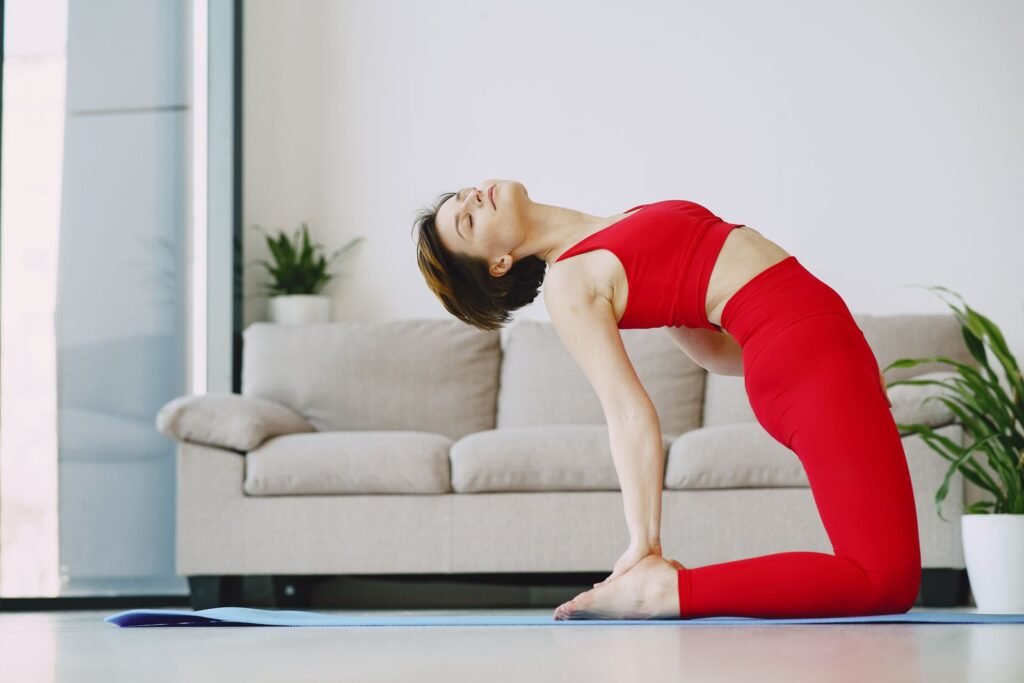
Camel Pose (Ustrasana)
Kneeling with hips stacked over knees, gently arch back and reach for your heels, or keep hands on your lower back for a lighter variation. This heart-opening backbend counters the collapsed posture common in depressive states and can feel emotionally activating, so ease in slowly and come out with control. Hold for 20 to 30 seconds, breathing steadily.
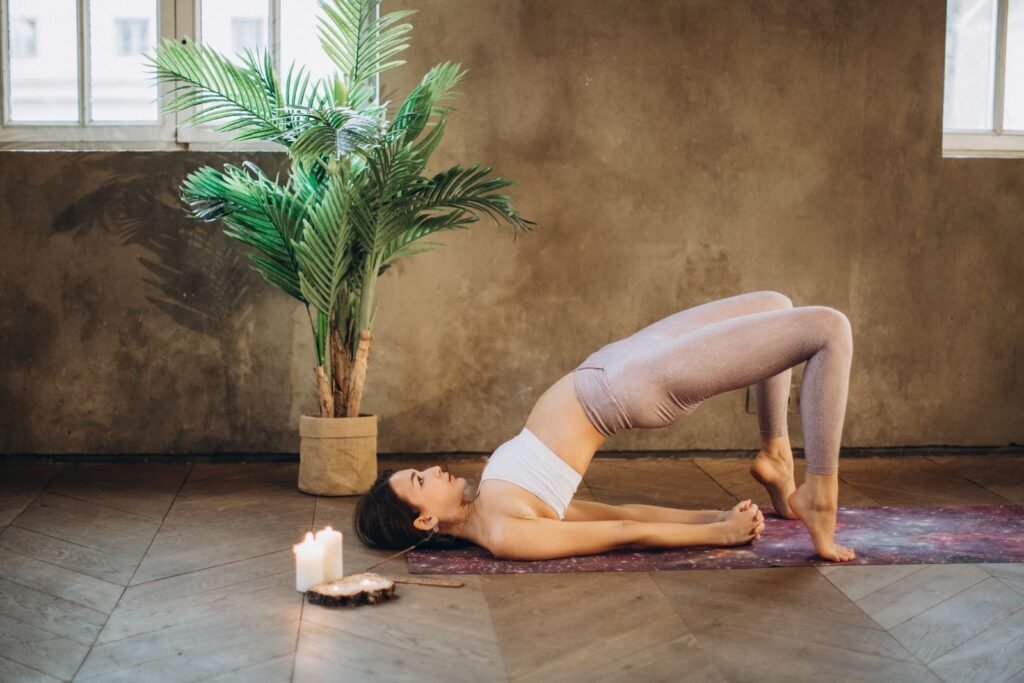
Bridge Pose (Setu Bandhasana)
Lying on your back with knees bent and feet flat, lift your hips toward the ceiling while keeping your shoulders grounded. Bridge Pose gently opens the chest and front of the shoulders, an accessible alternative to deeper backbends for people newer to yoga or dealing with low energy. Hold for 30 to 60 seconds, breathing fully into the open chest.
Child’s Pose (Balasana)
Kneel with big toes touching and knees wide, then fold forward with your forehead resting on the mat. Despite being a forward fold rather than a backbend, Child’s Pose offers a grounding, safe stillness that many people find soothing on especially heavy days. It is often the pose practitioners return to between more active postures.
Warrior II (Virabhadrasana II)
From a wide-legged stance, bend your front knee to a right angle while keeping your back leg straight, arms extended parallel to the floor, gaze over your front hand. This standing pose builds a felt sense of strength and stability, which many practitioners describe as psychologically as well as physically grounding during depressive episodes.
Legs-Up-the-Wall (Viparita Karani)
Sit sideways against a wall, then swing your legs up so your body forms an L-shape. This gentle inversion is one of the most accessible restorative poses available, requiring almost no energy while still calming the nervous system. Five to ten minutes here is often enough to notice a shift in both mood and physical tension.
Corpse Pose (Savasana)
Lying flat with arms relaxed and palms up, Savasana closes out a depression-focused sequence by giving the nervous system uninterrupted time to settle. It looks like doing nothing, but it consolidates the calming effects built by the rest of the practice, and five to ten minutes here is well worth the stillness it asks for.
What Yoga Therapy Approach Works Best for Depression?
Yoga therapy, the practice of tailoring yoga specifically to a person’s mental or physical health condition rather than following a generic class format, has grown as its own discipline precisely because depression doesn’t respond uniformly to every style of practice. A yoga therapist working with depression typically assesses energy level, sleep quality, and whether anxiety is also present before building a sequence, since a heavy, low-energy depressive presentation calls for a different approach than an agitated, anxious one.
In practice, this often means favoring restorative and gentle Hatha-based sequences over fast-paced flows, at least initially, and layering in specific breathing techniques designed to lift energy without overstimulating the nervous system. Yoga therapy also tends to build in more verbal cueing around noticing bodily sensation without judgment, borrowing directly from mindfulness-based approaches. If you are exploring this route, our overview of types of yoga can help you identify which style is likely to be the best entry point based on your current energy and experience level.
How Does Breathwork Help With Depressive Symptoms?
Pranayama, the yogic term for structured breathing practice, plays an outsized role in yoga’s effect on depression, arguably more than the postures themselves for people dealing with low energy. Depression frequently comes with shallow, restricted breathing, and consciously deepening and lengthening the breath sends a direct physiological signal that can help shift both energy and mood.
Two techniques are especially relevant. Diaphragmatic breathing, breathing deeply into the belly rather than shallowly into the chest, activates the parasympathetic nervous system and is often the first technique introduced in yoga therapy for depression because it requires so little physical effort. Bhramari, or humming bee breath, involves a gentle humming sound on the exhale and is commonly used to ease agitation when depression and anxiety overlap. For a deeper dive into building a consistent breathing practice, our piece on pranayama breathing techniques walks through several variations step by step.
How Often Should You Practice Yoga to See Results?
Consistency matters more than intensity when using yoga to manage depressive symptoms. Research generally points to noticeable improvements after eight or more weeks of regular practice, roughly two to four sessions per week, rather than after a single class. For someone newly starting out, a realistic structure looks like two to three 20-to-30-minute sessions a week combining gentle postures and breathwork, with the option to add short five-minute breathing resets on other days when a full practice feels like too much.
It helps to build in flexibility for how depression actually behaves day to day. On lower-energy days, a shortened five-minute breathing-only practice still counts and keeps the habit alive, which matters more long-term than any single session’s length. On days with more capacity, extending the practice or adding a few more active poses like Warrior II can help build the sense of accomplishment that depression often erodes. Our guide to yoga for beginners offers a gentler on-ramp if starting from zero feels overwhelming.
Can Yoga Help With Both Anxiety and Depression Together?
Anxiety and depression frequently co-occur, and much of the available research on yoga for anxiety and depression treats them as overlapping rather than entirely separate conditions, since both involve nervous system dysregulation, though often in different directions. Depression tends to present as low arousal, heaviness, and withdrawal, while anxiety presents as high arousal, restlessness, and racing thoughts, and a practice that works well for one can sometimes need adjustment for the other.
The practical solution most yoga therapists use is a blended sequence: grounding, energizing poses like gentle backbends and standing postures to counter depressive heaviness, paired with slow, extended-exhale breathing to settle anxious activation. Restorative styles that emphasize long holds and supported poses tend to serve both presentations reasonably well, since they neither overstimulate an anxious system nor demand more energy than a depressive one can supply. Our dedicated guide to yoga for anxiety goes deeper into sequencing for the anxious side of this overlap specifically.
Does Yoga Help With Depression as Much as Exercise Does?
Comparisons between yoga and general exercise for depression tend to show broadly similar benefit, which makes sense given that both involve physical movement, a known mood-supportive mechanism, and both can be practiced consistently without special equipment. Where yoga tends to differ is in the added layer of structured breathing and present-moment focus, which some studies suggest may offer additional benefit for the rumination and anxious overlay that often accompanies depression, beyond what cardio-style exercise alone provides.
That said, yoga is not inherently superior to other forms of movement for everyone; the best exercise for depression is generally the one a person will actually do consistently. For some people, the structure and stillness of yoga is more sustainable than a gym routine; for others, the opposite is true. If chronic tension or stress is compounding your depressive symptoms, our guide to yoga for stress addresses the physiological overlap between the two conditions in more detail.
What Style of Yoga Is Best for Someone With Depression?
Not every yoga style suits a depressive presentation equally well, and choosing the wrong one, particularly early on, can feel discouraging rather than supportive. Restorative yoga, which uses props like bolsters and blankets to support the body in passive poses held for five minutes or more, asks very little physical effort while still offering nervous-system benefit, making it one of the most accessible entry points. Hatha yoga, with its slower pace and clear alignment cues, is similarly approachable for beginners or anyone dealing with low energy.
Yin yoga, which favors long, passive holds targeting connective tissue, can also work well, particularly for people who find stillness easier to tolerate than constant movement. By contrast, faster-paced styles like vinyasa yoga or power yoga can be genuinely valuable once some baseline energy and motivation return, since the endorphin release from more vigorous movement has its own mood benefits, but they are rarely the right starting point during a depressive low. Our broader overview of types of yoga breaks down pace and intensity across styles if you are unsure where to begin.
A Simple Beginner Sequence for Low-Energy Days
A short, repeatable sequence removes the decision-making that can itself feel like a burden during a depressive episode. Try this gentle 15-minute flow, ideally at a consistent time of day to help anchor the habit:
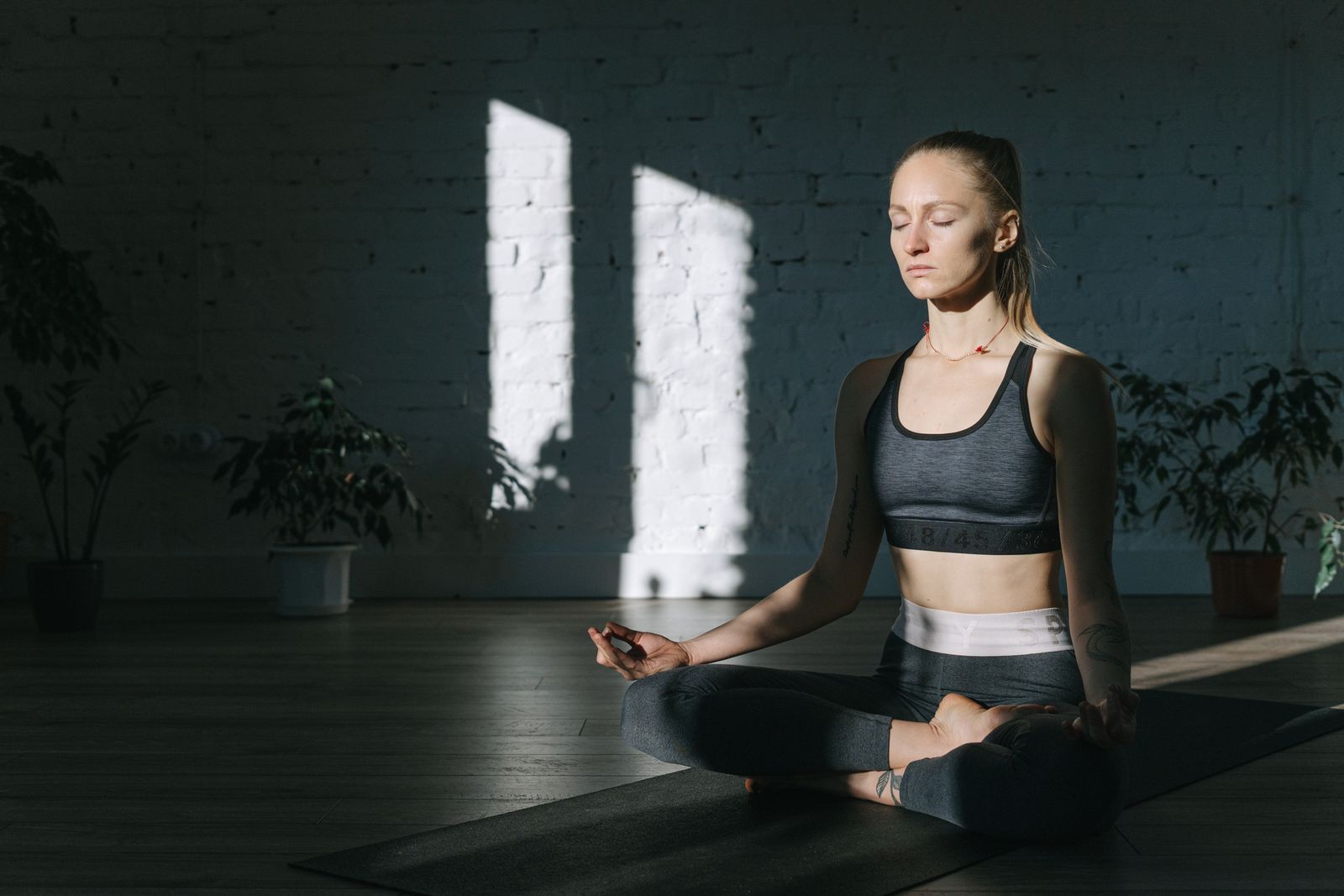
- Minute 0-3: Seated or lying down, eyes closed, diaphragmatic breathing (slow belly breaths, no counting required)
- Minute 3-6: Bridge Pose, three to five slow lifts synced to breath
- Minute 6-9: Camel Pose or a lighter chest-opening backbend variation
- Minute 9-12: Legs-Up-the-Wall, allowing the body to fully rest
- Minute 12-15: Savasana, staying as long as feels supportive
This sequence deliberately avoids poses that demand strength or stamina so it remains doable even on the heaviest days. Once a bit more capacity returns, our yoga for beginners guide offers a fuller foundation to build from, and our morning yoga routine guide has ideas for turning a version of this into a daily anchor.
How Does Sleep Fit Into Yoga’s Effect on Depression?
Sleep and depression have a strongly bidirectional relationship: disrupted sleep is both a common symptom of depression and a factor that can worsen it, creating a cycle that can be difficult to interrupt without addressing both sides. Gentle, restorative yoga practiced in the evening supports the same parasympathetic shift that promotes better sleep onset, making a short wind-down sequence a useful bridge between managing depressive symptoms during the day and improving rest at night.
Poses like Legs-Up-the-Wall and Child’s Pose, held for several minutes each with slow breathing, are commonly recommended before bed precisely because they require no exertion and actively calm the nervous system rather than stimulate it. Our dedicated guide to yoga for sleep offers a fuller evening sequence if disrupted sleep is a significant part of your experience with depression.
Is Online Yoga Effective for Managing Depression?
Online yoga classes can be genuinely effective for managing depressive symptoms, and for many people they remove a meaningful barrier: depression often makes the motivation, energy, and self-consciousness required to leave the house for a studio class feel like an insurmountable obstacle on hard days. Practicing from home also allows more flexible timing, which matters because consistency, not any single session’s intensity, is what the research most consistently links to symptom improvement.
The elements that make any yoga practice effective for depression, breath awareness, gentle sustained postures, and a calm, low-pressure environment, translate well to a home setting, and a live instructor adds the accountability and real-time guidance that following a static video sometimes lacks. If exercise or weight concerns are also part of your picture, our guide to yoga for weight loss covers a sustainable approach that avoids adding extra pressure to an already difficult period.
What Mistakes Make Yoga Less Effective for Depression?
A handful of common missteps can blunt yoga’s benefit for depressive symptoms. Choosing an overly intense, fast-paced class when energy is already low can feel discouraging or simply unsustainable, leading many people to abandon the practice entirely rather than adjusting the style. Practicing only during acute crises rather than as an ongoing habit also limits benefit, since the strongest research support comes from sustained practice over eight or more weeks, not sporadic sessions.
Treating yoga as a task to master, chasing advanced poses or comparing progress to others, can introduce a new source of self-criticism into what is meant to be a supportive practice, which is particularly counterproductive for depression, where self-criticism is often already elevated. It also bears repeating that yoga is not a substitute for professional care when depression is moderate to severe or accompanied by thoughts of self-harm; in those situations, a mental health professional should always be part of the plan, with yoga serving as a complementary tool rather than the primary treatment.
How Does Yoga for Depression Fit Into a Broader Wellness Routine?
Depression rarely responds to a single intervention in isolation, and yoga works best as one piece of a broader approach that may include therapy, medication when prescribed, social connection, and lifestyle factors like sleep and nutrition. Physical tension is a common companion to depression, often concentrated in the neck, shoulders, and jaw, and pairing your practice with the guidance in our yoga for neck pain and yoga for back pain guides can address the physical carriers of emotional strain directly.
Community and structure also matter more than they might seem to on the surface; depression often isolates, and a consistent class, even an online one, can provide a small but reliable point of connection and routine during a period when both can be hard to maintain. Our overview of benefits of yoga covers the fuller range of physical and mental effects a consistent practice can offer over time.
Questions People Ask About Yoga for Depression
Does yoga help with depression and anxiety together?
Yes. Because anxiety and depression frequently overlap and both involve nervous system dysregulation, a blended practice, grounding poses paired with slow, extended-exhale breathing, tends to address both presentations reasonably well. Restorative styles with long, supported holds are often the most broadly tolerable starting point for this combination.
How long does it take for yoga to help with depression?
Most research showing meaningful symptom improvement involves consistent practice, roughly two to four sessions a week, sustained over eight or more weeks. Some effects, like reduced physical tension and slower breathing, can be noticed within a single session, but sustained mood improvement generally requires ongoing, regular practice rather than occasional sessions.
Can yoga cure depression on its own?
No single practice should be relied on to cure depression on its own, and yoga is best understood as a complementary tool rather than a standalone cure. For mild, situational low mood, yoga can offer significant relief; for moderate to severe depression, it works best alongside therapy or medication as part of a broader treatment plan guided by a professional.
What is the best time of day to practice yoga for depression?
There is no universally best time; it depends on when your energy and motivation are highest. A short morning practice can help build momentum before the day’s demands set in, while an evening practice can help process the day and support better sleep. Some people benefit from a brief practice at both ends of the day.
Is it normal to feel emotional during yoga for depression?
Yes, this is a commonly reported experience. Poses that open the chest and hips, along with slow, focused breathing, can bring up stored emotion or unexpected tearfulness. This is generally considered a normal part of the process rather than a sign that something is going wrong, though it is worth mentioning to a yoga therapist or teacher if it feels overwhelming.
Can beginners with depression start yoga without any prior experience?
Yes. Gentle poses like Legs-Up-the-Wall, Child’s Pose, Bridge Pose, and Savasana require no flexibility or prior experience and are commonly the first poses introduced in yoga therapy for depression specifically because they ask so little of the body while still offering nervous-system benefit.
Try This for Yourself
Reading about yoga for depression is a useful starting point, but the benefits described here only show up through consistent practice. If you would like guided support building a gentle, sustainable routine without the pressure of an in-person studio, explore FitStrot’s online yoga classes, designed to meet you wherever your energy levels are today.
Related reading: Yoga for Anxiety | Yoga for Mental Health | Yoga for Stress | Yoga for Sleep | Online Yoga Classes