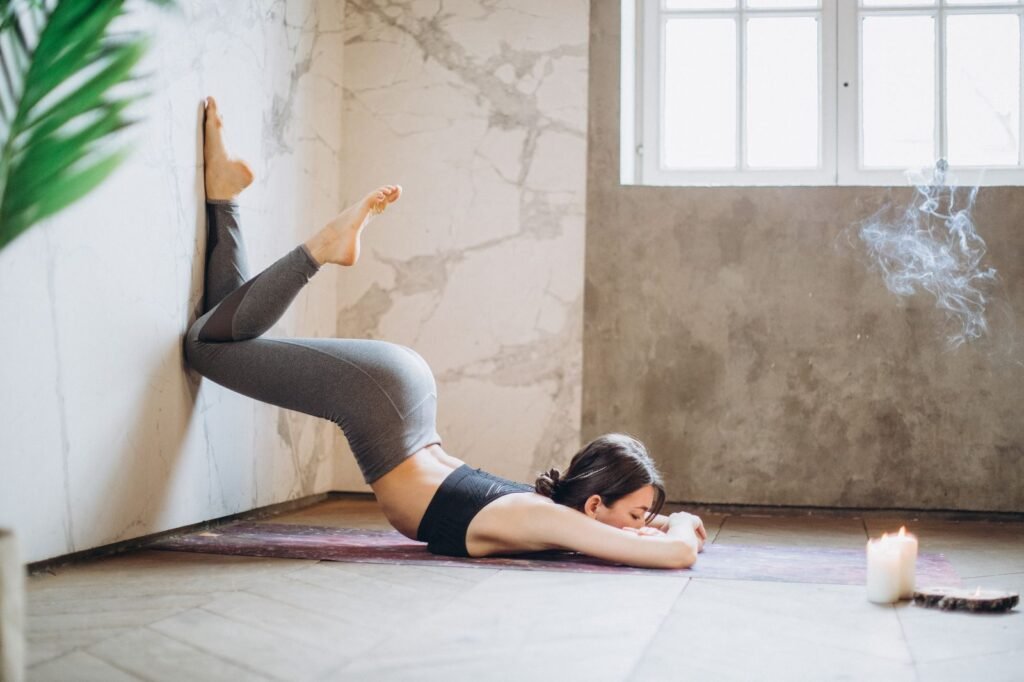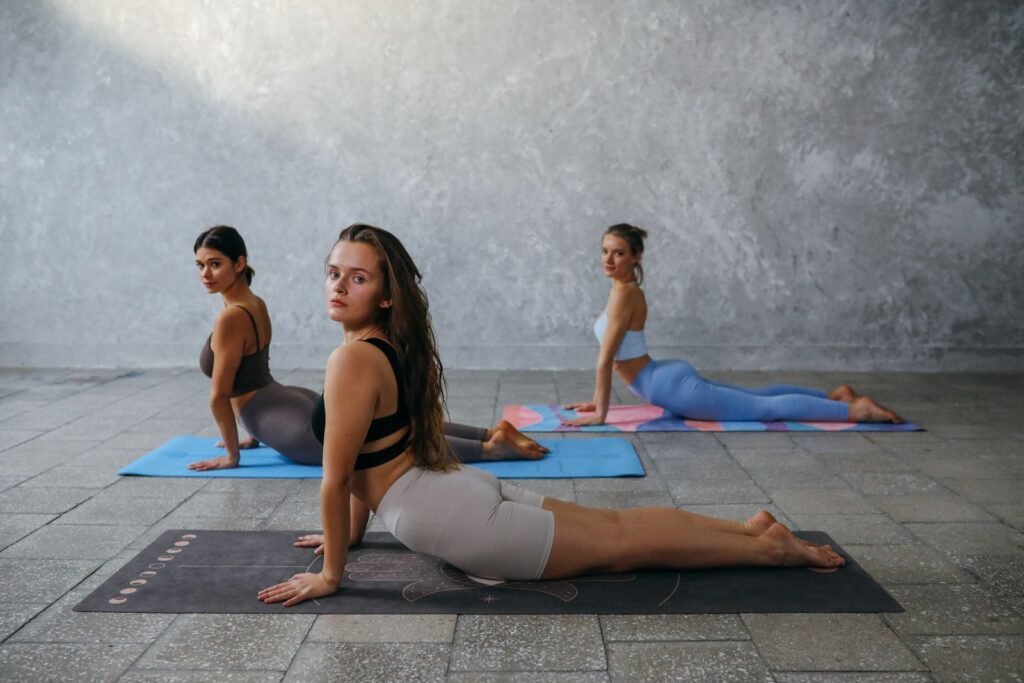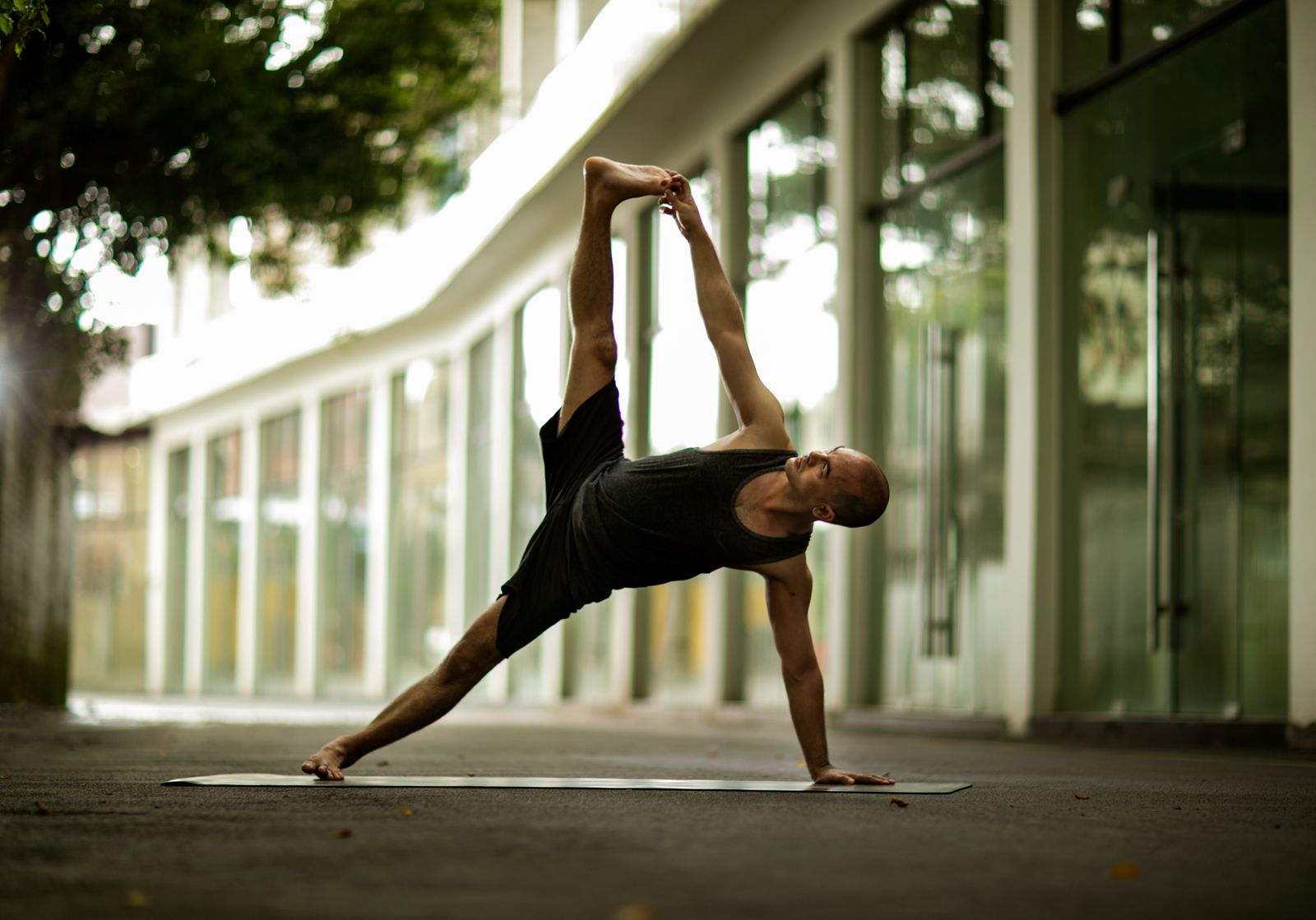
Yoga for athletes is a supplemental training practice that uses controlled breathing, static and dynamic stretching, and postural strength work to improve flexibility, joint mobility, balance, and recovery without adding impact stress to the body. Runners, cyclists, swimmers, weightlifters, and team-sport competitors use it to counteract the tightness and muscular imbalances that repetitive training creates, and to build the kind of body awareness that reduces injury risk. Unlike a rest day spent doing nothing, a 20 to 45 minute yoga session actively supports recovery by increasing blood flow, releasing tension in overworked muscle groups, and training the nervous system to shift out of a stressed, sympathetic state. Most athletes who add it see benefits within four to six weeks of consistent practice, two to three sessions a week.
Why Do Athletes Need Yoga If They Already Train Hard?
Sport-specific training builds strength and skill in a narrow range of motion, repeated thousands of times. A distance runner’s hips flex and extend in one plane for hours a week; a swimmer’s shoulders internally rotate on every stroke; a cyclist spends hours folded into the same hip and spine position. Over months and years, this repetition tightens the muscles used constantly and lets the ones rarely used grow weak, creating the kind of imbalance that shows up as chronic tightness, nagging pain, or a change in movement pattern that eventually leads to injury.
Yoga works against this pattern rather than adding to it. It moves joints through ranges of motion that sport-specific training skips, strengthens stabilizer muscles that never get loaded directly, and forces the athlete to pay attention to alignment and breath rather than raw output. This is why yoga for athletes is typically framed as a complement to training, not a replacement for it, and why it shows up in the programs of national governing bodies, university athletic departments, and professional teams as a standard recovery and injury-prevention tool alongside the broader benefits of yoga.
What Does the Research Say About Yoga and Athletic Performance?
Studies on yoga and sport performance generally point in a consistent direction: regular practice is associated with improved flexibility, better balance, and lower perceived stress in athletic populations, along with some evidence of better sleep quality during heavy training blocks. The effects on raw performance metrics like sprint speed or vertical jump are less consistently shown across studies, which is unsurprising since yoga is not designed to replace power or speed training. The more defensible claim, and the one supported across multiple lines of research, is that yoga helps manage the physical and mental stress load that comes with heavy training, which in turn supports more consistent performance over a season rather than a single dramatic gain.
Which Athletes Benefit Most From Practicing Yoga?
Athletes in sports with repetitive, single-plane movement patterns tend to see the clearest benefits, because yoga directly counteracts the tightness those sports create.
- Runners often develop tight hip flexors, hamstrings, and calves; yoga restores hip extension and ankle mobility. See yoga for runners for a sport-specific sequence.
- Cyclists spend hours in spinal flexion and hip flexion, which yoga helps reverse through backbends and hip openers, covered in yoga for cyclists.
- Swimmers benefit from shoulder external rotation work and thoracic spine mobility to offset the internal rotation of the stroke.
- Weightlifters and CrossFit athletes use yoga to restore ankle, hip, and thoracic mobility that heavy barbell work can stiffen over time.
- Team-sport athletes in soccer, basketball, and field hockey use it for hip and groin mobility and single-leg balance, both closely tied to lower-body injury risk.
Whatever the sport, the underlying goal is the same one behind yoga for flexibility generally: restoring a joint’s full, controlled range of motion rather than chasing extreme flexibility for its own sake.
What Are the Best Yoga Poses for Athletes?
The best yoga poses for athletes target the joints and muscle groups most stressed by training: hips, hamstrings, shoulders, thoracic spine, and the stabilizers around the ankle and knee. A short, well-chosen sequence beats a long, unfocused one.
Downward-Facing Dog (Adho Mukha Svanasana)
Stretches the hamstrings, calves, and shoulders simultaneously while building shoulder and core stability. A foundational pose in vinyasa yoga sequences and a fast way to check tightness in the posterior chain after a hard session.
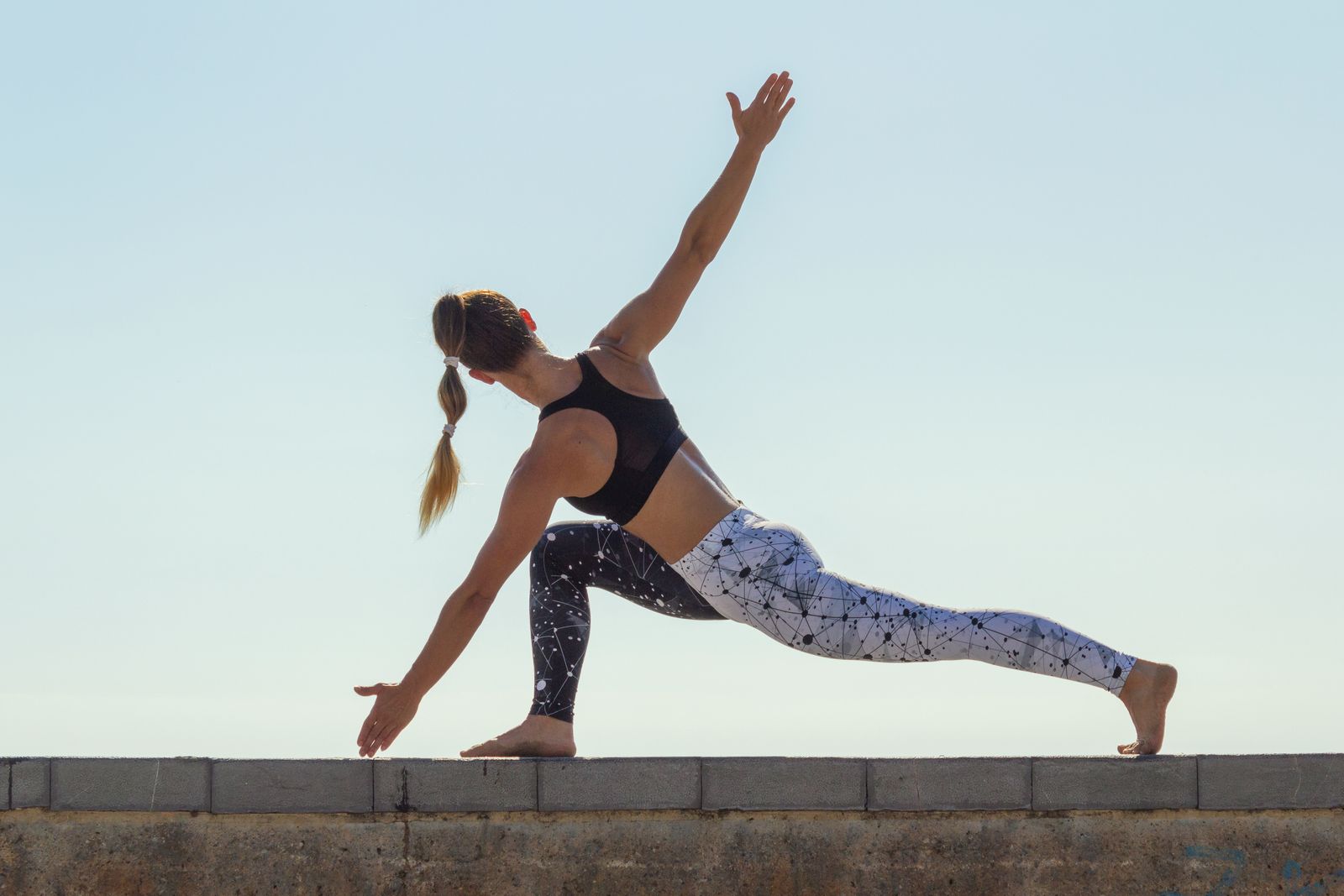
Low Lunge (Anjaneyasana)
Opens the hip flexors and quadriceps, the two areas that tighten most from running, cycling, and squatting. Holding for five to eight breaths per side gives a deeper release than a quick dynamic stretch.
Pigeon Pose (Eka Pada Rajakapotasana)
Targets the deep external rotators of the hip, including the piriformis, which is frequently implicated in referred glute and lower-back pain in runners and cyclists.
Warrior II (Virabhadrasana II)
Builds strength and stability through the legs and hips while opening the inner thighs, useful for athletes in cutting or lateral-movement sports.
Bridge Pose (Setu Bandhasana)
Strengthens the glutes and hamstrings while opening the front of the hips and chest, a useful counter to the seated, hunched posture that cycling and long car or plane travel encourage.
Thread the Needle (Parsva Balasana)
A gentle twist that releases tension through the upper back and shoulders, especially useful for swimmers and throwing athletes carrying rotational load.
Reclining Spinal Twist (Supta Matsyendrasana)
A passive, floor-based twist that decompresses the lower back and is often used at the end of a session as a transition toward rest.
For a fuller library of postures beyond this sport-specific selection, see the complete guide to yoga poses.
How Does Yoga Improve Flexibility and Range of Motion for Sport?
Flexibility gains from yoga come from a combination of static holds, which lengthen muscle fibers over time, and active mobility work, which teaches the nervous system that a joint can move safely through a wider range without triggering a protective tightening response. This second mechanism matters more than most athletes realize: a lot of “tightness” is not shortened tissue but a nervous system that has learned to guard a joint. Slow, controlled yoga poses held with steady breath retrain that guarding response, which is why athletes often report feeling looser after a single session even though muscle tissue does not change that quickly. Athletes who do yoga consistently for eight or more weeks typically see measurable gains in hip and shoulder range of motion, which translates into a longer, more efficient stride, stroke, or swing depending on the sport.
Can Yoga Help Athletes Recover Faster Between Training Sessions?
Recovery depends on restoring blood flow, reducing muscular tension, and shifting the nervous system out of the sympathetic “fight or flight” state that hard training leaves it in. Gentle yoga, particularly slower styles built around long holds and deep breathing, does all three. The forward folds and twists common in a recovery-focused sequence mechanically compress and release tissue, encouraging circulation to areas that stay static during a run or ride. The breathing patterns used throughout, especially slow diaphragmatic breathing, activate the parasympathetic nervous system, which is the physiological switch that allows the body to actually repair and adapt to training stress. This is why many strength and conditioning coaches schedule yoga on active recovery days rather than as a warm-up before hard sessions, and why yoga for back pain overlaps so heavily with general athletic recovery work.
Does Yoga Reduce the Risk of Sports Injuries?
Many sports injuries trace back to a joint that lacked the mobility or stability to handle the load placed on it, or a muscular imbalance that left one side of the body compensating for the other. Yoga addresses both directly. Balance poses like Tree Pose and Warrior III train the small stabilizer muscles around the ankle and knee that a sprained ankle history so often reveals were undertrained, a focus shared with yoga for balance practice generally. Hip-opening poses restore the range of motion that, when missing, forces the lower back or knee to absorb forces the hip should have handled. None of this makes an athlete injury-proof, but a body that moves through a full, controlled range of motion and can stabilize itself on one leg is measurably less likely to break down under repetitive load than one that cannot.
What Type of Yoga Is Best for Athletes?
The right style depends on the training goal and the point in the season.
Vinyasa or Power Yoga for Strength and Conditioning Phases
Faster-paced, breath-linked sequences build heat, strength, and cardiovascular demand, making them a reasonable substitute for a moderate conditioning session during base-building phases.
Yin Yoga for Deep Tissue and Joint Release
Poses held for three to five minutes target the connective tissue and joint capsules that faster styles do not reach, making yin especially useful during high-mileage or high-volume training blocks.
Restorative Yoga for Taper Weeks and Post-Competition
Fully supported, passive poses prioritize nervous system recovery over stretching intensity, which is exactly what is needed in the days immediately before or after a competition.
Hatha Yoga for General Maintenance
Hatha yoga offers a slower-paced, foundational approach that suits athletes newer to the practice or those simply looking for a steady, low-risk maintenance routine year-round.
How Often Should Athletes Practice Yoga Each Week?
Two to three sessions of 20 to 45 minutes per week is a realistic and sustainable target for most competitive athletes, fit around existing training rather than added on top of it without adjustment. A short 15-minute mobility-focused session after a hard workout, paired with one longer 45-minute session on a lower-intensity or rest day, covers both the maintenance and deeper-release needs of most training schedules. Athletes in a heavy competition block may drop to a single restorative session per week, while those in an off-season or base-building phase can reasonably practice four to five times weekly since the intensity is lower than sport-specific training.
Should Athletes Practice Yoga Before or After Training?
Timing changes the intended effect. Before training, short, dynamic yoga-based movements such as low lunges, leg swings disguised as standing poses, and gentle spinal waves serve as an active warm-up that raises tissue temperature and rehearses the ranges of motion the session will demand, without the long static holds that can temporarily reduce muscular power output if done immediately before an explosive effort. After training, longer static holds and slower breathing work are more appropriate, since the goal shifts from preparation to recovery and the athlete is not relying on maximal power in the following minutes. As a general rule, save deep static stretching for after the hard effort, and keep pre-training yoga dynamic and brief.
What Breathing Techniques From Yoga Help Athletic Performance?
Breath control, or pranayama, trains the respiratory muscles and improves an athlete’s ability to stay calm under physical stress, which has direct carryover to competition. Diaphragmatic breathing, where the belly rather than the chest expands on the inhale, increases the volume of air moved per breath and is the foundation technique most yoga-practicing athletes learn first. Nadi Shodhana, or alternate nostril breathing, is commonly used pre-competition to calm nervous system arousal without reducing alertness, since over-arousal before a big event is often more disruptive to performance than under-arousal, a concept explored further in pranayama breathing techniques. Ujjayi breath, a slightly constricted throat breath used throughout vinyasa practice, gives athletes a rhythm to anchor pacing and attention during long training efforts, a skill that transfers directly to pacing a race or a long set.
How Does Yoga Support the Mental Side of Competing?
Competitive sport places heavy demands on focus, emotional regulation, and the ability to recover mentally from a bad rep, a missed shot, or a poor split without letting it cascade into the rest of the performance. Yoga trains exactly this skill through its emphasis on staying present with sensation and breath even when a pose is uncomfortable. Athletes who practice regularly often describe an improved ability to notice tension or distraction quickly and consciously release it, rather than letting it build unchecked through a competition. This mental training complements more structured approaches like breathwork and meditation and forms part of a broader mind-body training approach rooted in yoga philosophy, which treats the mental and physical practice as inseparable rather than as two separate disciplines bolted together.
Are There Any Risks or Common Mistakes Athletes Should Avoid?
The most common mistake is treating yoga as a competition, pushing into deep stretches with the same intensity used for strength training. Overworked muscle fibers are more vulnerable to strain when forced into a deep stretch, so athletes should ease into poses gradually and back off from sharp or pinching sensations, which signal joint or nerve irritation rather than a productive stretch. A second common error is skipping the breathing component entirely and treating a session as pure stretching, which loses much of the nervous-system benefit that makes yoga distinct from a standard mobility routine. Athletes with a history of hypermobility should also be cautious with very deep stretches and prioritize poses that build stability and control rather than maximum range of motion.
How Should an Athlete Start a Yoga Practice From Scratch?
Begin with two short sessions a week of 15 to 20 minutes, focused on the joints most stressed by the primary sport rather than a generic full-body sequence. A runner might start with hip flexor and hamstring focused poses; a swimmer with shoulder and thoracic spine work. Guided online classes remove the guesswork of sequencing and pacing, which matters most in the first few weeks while an athlete is still learning basic alignment cues. Consistency over the first month matters more than duration or intensity of any single session, since the nervous-system adaptations that make yoga valuable for athletes build gradually with repeated, moderate exposure rather than a single long or difficult class. Beginners often find it easier to start with a gentler style of yoga before progressing to more athletic sequences.
Questions People Ask About Yoga for Athletes
Is yoga enough exercise on its own for an athlete?
No. Yoga is a supplemental practice that improves flexibility, mobility, and recovery, but it does not replace sport-specific strength, speed, or endurance training. Most athletes use it alongside their regular training, typically two to three times a week, rather than as a standalone program for building athletic performance.
Will yoga make an athlete weaker or less powerful?
Regular yoga does not reduce strength or power when programmed sensibly. The concern is timing: long static stretches performed immediately before an explosive effort can temporarily reduce force output, so athletes should save deep holds for after training or on separate recovery days rather than right before competing.
How quickly will an athlete notice benefits from yoga?
Some athletes report feeling looser and calmer after a single session, but measurable gains in flexibility, balance, and recovery quality typically take four to six weeks of consistent practice, at two to three sessions per week, to become noticeable and reliable.
Can yoga help with a specific sports injury?
Gentle yoga can support recovery from some overuse injuries by improving circulation and restoring range of motion, but it should not replace medical evaluation or a rehabilitation plan for a diagnosed injury. Athletes recovering from injury should get clearance from a physical therapist or doctor before resuming poses that load the injured area.
Do professional athletes actually practice yoga?
Yes, yoga is widely used across professional and elite sport as part of recovery and mobility programming, and several major sportswear brands and team performance staffs publish yoga sequences specifically designed for athletes, reflecting how mainstream the practice has become in high-level training environments.
What is the best time of day for an athlete to practice yoga?
There is no single best time; it depends on the goal. A short, dynamic sequence works well as part of a warm-up before training, while a longer, slower session in the evening or on a rest day supports recovery and better sleep. Consistency in scheduling matters more than the specific hour chosen.
Try This for Yourself
Reading about yoga for athletes only goes so far: the real benefits come from consistent practice with proper guidance on alignment, pacing, and breath. Join a FitStrot online yoga class built around real coaching and structured sequencing, and start building the flexibility, recovery, and mental focus that complement whatever sport you train for.
Related reading: yoga for runners, yoga for cyclists, yoga poses, benefits of yoga, and explore FitStrot’s online yoga classes to get started.