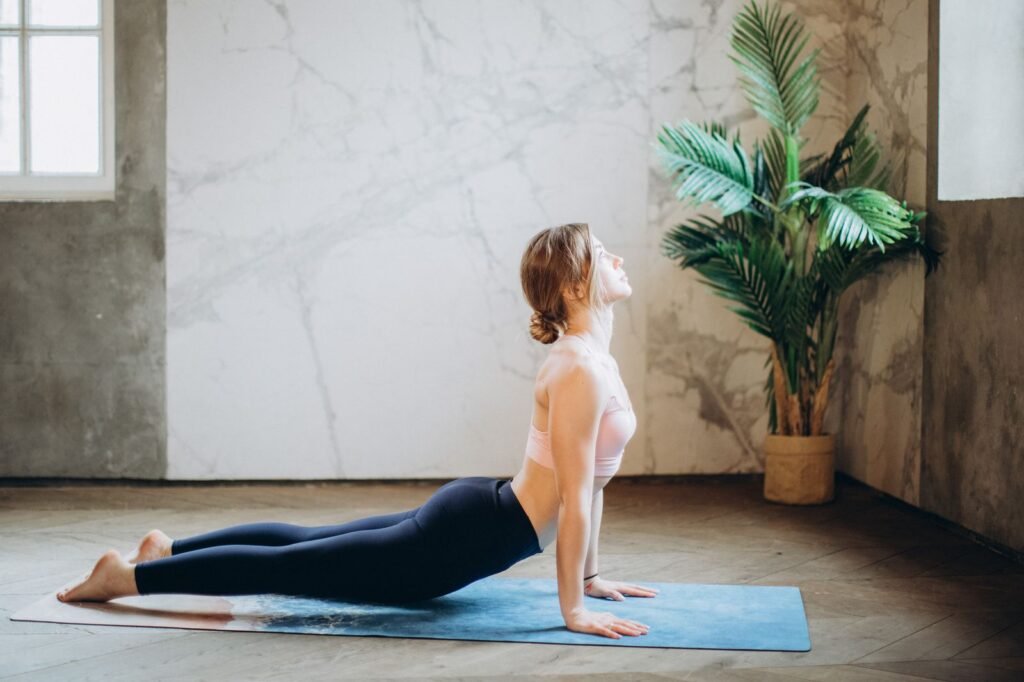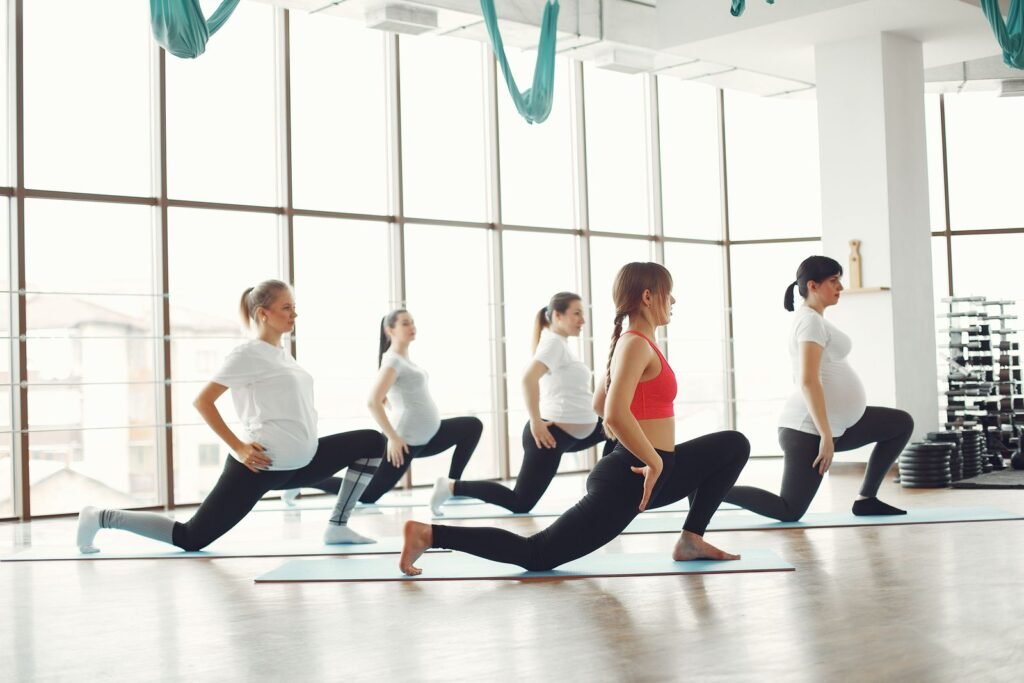
Postnatal yoga is a gentle movement practice designed for the weeks and months after childbirth, combining breathwork, restorative stretches, and slowly progressing core and pelvic floor work to help the body recover from pregnancy and delivery. Unlike a general fitness class, it accounts for loosened ligaments, abdominal separation, C-section healing, and postpartum fatigue, and it typically also creates space for bonding with your baby. Most practitioners can start with breathing and gentle pelvic floor awareness within the first couple of weeks postpartum, provided a doctor has confirmed there are no complications, with more active poses reintroduced gradually as strength and healing allow.
What Exactly Is Postnatal Yoga?
Postnatal yoga (also called postpartum yoga) adapts yoga for beginners principles to the postpartum period rather than functioning as a separate discipline. It borrows shapes from hatha, restorative, and gentle vinyasa traditions but resequences them around what a newly postpartum body actually needs: pelvic floor recovery, core reconnection, upper-back relief from feeding and carrying, and nervous system regulation during a famously sleep-deprived stretch of life. Sessions are usually slower-paced than vinyasa yoga, with more floor-based work and fewer deep backbends or intense core exercises in the earliest weeks. Many classes also welcome babies on the mat, which is part of why “postnatal yoga near me” is such a common search among new parents looking for an in-person community rather than a solo home practice.
How Is Postnatal Yoga Different From Prenatal Yoga?
Prenatal yoga and postnatal yoga sit on either side of birth, and the priorities flip. During yoga during pregnancy, the focus is on creating space for a growing belly, easing hip and lower-back discomfort, and preparing the breath and pelvis for labor. Postnatal yoga instead focuses on rebuilding: reconnecting to a core that has been stretched for nine months, restoring pelvic floor tone, and addressing the rounded-shoulder, forward-head posture that comes from constant feeding and holding a baby. If you were doing yoga for pregnant women before delivery, postnatal yoga is the natural next step, but it should not be treated as a simple continuation — the body’s needs, and its physical limitations, are genuinely different in the fourth trimester.
When Can You Safely Start Postnatal Yoga?
Timing depends heavily on delivery type and individual recovery, so this is one area where a blanket rule doesn’t serve anyone well. Many care providers clear gentle movement, including breathing exercises and pelvic floor awareness, within the first one to two weeks after an uncomplicated vaginal delivery, while more active postures are usually introduced after the six-week postpartum check-up. After a cesarean birth, healing an abdominal incision generally takes longer, and many practitioners wait until they’ve been cleared at their six-to-eight-week follow-up before attempting anything beyond seated breathing and very gentle stretches. Because every birth and recovery is different, the safest approach is always to get explicit sign-off from your obstetrician, midwife, or physical therapist before resuming any postnatal yoga poses, rather than relying on a fixed timeline.
What Are the Core Benefits of Postnatal Yoga?
The appeal of postnatal yoga goes well beyond flexibility. A 2024 systematic review examining yoga-based interventions during the postnatal period found associations with improved mood and psychological well-being for new mothers, adding to a growing body of research connecting movement-based mind-body practices with better postpartum mental health outcomes. Beyond the mental health angle, commonly reported benefits include gradual pelvic floor strengthening, improved core stability as the abdominal wall recovers from diastasis recti, relief from upper back and neck tension caused by nursing and carrying, better sleep quality when practiced consistently, and a structured, judgment-free space to reconnect with your body. It’s worth noting most of this evidence describes associations and self-reported improvement rather than guaranteed outcomes for every individual, so results vary by person, birth experience, and consistency of practice.
What Postnatal Yoga Poses Should You Start With?
The best postnatal yoga poses prioritize gentle activation over intensity, especially in the early weeks:
- Cat-cow — moving slowly between spinal flexion and extension on hands and knees helps mobilize a stiff lower back and reintroduces core awareness without strain.
- Seated deep breathing — with a hand on the belly, this helps you feel the diaphragm and pelvic floor working together, and it’s often the very first “exercise” cleared postpartum.
- Reclined pelvic tilts — lying on your back with knees bent, these gently re-engage the deep core (transverse abdominis) that stretched over pregnancy.
- Child’s pose — offers a restful stretch for the lower back and hips.
- Supported bridge pose — using a block or bolster under the hips, this can relieve lower-back tension from breastfeeding posture.
- Modified standing poses — as strength returns, gentle options like modified warrior or a supported forward fold can be layered in, ideally under the guidance of an instructor familiar with postpartum bodies.
These same fundamentals also show up in broader guidance on yoga poses for flexibility, though postpartum sequencing is deliberately more conservative.
How Should You Approach Diastasis Recti and Core Work?
Diastasis recti, a separation of the two sides of the abdominal rectus muscle, is extremely common after pregnancy and is one of the main reasons postnatal yoga sequencing differs from a general beginner’s class. Traditional core exercises like full sit-ups or deep backbends can increase intra-abdominal pressure and potentially worsen the separation if introduced too early, so postnatal-specific classes typically start with gentle transverse abdominis activation instead — think slow pelvic tilts and breath-led belly draws rather than crunches. If you’re unsure whether you have diastasis recti, a simple self-check (or a quick assessment from a postpartum physical therapist) can guide how conservatively you should approach core-focused postures. This is a good example of why generic yoga for back pain routines aren’t automatically appropriate for the postpartum body without modification.
Why Does Pelvic Floor Recovery Matter So Much?
Pregnancy and vaginal delivery place significant load on the pelvic floor, and even cesarean births involve nine months of a heavier uterus pressing down on these muscles. A weakened pelvic floor is commonly linked to issues like stress urinary incontinence (leaking when you cough, sneeze, or jump) and can also affect core stability more broadly, since the pelvic floor works as part of the same pressure system as the diaphragm and deep abdominals. Postnatal yoga typically incorporates gentle pelvic floor engagement cues, often paired with the breath, to help rebuild this connection gradually. If symptoms like leaking, heaviness, or pelvic pain persist, that’s a signal to consult a pelvic floor physical therapist rather than pushing through with yoga alone — a home or studio practice is complementary, not a replacement for clinical care when something feels genuinely off.
Can You Practice Postnatal Yoga With Your Baby?
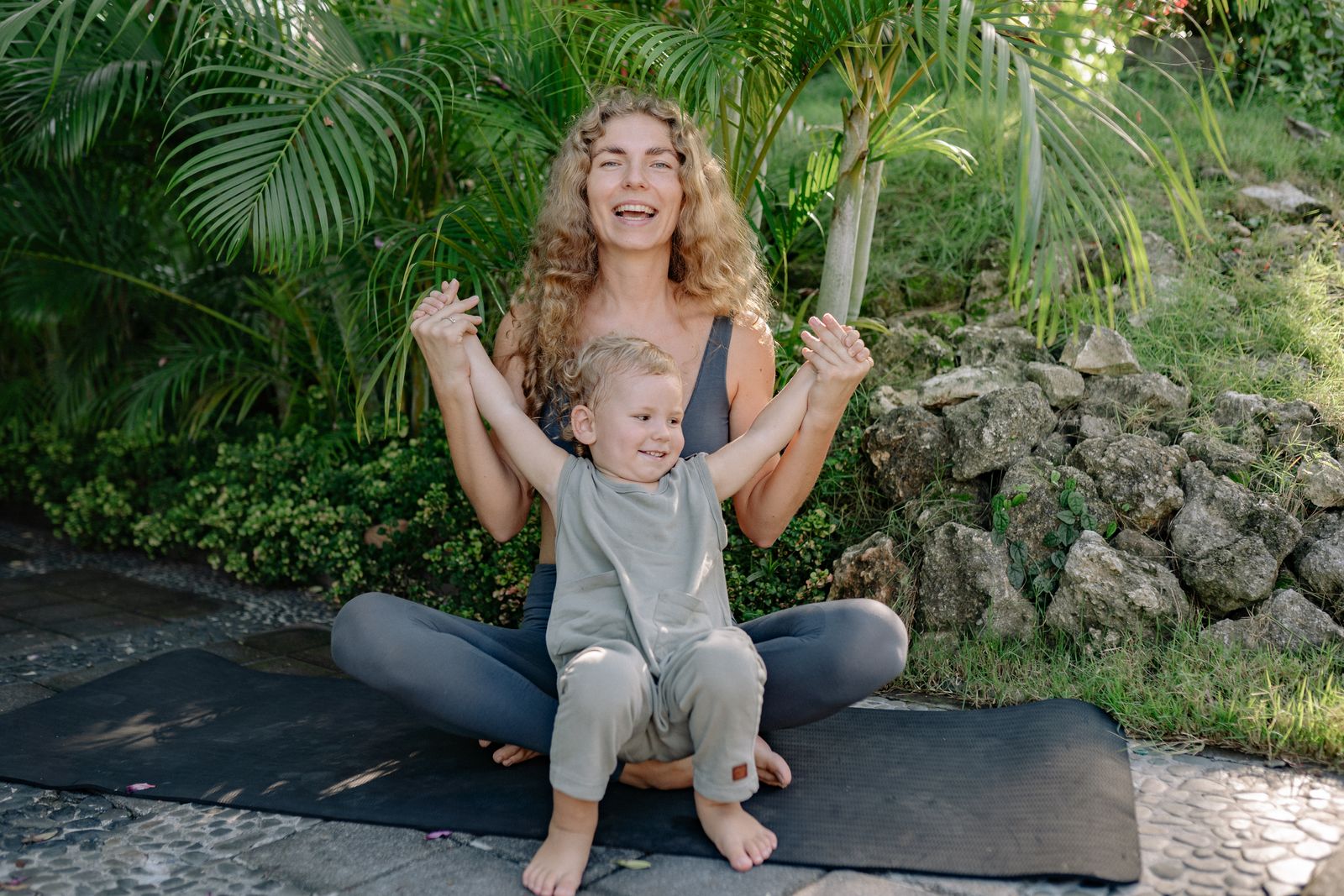
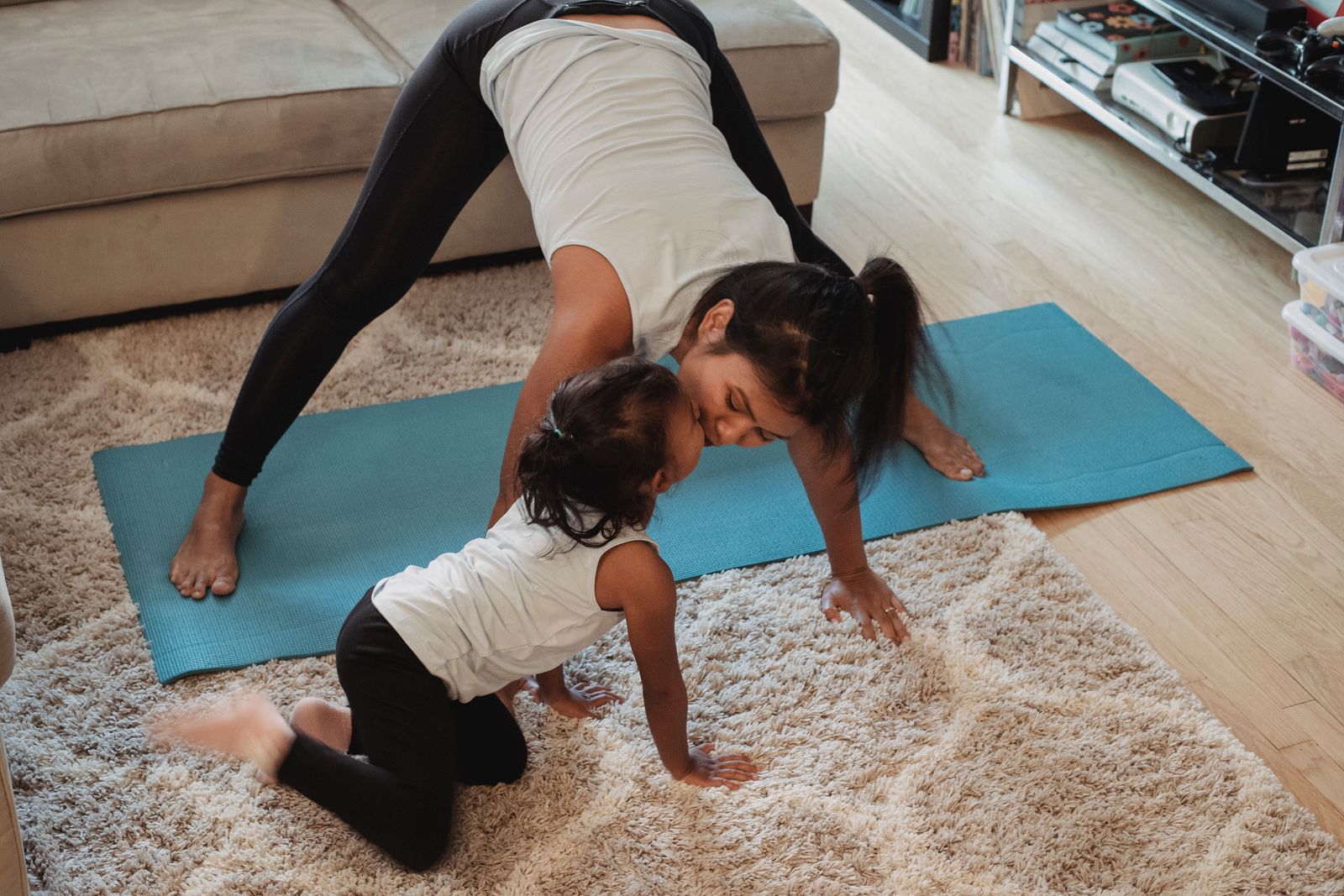
Yes, and this is one of the most distinctive features of postnatal yoga compared to other styles. Many in-person “postnatal yoga near me” classes explicitly welcome babies on the mat, incorporating them into certain poses — a baby resting on your shins during a gentle stretch, or being held during a supported squat. This mother-and-baby format serves two purposes: it solves the practical childcare problem that keeps many new parents from attending any class at all, and it doubles as a bonding and co-regulation practice, since babies often respond calmly to the slow breathing and movement happening around them. If you prefer practicing without your baby present, many studios and online yoga for beginners-style platforms offer baby-free sessions too, so the format is really a matter of preference rather than a fixed requirement.
What Should You Avoid in the Early Postpartum Weeks?
Certain categories of movement warrant extra caution in the early postpartum period. Deep twists and intense backbends can strain a core and pelvic floor that haven’t fully recovered. High-intensity flows, jumping transitions, or fast power yoga-style sequences are generally best postponed until you’ve been cleared for more vigorous exercise, typically after the six-week check-up at the earliest. Deep forward folds and inversions can also feel uncomfortable or inadvisable depending on healing status, particularly after a cesarean delivery. Beyond specific poses, general red flags to stop and check in with a provider include sharp pain, a visible bulge along the midline of the abdomen, increased bleeding, or dizziness during practice. Postnatal yoga should feel restorative and manageable, not depleting — if a session leaves you more exhausted than before, that’s worth reassessing with your instructor.
How Does Postnatal Yoga Support Mental Health?
The postpartum period carries a well-documented risk of mood disturbances, and research has increasingly explored movement-based interventions as a complementary support alongside clinical care. A 2024 systematic review examining yoga interventions during the postnatal period reported associations between yoga practice and improved measures of maternal well-being and mood. The proposed mechanisms are fairly intuitive: slow diaphragmatic breathing activates the parasympathetic nervous system, dedicated practice time offers a rare moment of uninterrupted focus, and community classes reduce the isolation that often accompanies early parenthood. That said, yoga is best understood as a supportive practice alongside, not a substitute for, professional care if you’re experiencing symptoms of postpartum depression or anxiety — if you notice persistent low mood, intrusive thoughts, or loss of interest in things you’d normally enjoy, please speak with your healthcare provider.
How Do You Choose Between a Studio Class and Online Postnatal Yoga?
Both formats have real advantages depending on your circumstances:
| Studio Class | Online Postnatal Yoga |
|---|---|
| Built-in community with other new parents | No logistics of getting a newborn out the door |
| Hands-on adjustments from an instructor who can see your alignment in real time | Pause anytime for a feed or nappy change without disrupting a group class |
| Often a baby-friendly structure built around naps and feeds | Practice at 6 a.m. or 9 p.m., whenever your baby actually sleeps |
Many new parents find a hybrid approach works well: an occasional in-person class for community and form-checking, supplemented by online sessions for the days when leaving the house simply isn’t realistic.
How Should You Sequence a Postnatal Yoga Practice?
A well-structured postnatal session typically follows a predictable arc: begin with a few minutes of seated or reclined breathing to settle the nervous system and connect with the pelvic floor, move into gentle mobility work like cat-cow and neck rolls to release tension from feeding posture, add slow core reconnection through pelvic tilts and modified bridges, layer in a small number of standing or supported poses as strength allows, and close with a restorative pose like legs-up-the-wall or a supported child’s pose. This differs meaningfully from the pacing you’d find in other types of yoga, where a more vigorous class might open with sun salutations. In postnatal yoga, the opening minutes are almost always about regulation and reconnection rather than building heat. Breath work carries particular weight in this sequencing, and reviewing pranayama breathing techniques can help you understand why the breath, not the pose, is doing much of the recovery work.
How Does Postnatal Yoga Compare to Other Postpartum Fitness Options?
New parents often ask how postnatal yoga stacks up against options like postnatal Pilates, walking, or general strength training. The honest answer is that these aren’t competing choices — they address different needs and can be sequenced together as recovery progresses. Postnatal yoga’s particular strength is in combining breathwork, gentle mobility, and pelvic floor reconnection in one low-impact session, which makes it a sensible starting point in the earliest weeks before more demanding training is appropriate. As you progress past initial recovery, you might combine a postnatal yoga foundation with the same principles you’d apply to the broader benefits of yoga — building strength gradually, respecting rest, and layering intensity only once the basics feel stable. If your longer-term goal includes activities like Zumba or more dynamic training, postnatal yoga is a reasonable, joint-friendly bridge back to that level of activity rather than a permanent ceiling.
What Equipment Do You Need to Get Started?
One of the appeal points of postnatal yoga is how little equipment it requires. A supportive, non-slip yoga mat is the only essential. A couple of yoga blocks are useful for supported bridge pose and to bring the floor “closer” during forward folds when flexibility is still limited. A bolster or a firm pillow helps prop the hips or chest in restorative poses like supported child’s pose or reclined bound angle. A rolled blanket can support the knees during floor-based work. None of this needs to be purchased specially — most households already have suitable substitutes, which makes postnatal yoga one of the more accessible entry points into yoga for beginners generally, postpartum or not.
Questions People Ask About Postnatal Yoga
How soon after birth can I start postnatal yoga?
Gentle breathing and pelvic floor awareness can often begin within the first couple of weeks after an uncomplicated vaginal delivery, once cleared by your provider. More active postures are typically introduced after the six-week postpartum check-up, and cesarean recovery generally needs additional healing time before resuming movement beyond light stretching.
Is postnatal yoga safe if I had a C-section?
Postnatal yoga can be safe after a cesarean birth, but timing and pose selection matter more than with a vaginal delivery. Most practitioners wait for clearance at their six-to-eight-week follow-up before anything beyond gentle breathing, and poses that strain the abdominal incision, like deep twists or core-intensive shapes, should be avoided until fully healed.
Can postnatal yoga help with diastasis recti?
Postnatal yoga classes designed with postpartum bodies in mind typically include gentle transverse abdominis activation exercises, like pelvic tilts and breath-led belly draws, which are commonly used to support core reconnection after diastasis recti. Deep or intense core exercises are usually avoided until the separation has sufficiently closed, ideally with guidance from a postpartum physical therapist.
Do I need to bring my baby to a postnatal yoga class?
No, it’s entirely optional. Many “postnatal yoga near me” classes are baby-friendly and even build babies into certain poses for bonding, but baby-free sessions and online postnatal yoga options are widely available if you’d prefer uninterrupted practice time or don’t have a baby who tolerates being held still.
What are the best postnatal yoga poses for beginners?
Cat-cow, reclined pelvic tilts, child’s pose, seated diaphragmatic breathing, and supported bridge pose are commonly recommended starting points. These postnatal yoga poses prioritize gentle mobility and core reconnection over strength or flexibility, making them appropriate even in the earliest cleared weeks postpartum.
How long should a postnatal yoga session last?
Many postnatal yoga sessions run 20 to 40 minutes, which tends to be realistic given newborn sleep and feeding schedules. Shorter, more frequent sessions are generally considered more sustainable and effective for building a consistent postpartum practice than infrequent longer classes.
Try This for Yourself
If you’re ready to rebuild strength, ease postpartum tension, and reconnect with your body at your own pace, FitStrot’s online yoga classes offer guided sessions you can practice on your own schedule, whether that’s during a nap or after your baby’s asleep for the night. Explore a class designed to meet you exactly where your postpartum recovery is today.
Related reading: prenatal yoga, yoga during pregnancy, yoga for pregnant women, yoga for beginners, and FitStrot’s online yoga classes.