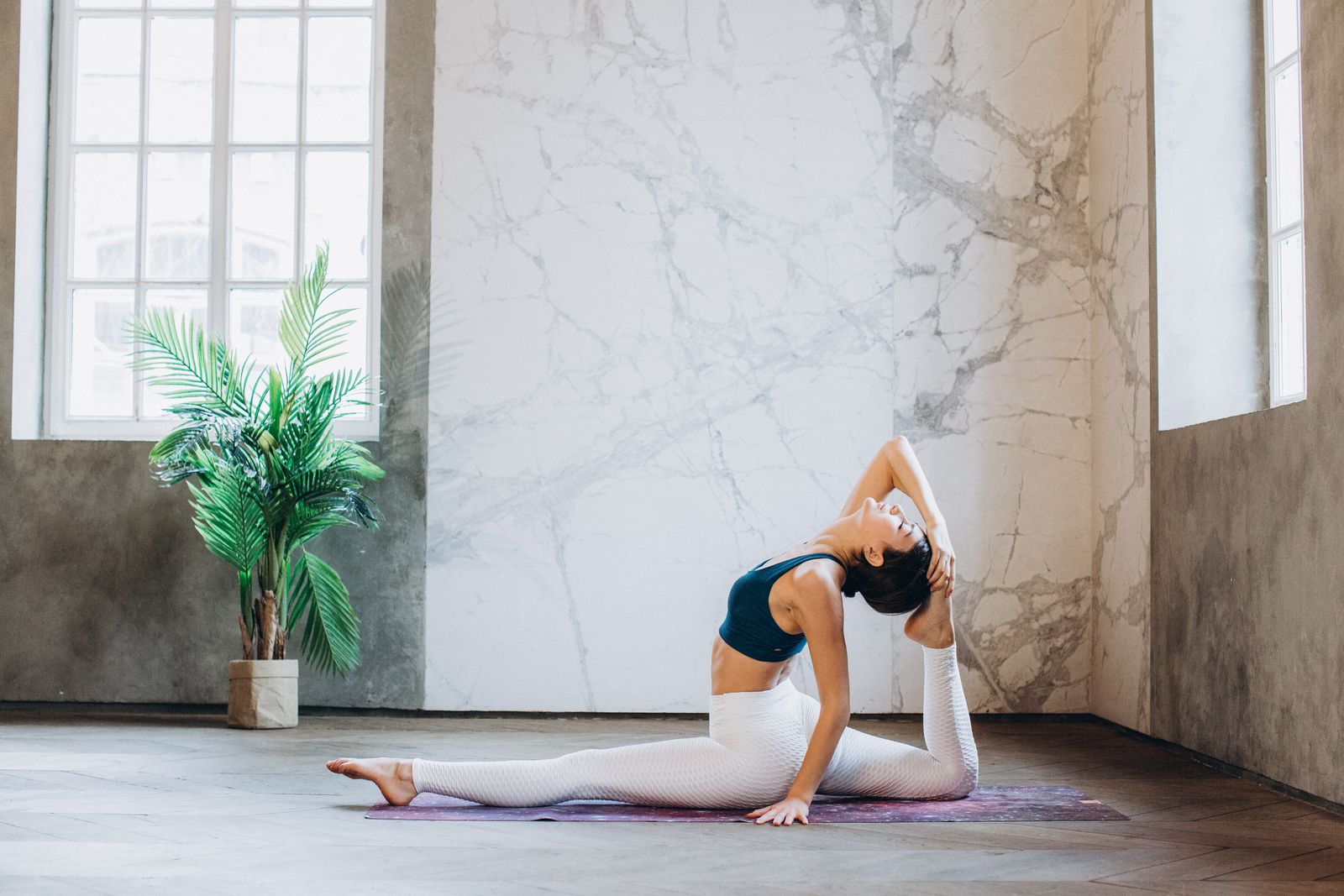
Hanumanasana, commonly known as Monkey Pose or the yoga full splits, is an advanced seated posture in which the front leg extends straight forward, the back leg extends straight behind, and both hips square to the front of the mat while the torso stays upright and the arms reach overhead. Named after the Hindu monkey deity Hanuman, it is one of the deepest hip openers in the entire yoga poses catalogue, requiring significant length in the hamstrings, hip flexors, and groin along with pelvic stability. It is not a beginner pose, but almost anyone can work toward it safely using props, patience, and a structured warm-up routine.
What Does Hanumanasana Mean and Where Does the Name Come From?
“Hanumanasana” combines “Hanuman,” the revered monkey god of Hindu mythology, with “asana,” meaning seat or pose. According to the Ramayana, Hanuman is commonly said to have made an extraordinary leap across the ocean from India to Lanka in search of Sita, and the full-splits shape of this asana is traditionally understood to represent that legendary stride, front leg forward and back leg trailing, frozen mid-leap. Whether or not you know the mythology, the story is a useful mental image: this pose is about reach, commitment, and controlled extension rather than brute force. It sits alongside other devotional poses in the tradition, similar to how Anjaneyasana (Low Lunge, also named for Hanuman) acts as a natural stepping stone toward the full expression.
How Do You Get Into Hanumanasana Step by Step?
Start from a low lunge with your front foot forward and back knee grounded, similar to the setup used before Surya Namaskar transitions. Walk your front heel forward slowly while sliding the back knee backward, keeping both hip points squared toward the front edge of your mat. Support your weight on your fingertips or two yoga blocks placed under each hand. As your front leg straightens, flex the front foot and keep a soft microbend in the knee to protect the joint. Lower the back thigh and the front of the back foot toward the floor only as far as your tissue allows, and pause well before any pulling or pinching sensation. Many practitioners never reach the floor, and that is a completely valid variation, not a failure.
Which Muscles Does Hanumanasana Stretch and Strengthen?
The front leg’s hamstrings (semitendinosus, semimembranosus, and biceps femoris) lengthen intensely, while the back leg’s hip flexors, primarily the psoas and rectus femoris, are stretched as the thigh extends behind the body. The adductor group along the inner thigh of the front leg and the quadriceps of the back leg are also heavily engaged. Meanwhile, the core, especially the transverse abdominis and obliques, works isometrically to keep the pelvis level and prevent the torso from tipping forward or rotating. This combination is why Hanumanasana is often used as a benchmark pose for overall lower-body flexibility, much like Tadasana is used as a benchmark for standing alignment.
What Are the Benefits of Practicing Hanumanasana?
Regular, careful practice of Hanumanasana is associated with several benefits commonly cited by yoga teachers and physical therapists working with flexibility training:
- Improved hamstring and hip flexor flexibility, which can support better stride length for runners and reduce compensatory strain elsewhere in the kinetic chain.
- Greater hip mobility that carries over into daily movements like bending, squatting, and getting up from the floor.
- Enhanced pelvic stability and core control, since holding the pose demands constant micro-adjustments from the deep stabilizing muscles.
- A mental focus and patience practice, since the pose cannot be forced and rewards slow, breath-led progress over weeks or months.
- Symbolic grounding in yoga philosophy, connecting movement practice to the devotional stories that inform many pose names, similar to the meditative intent behind yoga philosophy more broadly.
What Are Common Mistakes in Hanumanasana?
The most frequent error is dropping into the pose too quickly without an adequate warm-up, which increases the risk of straining the hamstring at the sit bone attachment or overstretching the groin. Another common mistake is letting the front knee hyperextend by locking it aggressively instead of keeping a soft microbend. Many practitioners also let the hips rotate open rather than staying squared to the front of the mat, which reduces the stretch’s effectiveness and can torque the sacroiliac joint. Finally, rushing to touch the floor rather than using blocks under the hips and hands often leads to compensations through the lower back. Slow, prop-supported progress modeled on the pacing used in a well-structured beginner yoga poses sequence is safer and more effective long term.

What Poses Should You Practice Before Attempting Hanumanasana?
Because Hanumanasana demands so much from the hamstrings and hip flexors simultaneously, a preparatory sequence matters more here than in most poses. Useful building blocks include Low Lunge (Anjaneyasana) to open the hip flexors, Half Splits (Ardha Hanumanasana) to isolate the hamstring stretch with the back knee still bent for support, Pyramid Pose to lengthen the hamstring in a folded position, and Vrksasana or other balance poses to build the single-leg stability that supports the pelvis during the final shape. Runners and cyclists in particular benefit from adding hip-flexor-focused stretches, since tight iliopsoas muscles from repetitive forward motion are one of the biggest blockers to a comfortable Hanumanasana.
How Long Does It Take to Achieve Full Hanumanasana?
There is no fixed timeline, and comparing your progress to someone else’s is one of the fastest ways to get injured in this pose. Flexibility depends on genetics, joint structure, prior activity history, and how consistently you practice. Some practitioners with naturally mobile hips and hamstrings reach a full expression within a few months of dedicated practice, while others work toward it for years, or choose to stay in Half Splits indefinitely as their full expression, which is equally valid. What matters far more than the calendar is consistency: three to four short sessions a week of gentle, prop-supported stretching tends to outperform one intense session that pushes too hard, too soon.
What Props Make Hanumanasana Safer and More Accessible?
Yoga blocks are the single most useful prop for this pose. Placing a block under each hand raises the torso and takes pressure off the hips, letting you control exactly how far you descend. A block or thickly folded blanket under the front hip provides support so you are not sinking your full body weight into an unready hamstring. A folded blanket under the back knee cushions the kneecap and shin against a hard floor. Some practitioners also use a strap looped around the front foot in the earlier stages to maintain length in the leg while the hip continues to open. Props are not a sign you are “not flexible enough”; experienced teachers use them regularly to fine-tune alignment.
Is Hanumanasana Safe for Beginners?
Hanumanasana is generally categorized as an advanced or intermediate-advanced pose and is not recommended as an entry point for someone new to yoga. Beginners are better served by building a foundation with standing poses, gentle hip openers, and hamstring stretches over several weeks before approaching even the Half Splits variation. If you are new to a home or studio practice, starting with a broader grounding in yoga for beginners and gradually layering in hip-opening work is a far safer path than attempting the full splits shape early. Anyone with a current or recent hamstring strain, groin injury, or hip labral issue should avoid this pose until cleared by a healthcare provider or physical therapist.
How Does Hanumanasana Fit Into a Yoga Sequence?
Hanumanasana is almost always placed toward the end of a well-warmed practice, never at the start. A typical sequencing approach begins with a full-body warm-up such as Surya Namaskar (Sun Salutations) to raise tissue temperature and circulate synovial fluid through the joints, moves through standing poses and lunges that open the hip flexors, and only then approaches Half Splits and eventually full Hanumanasana. After the pose, gentle counter-stretches such as a supported bridge or a seated forward fold help the nervous system settle before moving into any closing relaxation. Attempting this pose cold, straight from a seated meditation or a still start, significantly raises injury risk.
What Is the Difference Between Hanumanasana and Ardha Hanumanasana?
Ardha Hanumanasana, or Half Splits, is the foundational precursor to the full pose. In Half Splits, the back knee stays bent and grounded under the hip while the front leg straightens and the torso hinges forward over it, isolating a hamstring stretch without demanding hip flexor length from the back leg at the same time. Full Hanumanasana extends both legs simultaneously and keeps the torso upright, which is a substantially bigger demand on hip flexor length, pelvic control, and balance. Many practitioners spend months in Half Splits, and it remains a legitimate, complete practice on its own rather than merely a stepping stone.
Can Hanumanasana Help With Running or Sports Performance?
Runners, dancers, martial artists, and footballers often use Hanumanasana-family stretches to address the tight hip flexors and hamstrings that come from repetitive forward-motion sports. Improved hip extension can support a longer, more efficient stride, while balanced flexibility between the front and back of the hip may help reduce compensatory strain on the lower back and knees. That said, static splits-style stretching is generally most useful after activity rather than as a pre-workout warm-up, since deep static stretching before explosive movement is commonly associated with temporarily reduced power output. Pairing this pose with dynamic mobility work, similar to the movement patterns in Vinyasa yoga, tends to serve athletes better across a full week of training.
What Are the Variations of Hanumanasana?
Several variations let you adapt the pose to your body and goals. Supported Hanumanasana uses blocks under the hips and hands as described above. Reclined Hanumanasana takes the shape lying on your back with a strap around the front foot, removing the balance and core demands entirely so you can isolate the stretch. Wall-supported Hanumanasana uses a wall behind the back leg for added stability. Mermaid-style variations add a back backbend by catching the back foot with the same-side hand once the front leg is fully extended, though this addition should only be attempted once the base shape is comfortable and stable.
Questions People Ask About Hanumanasana
Is Hanumanasana the same as doing the splits?
Yes, functionally Hanumanasana is the yoga name for the front splits, with one leg extended forward and the other extended behind while the torso stays upright and the hips square forward. It differs slightly from a gymnastic or dance split in its emphasis on breath, alignment cues, and using props to protect the joints rather than forcing maximum depth.
Why can’t I get my hips to the floor in Hanumanasana?
Hip-to-floor contact depends on hamstring length, hip flexor flexibility, and hip joint structure, all of which vary by individual. Tight hip flexors on the back leg are usually the biggest limiting factor, not lack of effort. Using blocks under the hips and consistently practicing preparatory poses like Half Splits and Low Lunge will gradually increase your range over weeks or months.
How often should I practice Hanumanasana to improve flexibility?
Three to four short sessions per week tend to work better than one long, intense session, since connective tissue adapts gradually and needs recovery time between deep stretches. Consistency over months matters far more than the intensity of any single session.
Can Hanumanasana cause injury?
Yes, if approached without warming up or pushed past a comfortable range, Hanumanasana can strain the hamstring at the sit bone, overstretch the groin, or aggravate the hip joint. Using props, stopping well short of any pulling sensation, and building up through preparatory poses substantially reduces this risk.
Should I do Hanumanasana every day?
Daily gentle preparatory work, such as Half Splits or hip flexor stretches, is generally fine for most people, but pushing into a deep or full expression of Hanumanasana every single day without rest may not allow connective tissue adequate recovery time. Listening to how your hips and hamstrings feel session to session is the best guide.
Try This for Yourself
Reading about Hanumanasana is a useful start, but building the hip and hamstring flexibility it demands is best done with guided, real-time feedback on your alignment. If you would like a structured path toward this pose, with props, modifications, and pacing built around your current mobility, join a live session with FitStrot’s online yoga classes and work with an instructor who can adjust the practice to your body.
Related reading: explore the full yoga poses library, learn the foundational Surya Namaskar sequence, ground your alignment with Tadasana, build balance with Vrksasana, or start your journey with FitStrot’s online yoga classes.