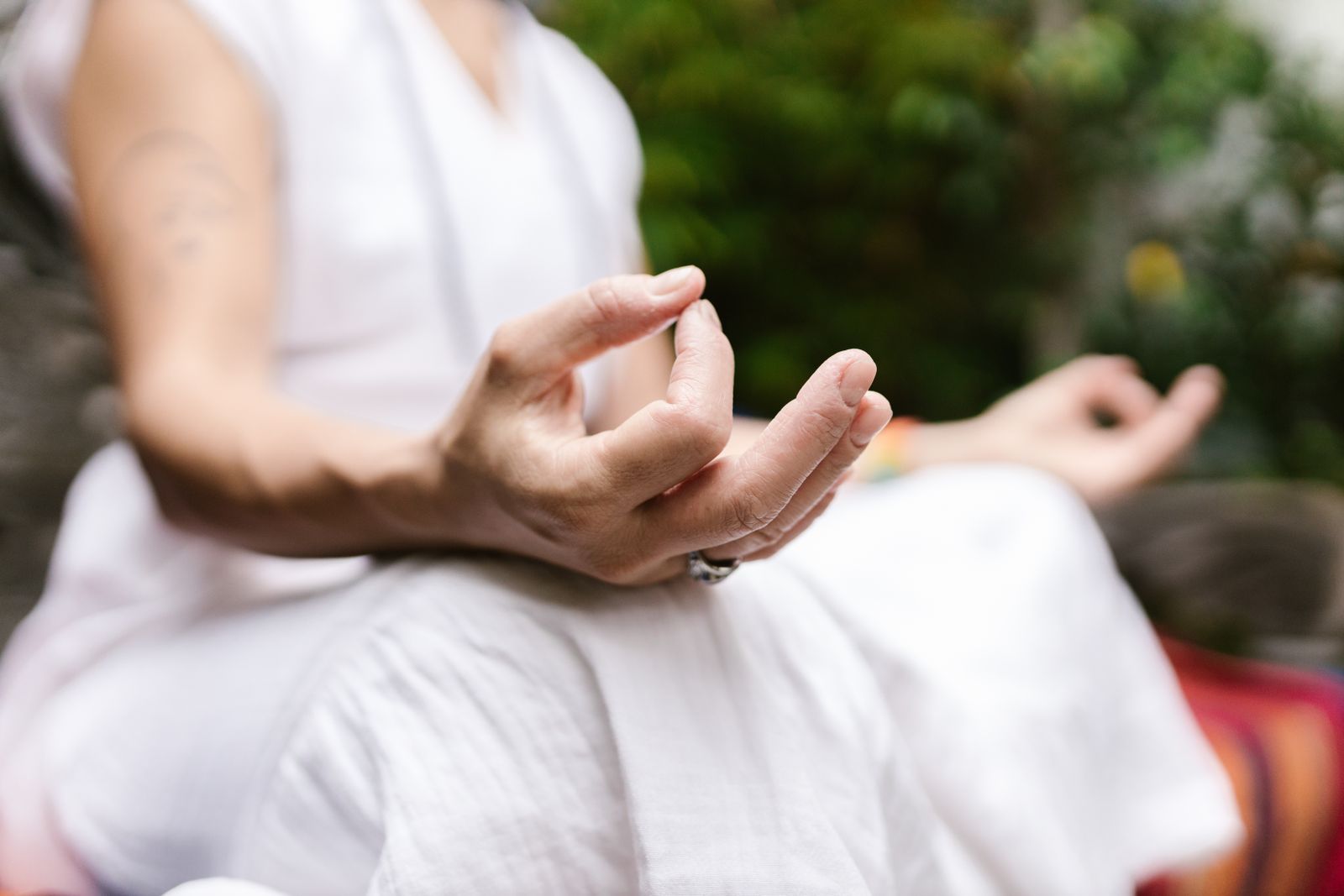
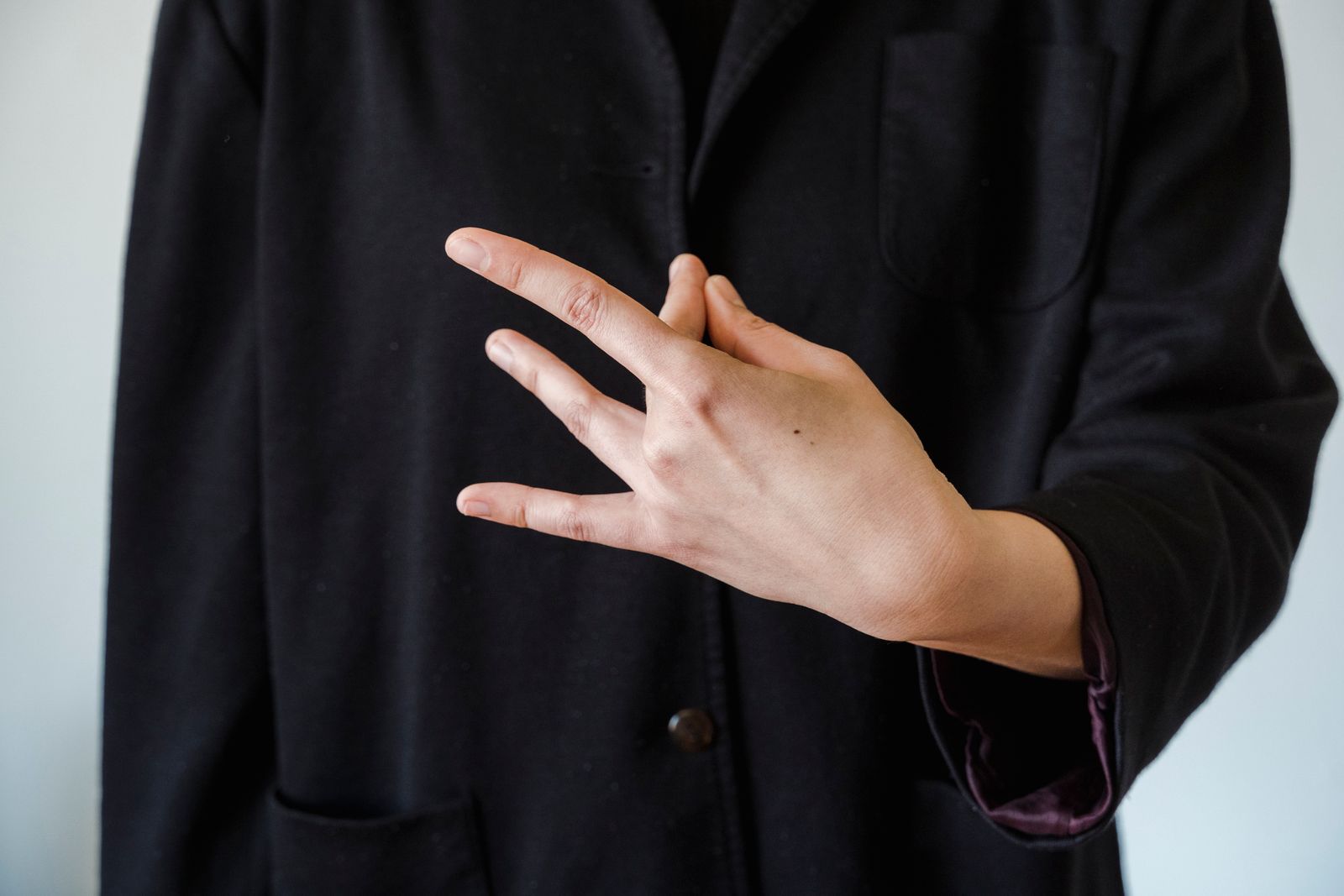
Yoni mudra is a seated hand gesture in which the palms meet at the navel, the thumbs point upward, and the remaining fingers interlace and curl inward to form a diamond-like shape resembling a womb or seed. Also called Jyoti Mudra (“gesture of light”), it is traditionally practiced with the eyes closed to withdraw attention from the outside world and turn it inward, similar to the sensory withdrawal described in pratyahara. Practitioners use it to steady the mind before meditation, and it is commonly paired with slow, deep breathing for five to fifteen minutes. Most people can learn the hand shape in under a minute, though the deeper meditative effect builds with consistent practice over several weeks.
What Does Yoni Mudra Mean?
The word “yoni” is Sanskrit for womb, source, or origin, and “mudra” means seal or gesture. Together, yoni mudra translates roughly to “womb seal” or “gesture of the source,” pointing to the idea of returning to a still, protected inner space, much like a fetus resting before birth. Some teachers also call it Jyoti Mudra, meaning “gesture of light” or “inner light,” because the diamond-shaped gap formed by the fingers is said to represent a window through which the practitioner observes the subtle light of awareness behind closed eyes.
This mudra belongs to a broader family of hand and finger gestures used throughout hatha yoga and tantric practice to direct prana, or life energy, through the body. Unlike simpler mudras such as gyan mudra, which involves only the thumb and index finger, yoni mudra uses both hands together in a more elaborate seal, which is why it is usually reserved for seated meditation rather than active asana practice.
How Do You Perform Yoni Mudra Correctly?
Begin in any comfortable, stable seated posture with the spine naturally erect, such as Sukhasana (easy pose) or Padmasana (lotus pose) if that is accessible to your knees and hips. Rest your hands on your knees for a moment, close your eyes, and take a few natural breaths to settle. Once you feel steady, follow these steps to form the seal:
- Bring both hands together in front of your navel or lower abdomen.
- Interlace the middle, ring, and little fingers of both hands, tucking them inward toward the palms.
- Extend the index fingers and press them together, pointing them downward or curling them to touch, depending on the variation you were taught.
- Point both thumbs straight up and press the thumb tips together, letting the palm heels separate slightly so a small diamond or teardrop-shaped gap opens between the index fingers and thumbs.
- Rest this hand shape gently against or near the lower belly, keep the shoulders relaxed, and hold the position while breathing slowly through the nose.
What Are the Different Variations of Yoni Mudra?
Teachers describe a few small variations, and none is more “correct” than another; the differences mostly reflect which lineage passed down the technique. In one common version, the index fingers point downward and touch at the tips, forming a more elongated diamond. In another, the index fingers curl inward to touch the base of the thumbs, creating a rounder gap. Some practitioners keep the joined hands resting lightly in the lap, while others hold them a few inches away from the body at navel height without touching the torso. Beginners should try a version taught by a qualified instructor first, then experiment gently once the basic shape feels stable and comfortable to hold for several minutes.
What Happens During Yoni Mudra Practice?
Once the hand seal is formed, most traditional instructions ask you to close your eyes, apply gentle inward pressure with the fingertips against the eyelids or eye sockets (only if you have been shown this safely and have no eye conditions), and observe the field of darkness in your inner vision. As the eyes and mind settle, many practitioners report perceiving faint points or flickers of light in this darkness, which is the basis for the alternate name Jyoti Mudra. The instruction is not to chase or analyze this light, but simply to rest attention on it, similar to the object-focused concentration used in trataka meditation. This inward gazing is typically paired with slow diaphragmatic breathing, sometimes counted or extended using ratios similar to those taught in pranayama practice.
What Are the Benefits of Yoni Mudra?
Yoni mudra is most often taught as a tool for sensory withdrawal and mental focus. By physically blocking or softening visual input and turning attention toward the breath and inner darkness, practitioners commonly report a faster transition into a meditative state compared with simply closing the eyes and sitting. This makes it a popular gesture to use at the start of a longer pranayama or seated meditation session.
Traditional yoga texts and many contemporary teachers also associate this mudra with calming the nervous system, since the combination of stillness, closed eyes, and slow breathing tends to lower physiological arousal in the same way other quiet seated practices do. Some schools additionally connect yoni mudra to reproductive and hormonal wellbeing, given its symbolic association with the womb, though these specific physiological claims are rooted in traditional teaching rather than clinical research, so it is best to think of the mudra primarily as a concentration and relaxation practice rather than a treatment for any medical condition.
How Does Yoni Mudra Affect Breath and Prana?
In yogic philosophy, mudras are described as ways of “sealing” energy so that prana, the subtle life force, is redirected inward rather than dispersed outward through the senses. Yoni mudra is considered particularly effective for this because closing off external light and sound, even briefly, reduces the sensory chatter that usually pulls attention outward. Combined with slow nasal breathing, the gesture is traditionally taught as a way to prepare the mind for deeper stages of concentration, sometimes as a precursor to more advanced pranayama techniques or to kriyas such as those described in shatkarma kriyas.
When Is the Best Time to Practice Yoni Mudra?
Traditional guidance favors early morning practice, particularly the hours before sunrise, when the mind is naturally quieter and less crowded with the day’s activity. Many teachers recommend practicing for ten to thirty minutes at a stretch, either as a standalone sitting or folded into the early part of a longer meditation or pranayama session. If early mornings are not realistic, practicing in the evening before sleep is a reasonable substitute, since the calming effect can also help transition the nervous system toward rest. Consistency across days tends to matter more than the exact clock time chosen.
How Long Should You Hold Yoni Mudra?
Beginners typically start by holding the hand seal for five to ten minutes while focusing on breath and inner stillness, gradually working up to fifteen or twenty minutes as the hands and shoulders adapt to the position. There is no fixed rule that a longer hold is automatically better; what matters more is that the mind remains reasonably settled during the practice rather than restless or straining. If your fingers cramp or your shoulders tense noticeably, it is a sign to shorten the session and rebuild duration gradually over subsequent days.
Who Should Avoid or Modify Yoni Mudra?
Anyone with a current eye condition, recent eye surgery, glaucoma, or high intraocular pressure should skip the version of the practice that involves any pressure near the eyes, and should check with an eye care professional before attempting it at all. Pregnant practitioners are often advised to practice the hand seal without deep abdominal pressure and to keep sessions gentle, since some traditional teachings caution against certain pranayama intensities during pregnancy; a qualified prenatal-aware instructor can advise on safe adaptations. People with significant hand, wrist, or shoulder injuries may find the interlaced finger position uncomfortable and can modify by resting the hands more loosely in the lap while still closing the eyes and focusing inward.
What Are Common Mistakes in Yoni Mudra?
A few recurring errors can undermine the calming effect of the practice:
- Gripping the fingers too tightly, which creates tension in the forearms and shoulders and distracts from the calming intent of the practice; the seal should be firm but relaxed, similar to how you would hold a small object without crushing it.
- Slouching the spine forward once the eyes close, which restricts breathing and undermines the alertness the posture is meant to support.
- Rushing straight into the mudra without first settling the breath, which tends to produce a restless rather than meditative experience.
- Applying strong or prolonged pressure near the eyes without proper guidance, which can cause discomfort or irritation; gentle awareness of the inner darkness is enough for most people, with or without light touch.
How Does Yoni Mudra Compare to Other Meditation Mudras?
Yoni mudra differs from simpler single-hand gestures like gyan mudra or chin mudra, which involve only touching the thumb to another finger while the hands rest openly on the knees, often used throughout an entire asana or pranayama session. Yoni mudra is more involved, using both hands together in a closed seal typically held during a dedicated period of inward-focused sitting rather than throughout an active practice. It is also distinct from mudras used within specific asanas, since it stands alone as a meditation tool rather than accompanying a physical pose like Samakonasana or Talasana (Palm Tree Pose).
How Does Yoni Mudra Fit Into a Broader Yoga Practice?
Yoni mudra is rarely taught as a complete practice on its own. It fits most naturally at the close of an asana sequence, once the body has been warmed and settled through movement, or at the start of a seated pranayama and meditation block. A typical home session might move through a short sequence of standing and seated yoga poses, transition into a few rounds of slow breathing, and finish by sitting quietly in yoni mudra for ten to fifteen minutes before opening the eyes. Practicing this way within a beginner yoga sequence gives the nervous system time to downshift gradually rather than jumping straight from an active pose into deep stillness.
Can Yoni Mudra Be Combined With Other Techniques?
Yes, and it is commonly layered with other subtle practices rather than used in isolation. Many teachers introduce it alongside trataka, using yoni mudra afterward to internalize the point of light observed during open-eyed candle gazing. It also pairs naturally with slow-count breathing techniques from pranayama, and some practitioners use it during the stillness that follows practices like jal neti or other shatkarma kriyas, once the body and breath feel clear. If you practice within a style like hatha yoga, yoni mudra often appears near the very end of class, just before final relaxation.
Is There Any Research Behind Yoni Mudra?
Yoni mudra comes from traditional hatha yoga and tantric texts rather than modern clinical research, and most of what is written about its specific effects on hormones, fertility, or the nervous system reflects centuries-old yogic teaching passed through lineages rather than controlled scientific studies. Broader research on meditation and slow-breathing practices does support benefits like reduced stress reactivity and improved subjective calm, and it is reasonable to expect yoni mudra to contribute to those general effects given its sensory-withdrawal and breath-focused design. However, specific claims about fertility or hormonal regulation should be treated as traditional teaching rather than an established medical outcome, and anyone with a fertility or hormonal health concern should consult a qualified physician rather than relying on the mudra alone.
Questions People Ask About Yoni Mudra
What is the difference between yoni mudra and Jyoti mudra?
They refer to the same hand gesture. “Yoni mudra” emphasizes the womb-like shape of the hands, while “Jyoti mudra” emphasizes the inner light some practitioners perceive with eyes closed. Different teachers and lineages simply prefer one name over the other, and both describe the identical practice of sealing the hands and turning attention inward.
Can beginners practice yoni mudra without a teacher?
Yes, the basic hand shape and seated breathing can be learned safely from clear instructions and practiced for short sessions of five to ten minutes. However, anyone wanting to add eye pressure, extended holds, or pair it with intensive pranayama should first learn from a qualified instructor, especially if they have any eye, cardiovascular, or respiratory condition.
Does yoni mudra help with anxiety?
Many practitioners find it calming because it combines slow breathing, closed eyes, and reduced sensory input, all of which are associated with lowered stress reactivity in general meditation research. It is reasonable to use it as one tool within a broader anxiety-management routine, but it should not replace professional care for diagnosed anxiety disorders.
How is yoni mudra different from a regular seated meditation?
Regular seated meditation can be done with hands resting openly on the knees, while yoni mudra specifically interlaces the fingers into a sealed, womb-like shape believed to intensify inward focus. The mudra adds a structured hand position and, in some traditions, gentle eye pressure, giving practitioners a more defined technique than simply sitting quietly.
Is yoni mudra safe during menstruation?
Yes, for most people the seated hand gesture itself is gentle and does not involve the inversions or intense core engagement that some traditions caution against during menstruation. If a particular sequence pairs the mudra with strenuous pranayama or postures, it is reasonable to keep those portions lighter and focus on the calming, seated aspect of the practice instead.
How soon will I notice the calming effects of yoni mudra?
Some practitioners notice a subtle settling of the mind within the first few minutes of a single session, particularly if they arrive already relaxed from prior asana or breathing practice. The deeper, more consistent calming effect that many long-term practitioners describe tends to build gradually over several weeks of regular, short daily sessions rather than appearing after just one sitting.
Try This for Yourself
Reading about hand position and breath timing only goes so far. If you want real-time feedback on your posture, breathing rhythm, and how to build yoni mudra into a complete practice safely, guided instruction makes the difference between guessing and progressing. Explore FitStrot’s online yoga classes to learn yoni mudra and other meditation techniques with personalized guidance from home.
Related reading: Yoga Poses | Talasana (Palm Tree Pose) | Hastapadasana | Samakonasana | Online Yoga Classes