Trataka meditation is a yogic concentration technique that involves gazing steadily at a single point — most commonly a candle flame — without blinking, until the eyes water, and then closing the eyes to hold the afterimage in the mind. Classified as one of the six shatkarmas (cleansing practices) in traditional Hatha Yoga, trataka is used to sharpen concentration, calm a restless mind, and, according to yogic tradition, strengthen the eyes. It typically takes 5 to 20 minutes and requires nothing more than a candle, a quiet room, and a comfortable seated posture. Practitioners describe it as one of the simplest ways to move from a scattered mind into single-pointed focus, which is why it is often taught as a bridge between physical yoga practice and deeper meditation.
What Does Trataka Mean in Yoga?
The word “trataka” (also spelled tratak or tratakam) comes from Sanskrit and means “to gaze” or “to look steadily.” In the context of yoga, trataka refers to the practice of fixing the gaze on a single object — a flame, a dot, an image, or even a point in space — for an extended, unblinking period. It is mentioned in the Hatha Yoga Pradipika, a classical 15th-century text on Hatha Yoga, where it is listed among the shatkarmas alongside practices like jal neti (nasal cleansing) and kapalbhati kriya (skull-shining breath). Unlike those two, which focus on physical cleansing of the nasal passages and respiratory system, trataka is considered primarily a practice for the eyes and the mind, making it a natural entry point into meditation for people who find seated stillness difficult at first.
Where Does Trataka Come From?
Trataka’s roots trace back to medieval Hatha Yoga literature, where it is described as a technique that “destroys eye disease” and clears mental fog. The tradition treats it with unusual reverence — some translations of the classical texts describe it as a practice that should be “guarded like a treasure,” reflecting how highly its early teachers regarded its effects on focus and inner clarity. Modern yoga schools frame it less mystically: they see it as an early form of concentration training (dharana) that prepares the nervous system for longer, more subtle meditation. Because scientific research specifically on trataka is still limited, most of what is known about its effects comes from centuries of yogic tradition and anecdotal practitioner reports rather than controlled clinical trials, so it’s worth approaching bold claims about eyesight or disease reversal with healthy skepticism while still recognizing its value as a concentration practice.
How Is Trataka Different From Other Shatkarma Kriyas?
The six shatkarma kriyas traditionally include neti, dhauti, basti, nauli, kapalbhati, and trataka, and each targets a different system in the body. Neti and dhauti cleanse the nasal and digestive passages, nauli works the abdominal muscles, basti flushes the colon, and kapalbhati clears the lungs and sinuses through forceful breathing. Trataka stands apart because it works through the eyes and the visual cortex rather than through physical elimination. Where the other kriyas are about removing something (mucus, toxins, waste), trataka is about training attention itself — it clears mental clutter the way the others clear physical residue. This is why many teachers introduce trataka only after a student is comfortable with basic yoga poses and breathing practices, since a steady seated posture makes the gazing practice far more comfortable.
How Do You Practice Trataka Meditation Step-by-Step?
The classical candle-gazing form of trataka follows a simple sequence:
1. Set Up Your Space
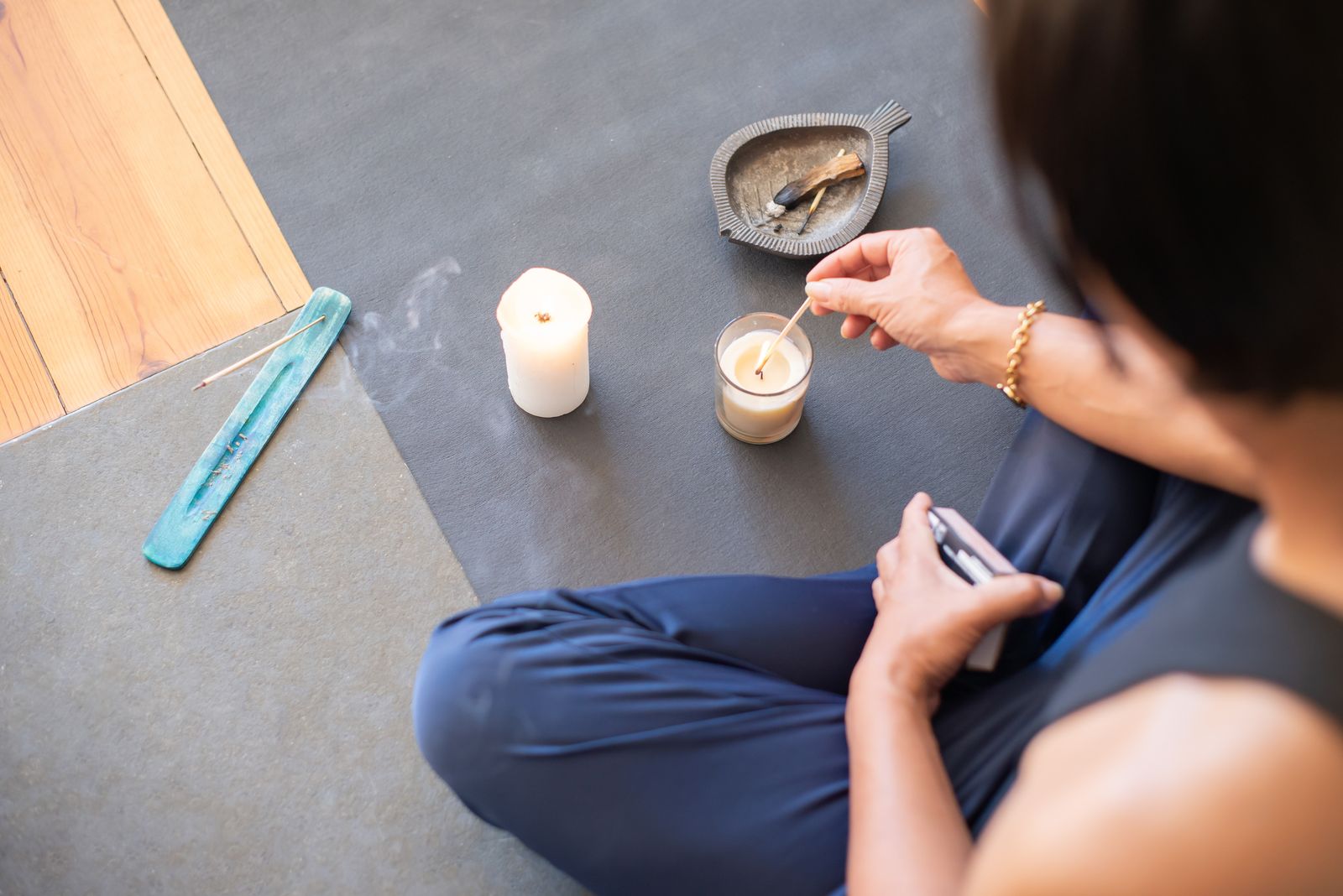
Dim the room and place a lit candle at eye level, about an arm’s length (roughly 2–3 feet) away. Some practitioners use a small black dot on white paper instead of a flame, especially if they want to avoid smoke or find open flames distracting.
2. Sit in a Steady, Comfortable Position
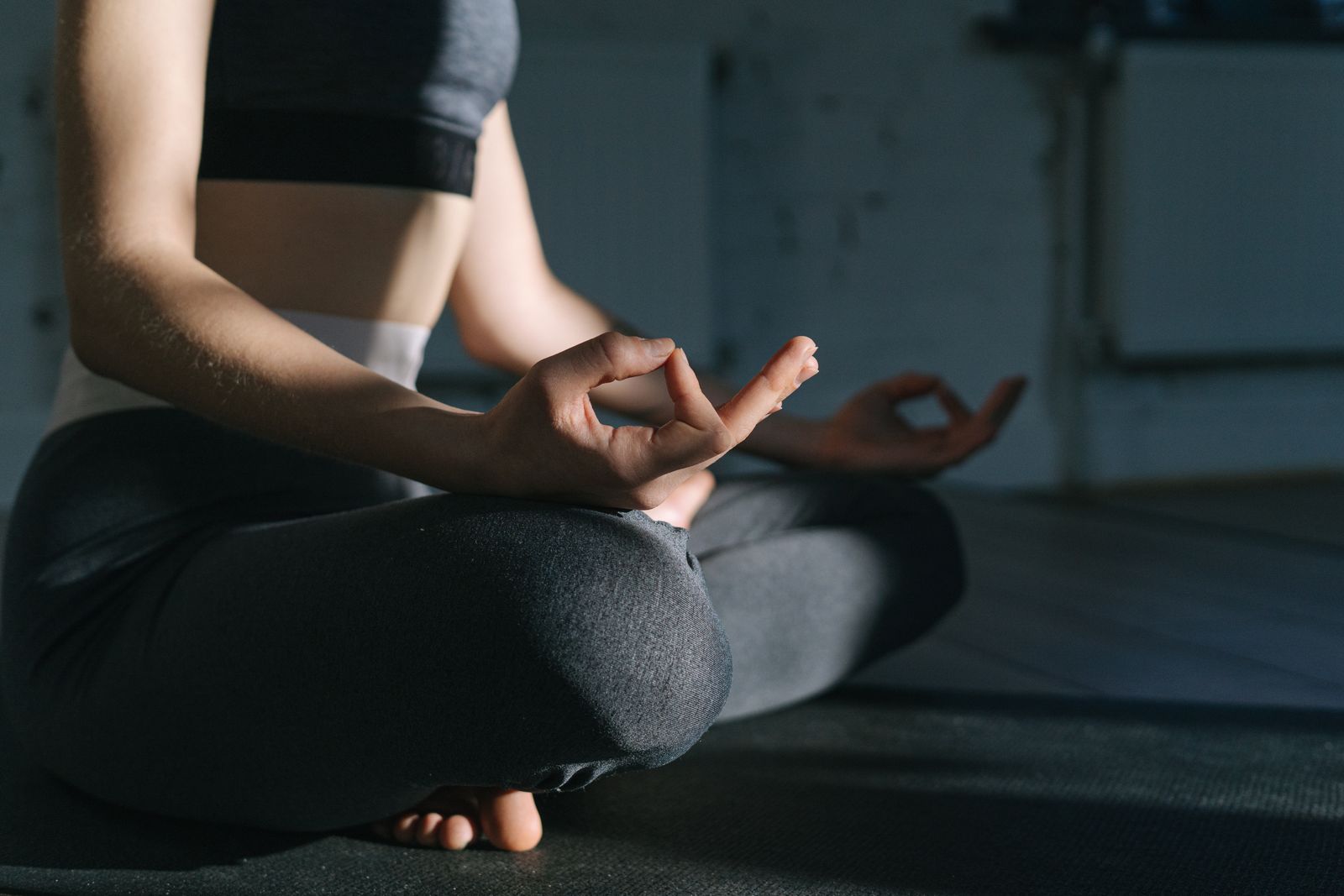
Choose a seated posture you can hold without shifting — Sukhasana (easy pose), Padmasana (lotus), or simply sitting upright in a chair all work. A stable spine keeps the body still, which lets the mind settle into the gazing practice rather than compensating for physical discomfort.
3. Gaze Without Blinking
Fix your eyes softly on the tip of the flame, keeping the body and face relaxed. Try to avoid blinking for as long as comfortable — this typically ranges from 30 seconds for beginners to several minutes with practice. Never force or strain; if your eyes water heavily or ache, that is the natural cue to close them.
4. Close Your Eyes and Hold the Afterimage
Close your eyes and locate the afterimage of the flame in the space between your eyebrows (the area associated with the ajna chakra, or third-eye center, in yogic anatomy). Hold your attention on this glowing impression for as long as it remains visible, then let it fade naturally.
5. Repeat the Cycle
Open your eyes and repeat the external gaze, followed by the internal afterimage stage, for 3–5 rounds. A full session usually lasts 5 to 15 minutes for beginners, extending to 20–30 minutes for more experienced practitioners.
6. Close With Stillness
After your final round, sit quietly with eyes closed for a minute or two, observing the calm, focused quality of the mind before returning to normal activity.
What Are the Benefits of Trataka Meditation?
Practitioners and yoga teachers commonly associate trataka with a range of benefits, most of which relate to focus, mental clarity, and eye comfort rather than dramatic medical outcomes:
- Improved concentration: The single-pointed nature of the gaze is widely considered one of the most direct ways to train sustained attention, which is why trataka is often recommended to students who struggle to stay focused during longer meditation for beginners sessions.
- Calmer, quieter mind: Many practitioners report that the practice quiets internal mental chatter faster than seated breath-focused meditation alone, likely because visual fixation gives the mind a concrete anchor.
- Eye relaxation: Some yoga traditions suggest trataka may help relax eye muscles that are chronically tense from screen use, though this should be seen as a complementary eye-care habit rather than a treatment for any diagnosed eye condition.
- Better sleep and reduced anxiety: The calming, meditative quality of the practice is often cited anecdotally as useful before bed, similar to other evening wind-down practices like yoga nidra.
- A gateway to deeper meditation: Because it gives the mind something tangible to hold onto, many teachers use trataka as a stepping stone toward more abstract practices like dhyana meditation or breath-based awareness.
It’s worth noting that rigorous scientific research specifically isolating trataka’s effects is still sparse, so these benefits are best understood as widely reported by long-term practitioners and consistent with what is known about focused-attention meditation generally, rather than as clinically proven outcomes for any specific health condition.
Can Trataka Improve Eyesight?
This is one of the most searched claims about trataka, and it deserves a careful answer. Traditional yogic texts describe trataka as beneficial for the eyes, and many practitioners report feeling that their eyes are more relaxed and less strained after regular practice. However, there is no strong, specific clinical evidence that trataka corrects refractive errors like myopia or astigmatism, and it should never replace corrective lenses, prescribed treatment, or a visit to an eye doctor for any diagnosed vision problem. What trataka may reasonably help with is reducing eye strain from prolonged screen use and training the eye muscles to relax after periods of tension — a supportive habit, not a medical fix.
Is Trataka the Same as Candle Gazing?
Candle gazing is the most common and beginner-friendly form of trataka, but it isn’t the only variation. Classical texts describe three broad stages: Bahiranga Trataka (external gazing at an object like a candle, dot, or image), Antaranga Trataka (internal gazing at the afterimage or a visualized point, usually at the third-eye center), and a more advanced form sometimes described as gazing into empty space or darkness. Beginners almost always start with candle gazing because the flame provides a bright, stable point of focus and a clear afterimage, which makes the transition into the internal stage easier to feel and understand.
When Is the Best Time to Practice Trataka?
Most teachers recommend practicing trataka early in the morning on an empty stomach, when the mind is naturally quieter and less distracted by the day’s events. Evening practice, particularly before bed, is also popular because the calming effect can ease the transition into sleep. Some practitioners pair trataka with their regular pranayama breathing exercises routine, doing a few rounds of breathwork first to settle the nervous system before beginning the gazing practice. Consistency tends to matter more than the exact time of day — even 5–10 minutes done daily builds concentration more effectively than occasional longer sessions.
Who Should Avoid or Modify Trataka?
Trataka is generally considered a low-risk practice, but a few precautions are worth knowing:
- People with diagnosed eye conditions such as glaucoma, cataracts, or retinal disorders should consult an ophthalmologist before attempting sustained, unblinking gazing.
- Anyone prone to migraines or light-sensitivity headaches may want to start with very short rounds (10–15 seconds) to see how the eyes and head respond.
- Contact lens wearers may find the practice more comfortable with lenses removed, since prolonged non-blinking can dry out the eyes.
- If dizziness, sharp eye pain, or unusual visual disturbances occur, stop the practice and rest with eyes closed; these are cues to shorten future sessions rather than push through discomfort.
As with any practice that affects the nervous system, those new to meditation or with a history of dissociation or intense anxiety around altered states of awareness may benefit from trying trataka under the guidance of an experienced teacher rather than learning it entirely alone.
How Does Trataka Compare to Other Meditation Techniques?
Most meditation styles fall into a small number of broad categories: focused-attention practices (where the mind rests on one object), open-monitoring practices (where awareness is allowed to observe whatever arises), and movement-based practices. Trataka is a clear example of focused-attention meditation, similar in structure to mantra repetition or breath counting, except that it uses a visual anchor instead of a sound or sensation. Compared to mindfulness meditation, which typically asks practitioners to observe thoughts without engaging them, trataka gives the mind a single, unchanging point to return to every time it wanders — which many beginners find more concrete and easier to grasp than open awareness. It also pairs naturally with practices like online yoga classes that already incorporate breathwork and stillness, since the seated posture and calm breathing developed in those sessions directly support a steady trataka practice.
Can Trataka Be Practiced Without a Candle?
Yes. While candle gazing is the classical and most widely taught form, trataka can be practiced using any small, stable point of focus. Common alternatives include a black dot drawn on white paper, a small yantra (geometric symbol) like a Sri Yantra, an image of a deity or guru for devotional practitioners, or even a fixed point on a wall. Some modern practitioners also experiment with gazing at the rising or setting sun for very brief, safe intervals (never directly at midday sun), though candle and dot gazing remain the safest and most accessible starting points for home practice. The core mechanism is the same regardless of the object: sustained, relaxed, unblinking attention followed by an internal afterimage stage.
How Does Trataka Fit Into a Broader Yoga Practice?
Trataka works well as a short addition at the end of an asana or pranayama session, when the body is already relaxed and the mind is more receptive to stillness. Many practitioners use it as a five-minute bridge between the physical portion of practice — such as a sequence of yoga poses — and seated meditation, since the eyes are already naturally calmer after physical movement. It’s also commonly grouped with other shatkarma practices during more advanced or traditional Hatha Yoga training, where students might learn jal neti, kapalbhati kriya, and trataka as a complete cleansing sequence covering the nose, lungs, and eyes. For those newer to yoga, it can also be introduced as a standalone concentration exercise, independent of the broader shatkarma kriyas system, simply as a tool for building focus.
Questions People Ask About Trataka Meditation
What is trataka in yoga?
Trataka in yoga is a concentration technique that involves gazing steadily at a fixed point, usually a candle flame, without blinking, followed by closing the eyes and holding the afterimage in the mind. It is one of the six shatkarmas, or cleansing practices, in classical Hatha Yoga, primarily used to train focus and calm the mind rather than for physical cleansing.
How long should I practice trataka each day?
Beginners typically start with 5 to 10 minutes a day, doing 3–5 short rounds of gazing and afterimage work. As comfort builds, sessions can extend to 15–30 minutes. Consistency matters more than duration, so a short daily practice is generally more effective than occasional long sessions.
Can trataka help with anxiety?
Many practitioners report that trataka’s single-pointed focus helps quiet racing thoughts and produces a calming effect similar to other focused-attention meditation styles. While specific clinical research on trataka and anxiety is limited, the practice shares mechanisms with other concentration techniques that are more broadly associated with stress reduction.
Is trataka safe for daily practice?
For most healthy adults, short daily sessions of trataka are considered safe. People with eye conditions such as glaucoma, migraines, or extreme light sensitivity should check with a doctor first, and anyone experiencing pain, dizziness, or visual disturbance during practice should stop and shorten future sessions.
What’s the difference between trataka and regular meditation?
Regular seated meditation often focuses on the breath or open awareness of thoughts, while trataka uses a specific visual object — typically a flame — as its anchor. This makes trataka a form of focused-attention meditation, which many beginners find more concrete and easier to sustain than open, objectless meditation styles.
Do I need a candle to practice trataka?
No. While candle gazing is the most common form, trataka can be practiced with a black dot on paper, a small symbol or image, or any small, stable point of focus. The key elements are a steady gaze, a relaxed body, and the follow-up internal afterimage stage, not the specific object used.
Try This for Yourself
Trataka is easiest to learn correctly with guidance on posture, breath, and pacing, so you don’t strain your eyes or lose the meditative benefit to poor technique. If you’d like to build a steady, guided practice around trataka and other calming yoga techniques, explore FitStrot’s online yoga classes and work with an instructor who can tailor the pace to your experience level.
Related reading: Jal Neti: The Complete Guide, Kapalbhati Kriya Explained, The Six Shatkarma Kriyas, Essential Yoga Poses for Beginners, and FitStrot’s Online Yoga Classes.