Sports nutrition is the practice of matching what you eat and drink to the specific demands of training — the right amount of carbohydrate to fuel your muscles, enough protein to repair and build them, and enough fluid to replace what you sweat out. It is not the same as general healthy eating: an athlete training five days a week needs more carbohydrate, more evenly spaced protein, and a tighter hydration plan than someone who exercises casually. Get these three levers right and you recover faster, train harder, and reduce your risk of injury and burnout.
This guide covers macronutrient targets, pre- and post-workout timing, hydration, and the mistakes that quietly undercut most people’s progress. Whether you’re searching what is sports nutrition as a beginner or want to fine-tune your sport nutrition around a specific goal, treat this as a working reference, not just a definition.

What Is Sports Nutrition, Exactly?
Sports nutrition is the applied science of using food, fluids, and timing to support training performance, recovery, and body composition goals. It sits at the intersection of exercise physiology and dietetics — it asks not just “is this food healthy” but “does this food, eaten at this time, help this specific workout or recovery window.”
The field covers four pillars: energy intake (fueling training without under-eating), macronutrient distribution (carbohydrate, protein, and fat ratios matched to your sport), nutrient timing (when you eat relative to training), and hydration. Sports and nutrition decisions compound — a runner who chronically under-eats carbohydrate feels it in workout quality within a week or two, long before it shows on a scale.
How Much Protein Do Athletes Actually Need?
The ISSN position stand on protein and exercise recommends 1.4 to 2.0 grams of protein per kilogram of body weight daily for most exercising individuals — well above the general population’s baseline of roughly 0.8 g/kg. The target shifts by training type:
- Endurance athletes: 1.0–1.6 g/kg/day, depending on training intensity and duration
- Strength and power athletes: 1.6–2.0 g/kg/day
- Intermittent-sport athletes (soccer, basketball, and similar): 1.4–1.7 g/kg/day
- Athletes in a calorie deficit trying to preserve lean mass: up to 2.3–3.1 g/kg/day, according to ISSN research on resistance-trained individuals during hypocaloric periods
For a 70 kg (154 lb) athlete doing regular strength training, that’s roughly 112–140 grams of protein a day, spread across meals rather than loaded into one sitting. ISSN research shows protein feedings spaced roughly every 3 hours, at a dose of 20–40 grams (about 0.25 g/kg) per meal, maximize muscle protein synthesis better than the same total eaten in one or two large meals. For a full day’s plan built around this, see our guide on structuring a nutrition and diet plan for muscle building, and our piece on essential amino acids explains why protein quality — not just quantity — determines how well your body uses what you eat.
What Should You Eat Before a Workout?
Eat a combination of carbohydrate and protein 1 to 4 hours before training. A full plate needs the longer end of that window to digest, while a small snack of fruit and yogurt works fine 30–60 minutes out. ISSN’s nutrient-timing position stand notes that pre-exercise carbohydrate, protein, and amino acid intake helps enhance training adaptations and can reduce exercise-associated muscle damage.
Practical combinations: oats with a scoop of whey protein and a banana 2–3 hours before; toast with peanut butter and a boiled egg 60–90 minutes before; or just a banana with a few dates 20–30 minutes out if you train first thing on an empty stomach.
The point of the pre-workout meal is to top up muscle and liver glycogen, not to stuff yourself. Heavy fat and fiber close to a session tend to sit in the gut and cause discomfort mid-workout, so keep those lower in this specific meal even if they’re staples elsewhere in your day.
What Should You Eat After a Workout?
Consume protein and carbohydrate within about 60 minutes of finishing training, and definitely within the 2-hour post-exercise window ISSN identifies as the period of heightened muscle protein synthesis. This meal repairs the muscle damage from your session and refills the glycogen you burned through.
A practical target is 20–40 grams of high-quality protein alongside carbohydrate — ISSN specifically calls out roughly 10 grams of essential amino acids, or a 20–40 g protein bolus, as the dose that maximally stimulates muscle protein synthesis. Good options: a protein shake with a banana or berries, grilled chicken or paneer with rice and vegetables, or Greek yogurt with granola and fruit.
One caveat: ISSN’s own review notes total daily protein matters more than the precise timing of any single meal. The 60-minute window helps, but it won’t rescue a day that falls well short of your overall target. For muscle gain specifically, our article on bodybuilding nutrition goes deeper into structuring these meals around a hypertrophy goal, and protein and nutrition covers whole-food sources if you’d rather skip the shakes.

How Many Carbs Do You Really Need for Training?
Carbohydrate needs scale directly with training volume, not body weight goals. According to the joint position stand of the Academy of Nutrition and Dietetics, Dietitians of Canada, and the American College of Sports Medicine (ACSM):
- Moderate exercise (about 1 hour/day): 5–7 g/kg/day
- Moderate-to-high intensity training (1–3 hours/day): 6–10 g/kg/day
- Ultra-endurance training (4–5 hours/day of moderate-to-high intensity): up to 8–12 g/kg/day
ISSN’s own guidance lands in a similar range — 5 to 8 g/kg/day generally, rising to 8–10 g/kg/day for athletes training at or above 70% of VO2max. For a 65 kg athlete training an hour a day, that’s roughly 325–455 grams of carbohydrate daily, mostly from rice, oats, fruit, potatoes, and whole grains. This is the single most under-eaten macronutrient among recreational athletes — many people cut carbs aggressively while training hard, then wonder why their strength or endurance plateaus. If your goal is building size or strength rather than losing fat, see our breakdown of nutrition for weight gain for layering carbohydrate onto a training block without overshooting on fat gain.
How Should Athletes Handle Hydration?
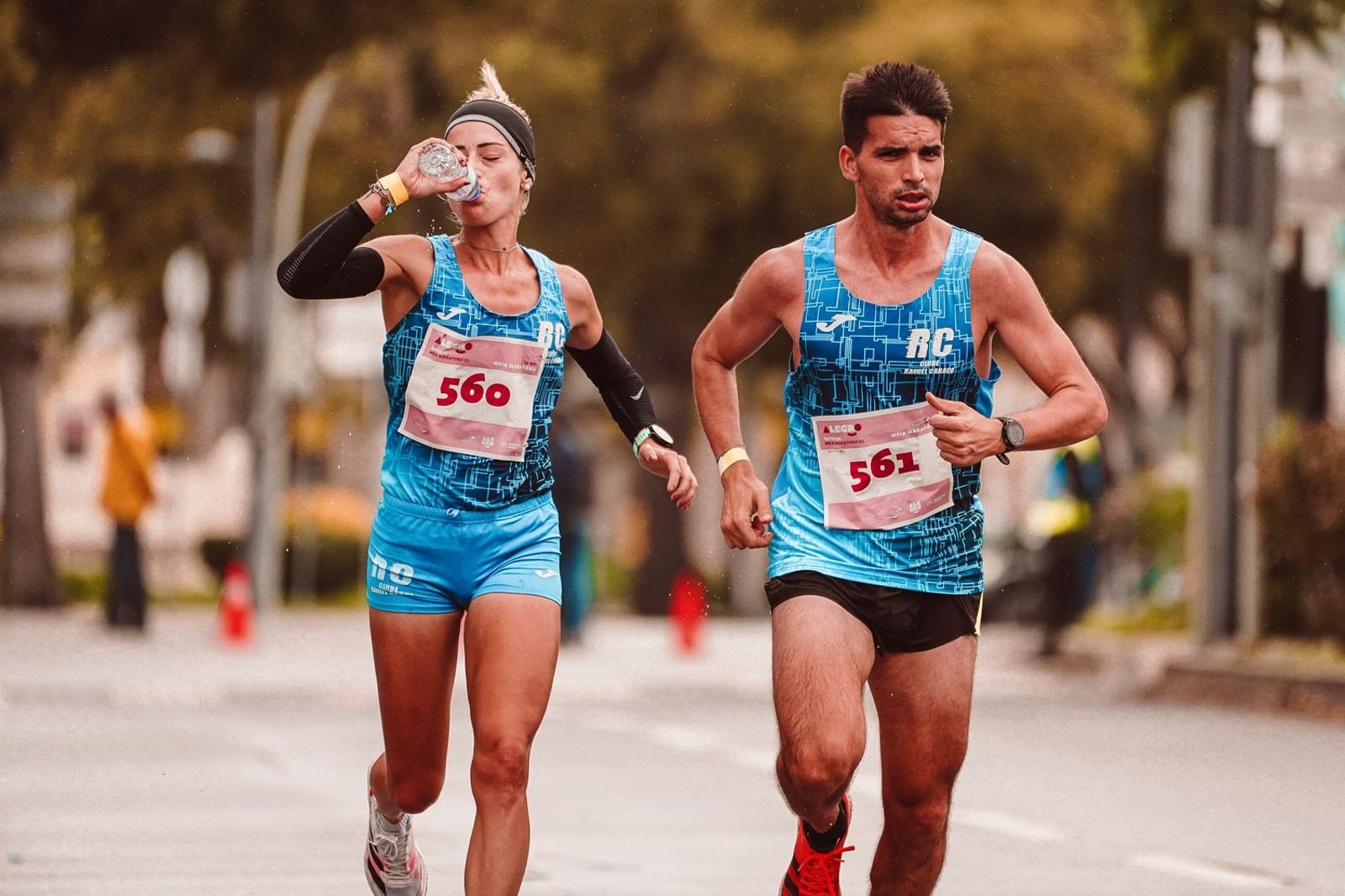
ACSM’s position stand on exercise and fluid replacement recommends about 500 ml (17 oz) of fluid roughly 2 hours before exercise, then 200–300 ml every 15 minutes during exercise to keep pace with sweat losses. Afterward, the rule of thumb is 1 liter of fluid for every 1 kg of body weight lost — which is why weighing yourself before and after a long or hot-weather session is genuinely useful, not overkill.
Water is enough for sessions under 60 minutes. For anything longer — or shorter sessions in heat and humidity above 30 minutes — a sports drink with sodium and carbohydrate helps, since sodium and chloride are the electrolytes lost in the greatest quantity through sweat. ACSM recommends 500–700 mg of sodium per liter, and notes fluids served cool (15–22°C) and flavored get consumed in larger volumes than plain water during exercise. If you train early morning in Indian heat and humidity, do not skip this because you “don’t feel that thirsty” — thirst lags well behind the actual deficit.
Common Sports Nutrition Mistakes That Slow Progress
A handful of errors show up again and again in training diets, and each one quietly caps performance or recovery:
- Under-fueling overall energy intake. Cutting calories while maintaining a hard training schedule leaves too little energy for performance and recovery — the body responds by breaking down muscle tissue and blunting hormone production.
- Treating protein timing as more important than protein total. A perfectly timed post-workout shake won’t compensate for a day that falls 40 grams short of your target. Total daily intake, spread across 3–4 meals, matters more than any single 30-minute window.
- Cutting carbohydrate during a heavy training block. Covered in more depth in our article on nutrition and calories — carbohydrate below training demand shows up first as flat, heavy workouts, then as declining strength and endurance.
- Ignoring hydration until performance already suffers. A fluid deficit of just 2% of body weight measurably impairs endurance performance, and thirst lags well behind the actual deficit.
- Copying an elite athlete’s plan without adjusting for your own training volume. A marathon runner’s 10 g/kg carbohydrate intake will leave a casual gym-goer over-fueled. Nutrition needs to scale to your actual training hours, not someone else’s.
Building Your Own Sports Nutrition Approach
Start with these four steps, in order:
- Calculate your protein target using your training type — 1.4–2.0 g/kg/day as a starting range — spread across 3–4 meals roughly 3 hours apart.
- Set your carbohydrate intake based on training hours per day, not body weight goals — 5–7 g/kg for moderate training, up to 8–12 g/kg for heavy endurance work.
- Build a pre- and post-workout routine — a carb-and-protein meal 1–4 hours before training, and another within an hour after.
- Track your hydration — weigh in before and after long or hot sessions, and replace 1 liter of fluid per kilogram lost.
This covers most recreational and competitive athletes, but individual variation is real — training age, sport, body composition goals, sweat rate, and medical history all shift these numbers. Our guide on diet and nutrition is a useful companion for the everyday eating patterns behind these training-specific numbers, and our nutrition and food fundamentals guide is a good starting point if you’re new to structured eating.
Frequently Asked Questions
What is sports nutrition in simple terms?
Sports nutrition is eating and drinking strategically to support training — matching carbohydrate, protein, fat, and fluid intake to the demands of your specific workouts and recovery needs, rather than following generic healthy-eating advice that isn’t calibrated to training volume.
How much protein should an athlete eat per day?
Most athletes need 1.4–2.0 grams of protein per kilogram of body weight daily, per ISSN guidance. Strength athletes sit toward the higher end (1.6–2.0 g/kg), endurance athletes toward the lower end (1.0–1.6 g/kg), spread across 3–4 meals.
Should I eat carbs before or after a workout?
Both. Eat carbohydrate with some protein 1–4 hours before training to fuel the session, and again within about an hour after to replenish glycogen and support muscle repair. Skipping either end of that window leaves performance and recovery on the table.
Do I need a sports drink, or is water enough?
Water is sufficient for workouts under 60 minutes. For longer sessions, or shorter ones in heat and humidity, a sports drink with 500–700 mg sodium per liter helps replace what you lose in sweat and supports better fluid retention than water alone.
How do I know if I need personalized sports nutrition guidance?
If you train more than 4–5 hours a week, are preparing for a specific event, are trying to change body composition while maintaining performance, or your energy and recovery feel consistently off despite eating “enough,” it’s time to move past general guidelines toward a plan built around your actual numbers.
General guidelines get most athletes most of the way there, but they are averages — your sweat rate, training split, sport, and goals are specific to you. If you’re training seriously and want a plan built around your actual numbers rather than a population average, an online nutritionist consultation with FitStrot can turn these principles into a day-by-day sports nutrition plan that fits your schedule and goals.