Bodybuilding nutrition comes down to three levers: a calorie target that matches your current phase (surplus to build, deficit to lean out), enough total protein — roughly 1.6 to 2.2 g per kg of bodyweight daily — spread across 4 to 5 meals, and patience, because body composition change is measured in months, not workouts. Everything else, including the timing of your post-workout shake, matters far less than the fitness industry has led you to believe.
If you’ve spent time in a gym or a bodybuilding forum, you’ve heard the rules recited like scripture: chug your shake within 30 minutes or the workout was wasted, eat six small meals to “stoke the metabolism,” bulk hard and cut harder. Some of that has a kernel of truth. Most of it is outdated bro-science that survived because it’s easy to repeat, not because it held up under research scrutiny. This guide separates what the sports nutrition literature actually supports from what’s just gym folklore, with specific numbers to build a plan around — whether you’re adding size or getting lean for a show, a photoshoot, or your own mirror.
What Makes Bodybuilding Nutrition Different From General Sports Nutrition?
General sports nutrition is built around performance — fueling a game, a race, a match. Bodybuilding nutrition is built around a single outcome: manipulating body composition, meaning maximal muscle retention or gain alongside deliberate fat loss, on a schedule you control. A marathon runner eats to finish 26.2 miles fast. A bodybuilder eats to look a specific way on a specific day, so every macro decision gets filtered through one question: does this help build or preserve muscle while hitting my target on the scale?
That’s why bodybuilding nutrition revolves around two phases most other athletes don’t formally cycle through — bulking and cutting — and why protein distribution across the day gets far more attention here than in general athletic diet plans for muscle building. If you’re also training for a specific sport alongside physique goals, a periodized nutrition plan with phased loading is a better framework than pure bodybuilding rules.
How Many Calories Should You Eat When Bulking?
A lean bulk works best with a modest surplus of roughly 200 to 300 calories above your maintenance intake, or about 10 to 20% over maintenance for lifters who want to move a bit faster and accept slightly more fat gain along with the muscle. Going bigger than this doesn’t build muscle faster — muscle protein synthesis has a ceiling dictated by training stimulus and recovery capacity, not by how much surplus food you shovel in. Extra calories beyond what your body can use for repair and growth just become fat.
Protein during a bulk should land around 1.6 to 2.5 g per kg of bodyweight per day. A 2018 meta-analysis in the British Journal of Sports Medicine, led by researchers including Brad Schoenfeld, found that muscle gains plateau at roughly 1.6 g/kg/day for most trained lifters, with intakes up to 2.2 g/kg offering a modest safety margin for those training hard or restricting calories elsewhere. Carbohydrates should fill most of the rest — around 4 to 7 g/kg — since they replenish glycogen and support training volume, with fat at roughly 0.5 to 1.5 g/kg. For the full macro math, a detailed calorie breakdown is worth running against your own maintenance number rather than copying someone else’s plan.
Expect to gain somewhere between 0.25% and 0.5% of bodyweight per week on a lean bulk. Faster than that and you’re very likely adding more fat than muscle.
How Aggressive Should a Cutting Phase Be?
A cutting deficit of 300 to 500 calories below maintenance is the range most research supports for preserving lean mass while losing fat, translating to roughly 0.5% to 1% of bodyweight lost per week. A 2024 systematic review published in Sports Medicine found that moderate deficits in this range preserved more than 90% of lean mass over the course of a cut, provided protein intake stayed high throughout.
And that’s the part lifters get wrong most often: protein needs go up, not down, when calories come down. Research on protein requirements during energy restriction points to a range of roughly 2.3 to 3.1 g per kg of lean body mass per day — noticeably higher than bulking-phase recommendations — because adequate protein is one of the few reliable tools for signaling your body to hold onto muscle tissue while it’s burning fat for fuel. Carbohydrate intake typically drops to around 2 to 5 g/kg during a cut, with fat usually the macro trimmed hardest to create the deficit, though it shouldn’t go so low that it disrupts hormone production.
Cutting too aggressively — deficits beyond 750 to 1,000 calories a day — tends to backfire. You lose more muscle alongside the fat, strength craters, and the diet becomes harder to sustain, which is usually the point where people abandon it and rebound. Slower is genuinely faster here.
How Much Protein Do You Actually Need, and When?
Most trained lifters do best somewhere between 1.6 and 2.2 g of protein per kg of bodyweight daily, a range consistent with the International Society of Sports Nutrition’s position stand on protein and exercise. That’s a wide enough window to accommodate both bulking and cutting phases, with the higher end more relevant when calories are restricted.
Total daily protein matters more than any single meal, but distribution still counts. The ISSN recommends spacing protein into servings of roughly 0.25 to 0.4 g/kg — about 20 to 40 g of high-quality protein — every 3 to 4 hours, which for most people works out to 4 to 5 meals a day. This pattern keeps muscle protein synthesis elevated more consistently across the day than front-loading most of your protein into one or two large meals.
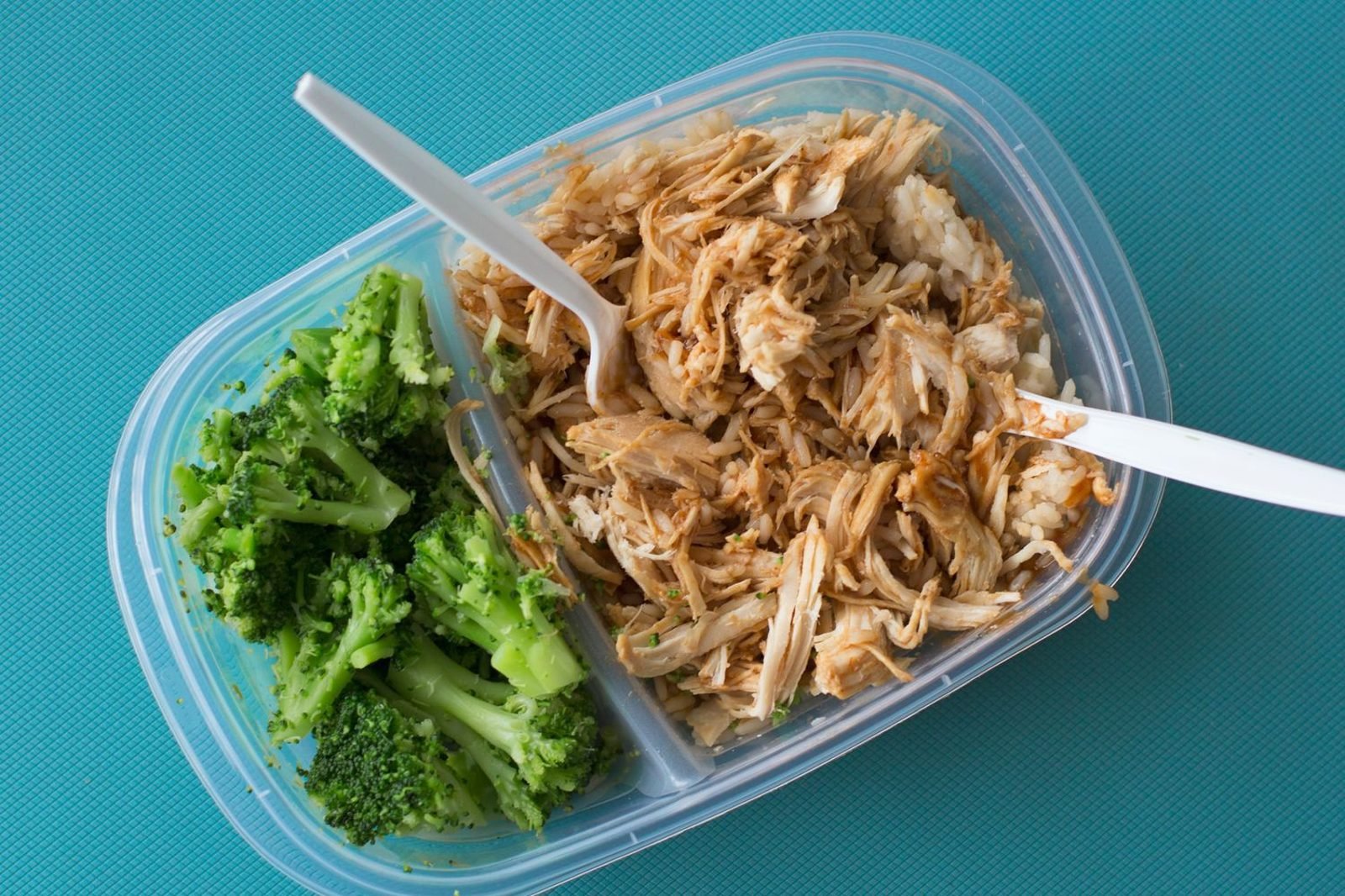
This is where the leucine threshold comes in. Leucine is the amino acid that acts as the “on switch” for muscle protein synthesis, and research suggests you need roughly 2.5 to 3 grams of leucine in a single sitting to maximally trigger that switch. In real food, that’s about 25 to 35 g of complete, high-quality protein — think a palm-and-a-half of chicken, a couple of eggs plus egg whites, or a solid scoop of whey. Eating less than that in a sitting still counts toward your daily total, but it won’t stimulate MPS as strongly. This is one reason bodybuilders lean on foods and supplements built around essential amino acids, since leucine content varies a lot between protein sources. For a broader look at protein sourcing and quality, see this protein and nutrition guide.
Do You Really Need a Protein Shake Within 30 Minutes of Training?
No — the strict 30-minute “anabolic window” is one of the most persistent myths in bodybuilding nutrition, and the research doesn’t back it up nearly as tightly as gym culture suggests. The idea originated from early studies showing muscle protein synthesis is elevated for roughly 1 to 4 hours after a meal, which got oversimplified into “you have a tiny window after training or you lose your gains.”
A widely cited 2013 meta-analysis by Schoenfeld, Aragon, and Krieger, published in the Journal of the International Society of Sports Nutrition, looked at protein timing across multiple studies and found that when total daily protein intake was accounted for, the timing effect on muscle hypertrophy essentially disappeared. In their simple pooled analysis (not controlling for total protein), timing showed a small effect on hypertrophy — a Hedges’ g of about 0.24 — but that advantage vanished once total protein intake was factored into the model. In plain terms: what you eat across the whole day predicts your results far better than how fast you eat after a workout.
The ISSN’s position stand on nutrient timing reaches a similar, more forgiving conclusion — the practical window for post-workout nutrition is closer to several hours than 30 minutes, especially if you ate a protein-containing meal 1 to 3 hours before training. If you trained fasted, getting protein in reasonably soon afterward is still sensible — just not panic-inducing if it takes 90 minutes instead of 30. The shake isn’t magic; it’s just one of several meals that add up to your daily total.
What Other Bodybuilding Nutrition Myths Should You Ignore?
A few more claims deserve a second look before you build your plan around them.
- “You need 6 small meals to keep your metabolism stoked.” Meal frequency has minimal effect on metabolic rate once daily calories and protein are controlled for. Eat in a pattern that fits your schedule and appetite — 3 meals or 6, the math works out roughly the same.
- “More protein is always better.” Beyond roughly 2.2 to 2.5 g/kg/day, extra protein mostly displaces carbs and fat rather than building more muscle. There’s a ceiling on how much your body can use for tissue repair in a day.
- “Carbs at night make you fat.” Total daily calorie balance determines fat gain or loss, not the clock. Evening carbs are fine and, for many lifters, help with sleep and next-day training.
- “You must bulk and cut in extremes to see real change.” Slow, controlled surpluses and moderate deficits outperform aggressive versions of both over the long run, with far less muscle lost and fat regained.

How Do You Put a Bulking or Cutting Plan Together?
Start with your maintenance calorie target, then adjust by phase: add 200-300 for a lean bulk or subtract 300-500 for a cut. Set protein first — aim for 1.6-2.2 g/kg while bulking and 2.0-2.5+ g/kg while cutting. Fill remaining calories with carbs to support training volume, and use fat to round out the rest. Spread protein across 4-5 meals, aiming for roughly 25-35 g per sitting to consistently clear the leucine threshold. Reassess every 2-3 weeks using bodyweight trends and progress photos rather than day-to-day scale fluctuations, and adjust calories in small increments. Training age, genetics, sleep, and stress all shift how your body responds to a given surplus or deficit, which is why cookie-cutter macros from a forum post rarely fit as well as a periodized athlete nutrition plan built around your own data.
Frequently Asked Questions
Do I need to eat protein immediately after training or I’ll lose muscle?
No. Research shows the “anabolic window” is measured in hours, not minutes, especially if you ate a protein-containing meal within a few hours before training. Total daily protein intake predicts muscle growth far more reliably than how quickly you eat after a workout.
How much protein per meal is actually useful for muscle growth?
Roughly 25 to 35 g of high-quality protein per meal is enough to hit the leucine threshold (about 2.5-3 g of leucine) that triggers muscle protein synthesis. Eating more in one sitting isn’t wasted, but it won’t stimulate MPS proportionally more than that amount does.
Can I build muscle and lose fat at the same time?
It’s possible, particularly for beginners, people returning after a layoff, or those significantly overweight, through a phenomenon called body recomposition. Trained, lean lifters generally see faster results by cycling distinct bulking and cutting phases instead.
How fast should I gain weight during a bulk?
Aim for about 0.25% to 0.5% of your bodyweight per week. A 90 kg lifter gaining faster than roughly 0.45 kg a week is very likely adding more fat than muscle relative to the training stimulus available.
Is intermittent fasting compatible with bodybuilding nutrition?
Yes, as long as total daily protein and calories still hit your targets within the eating window. The main challenge is fitting enough protein-dense meals into a shorter window to clear the leucine threshold multiple times a day.
Bodybuilding nutrition rewards consistency over cleverness — hitting your calorie target and protein distribution week after week outperforms any perfectly optimized single meal or supplement stack. If you want a plan built around your training history, body composition goals, and schedule rather than generic macros, an online nutritionist consultation can help you set targets that fit your life.