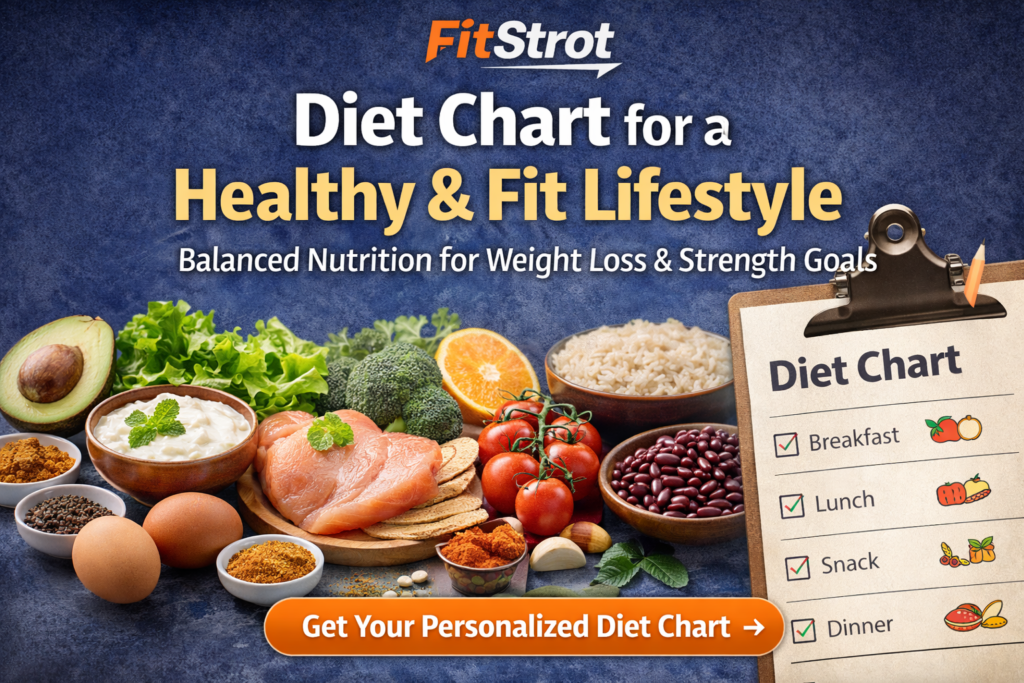
Good diet and nutrition comes down to a simple ratio you can put on a plate: roughly half vegetables and fruits, a quarter whole grains or cereals, and a quarter protein foods like pulses, eggs, fish, or lean meat, spread across three main meals and one or two small snacks. The ICMR-National Institute of Nutrition’s 2024 Dietary Guidelines for Indians formalized this as the “My Plate for the Day” model, built around a reference 2,000 kcal diet for a sedentary adult. You don’t need a nutrition degree to use it — you need a plate, a rough sense of portions, and a weekly rhythm you can actually stick to. This guide walks through how to translate that model into a diet chart you can follow starting this week.
What Does a Balanced Diet and Nutrition Plan Actually Look Like?
A balanced diet plan sources energy and nutrients from at least eight to ten food groups rather than relying on two or three staples. According to ICMR-NIN, vegetables, fruits, green leafy vegetables, roots, and tubers should together fill about half of the daily plate, while cereals and millets make up the next largest share, followed by pulses, eggs, flesh foods, nuts, oilseeds, and milk or curd. For a 2,000 kcal reference diet, that translates to roughly 250 grams of cereals and millets, 400 grams of vegetables, 100 grams of fruit, and 85 grams of pulses, eggs, or flesh foods per day. Cereals are capped at around 45% of total daily energy, with pulses, eggs, and flesh foods contributing another 14-15%, so the remaining energy comes from fats, dairy, nuts, and a limited allowance of sugar. If you’re still fuzzy on why this balance matters more than any single “superfood,” our guide to building a balanced diet breaks down the core food groups in more depth.

How Much Protein, Carbs, and Fat Do You Actually Need?
The ICMR-NIN 2020 nutrient requirements set the reference protein intake at 0.8 grams per kilogram of body weight per day for a sedentary adult, rising to about 1 gram per kilogram for people whose diets lean heavily on cereals, since cereal protein is lower quality than protein from eggs, dairy, or meat. In practical terms, a 65 kg sedentary man needs around 52-65 grams of protein daily. Protein is meant to supply roughly 10% of total daily energy in a balanced diet. Carbohydrates need a minimum of 100-130 grams per day to fuel brain function, and for most people they’ll make up the largest single share of calories, mainly from whole grains, millets, and pulses rather than refined sugar. Visible fat (oil, ghee, butter added during cooking) is capped at 25-30 grams a day for a moderately active woman and 25-40 grams for a moderately active man, depending on activity level — this is separate from the invisible fat already present in nuts, dairy, and meat. If you’re building a plan specifically around protein targets, our article on protein and nutrition covers food sources and timing in more detail, and our nutrition and calories guide can help you work out your own baseline before you start adjusting macros.
How Do You Build Your Own Diet Chart Step by Step?
Start with your calorie baseline, then fill it in food group by food group rather than meal by meal — it’s easier to hit targets when you think in totals first.
- Estimate your calorie need. ICMR-NIN references 2,320 kcal/day for a sedentary adult male and 1,900 kcal/day for a sedentary adult female; adjust upward if you’re moderately or heavily active. If you’re unsure where you fall, our calorie guide walks through the calculation.
- Block out your plate proportions. Half vegetables and fruit, a quarter whole grains, a quarter protein foods — use this as your template for lunch and dinner.
- Assign your cereal and millet portion. Around 250 grams a day for a 2,000 kcal diet, with at least half of that as whole grains or minimally polished cereal rather than refined flour.
- Pair every grain-based meal with a pulse or protein source. Dal, rajma, chana, eggs, paneer, or fish alongside rice or roti improves protein quality and keeps you fuller for longer.
- Add 400 grams of vegetables and 100 grams of fruit daily, spread across meals rather than saved for one sitting — ICMR-NIN specifically recommends at least 30 grams of fruit at each meal where fruit is included.
- Fix your fat budget. Keep added cooking oil or ghee within 20-30 grams a day depending on your sex and activity level, and favor a mix of oils over a single source.
- Plan snacks around gaps, not boredom. A handful of nuts, a fruit, or curd between meals prevents the energy dips that lead to overeating at the next meal.
What Should a Sample Diet Chart Look Like Across a Day?
A workable nutrition diet chart for a moderately active adult on roughly 2,000-2,200 kcal might look like this:
- Early morning: A glass of water, optionally with soaked nuts (4-5 almonds or walnuts).
- Breakfast: Whole grain or millet-based dish (poha, upma, or multigrain roti) with a protein source like eggs, sprouts, or paneer, plus a piece of fruit.
- Mid-morning snack: A seasonal fruit or a small bowl of curd.
- Lunch: Half the plate in vegetables and salad, a quarter in rice or roti (whole grain where possible), a quarter in dal or a flesh-food protein, with a small serving of curd.
- Evening snack: Roasted chana, a handful of nuts, or vegetable-based snacks rather than fried or packaged options.
- Dinner: Similar plate proportions to lunch but slightly lighter, ideally eaten at least two to three hours before sleeping.
Spacing meals roughly every three to four hours helps keep blood sugar and hunger more stable than skipping meals and overcompensating later. This structure isn’t a rigid prescription — it’s a template you adjust based on your own schedule, appetite, and goals. If your goal is fat loss specifically, see our nutrition for weight loss guide for how to adapt these proportions into a mild calorie deficit; if you’re trying to gain weight or muscle, the nutrition for weight gain article covers how to scale portions upward instead. For a broader framework on organizing your week rather than just your day, our meal planning guide is a useful next read.
Do Micronutrients Matter as Much as Macros?
Yes — a diet chart built only around calories and macronutrients can still leave you short on iron, calcium, vitamin D, or B12, especially on restrictive or monotonous diets. ICMR-NIN’s 2024 guidelines widened the food-group count specifically to push variety, because relying on the same three or four foods daily tends to under-deliver on micronutrients even when calories and protein look fine on paper. Including green leafy vegetables a few times a week, a dairy or fortified alternative daily, and varying your fruit and vegetable choices by color goes a long way. Our vitamin and nutrition guide covers which nutrients are most commonly missed and how to close those gaps through food first.
How Should a Diet Chart Change for Different Life Stages?
A single diet chart doesn’t fit everyone in a household. Children have proportionally higher nutrient needs relative to their body size and need more frequent, smaller meals — our child nutrition guide goes into age-specific portions. Athletes and people training intensively need higher carbohydrate and protein intake timed around workouts, which is covered in our sports nutrition guide. Pregnant and lactating women, older adults, and people managing conditions like diabetes or hypertension all need adjustments to the standard plate model — ICMR-NIN’s guidelines address these groups separately rather than applying one chart universally. If you’re building a chart for anyone outside a healthy sedentary-to-moderately-active adult range, it’s worth getting individual guidance rather than extrapolating from a generic template.
Frequently Asked Questions
How many meals should a diet chart include in a day?
Most balanced diet charts include three main meals plus one or two small snacks, spaced roughly three to four hours apart. This isn’t a strict rule — some people do well on two larger meals, others prefer five smaller ones. What matters more is hitting your daily food group and calorie targets consistently, not the exact meal count.
Is a 1,200-calorie diet chart safe for weight loss?
For most adults, dropping below roughly 1,200 kcal a day risks inadequate protein, vitamin, and mineral intake, since ICMR-NIN references 1,900-2,320 kcal as baseline needs for sedentary adults. A moderate deficit of 300-500 kcal below your maintenance level is generally safer and more sustainable than an aggressively low calorie target.
How much water should be part of a daily nutrition plan?
General guidance is around 2.5-3 liters (8-10 glasses) a day for adults, adjusted upward with heat, exercise, or high-fiber intake. Water needs also rise if you’re increasing vegetable and fruit intake, since fiber requires adequate fluid to move through the digestive system comfortably.
Can a diet chart be vegetarian and still meet protein needs?
Yes, provided it combines pulses, dals, dairy, soy, nuts, and whole grains rather than relying on grains alone. ICMR-NIN specifically recommends pairing every cereal-based meal with a pulse or legume, since this combination improves protein quality compared to either food group eaten alone.
How often should a diet chart be reviewed or changed?
Reassess every 8-12 weeks, or sooner if your weight, energy levels, activity, or goals shift meaningfully. A chart built for a sedentary routine won’t fit once training intensity increases, and portions calculated for one body weight need recalculating after significant weight change in either direction.
What’s the difference between a diet chart and a diet plan?
A diet chart is usually the specific day-by-day or meal-by-meal breakdown of what to eat and in what quantity. A diet plan is the broader strategy behind it — your calorie target, macronutrient split, and goals. In practice the terms are often used interchangeably, but the chart is the executable version of the plan.
Building your own diet chart from general guidelines is a solid starting point, but individual factors like medical history, food preferences, allergies, and activity patterns can change what “balanced” actually means for you. If you’d like a plan built around your specific numbers rather than a generic template, an online nutritionist consultation with FitStrot can help you turn this framework into a chart tailored to your body and goals.