
Online yoga classes in India let you train live with certified teachers over video call, from your own living room, on a schedule that fits around work, family, and travel. The best programs combine small-group or one-on-one sessions, real-time posture correction, and structured progressions (beginner to advanced) across styles like Hatha, Vinyasa, and therapeutic yoga. For most people in India today, online classes are not a compromise but a genuinely practical way to build a consistent practice, especially when a good studio isn’t nearby or a packed calendar makes fixed in-person timings hard to keep.
Why Are Online Yoga Classes Booming in India?
India’s fitness habits shifted permanently after the pandemic pushed millions of first-time practitioners onto video-call yoga, and a large share of them never went back to purely in-person formats. Rising smartphone penetration, better home broadband, and a growing urban population juggling long commutes have made “yoga from home” a mainstream choice rather than a niche one. Corporates have accelerated this further by adding online yoga and wellness sessions as an employee benefit, especially for remote and hybrid teams spread across cities. For many working professionals, the appeal isn’t just convenience, it’s the ability to fit a 45-minute session between meetings without losing an hour to travel.
What Should You Look for in an Online Yoga Class?
Not all online yoga classes are built the same, and the difference between a class that builds real skill and one that just plays a video matters a lot. Look for live, interactive sessions (not pre-recorded playlists) where an instructor can see your camera and correct your alignment in real time. Check that instructors are certified through a recognized yoga teacher training program, ideally with experience teaching therapeutic or beginner-specific modifications. Class size matters too: a session with 4-6 students allows for genuine individual attention, while a webinar-style class of 200 people offers almost none. Finally, confirm there’s a clear path from foundational classes to more advanced styles of yoga so you’re not stuck repeating the same routine for months.
How Do Online Yoga Classes in India Actually Work?
Most reputable programs run over Zoom or a similar video platform, with sessions booked in advance through an app or website. You typically pick a time slot, join a live room a few minutes early, and the instructor guides the group (or you individually, in 1-1 formats) through a warm-up, the main sequence, and a closing relaxation or breathing segment. Good platforms record attendance and progress notes so instructors can tailor the next session instead of starting from scratch every time. Many providers also offer a recording of the session afterward for practice between classes, though this should supplement live instruction rather than replace it, since real-time feedback is what actually prevents injury and builds correct form.
Live Group Classes vs. One-on-One Online Yoga: Which Is Better?
Group classes are more affordable and add a sense of community and accountability, which helps many students stick with a routine longer. One-on-one online yoga classes, on the other hand, are built entirely around your body, your goals, and any injuries or limitations you’re working with. Here’s how the two formats compare:
| Factor | Group Classes | One-on-One Classes |
|---|---|---|
| Cost | More affordable, shared per-session pricing | Higher per-class cost for full attention |
| Best for | Students who know basic postures and want structure and motivation | Beginners, injury recovery, pregnancy, or specific goals |
| Feedback | General cues shared across the group | Corrections tailored entirely to your body |
| Community | Strong sense of accountability and camaraderie | Minimal, but highly personalized pacing |
If you’re recovering from a back or knee issue, are pregnant, or are a complete beginner nervous about getting alignment wrong, personalized 1-1 online yoga sessions are usually worth the extra cost, at least for the first month or two, before switching to group classes to save money.
What Are the Best Online Yoga Courses in India for Beginners?
The strongest beginner-friendly online yoga courses in India share a few traits: a structured multi-week curriculum rather than random daily classes, small batch sizes, and an initial one-on-one assessment call to understand your flexibility, fitness level, and any health conditions. Look for a course that starts with breath awareness and basic beginner yoga poses before introducing sun salutations or more demanding flows. A well-designed course will also explain the “why” behind each pose, not just the “how,” so you build understanding you can carry into a home practice long after the course ends.
Can Online Yoga Really Replace In-Person Yoga Classes?
For most postures and most students, yes, especially with a skilled instructor who actively watches your camera feed and gives real-time corrections. Research on online yoga instruction conducted during and after the COVID-19 pandemic found that both students and instructors reported meaningful benefits from virtual formats, including greater accessibility, more flexible scheduling, and continued opportunities for community connection, even as some instructors noted it takes deliberate effort to replicate the hands-on cueing and shared-room energy of a physical studio. In practice, the gap that remains is smallest for seated postures, breathing work, and meditation, and slightly larger for complex inversions or partner-assisted stretches where hands-on spotting genuinely helps. If you’re mixing formats, consider anchoring your week with online classes and occasionally attending an in-person yoga workshop for deeper hands-on work.
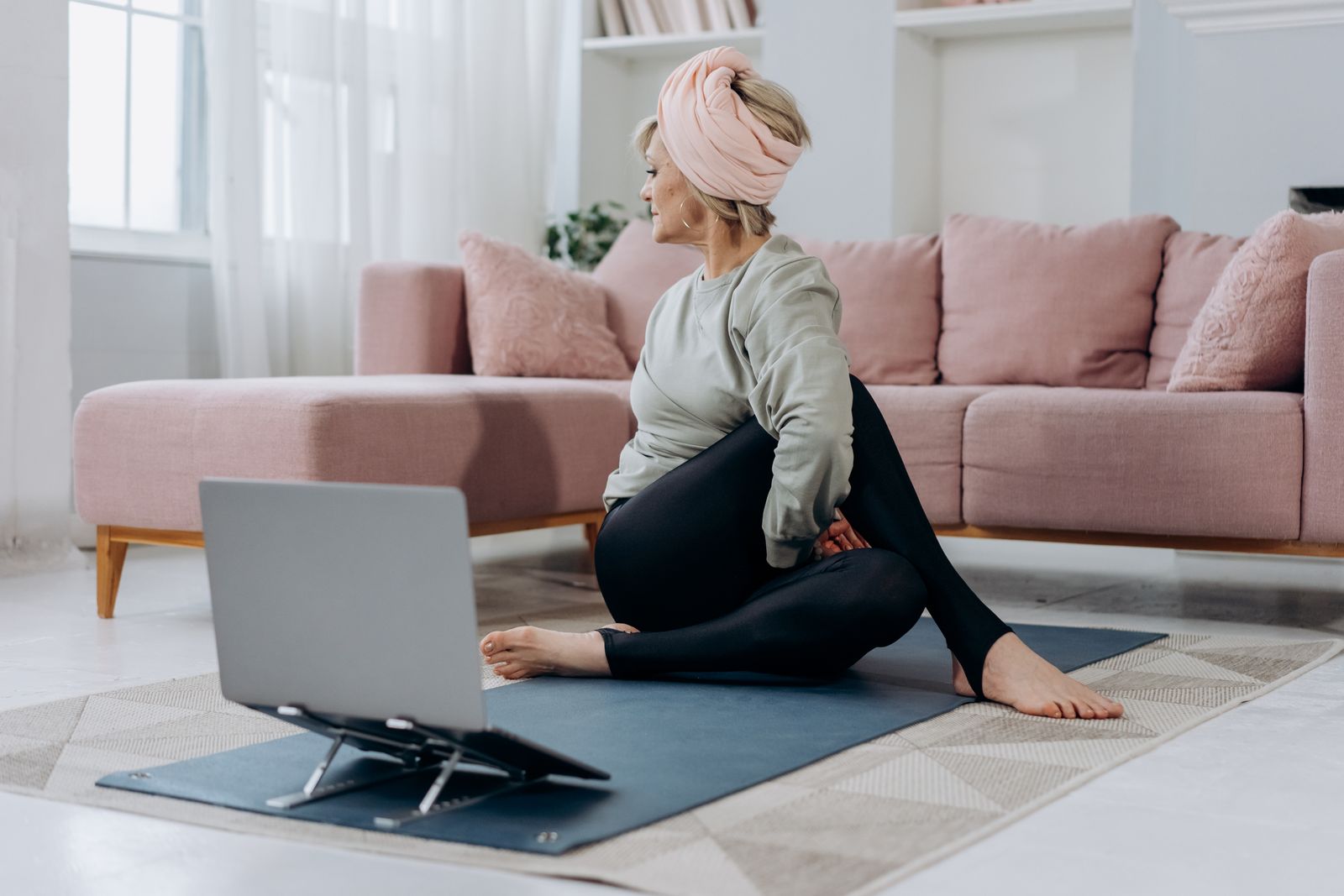
What Equipment Do You Need for Online Yoga at Home?
You need surprisingly little to get started. Here’s the basic setup:
- Yoga mat with good grip and roughly 2 meters of clear floor space
- A stable device (laptop or tablet propped up rather than handheld) positioned so your instructor can see your full body
- A yoga block and strap to help with modifications for tighter hips or hamstrings
- A folded blanket for kneeling poses if you don’t have a bolster
- Stable internet (ideally wired or strong Wi-Fi), since a laggy video feed makes real-time correction nearly impossible
- Comfortable, close-fitting clothing, since loose fabric can obscure your alignment from the instructor’s view
How Much Do Online Yoga Classes in India Cost?
Pricing varies widely by format and instructor experience. Group online classes are generally the most budget-friendly option, often priced as monthly packages covering multiple weekly sessions. One-on-one sessions cost more per class but deliver personalized attention that can be worth it for beginners, injury recovery, or specific goals like yoga for weight loss or prenatal yoga. Many providers offer a trial class at a lower price or even free, which is worth taking before committing to a package, since teaching style and instructor rapport matter as much as curriculum when it comes to whether you’ll actually stick with the practice.
Are Online Yoga Classes Good for Corporate Wellness in India?
Yes, and this is one of the fastest-growing use cases. Companies with hybrid or fully remote teams increasingly book recurring online yoga sessions as part of employee wellness programs, since they remove the logistical barriers (commute time, studio location, fixed timings) that keep employees from attending in-person sessions. A well-run corporate yoga program typically includes desk-friendly stretches for people dealing with prolonged sitting, along with stress-reduction breathing techniques suited to high-pressure work environments. HR teams often see this reflected in fewer complaints of back and neck pain and generally higher engagement in wellness initiatives compared to one-off in-person workshops that few people can attend consistently.
Which Yoga Styles Are Best Taught Online?
Slower-paced, alignment-focused styles like Hatha yoga translate extremely well to video, since instructors have time to observe and correct each student before moving to the next pose. Vinyasa yoga, which links breath to movement in a continuous flow, also works well online for students who already have a base level of familiarity with the postures involved. Restorative and yin styles, which involve holding poses for longer with props, are particularly well-suited to home practice since they require less spotting and more instructor-guided verbal cueing. More physically demanding styles like Ashtanga or power yoga are still teachable online but benefit from students having at least some in-person foundation first.
How Does Online Yoga Compare to Yoga Apps?
Yoga apps and pre-recorded video libraries are useful for casual, low-commitment practice, but they can’t watch your form or adjust a sequence based on how your body is responding that day. Live online classes fill exactly that gap: an instructor sees whether your knee is collapsing inward in a lunge or your spine is rounding in a forward fold and corrects it before it becomes a habit or an injury. If you’re currently relying on yoga apps for your practice, consider using them for supplementary practice on non-class days rather than as your only source of instruction, particularly if you’re still learning foundational alignment.
What About Online Yoga Classes Near You vs. Fully Remote Options?
Searching for online yoga classes near me often reflects a preference for instructors who understand local scheduling norms, speak the same regional language, or teach in a nearby time zone, even though the class itself happens over video. This matters less for logistics and more for comfort and rapport. In India specifically, being able to choose an instructor who can teach in Hindi, English, or a regional language, and who understands common cultural context around festivals, food timing, and daily routines, often makes the practice feel more natural and easier to sustain.
How Do You Choose Between Different Online Yoga Providers?
Start by checking instructor credentials and how classes are structured, live and interactive versus recorded playlists dressed up as “classes.” Ask whether you can try a session before buying a package, and whether the schedule accommodates your typical week, including early morning or late evening slots if you work full-time. Read what past students say about whether instructors actually corrected their form, since this is the single biggest differentiator between a program that builds real skill and one that’s just a video call with some stretching. Finally, check whether the provider offers a genuine online yoga classes curriculum that progresses over weeks, rather than a single generic session repeated indefinitely.
What Results Can You Realistically Expect?
Consistency matters far more than intensity when it comes to results from online yoga. Most students notice improved flexibility and reduced everyday stiffness within the first few weeks of regular practice, with better sleep quality and reduced stress commonly reported soon after, an effect closely tied to the broader benefits of yoga documented across regular practitioners. Strength gains, improved balance, and visible postural changes typically take longer, generally a few months of steady 3-4 sessions per week, and progress is rarely linear. Pairing yoga with basic pranayama breathing techniques tends to compound the stress-reduction benefits, which is why most structured courses dedicate specific time to breathwork rather than treating it as an afterthought tacked onto the physical postures.
Can Online Yoga Complement Other Fitness Goals?
Many students in India pair online yoga with other online fitness formats rather than treating it as a standalone practice. It’s common to alternate yoga days with online Zumba classes for cardio variety, or to use yoga specifically as a recovery and mobility session on the days between strength training. This kind of cross-training tends to reduce injury risk compared to doing the same high-intensity workout every day, while still keeping overall weekly activity levels high. If your main goal is flexibility and joint health rather than calorie burn, anchoring your week around Hatha yoga or gentle flow sessions, with one or two higher-intensity days elsewhere, tends to work better long-term than an all-or-nothing approach.
Questions People Ask About Online Yoga Classes in India
Are online yoga classes as effective as in-person classes?
For most students, yes, particularly when the instructor teaches live and can watch your camera feed for real-time corrections. The main difference is in hands-on adjustments for advanced or complex postures, where a physical spot can help more than verbal cueing alone. For breathing practices, seated postures, and most standing and flexibility work, online classes deliver comparable benefit to in-person sessions.
How do I find a good online yoga teacher in India?
Check for recognized yoga teacher training certification, ask about class size (smaller is better for feedback), and always take a trial class before committing to a package. Read reviews focused specifically on whether the instructor corrects alignment during class, since this distinguishes genuine teaching from a group video call with light instruction.
What time should I do online yoga classes?
Early morning (before work) and early evening are the most popular slots because they bookend the workday without competing with meetings. Morning practice tends to improve energy and focus for the day ahead, while evening sessions help release accumulated tension. The best time is ultimately whichever slot you can attend consistently, since regularity matters more than the specific hour.
Do I need prior experience to join online yoga classes?
No, most structured programs in India offer dedicated beginner tracks that start with breath awareness and basic postures before progressing further. A brief onboarding or assessment call is common so the instructor understands your flexibility and any injuries before your first class, allowing them to modify poses appropriately from day one.
Can online yoga help with specific health conditions like back pain?
Yes, many providers offer therapeutic tracks addressing common issues such as back pain, stiff shoulders from desk work, or stress-related tension. It’s important to inform your instructor of any diagnosed condition before starting so poses can be modified safely, and to treat online yoga as a complement to, not a replacement for, medical advice for serious or persistent pain.
Is one-on-one or group online yoga better for weight loss goals?
Group classes with a dynamic, flow-based style can support calorie burn and consistency through community accountability, while one-on-one sessions allow the instructor to build a sequence specifically calibrated to your fitness level and pace. Many students start with 1-1 sessions to learn safe form, then transition to group classes for the more affordable, sustained practice that a genuine weight-loss journey usually requires.
Try This for Yourself
The clearest way to know whether online yoga fits your life is to actually try a live, instructor-led class rather than reading about it. Explore FitStrot’s online yoga classes to book a session with a certified instructor, get real-time feedback on your form, and start building a practice that works around your schedule instead of the other way around.
Related reading: Online Yoga Classes, Online Yoga Classes Near Me, Best Yoga Apps, 1-1 Online Yoga, and FitStrot’s Online Yoga Classes.