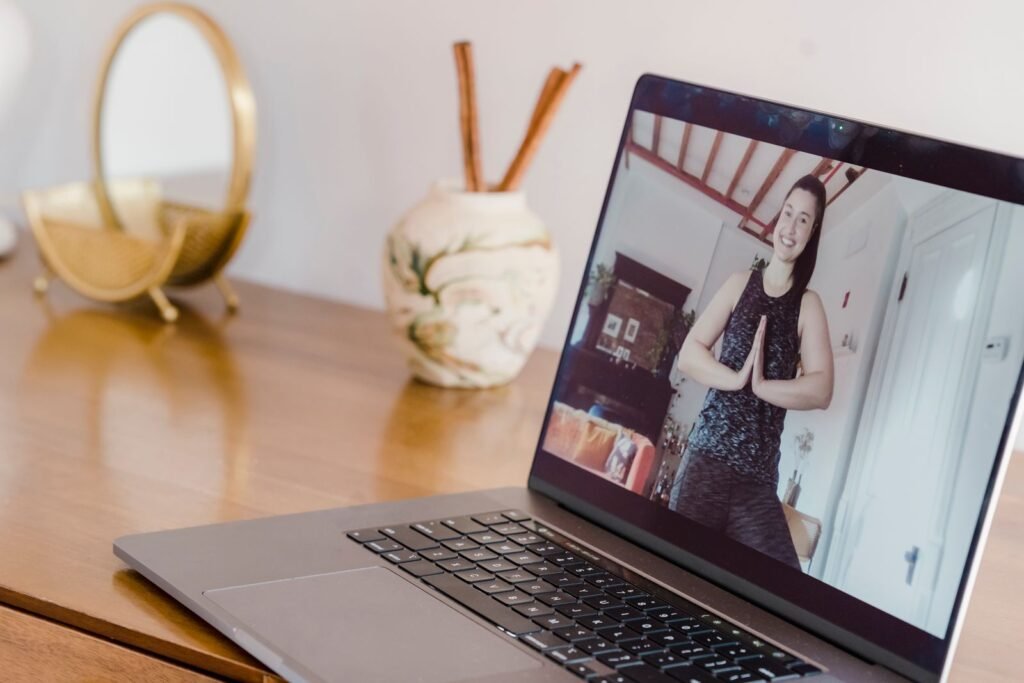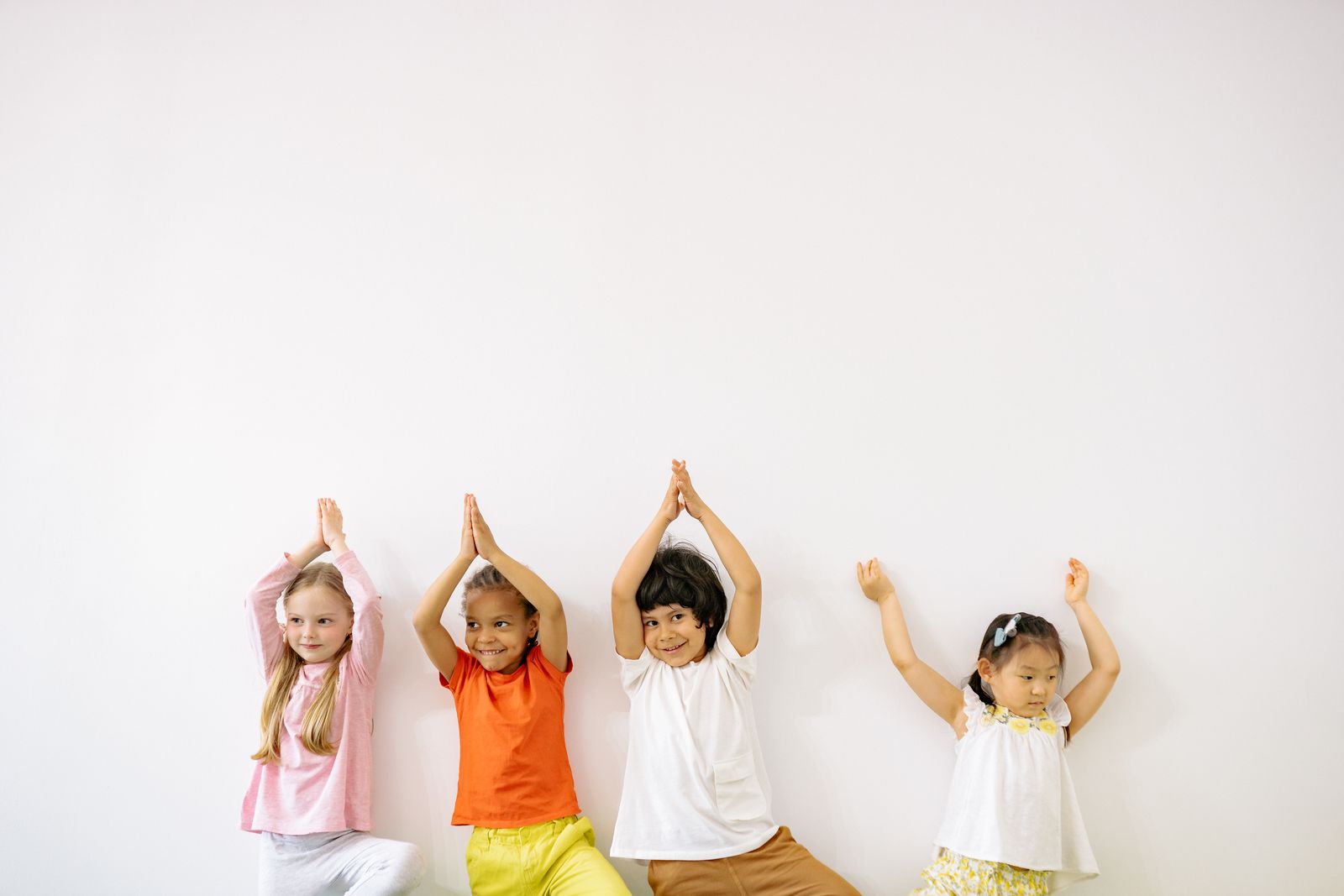
Online yoga classes for kids are live or pre-recorded yoga sessions designed specifically for children, taught through video calls or streaming platforms so kids can practice from home, school, or anywhere with an internet connection. Good kids’ classes differ from adult yoga in pacing, language, and structure: they use games, animal-themed poses, storytelling, and short attention-span segments instead of long holds and technical alignment cues. For most families, online yoga for kids works best as 20-45 minute sessions, 1-3 times a week, taught by an instructor trained specifically in child development rather than a general adult yoga teacher reading a script.
This guide breaks down exactly how online kids’ yoga classes work, what ages benefit most, how to evaluate a class before you book it, what a typical session looks like, and how to keep a child engaged through a screen instead of in a physical studio.
How Do Online Yoga Classes for Kids Actually Work?
Most online yoga classes for kids run through live video conferencing tools, similar to how online yoga classes work for adults, but with a shorter runtime and a teacher trained to hold a child’s attention through a screen. A session typically opens with a simple breathing or “settling in” game, moves into a themed pose sequence (jungle animals, ocean creatures, superheroes), includes a short partner or group activity if it’s a live class with multiple kids, and closes with a brief relaxation or storytelling segment.
Some providers offer one-on-one sessions, which resemble personal training-style online yoga classes in structure, just adapted for a younger student. Others run small group classes capped at 6-10 kids so the instructor can still see and correct each child’s form. The best programs record sessions or provide a library of shorter follow-along videos for days when a live class doesn’t fit the family schedule.
What Age Should a Child Start Online Yoga?
Most children’s yoga programs group kids by developmental stage rather than by yoga skill, since a 4-year-old and a 12-year-old need almost entirely different class formats even if both are “beginners.”
- Toddlers (2-4 years): Very short sessions (10-15 minutes), heavy on animal sounds, movement games, and parent participation. Attention span is the limiting factor, not flexibility or strength.
- Preschool and early elementary (5-7 years): 20-30 minute classes built around storytelling and simple poses like Cat-Cow, Tree Pose, and Downward Dog, often themed around a book or adventure narrative.
- Middle childhood (8-11 years): 30-45 minute classes that start introducing basic sun salutations, longer holds, simple breathing techniques, and light partner poses.
- Tweens and teens (12+ years): Classes start to resemble adult beginner yoga, sometimes blending into vinyasa-style flows or more structured hatha yoga fundamentals, with more focus on stress relief, body awareness, and confidence rather than just play.
There’s no single “correct” starting age. What matters more is matching the class format to your child’s actual attention span and interest level rather than their age on paper.
What Are the Real Benefits of Yoga for Kids?
Interest in kids’ yoga has grown well beyond flexibility and fitness. A body of research, including a scoping review published in Frontiers in Education on yoga in school settings, has looked at how regular yoga practice relates to children’s classroom behavior, emotional regulation, and general well-being. While study designs and sample sizes vary, the pattern across this research consistently points toward a few recurring benefits:
- Self-regulation: Breathing techniques give kids a concrete tool to use when they feel frustrated, anxious, or overstimulated, rather than just being told to “calm down.”
- Body awareness and coordination: Balancing poses like Tree Pose or Airplane Pose build proprioception, the sense of where your body is in space, which supports overall motor development.
- Focus and attention: Structured movement sequences that require following multi-step instructions can support classroom-relevant attention skills.
- Emotional literacy: Many kids’ yoga programs pair poses with naming emotions (“this is our brave pose,” “this is our calm-down breath”), giving children language for internal states.
- Physical benefits: Improved flexibility, core strength, and general movement confidence, similar to the physical benefits of yoga seen in adult practitioners, just scaled to a child’s body.
It’s worth noting that yoga is not positioned in this research as a replacement for other physical activity or clinical intervention. It’s best understood as one useful tool in a broader toolkit for supporting a child’s physical and emotional development.
Live Instructor-Led vs. Pre-Recorded Kids’ Yoga: Which Is Better?
Both formats have a place, and the right choice depends on your child’s personality and your schedule.
Live instructor-led classes allow real-time correction of poses, which matters more for kids than adults since children are still developing body awareness and may not notice they’re compensating incorrectly. Live classes also add social accountability, kids show up because their friends or classmates are there, and a good instructor can adjust the pace on the fly if the group is restless or especially focused that day.
Pre-recorded or on-demand classes offer flexibility for irregular schedules, work well as a “cool down” option after school, and let a child repeat a session as many times as they want, which some kids genuinely enjoy since repetition builds mastery and confidence. The tradeoff is no real-time feedback on alignment or safety, so pre-recorded content works best for younger kids doing simple, low-risk poses rather than anything requiring inversion or deep backbends.
Many families use a mix: a weekly live class for structure and social connection, supplemented by shorter on-demand videos on busy days, similar to how adults often combine studio sessions with a yoga app for flexibility.
What Does a Typical Online Kids’ Yoga Class Look Like?
A well-structured class for elementary-age children usually follows a predictable arc, which helps kids know what to expect and settle in faster:
- Welcome and centering (2-5 minutes): A simple breathing exercise, sometimes with a prop like a stuffed animal placed on the belly so kids can watch it rise and fall.
- Warm-up (5 minutes): Gentle movement, often a themed “journey” (walking through a jungle, swimming like a fish) that gets the body moving without formal poses yet.
- Pose sequence (10-20 minutes): The core of the class, usually 8-12 poses linked by a story or game, mixing standing poses, balances, and floor stretches such as Child’s Pose and a gentle Bridge Pose.
- Partner or group activity (5-10 minutes, live classes only): Partner poses, a balance challenge, or a “yoga freeze dance” game that reinforces the poses just learned.
- Cool-down and relaxation (3-5 minutes): A short guided relaxation, sometimes using visualization (“imagine you’re floating on a cloud”) to bring energy levels back down before the class ends.
This structure mirrors principles used across different types of yoga for adults, warm-up, active work, cool-down, just compressed and reframed for a shorter attention span and a playful tone.
How Do You Choose a Good Online Yoga Class for Your Child?
Not every yoga program marketed to families is equally well-designed for kids. A few things to check before signing up:
- Instructor training specific to children: Look for certifications in kids’ yoga specifically (such as a recognized 95-hour or 200-hour children’s yoga teacher training), not just a general adult yoga certification.
- Class size for live sessions: Smaller groups mean more individual attention and safer pose correction.
- Age-appropriate content: A class for 5-year-olds should look and sound completely different from a class for 11-year-olds. If a provider uses one script for all ages, that’s a red flag.
- Clear safety guidance: Kids’ bones and joints are still developing, so a good instructor avoids deep, forced stretches and explains modifications rather than pushing kids into advanced poses for the sake of a good photo.
- Trial or introductory session: Since engagement varies so much by child, a low-commitment trial class is the best way to see if your child responds to a particular teaching style before committing to a package.
Is Online Yoga as Effective as In-Person Yoga for Kids?
For most of the core benefits, yes, with one caveat around physical correction. Online yoga for kids delivers the same breathing techniques, the same pose sequences, and the same emotional-regulation framing as in-person classes. Where in-person has a genuine edge is hands-on physical assistance for kids who are struggling to find a pose or who need gentle physical guidance to avoid straining, which a screen simply can’t provide the same way.
In practice, this gap matters most for younger children (under 6) and for any poses involving inversions or deep backbends. For seated poses, standing balances, breathing work, and most floor stretches, well-taught online classes are a genuinely comparable substitute, and often more convenient since there’s no travel time and less resistance to “getting ready to go somewhere.”
How Can You Keep a Child Engaged During a Virtual Yoga Class?
Screen-based learning has a shorter engagement runway than in-person instruction, so a few practical adjustments make a real difference:
- Set up a dedicated space: A cleared floor area with a mat, away from toys and siblings, signals “this is yoga time” the same way a designated homework spot signals focus time.
- Match session length to age: Forcing a 4-year-old through a 45-minute class guarantees frustration. Start shorter and extend gradually as attention span grows.
- Let them see the teacher’s full body: Position the device so your child can see the instructor’s whole pose, including standing poses like Warrior Pose and Downward Dog, since kids learn poses largely by mimicry.
- Join in yourself, at least sometimes: Parents practicing alongside their kids, even briefly, tends to boost buy-in more than any other single factor, and it doubles as an easy way to fit in your own stress-relieving practice.
- Skip the corrections mid-class: Save alignment feedback for after class rather than interrupting flow, unless there’s a genuine safety concern.
Can Online Yoga Help Kids with Anxiety or ADHD?
Some published research, including a review focused on yoga’s relationship to children’s mental health and well-being, has looked specifically at yoga’s role in supporting children’s emotional regulation, including for kids who struggle with anxiety or attention difficulties. The proposed mechanism is fairly intuitive: yoga combines physical movement (which helps discharge restless energy), structured breathing (which activates the body’s calming nervous system response), and mindfulness framing (which builds a habit of noticing feelings rather than being overwhelmed by them).
That said, yoga should be treated as a complementary practice, not a replacement for clinical support when a child has a diagnosed condition. Parents of children with anxiety, ADHD, or sensory processing differences should loop in their pediatrician or therapist when adding any new structured activity, and look for instructors experienced in adapting movement practices for neurodivergent kids specifically, since a rigid one-size-fits-all class can sometimes add stress rather than reduce it.
What Equipment Do You Actually Need for Online Kids’ Yoga?
The list is intentionally short, part of what makes this format so accessible:
- A yoga mat or soft rug: Provides grip and a small amount of cushioning; a folded blanket works in a pinch for younger kids.
- A device with a camera (for live classes): A tablet or laptop propped at a height where the whole body is visible works better than a phone held at an odd angle.
- Comfortable clothing: Anything that allows full range of motion; kids don’t need special “yoga clothes.”
- Optional props: A stuffed animal for breathing exercises, a small pillow for seated comfort, or a scarf for some breathing games. None of this is required to get started.
Unlike some adult practices that eventually call for blocks, straps, or bolsters, most children’s yoga intentionally avoids equipment-heavy sequences, since the goal is playful movement rather than deep stretching.
How Does Kids’ Yoga Fit Alongside Other Family Fitness Activities?
Yoga for kids works well as a complement to, rather than a replacement for, other physical activity. A child who plays team sports, swims, or takes dance classes can still benefit from yoga’s specific focus on breath control, flexibility, and calm-down skills that other sports don’t typically address directly. Some families structure the week so that higher-intensity activities like online Zumba classes happen on certain days and calmer yoga sessions happen on others, giving kids variety in both movement style and energy level.
For families where everyone practices together, mixing kids’ yoga with adult-oriented sessions like local or online personal yoga sessions for the parents, or a shared restorative yoga wind-down in the evening, can turn movement into a household routine rather than one more item on a kid’s separate schedule.
Questions People Ask About Online Yoga Classes for Kids
How long should an online yoga class be for a young child?
For children under 5, aim for 10-15 minutes. For elementary-age kids (5-10), 20-30 minutes tends to work well. Preteens and teens can typically handle 30-45 minute sessions similar in length to a beginner adult class. Session length should flex based on how engaged your specific child is, not a fixed rule.
Do kids need any prior flexibility or experience to start yoga?
No. Kids’ yoga classes are built for complete beginners and typically emphasize playful movement over technical flexibility from day one. Most poses are introduced as games or animal shapes precisely so that no prior experience or physical skill is assumed.
Is online yoga safe for kids to do without adult supervision?
For younger children, having a parent or caregiver nearby is recommended, both for safety and to help with camera positioning and focus. Older kids (roughly 9 and up) who understand basic pose cues can often participate independently once they’re familiar with the format, though occasional check-ins are still wise.
How often should a child do yoga each week?
One to three sessions per week is a common and sustainable range for most families. Consistency matters more than frequency, a single weekly class practiced regularly tends to build more lasting benefit than sporadic daily sessions that fizzle out after a few weeks.
Can siblings of different ages take the same online yoga class?
It’s possible for a short window (roughly a 2-3 year age gap), but classes designed for one specific age band generally serve each child better. A program that separates toddlers, elementary-age kids, and tweens usually keeps everyone more engaged than a single mixed-age session trying to serve all levels at once.
What if my child doesn’t like the first class they try?
Try a different instructor or format before concluding that yoga isn’t for your child. Teaching style, pacing, and theme (animals vs. superheroes vs. storytelling) vary enormously between programs, and a mismatch in style is far more common than a genuine dislike of yoga itself.
Try This for Yourself
The clearest way to know if online yoga fits your child is to see them in an actual class rather than reading about one. Explore FitStrot’s Online Yoga Classes to find an age-appropriate session and see how your child responds to guided movement, breathing games, and a little playful storytelling.
Related reading: For more on getting started with online practice, see our guides to online yoga classes, online yoga classes near me, and the best yoga apps for practicing between sessions, plus our broader look at the benefits of yoga for every age group, or explore FitStrot’s Online Yoga Classes directly.