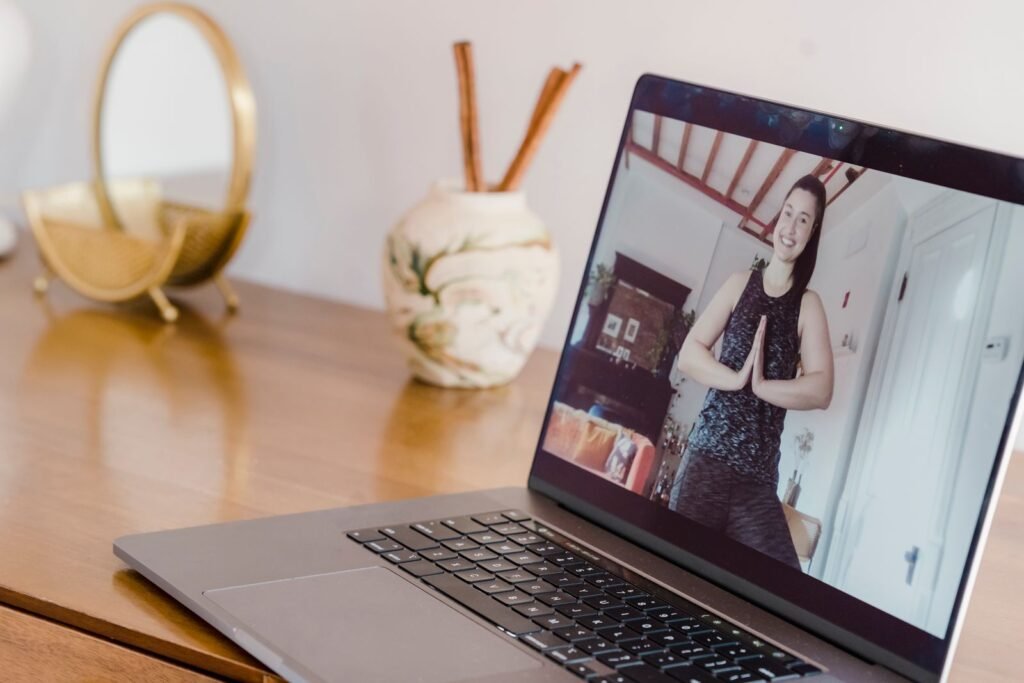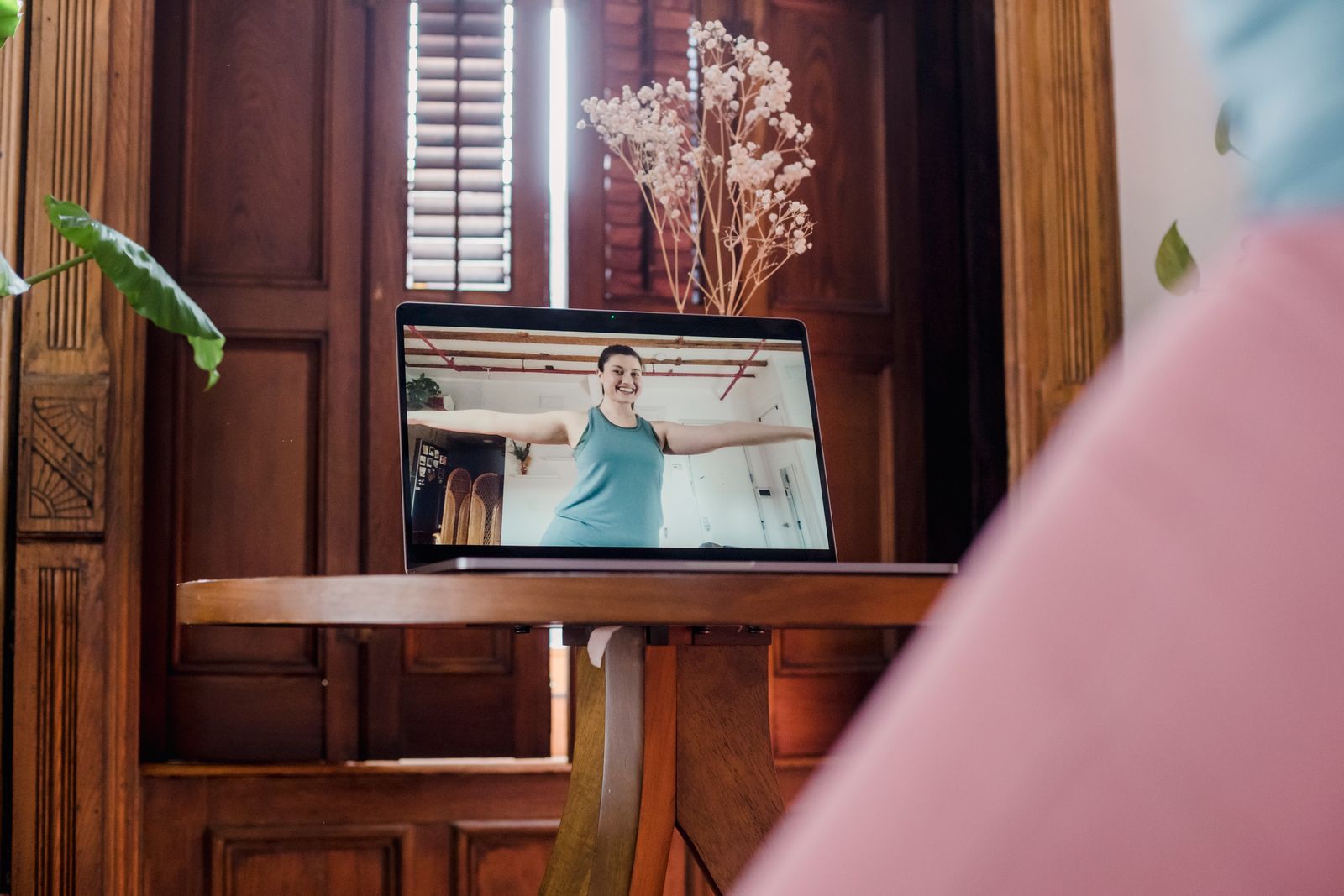
Live yoga classes online are real-time, instructor-led sessions streamed over video so you can practice from home while a teacher watches your alignment, corrects your form, and guides your breathing in the moment. Unlike a pre-recorded video, a live class runs on a schedule, allows two-way interaction through video or chat, and adapts to how the room is actually moving that day. You can join through a dedicated studio platform, a video-call link, or free live TV and YouTube streams such as Aastha TV’s Baba Ramdev sessions, though a structured, instructor-led live class online is generally the better option if you want feedback, progression, and consistency.
What Exactly Are Live Yoga Classes Online?
A live yoga class online is a scheduled session where an instructor teaches in real time through video conferencing software, and students follow along from wherever they are. It differs from on-demand video content in one crucial way: interactivity. The teacher can see you (or hear you describe a sensation), pause to correct a knee position, slow the pace if the room is struggling with a transition, or speed up a sun salutation sequence if everyone is ready to move on. This live feedback loop is what separates a genuine class experience from simply watching a video of someone else practicing.
Most platforms delivering online yoga classes today use standard video tools, sometimes layered with a purpose-built app that tracks attendance, lets you message the instructor, and stores class recordings for members who miss the live session.
How Do Live Yoga Classes Online Compare to Pre-Recorded Videos?
Pre-recorded yoga videos are convenient and endlessly repeatable, but they cannot respond to you. If your alignment in warrior II is off, a recorded video has no idea. A live class, by contrast, lets an instructor flag that your front knee is collapsing inward or that your shoulders are creeping toward your ears, in the exact moment it happens. For beginners in particular, that correction prevents small habits from calcifying into injuries.
Live classes also build accountability. A fixed time slot on your calendar is psychologically stickier than “I’ll do a video sometime today.” Many practitioners who start with yoga apps and on-demand libraries eventually move to live sessions specifically because the fixed schedule keeps them consistent. That said, recorded libraries remain useful as a supplement between live sessions or when travel or time zones make live attendance difficult.
What Are the Free Options: Aastha TV, Baba Ramdev, and YouTube Yoga?
India has a long-running tradition of free televised yoga, and Aastha TV’s daily Baba Ramdev yoga camp is the best-known example. Swami Ramdev has broadcast pranayama and asana sessions on Aastha TV for years, typically airing in the early morning, alongside simultaneous streams on YouTube and Facebook. Exact daily timing can shift with programming schedules, so it’s worth checking Aastha TV’s own channel guide or its official YouTube channel on the day you plan to practice rather than relying on a fixed time from memory.
These free broadcasts are a genuinely useful entry point if you want a no-cost, no-signup way to try pranayama and basic asanas alongside a large, familiar audience. The trade-off is the same one you’d expect from any one-to-many broadcast: there’s no way for the instructor to see your form, adjust for an injury, or answer a question mid-session. If you’re new to yoga, unsure of a pose, or managing a joint issue, that lack of individual feedback matters more than it might seem.
How Do You Choose Between Free Live TV Yoga and a Paid Live Class?
The right choice depends on what you actually need from your practice. If your goal is simply to move your body every morning and you’re comfortable following along without correction, free options like Aastha TV’s live yoga broadcasts are a reasonable starting point and cost nothing. If you’re managing a specific condition, training for a goal like yoga for back pain relief, recovering from an injury, or you simply plateau on a broadcast format because there’s no one checking your form, a smaller live class with real instructor interaction becomes the more useful investment.
A useful test: if you’ve been practicing along with free broadcasts for a few months and still can’t tell whether your alignment in basic poses like downward dog or triangle pose is correct, that’s a signal you need eyes on your practice, not more repetition of the same broadcast.
What Should You Look For in a Live Online Yoga Platform?
Not all live class platforms are built the same way. A few things separate a genuinely useful service from a video call with a yoga label attached to it:
- Small class sizes or 1-1 options so the instructor can actually see and correct you, not just broadcast to a large group.
- Recorded replays for when your schedule or time zone doesn’t line up with the live slot.
- Instructor credentials, including certification level and specialisation (prenatal, therapeutic, power yoga, and so on).
- Two-way audio and video rather than a one-directional livestream, so the teacher can hear you and respond.
- Clear scheduling across time zones if you’re joining from outside the instructor’s home country.
Platforms offering online yoga classes near me-style search filters, where you can filter by instructor location, time zone, and specialty, tend to make this matching process faster than generic video-call bookings.
Is Live Yoga Classes Online Free Actually a Good Idea?
Searches for “live yoga classes online free” are common, and free options do exist beyond the Aastha TV broadcast model: many certified instructors run free introductory sessions on Instagram Live or YouTube Live, and some studios offer a free trial week of their live schedule. These are genuinely worth using to test whether live-format learning suits you before committing to a paid plan.
The caveat is durability. Free live sessions are often inconsistent in scheduling, don’t always offer replays, and rarely include any individual correction, since the instructor is usually managing a large, anonymous audience. If your intent is a one-off trial or an occasional morning practice, free live yoga is fine. If you want a dependable weekly rhythm with a teacher who remembers your name and your injury history, a paid live class online is built for that in a way a free broadcast structurally is not.
What Equipment Do You Actually Need for a Live Online Class?
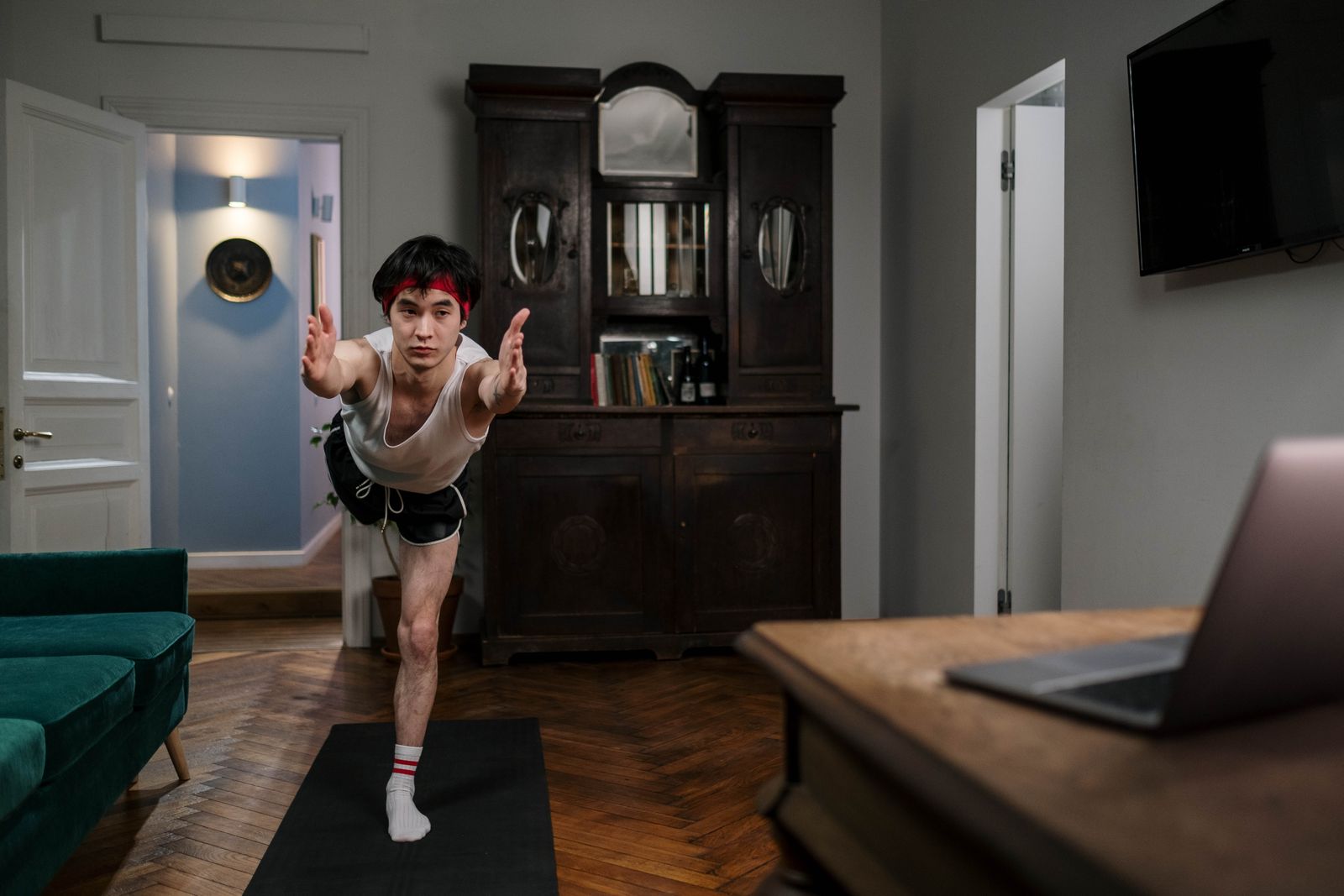
Less than most people assume. A stable internet connection, a device with a camera (a phone propped up works fine), a yoga mat, and roughly 6×4 feet of clear floor space covers the basics. A few additions make the experience noticeably better: a block and strap for modifications, a second device or external speaker so instructor cues aren’t muffled by a laptop’s built-in speaker, and good lighting so the instructor can actually see your alignment on their end. If you’re joining a group class, muting your microphone except during discussion helps avoid crosstalk and audio feedback for everyone else in the room.
What Yoga Styles Are Commonly Taught Live Online?
Live online platforms tend to mirror the same range of styles you’d find at a physical studio. Hatha yoga classes suit beginners who want a slower pace with longer holds. Vinyasa yoga sessions link breath to movement in a more continuous flow and suit people who want a cardio element built into their practice. Yoga nidra sessions run as guided relaxation and are often scheduled in the evening rather than the morning. If your interest runs toward the philosophical and spiritual side rather than purely physical fitness, some instructors also teach live sessions rooted in classical concepts, including the eight limbs of yoga framework from Patanjali’s Yoga Sutras. Reviewing the full range of types of yoga before you commit to a live schedule helps you pick a style that matches your actual goal rather than whatever happens to be trending.
Can Live Online Yoga Replace an In-Studio or 1-1 Class?
For most people, live online yoga replaces a large share of what an in-studio class offers, but not all of it. Instructor correction, community energy, and scheduled accountability all translate reasonably well to a live video format. What doesn’t translate as cleanly is hands-on adjustment, which some styles and some injuries genuinely benefit from. If you’re recovering from a specific injury or working through a chronic issue, pairing live online sessions with occasional 1-1 personal training or in-person check-ins tends to give you the best of both formats: convenience most days, and hands-on precision when it actually matters.
How Do Live Yoga Classes Online Fit Into a Weekly Routine?
Consistency matters more than intensity when it comes to yoga’s benefits, and a fixed live schedule is one of the simplest ways to build that consistency. Many practitioners find that anchoring two or three live sessions a week, say Monday, Wednesday, and Friday mornings, creates enough structure to stick without becoming a burden. On the days without a live class, a short home practice or a recorded session covering beginner yoga poses or a themed sequence keeps momentum going. If your goal includes a broader fitness outcome such as yoga for weight loss, combining live classes with strength or cardio work on off days tends to produce better results than yoga alone.
What Are the Documented Benefits of a Regular Yoga Practice?
Beyond flexibility, a consistent yoga habit is associated with measurable improvements in several areas commonly discussed in the broader wellness and clinical literature: reduced perceived stress, improved sleep quality, better balance and proprioception in older adults, and modest improvements in markers of cardiovascular health when practiced regularly over months rather than weeks. The general benefits of yoga tend to compound with consistency rather than intensity, which is part of why a live class format, with its built-in schedule and social accountability, often outperforms sporadic solo practice for long-term adherence. For specific concerns like anxiety, breathwork-focused practices such as pranayama breathing exercises are frequently taught as a component of live sessions rather than a separate discipline.
How Do Corporate Teams Use Live Yoga Classes?
Companies increasingly book recurring live yoga sessions as part of employee wellness programs, since a scheduled group class fits naturally into a remote or hybrid work calendar without requiring anyone to travel. A typical setup involves a weekly or twice-weekly 30-to-45-minute live session, streamed to employees wherever they’re working from, often paired with a short guided breathing segment aimed at midweek stress. Corporate yoga classes delivered live tend to see higher attendance than pre-recorded wellness content precisely because a live time slot creates a small but real social commitment, similar to a scheduled meeting.
What Time Zone and Scheduling Challenges Should You Expect?
If you’re joining a live class from a different country or region than the instructor, time zone mismatches are the most common practical friction point. A class scheduled for 7 a.m. in the instructor’s local time might land at an awkward late-night slot for you. Before committing to a recurring live schedule, confirm the class time in your own local time zone, check whether the platform offers a recording if you occasionally miss the live slot, and, if possible, test one session before committing to a multi-week or monthly plan. Platforms with instructors across multiple time zones make it easier to find a live slot that actually fits your day rather than forcing you into a single fixed option.
Questions People Ask About Live Yoga Classes Online
Are live yoga classes online worth it compared to free YouTube videos?
Live classes are worth it if you want real-time correction, accountability from a fixed schedule, and progression tailored to your level. Free YouTube videos are fine for casual movement but can’t adjust to your form or answer questions, which matters most for beginners and anyone managing an injury or specific goal.
What time does Baba Ramdev’s live yoga class air on Aastha TV?
Baba Ramdev’s yoga sessions have historically aired in the early morning on Aastha TV, alongside simultaneous YouTube and Facebook streams, though exact timing can vary with the channel’s programming schedule. Check Aastha TV’s current schedule or its official YouTube channel on the day to confirm the live slot.
Can beginners join a live yoga class online, or should they start with recorded videos?
Beginners often benefit more from live classes than recorded ones, since a live instructor can catch alignment mistakes before they become habits. A short recorded introduction to basic poses beforehand can help you feel less lost in your first live session, but it isn’t a prerequisite.
How much do live yoga classes online typically cost?
Pricing varies widely by platform and format: free broadcasts and trial sessions exist at one end, while small-group or 1-1 live classes with certified instructors typically run as monthly memberships or per-session packages. Group sessions are generally more affordable than individual instruction, which reflects the added personal attention.
Do I need any prior yoga experience to join a live online class?
No. Most live platforms offer beginner-friendly sessions explicitly designed for people with zero prior experience, and instructors typically ask about injuries or limitations before or during the first class so they can offer modifications in real time.
What’s the difference between a live yoga class and a live yoga workshop?
A live class is typically a recurring, shorter session (30 to 75 minutes) focused on a consistent practice format, while a workshop is usually a one-time or occasional longer session (90 minutes or more) that goes deep into a single topic, such as backbends, inversions, or a specific pranayama technique.
Try This for Yourself
If you’ve been relying on free broadcasts or recorded videos and want real feedback on your form, a real schedule to stay consistent, and an instructor who actually knows your practice, it’s worth trying a proper live class built around you. Explore FitStrot’s online yoga classes and book a live session with a certified instructor this week.
Related reading: Online Yoga Classes, Online Yoga Classes Near Me, Best Yoga Apps, Types of Yoga, and FitStrot’s Online Yoga Classes.