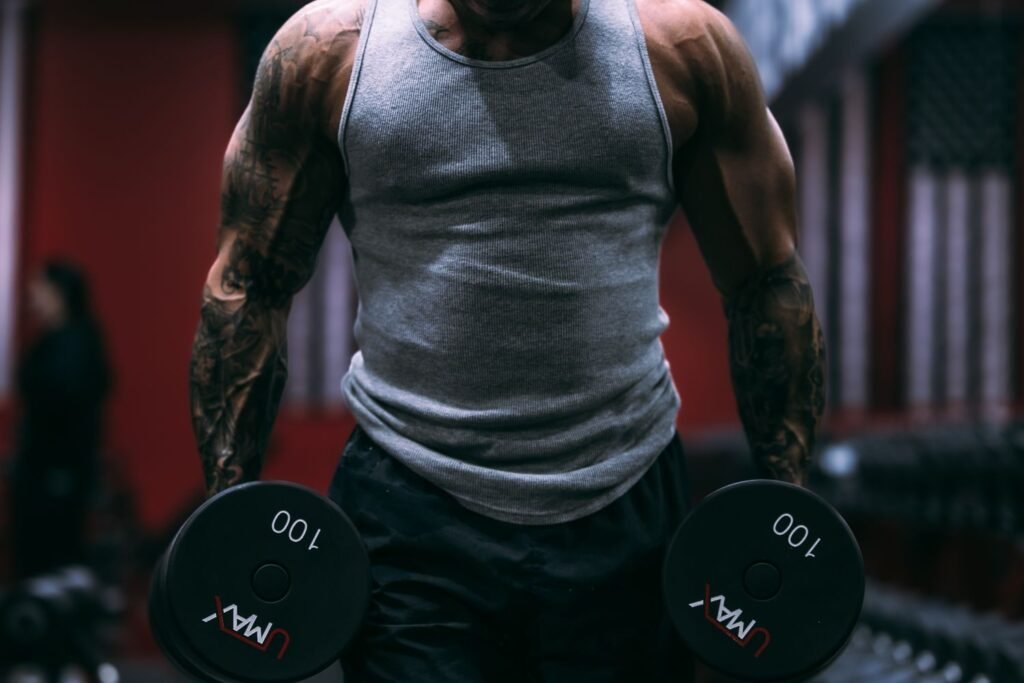
A chest and bicep workout pairs a pushing muscle group with a pulling one in the same session, usually four to six exercises split evenly between chest presses/flyes and bicep curls. It’s not the standard pairing you’ll see programmed in most gyms (that’s chest and triceps), but it works well for people training three days a week, people who want a true “push day, pull accessory” split, or anyone whose triceps are already fried from a shoulder or arm day earlier in the week. We build this pairing for clients who need efficient, antagonist-style sessions rather than a full push/pull/legs split.
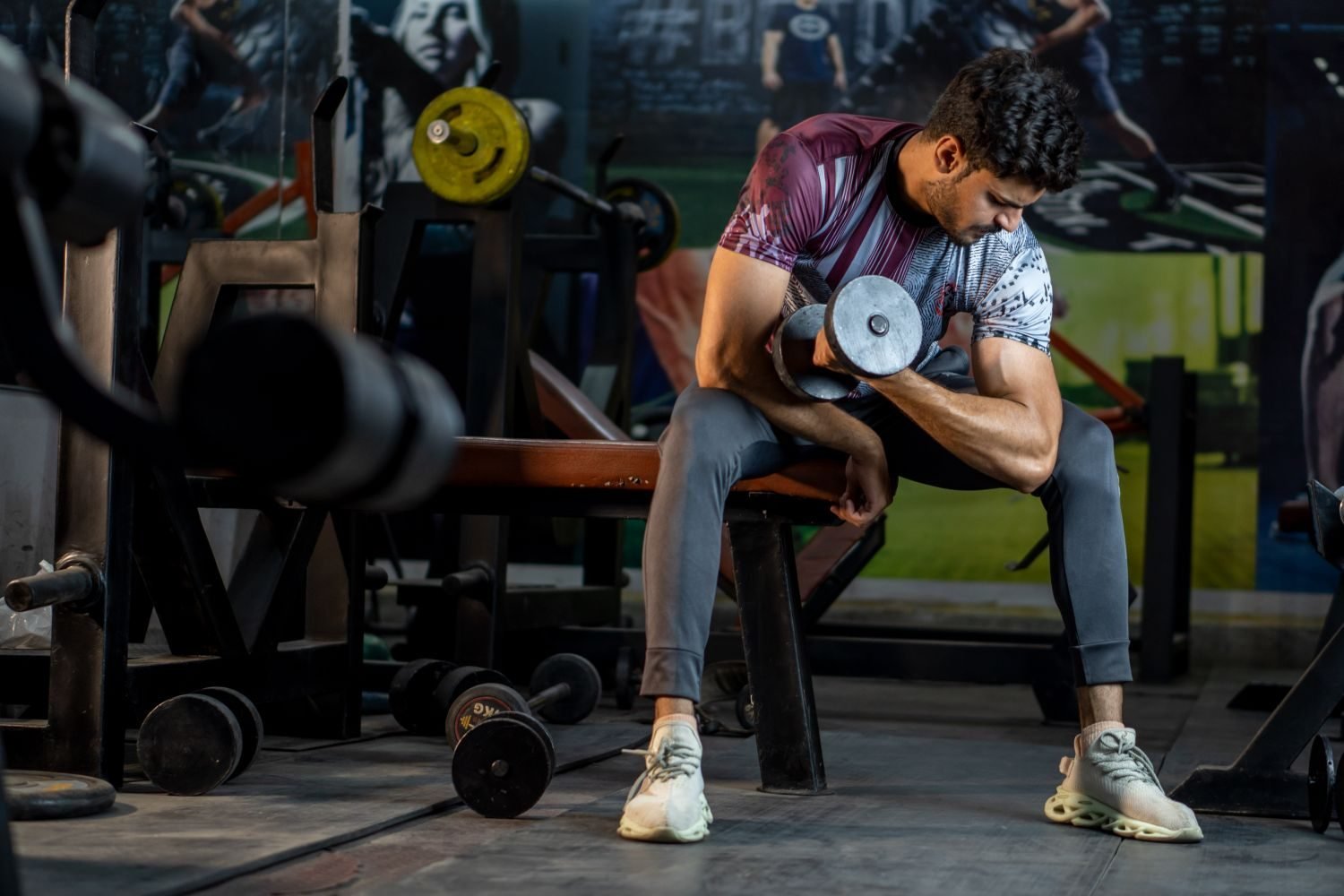
What Makes Chest and Biceps a Smart Pairing?
Chest is a pushing muscle. Biceps are a pulling muscle. When you train two muscles that work in opposite directions, one gets to fully rest while the other is under load. That means you can keep intensity high on both without one exercise bleeding fatigue into the next, which happens constantly when you pair chest with triceps (your triceps are already half-cooked from every pressing movement before you even touch a tricep-specific exercise).
This isn’t a “better” pairing in some universal sense. It’s a different tool for a different schedule. If you train four or five days a week and can dedicate a full day to arms, chest and triceps or a push/pull split makes more sense. If you’re training three days a week and need every session to hit a big muscle and a small one without wasting a whole day on arms alone, chest and biceps solves that problem cleanly.
Why Do Most Gyms Pair Chest With Triceps Instead?
Triceps assist almost every pressing movement, so pairing them with chest lets you finish off an already-fatigued muscle with isolation work at the end of the session. It’s efficient because the triceps are pre-fatigued anyway. That’s the entire logic behind a chest triceps workout, and for most people training four or more days a week, it’s the more common and arguably more efficient default.
The trade-off is that your triceps never get a truly fresh set. Every curl-and-press combo you do involves some tricep assistance from stabilizing, so by the time you get to skull crushers or pushdowns, you’re working with a muscle that’s already been through two or three compound movements. Chest and biceps avoids that problem entirely because your biceps aren’t doing meaningful work during flat bench, incline press, or flyes. They show up fresh for their own exercises.
When Should You Train Chest and Biceps Together?
We recommend this pairing in three specific situations:
- A three-day split: when you’re rotating push-dominant, pull-dominant, and legs, and want your “push” day to include some pulling volume for balance rather than leaving biceps stranded on a separate day.
- You’ve already trained shoulders and triceps earlier in the week and don’t want to double up on tricep fatigue again so soon.
- You simply respond better to antagonist pairing and recover faster with alternating push/pull sets than with two pushing muscles back to back.
It also works if your goal is arm size specifically. Doing biceps on a day when they’re not competing with tricep fatigue for blood flow and recovery resources can let you push a bit harder on curls than you would tacked onto the end of an already long pressing session.
What Does a Full Chest and Bicep Workout Look Like?
Here’s a session we actually program for clients running a three-day-a-week split. It opens with your two heaviest compound lifts, moves into isolation work for chest, then finishes with biceps while your grip and elbow flexors are still fresh enough to move real weight.
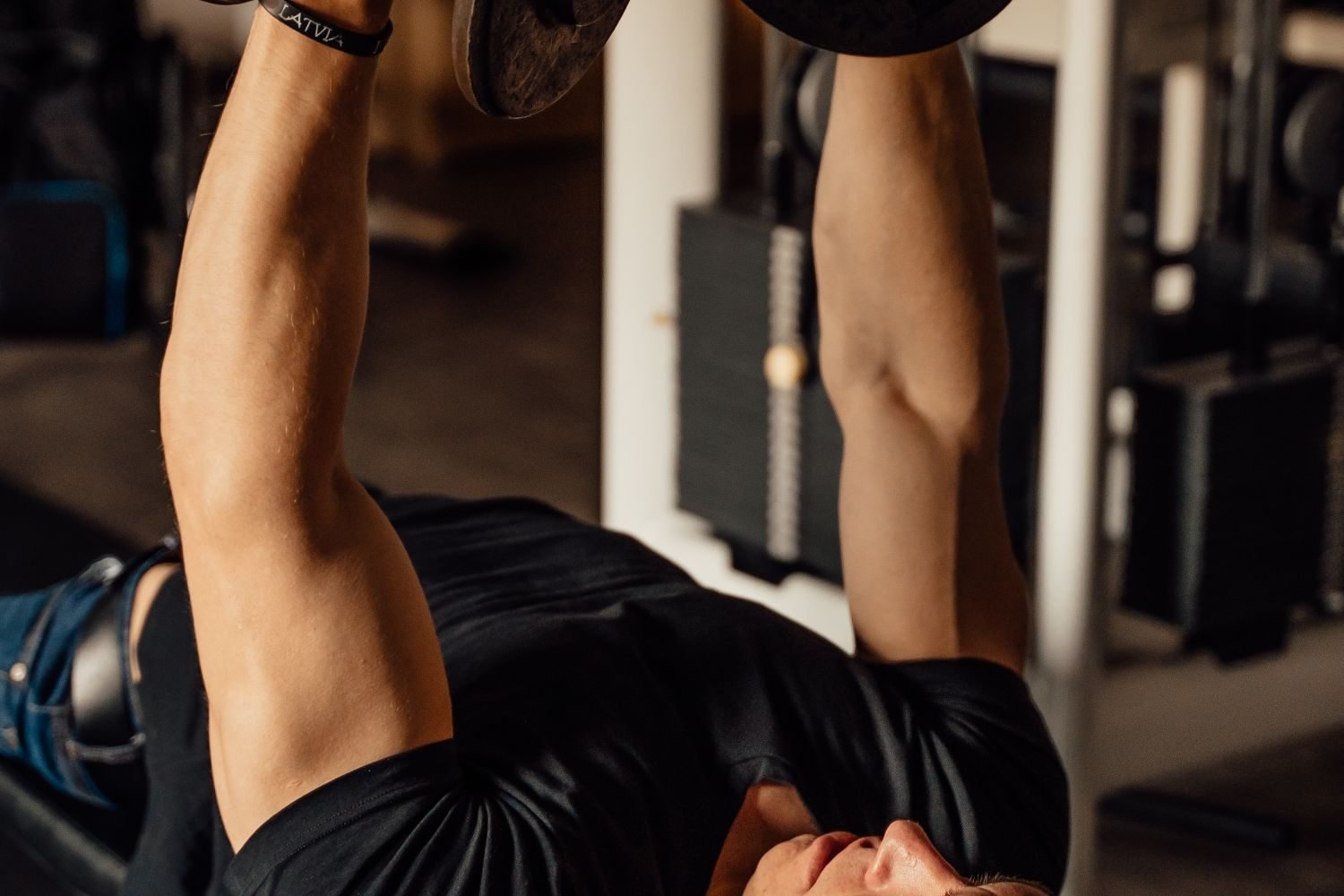
| Exercise | Sets | Reps | Rest |
|---|---|---|---|
| Barbell Bench Press | 4 | 6-8 | 2-3 min |
| Incline Dumbbell Press | 3 | 8-10 | 90 sec |
| Cable Chest Fly | 3 | 12-15 | 60 sec |
| Barbell Curl | 4 | 8-10 | 90 sec |
| Incline Dumbbell Curl | 3 | 10-12 | 60 sec |
| Hammer Curl | 3 | 12-15 | 45-60 sec |
Swap any of these for equipment you actually have access to. Push-ups can replace bench press if you’re training at home, and resistance band curls work fine in place of a barbell. The exercise selection matters less than the structure: heavy compound push first, isolation push second, then heavy pull, then isolation pull.
How Do You Order the Exercises for Best Results?
Always start with your heaviest, most technical chest movement while you’re fresh. A flat barbell bench press or heavy dumbbell press demands full-body tension and coordination, and you don’t want to attempt it after your grip is already fatigued from curls. Finish chest with something isolation-focused like flyes, where fatigue matters less than mind-muscle connection.
Then flip to biceps and repeat the pattern: heaviest movement first (barbell or EZ-bar curl), then isolation and single-arm variations after. Some people prefer alternating sets, a chest exercise then a bicep exercise, back and forth through the session instead of finishing one muscle group entirely before starting the next. Both approaches work. Alternating can shorten your total session time since you’re resting one muscle while working the other, which is worth trying if you’re short on time.
How Many Sets and Exercises Do You Actually Need?
Three exercises per muscle group is enough for most people, which puts a full session at five to six total exercises. Anything beyond that and you’re adding junk volume without adding results, especially for biceps, which are a small muscle that responds well to focused, moderate volume rather than exhaustive isolation work.
Aim for somewhere between nine and twelve total working sets per muscle group across the week if chest and biceps only show up once. If you’re hitting each of them twice weekly across your split, six to eight sets per session per muscle is plenty. Don’t chase soreness. Chase progressive overload on the same handful of movements over weeks.
Should You Train Chest With Triceps or With Biceps?
Neither is objectively correct. Triceps pairing suits people training four-plus days a week who want maximum pressing-muscle synergy and don’t mind training already-fatigued triceps. Biceps pairing suits people training three days a week, people who want fresher arm training, or people building a push/pull rhythm into a shorter split. If you’re unsure which fits your schedule, look at your weekly training frequency first, then build the pairing around that rather than around what looks common online. For a broader look at chest training options outside this specific pairing, our guide to chest workouts breaks down other splits and exercise variations worth considering.
What If You Want More Structure Around This?
A lot of people ask us for the “right” way to do this pairing, and honestly, there isn’t a single right way. What matters more is consistency, progressive loading, and recovery between sessions. If your arms are still sore two days later, you probably don’t need to add volume, you need to give them another day before hitting them again. This is where working with a coach on a personalized plan pays off, because your ideal split depends on your recovery, your schedule, and your specific goals, not a generic template pulled off the internet.
If you want a program built specifically around your split, your equipment, and your recovery capacity rather than a one-size-fits-all template, our 1-on-1 personal training service pairs you with a coach who builds and adjusts your sessions week to week based on how you’re actually responding, not a fixed plan you’re stuck following for months.
If you’re newer to bicep training specifically and want a slower on-ramp before jumping into a full pairing like this, our biceps workout for beginners guide is a good starting point. And if you’re curious how this same push/pull logic applies to shoulders instead of chest, check out our shoulder and bicep workout breakdown for a comparable antagonist pairing built around a different pushing muscle.
Frequently Asked Questions
Is it good to train chest and biceps together?
Yes, for the right person. Since chest pushes and biceps pull, neither muscle interferes with the other’s performance during the session. It’s a strong option for people training three days a week or anyone who wants fresh biceps rather than training them after triceps have already worn down your pressing strength.
What is a good chest and bicep workout?
A good session opens with a heavy compound chest press, adds one or two isolation chest movements, then moves into a heavy bicep curl variation followed by isolation curls. The sample workout above (bench press, incline press, cable fly, barbell curl, incline curl, hammer curl) covers that structure in six exercises.
Should you train chest with triceps or biceps?
It depends on your split. Chest and triceps suits higher-frequency training weeks because triceps are already engaged during pressing, so you’re finishing off a muscle that’s partially fatigued anyway. Chest and biceps suits lower-frequency splits, typically three days a week, where you want a true push/pull balance in one session and fresher arm training.
How many exercises for chest and biceps?
Three exercises per muscle group, so five to six total, covers most training goals without turning into junk volume. Start heavy and compound for each muscle, then finish with one or two isolation movements.
Can beginners do a chest and bicep workout together?
Yes. Beginners generally recover fast enough to handle a session with both pushing and pulling elements. Keep the exercise count on the lower end, around four to five total movements, and focus on form before adding weight or volume.