A good chest workout does three things at once: it hits the upper, middle, and lower fibers of the pectoralis major, it pairs a heavy pressing movement with a stretch-focused flye or cable movement, and it adds a little more weight or a rep or two over time. Skip any one of those and you get a chest that grows slowly, unevenly, or not at all. Most people training chest twice a week are doing flat bench and calling it a day, which is why so many lifters end up with a flat, square-looking chest instead of the full, rounded shape they actually want.
In this guide we’ll break down what your chest is actually made of, why pressing alone won’t build it, and give you a complete sample workout you can start using this week. We’ll also flag the mistakes we see most often when we coach clients through their first few months of structured chest training.
What muscles make up your chest?
Your chest is built almost entirely by one muscle: the pectoralis major. It’s a big, fan-shaped muscle, and that shape matters for how you train it. The fibers run in three general directions, often grouped into upper (clavicular), middle (sternal), and lower (costal) sections. Underneath sits the pectoralis minor, a smaller muscle that mostly helps stabilize the shoulder blade rather than add visible size.
Here’s the part most gym-goers miss. Because the fibers run in different directions, no single exercise trains all of them equally. A flat bench press loads the middle fibers hardest. An incline press shifts more of the work to the upper fibers. Dips and decline pressing bias the lower fibers. This is why a chest day built entirely around flat bench press produces a chest that’s strong but flat across the top, the classic “sunken upper chest” look you’ll notice in lifters who’ve benched for years but never trained incline seriously.
What does a complete chest workout actually need?
Three to four exercises is the sweet spot for most people, not eight. A complete chest session needs:
- One heavy compound press — your main strength and mass builder for the session.
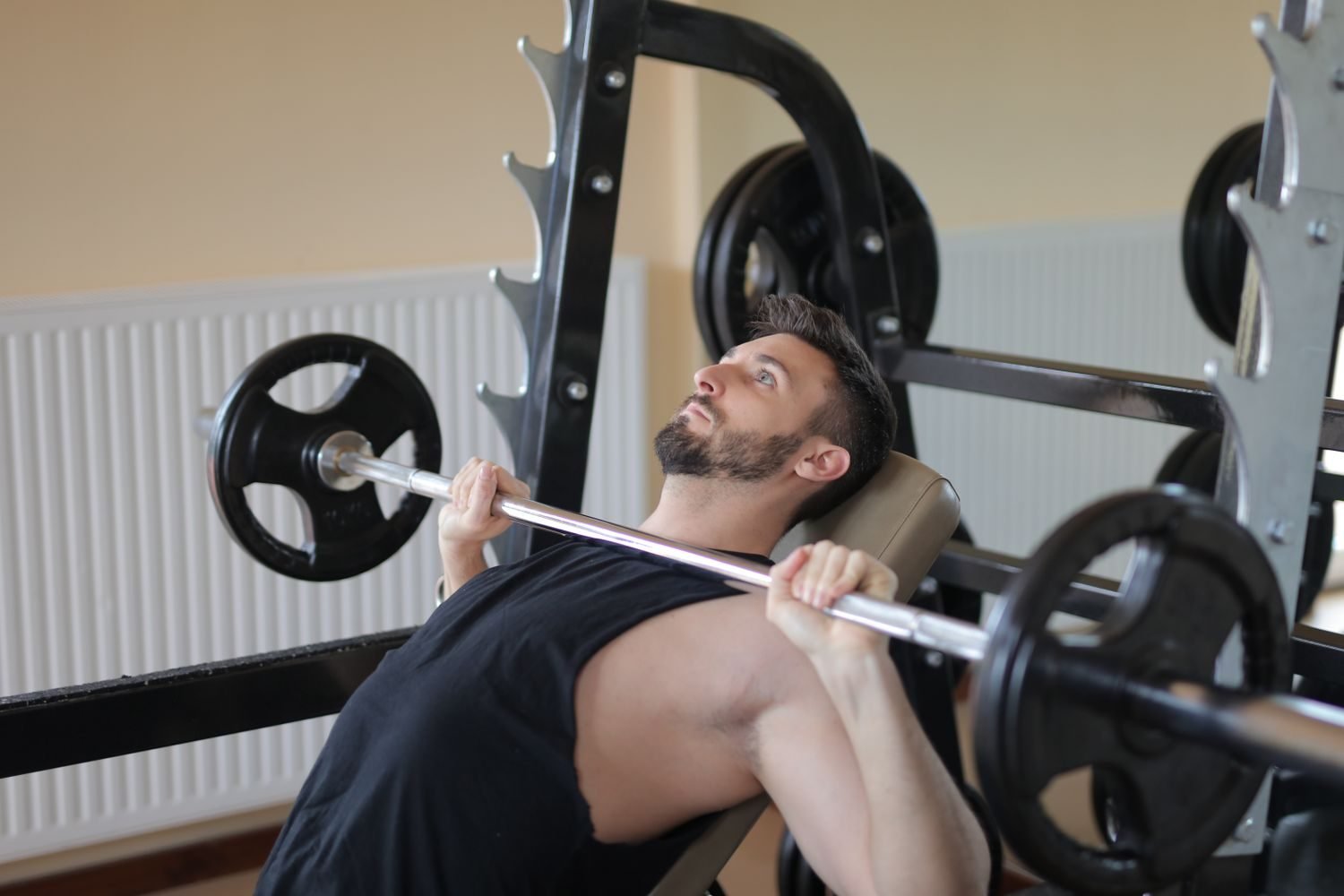
- One incline movement — for the upper chest fibers a flat press mostly skips.
- One lower-chest or pressing-variety movement — dips or a decline press to round out the fiber directions.
- One flye or cable movement — for isolation and a deep stretch under load.
Research on incline angle backs this up: setting the bench between 30 and 45 degrees activates the upper chest noticeably more than flat pressing, and going past 45 degrees starts shifting the load onto your front delts instead, which defeats the point.
Flyes and cable crossovers earn their spot for a different reason. They let your arms travel through a longer range of motion than a press allows, stretching the chest under load at the bottom of the movement. That stretch is where a lot of the growth signal comes from, and it’s something pressing movements alone don’t fully deliver.
Sample chest workout
This is the workout we build out for most intermediate clients starting a dedicated chest day. Rest 90 seconds to 2 minutes between sets on the presses, and 60 to 90 seconds on the isolation work.
| Exercise | Sets | Reps |
|---|---|---|
| Flat barbell bench press | 4 | 6-8 |
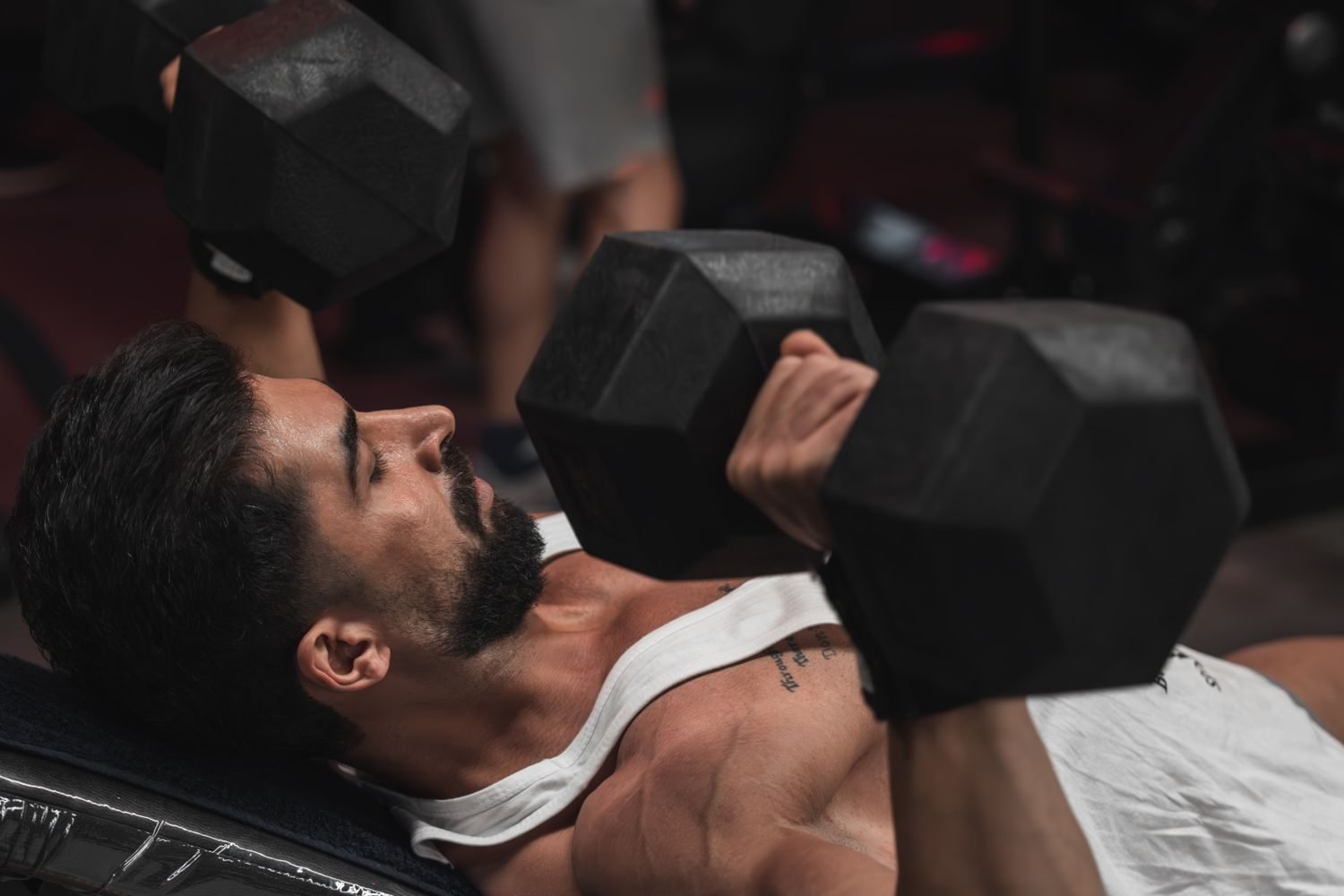
| Incline dumbbell press (30-45°) | 3 | 8-10 |
| Weighted dips or decline bench press | 3 | 8-12 |
| Dumbbell flye or cable crossover | 3 | 12-15 |
| Push-ups (finisher, bodyweight) | 2 | To near failure |
Start with the flat bench press while you’re freshest, since it’s the movement where you can move the most weight. Incline work goes second, before fatigue makes it tempting to lean back and turn it into a quarter-rep shoulder press. Dips or decline pressing come next, and the flye or cable crossover finishes the session, since isolation work is far more effective when your chest is already warmed up and partially fatigued. For more exercise variety beyond the five moves above, our chest workout names and variations guide has options to rotate in every few months.
How often should you train chest?
Twice a week works well for most lifters, with at least 48 hours between sessions. One heavier, press-focused day and one lighter day with more flyes and higher reps covers both strength and the isolation volume the upper and lower fibers need. Training chest once a week is fine if you’re short on time, but you’ll build size more slowly. Training it more than twice a week rarely helps unless you’re an advanced lifter managing volume carefully, and it often just adds junk volume that slows recovery. If you’re pairing chest with other push muscles on the same day, our chest, shoulder, and tricep push day guide shows how to sequence that session properly.
What’s the most common chest training mistake?
In our experience coaching clients, it’s neglecting the upper chest. People default to flat bench because it’s the exercise they know, the one with a number attached to it they can chase. Incline work feels awkward and the weights go up slower, so it gets skipped or tacked on as an afterthought for one light set. Six months later they’ve got a strong flat bench but their upper chest hasn’t moved, and their chest looks disproportionate in a t-shirt even though their bench numbers went up.
The second mistake is almost as common: turning every pressing movement into a shoulder exercise by flaring the elbows too wide or setting the incline too steep. If your shoulders are more sore than your chest the day after a chest workout, something in your setup needs fixing, usually elbow angle or bench angle, before you add more weight.
How does chest training fit into a bigger program?
If you’re running a push/pull/legs split, chest usually gets paired with shoulders and triceps on a push day, since all three muscles are already working together during pressing movements, and sequencing them properly keeps shoulders from getting overtrained by the time you reach isolation work.
If you prefer an upper/lower or bro-split structure, chest and biceps is another common pairing, mostly because it leaves triceps fresh for a separate arm-focused day. We’ve laid out a full session in our chest and bicep workout guide. And if you’re building muscle across a full week rather than just one session, it’s worth seeing how chest training fits into a complete split. Our bulking workout plan guide walks through a 4-day split with a dedicated chest and triceps day and how the volume balances across the week.
Do you need progressive overload for chest growth?
Yes, and it’s the part most people get wrong even when their exercise selection is solid. Progressive overload just means giving your chest a reason to adapt over time, whether that’s more weight, an extra rep, a slower eccentric, or better form on the same load. If you’re bench pressing the same 60 kilos for 8 reps every week for three months, your chest has no reason to grow. Log your sets. Add small jumps, 2.5 kilos on a press or one rep on a flye, and track it. It sounds basic because it is, but it’s the single biggest driver of results once your exercise selection and form are already sound.
This is also where working with a coach tends to pay off fastest. A lot of plateaus we see aren’t about exercise selection at all, they’re about someone doing the same workout for six months without ever adjusting load, tempo, or volume. If you want a program built around your specific chest, shoulders, and overall physique goals rather than a generic template, our 1-on-1 personal training program builds that progression in from week one and adjusts it as you go.
Frequently asked questions
What are chest workouts?
Chest workouts are training sessions built around exercises that target the pectoralis major, the main chest muscle, along with supporting muscles like the shoulders and triceps. A well-designed chest workout combines pressing movements like bench press with isolation movements like flyes to train the upper, middle, and lower fibers of the chest.
How do you do chest workouts properly?
Start with a heavy compound press like flat or incline bench, follow it with a secondary press or dip movement, then finish with a flye or cable crossover for isolation. Keep elbows at roughly a 45 to 75 degree angle from your torso on presses to protect your shoulders, and control the eccentric rather than dropping the weight.
What are the benefits of chest workouts?
Chest workouts build upper body pressing strength that carries over to daily tasks and other lifts like the overhead press. They improve posture-related strength around the shoulder girdle when balanced with back work, and they’re one of the more visible areas of muscle growth, which is often what keeps people consistent with training.
How many chest exercises should I do per workout?
Three to four exercises per session is enough for most lifters. One heavy press, one incline or decline variation, and one flye or cable movement covers all three regions of the chest without turning the session into a two-hour marathon that hurts recovery.
Can you train chest every day?
No, and you shouldn’t try to. The chest needs 48 to 72 hours to recover between sessions, especially after heavy pressing. Training it daily leads to accumulated fatigue, worse performance in later sessions, and a higher injury risk without any extra growth to show for it.