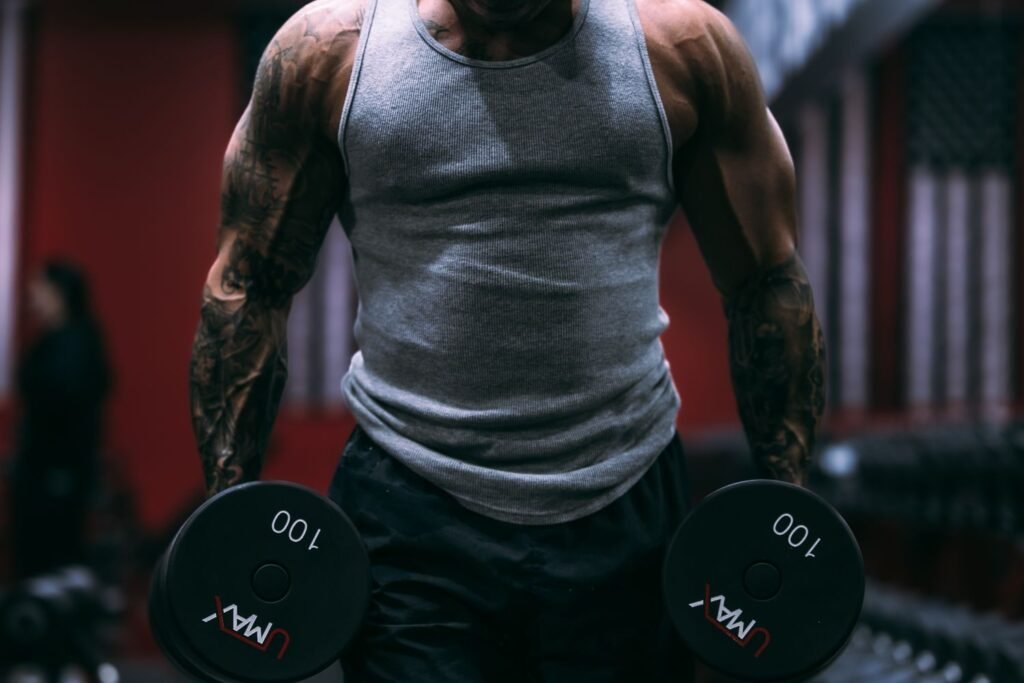
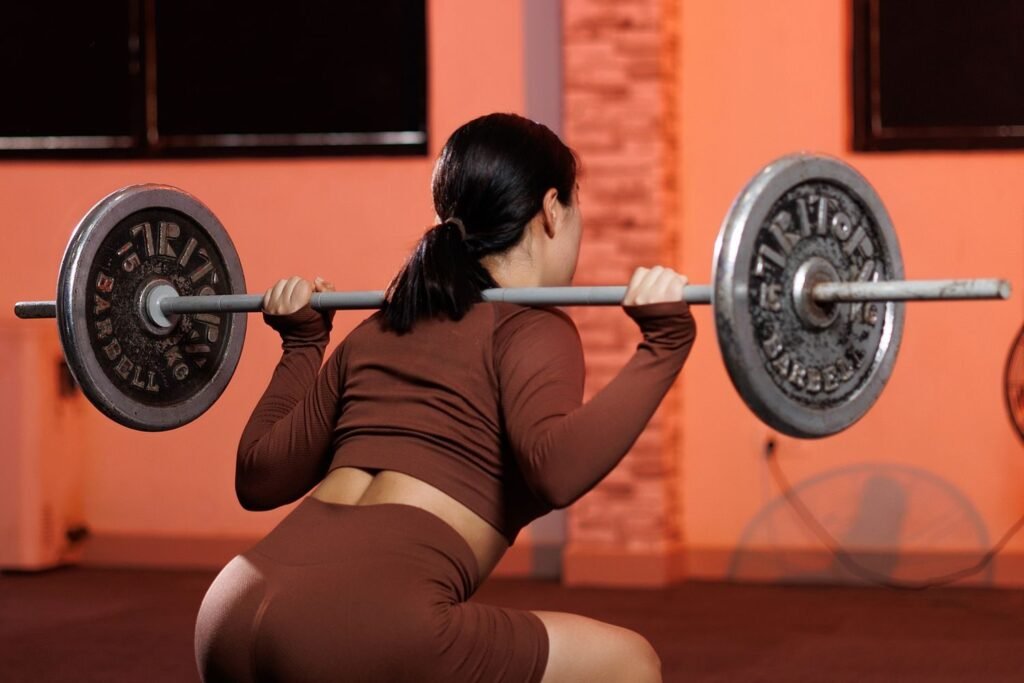
A shoulder and bicep workout pairs a push muscle group (shoulders) with a pull muscle group (biceps) in the same training session, similar to how chest and bicep day works. The shoulders press and the biceps curl, so one muscle group rests while the other works, which means you keep intensity high through the whole session instead of grinding one tired muscle group after another. It’s a smart antagonist-style pairing that fits well into a 4 or 5 day split, and it’s one of the pairings we build often for clients who want a heavier shoulder focus without sacrificing arm volume.
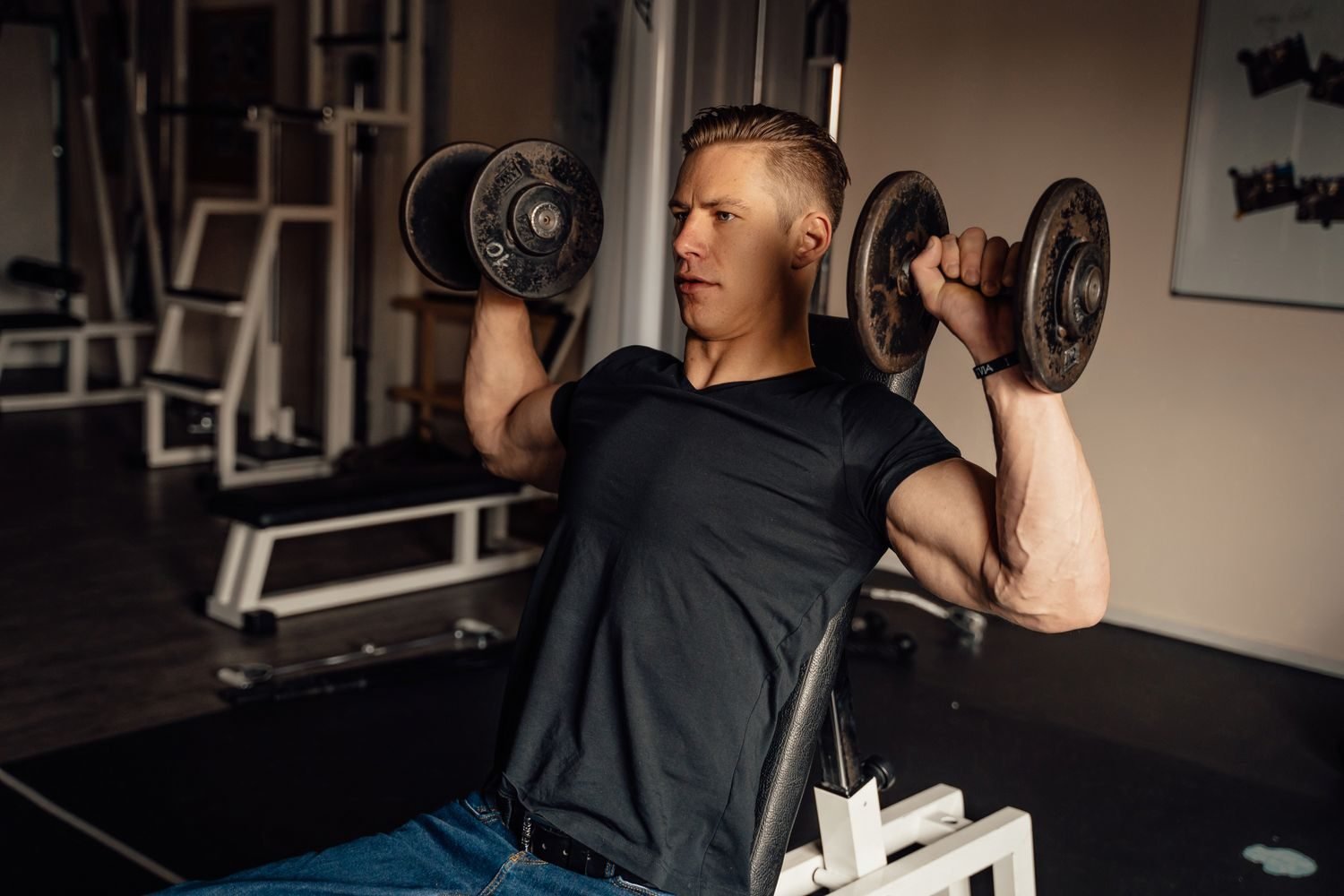
Why Pair Shoulders and Biceps in One Session?
Shoulders are a push muscle. Biceps are a pull muscle. When you train them back to back, the biceps get a genuine break while the shoulders work, and vice versa. This isn’t the case when you pair, say, shoulders with triceps, where both muscles are pushing and fatigue stacks up fast. We build this pairing for clients because it lets you train shoulders with real intensity, heavy presses, strict form, full range, and then move into biceps while your shoulders are still recovering blood flow but your arms are fresh.
There’s also a practical training split reason. A lot of people run push/pull/legs or an upper/lower split, and shoulders often get bundled in with chest on push day, leaving them under-trained relative to how many angles they actually need (front delt, side delt, rear delt). Splitting shoulders out into their own day and pairing them with biceps gives shoulders the dedicated volume they deserve, especially the side and rear delts that get neglected when they’re an afterthought after four sets of bench press.
When Does This Pairing Make the Most Sense?
This works best if you’re training 4 to 6 days a week and want more than one exercise per muscle group per session. If you’re only training 3 days a week, a full body or upper/lower split usually serves you better than isolating shoulders and biceps together. But once you’ve got the volume to spread across more sessions, shoulder and bicep day becomes a strong addition, usually placed a day or two after chest and tricep day so your pressing muscles aren’t doubling up back to back.
It also makes sense if you’ve read our shoulder workout routine and realized you want a full day dedicated to delts, but don’t want biceps sitting untouched for a week. Pairing them keeps your arms in the weekly rotation without adding an extra training day just for a small muscle group.
How Do Shoulders and Biceps Work as a Push and Pull Pair?
Every pressing movement, overhead press, lateral raise, arnold press, recruits the deltoids as the prime mover and the triceps as a secondary mover. Every curling movement, barbell curl, hammer curl, incline curl, recruits the biceps as the prime mover with almost no crossover into the shoulder joint’s pressing mechanics. That separation is what makes the pairing efficient. You’re not asking the same muscle to push and then immediately support a pull, so your second exercise doesn’t start from a fatigue deficit the way chest and triceps do.
If you want the direct comparison, our chest and bicep workout article covers the same logic but built around the chest as the primary push muscle instead of the shoulders. Both are antagonist pairings. The difference is that shoulder work hits three distinct heads (front, side, rear delt) rather than one broad muscle, so a shoulder and bicep day tends to have more total exercises packed in.
What Does a Full Shoulder and Bicep Workout Look Like?
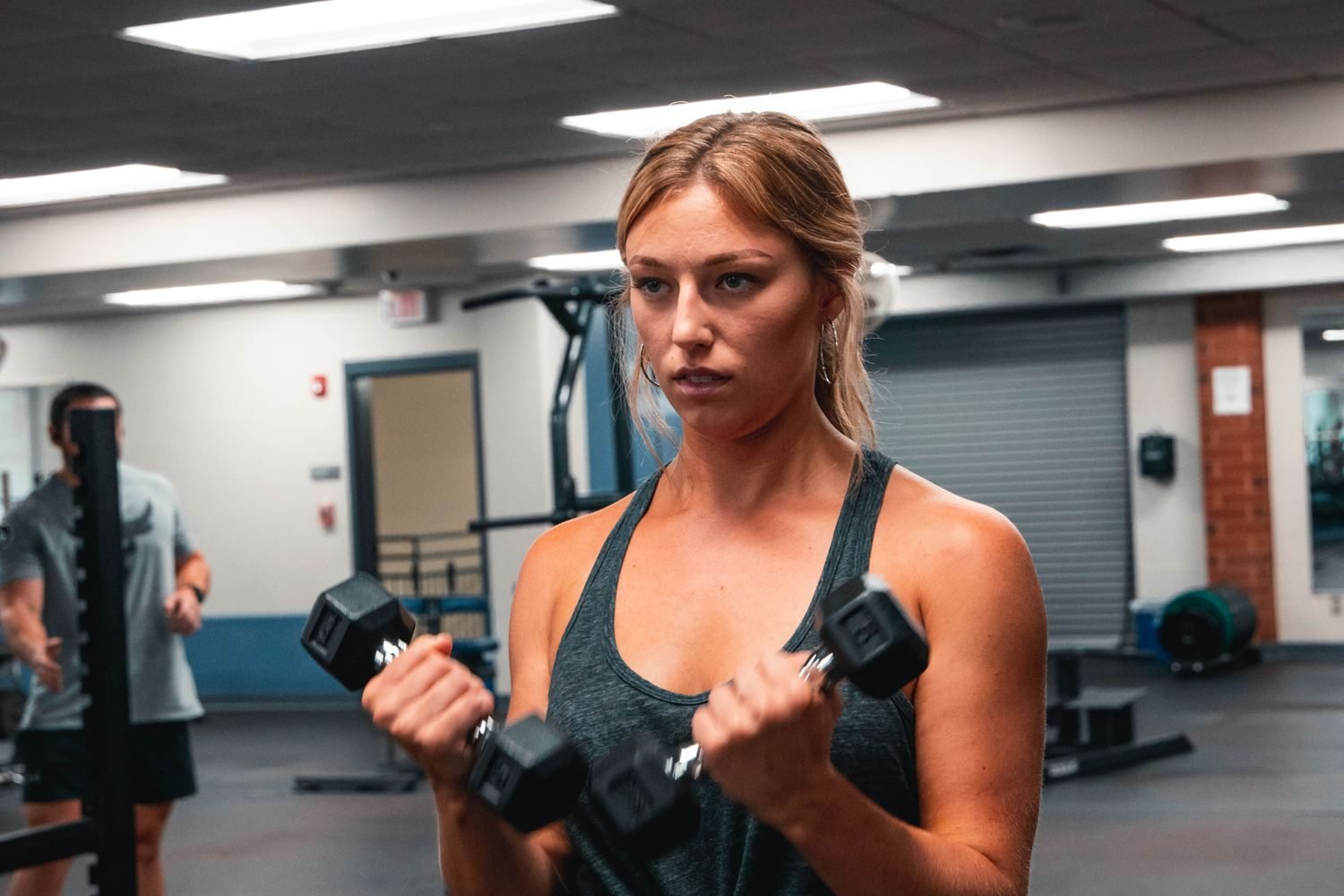
Here’s a sample session we’d give a client training at an intermediate level, roughly 60 to 75 minutes including warm-up. Adjust load based on your own strength levels, and don’t chase the weight on lateral raises, that’s where most people cheat their form.
| Exercise | Sets | Reps | Rest |
|---|---|---|---|
| Seated Dumbbell Shoulder Press | 4 | 8-10 | 90 sec |
| Barbell or Cable Lateral Raise | 4 | 12-15 | 60 sec |
| Rear Delt Fly (machine or dumbbell) | 3 | 12-15 | 60 sec |
| Front Raise (plate or dumbbell) | 3 | 10-12 | 60 sec |
| Barbell Bicep Curl | 4 | 8-10 | 75 sec |
| Incline Dumbbell Curl | 3 | 10-12 | 60 sec |
| Hammer Curl | 3 | 10-12 | 60 sec |
| Cable Curl (rope or straight bar) | 2 | 12-15 | 45 sec |
That’s eight exercises total, four for shoulders and four for biceps, which gives each muscle group enough volume to actually grow without turning the session into a three hour ordeal. If you’re newer to training, you can trim this down to two shoulder exercises and two bicep exercises and still get a solid workout in.
How Should You Order and Rest Through the Session?
Start with the heaviest compound shoulder movement while you’re fresh, that’s your seated press. Save isolation work like lateral raises and rear delt flys for after, since they don’t need the same neural energy that heavy pressing does. Once shoulders are done, move straight into biceps starting with the heaviest curl variation (usually barbell curls) and finish with lighter, higher rep isolation work like cable curls.
Rest periods matter more than people think. Give yourself 90 seconds on heavy shoulder presses so you’re not sacrificing form on rep six. You can cut rest shorter on bicep work, 45 to 75 seconds is enough since the muscle group is smaller and recovers faster between sets. We see a lot of clients rush their shoulder press rest to get to the “fun” bicep exercises faster, and it shows up as sloppy form and stalled strength on the press within a few weeks.
What Mistakes Should You Avoid on Shoulder and Bicep Day?
A few mistakes show up again and again on this split:
- Skipping rear delts. Most people default to front and side delt work because those are the muscles you see in the mirror, but neglected rear delts lead to rounded shoulders and posture issues over time. If you want a deeper breakdown of all three deltoid heads and how to hit each one properly, our deltoid workouts guide goes into that in detail.
- Swinging on curls to move more weight. Bicep isolation only works if the bicep is doing the work, not your hips and lower back. Keep your elbows pinned to your sides and control the eccentric portion of every rep. If you’re just getting started with curls and want the fundamentals first, check out our biceps workout for beginners before jumping into a full four-exercise arm block.
- Treating this as a light “arm day” instead of a real training session. Shoulders are a bigger, more complex muscle group than people give them credit for, and undertraining them because you’re saving energy for curls is a common way to stall shoulder development for months.
How Do You Know If This Split Is Right for You?
If your current split has shoulders crammed into the same day as chest, and your side delts and rear delts are lagging visibly compared to your chest and arms, splitting shoulders out and pairing them with biceps is worth testing for a full training block. Give it six to eight weeks before judging results. Muscle groups that were previously undertrained usually respond fast once they get dedicated volume and a fresh training slot in the week.
Not everyone needs a custom split written out for them, but a lot of people get stuck guessing at exercise order, rest periods, and progression without ever knowing if it’s actually working. That’s exactly the gap our 1-on-1 personal training program at FitStrot is built to close. You get a program built around your actual schedule and recovery, with a coach checking your form and adjusting load as you progress, not a generic plan you found online.
Is it good to train shoulders and biceps together?
Yes. Shoulders are a push muscle and biceps are a pull muscle, so pairing them lets one group recover while the other works. This keeps your intensity high through the whole session and is a common, effective way to structure a 4 to 6 day training split.
What is a good shoulder and bicep workout?
A good session covers all three deltoid heads (front, side, rear) with at least one compound press and a couple of isolation movements, followed by two to four bicep exercises that mix barbell, dumbbell, and cable curls for different angles of tension. The sample workout above is a solid template to start with.
How many exercises for shoulders and biceps?
Most intermediate lifters do well with three to four shoulder exercises and three to four bicep exercises per session, totaling around seven to eight exercises. Beginners can scale that down to two exercises per muscle group and still see solid progress.
Should biceps be trained with shoulders or back?
Both work, and it depends on your split. Biceps paired with back (a pull and pull combination) means your biceps are already partially fatigued from rows and pull-ups before direct curl work, which can limit your curling strength. Biceps paired with shoulders means your arms are fresh going into curls since shoulders are a separate push movement pattern. If you want maximum bicep strength and volume, pairing with shoulders usually lets you lift heavier on curls.