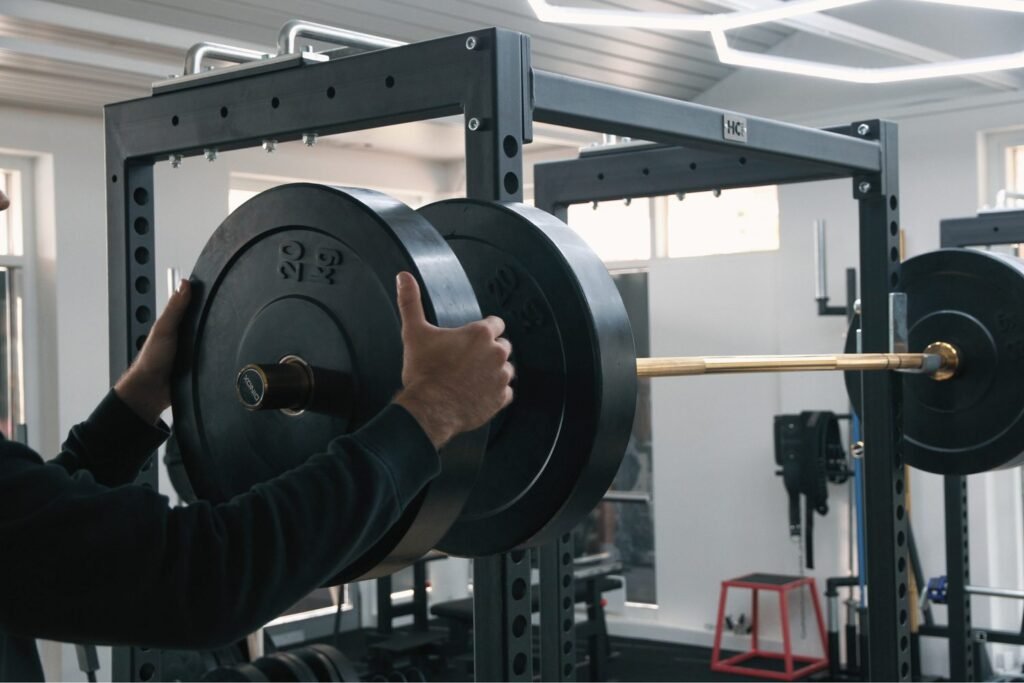
A lower body workout day trains the muscles below your waist: quads, hamstrings, glutes, and calves, usually alongside your core and lower back for stability. In an upper/lower split, this is one of two training days you repeat each week, the other being upper body. The idea is simple. You hit your legs and posterior chain hard on one day, let your upper body rest, then flip it the next session. It gives every muscle group two full training days a week without you needing to be in the gym five or six times.
This isn’t a rehash of a full leg-day breakdown. If you want the deep dive on every squat variation, machine, and accessory lift, our leg workouts at the gym guide covers that in detail. What we’re covering here is how a lower body day sits inside a weekly split, why the programming logic matters more than the exercise list, and how to build a session that actually fits your week.

What Actually Counts as a Lower Body Day?
A lower body day is broader than a pure leg day. Because you’re training the whole lower half in one session and not coming back to it for three or four days, most upper/lower programs fold in a bit more than just quads and hamstrings. A typical lower body day includes:
- A primary compound lift (squat, deadlift, or a hinge/leg press variation)
- A secondary compound movement for the pattern you didn’t lead with
- Unilateral work like lunges or split squats
- Isolation work for hamstrings, glutes, or calves
- Sometimes a short core block, since you’re already on the floor and warmed up
You don’t need every single one of these every time. But the day is built around covering the major lower body patterns in one sitting rather than spreading them thin across the week.
How Does Lower Body Day Fit Into an Upper/Lower Split?
The most common setup is four days a week: upper, lower, rest, upper, lower, then two rest or active recovery days. Some people run it as upper/lower/upper/lower back to back with one rest day in the middle, which works fine too if recovery holds up. The point of the split is frequency. Training legs twice a week beats training them once, even if the total weekly sets stay similar, because you spread the stimulus and recovery demand across more sessions instead of front-loading it into one brutal workout.
Where this differs from a dedicated leg day in a bro split or a push/pull/legs routine is volume per session. In PPL, your leg day often carries every set your legs get that week. In upper/lower, you’re splitting that volume across two lower sessions, so each individual workout can be a bit shorter and the intensity easier to manage without wrecking your ability to walk properly the next day.
What Does a Sample Lower Body Day Look Like?
Here’s a straightforward lower body day you could drop into an upper/lower split. It covers a squat pattern, a hinge pattern, unilateral work, and a bit of core, without turning into a two-hour session.

| Exercise | Sets x Reps | Rest |
|---|---|---|
| Barbell Back Squat | 4 x 6-8 | 2-3 min |
| Romanian Deadlift | 3 x 8-10 | 2 min |
| Walking Lunges | 3 x 10-12 per leg | 90 sec |
| Leg Press or Leg Curl | 3 x 10-12 | 90 sec |
| Standing Calf Raise | 3 x 12-15 | 60 sec |
| Hanging Knee Raise or Plank | 3 x 12-15 or 30-45 sec | 45 sec |
Swap the squat for a front squat, the RDL for a trap bar deadlift, or the leg press for a hack squat depending on what your gym has and how your knees or lower back feel that week. The pattern matters more than the exact machine. If you want more variations and a proper breakdown of technique, that’s what the leg workouts at the gym guide is for.
How Many Sets and Reps Should You Do on Lower Body Day?
For most people training lower body twice a week, 12-18 total working sets per session across all the major patterns is a reasonable range. That’s split roughly as 4-6 sets on your main compound lift, then 8-12 spread across accessories. Reps tend to sit lower (5-8) on the heavy compound and climb to 10-15 on accessory and isolation work. This isn’t a hard rule. Someone chasing strength will bias lower reps and heavier loads on the main lift, while someone training for general fitness or fat loss might keep everything in the 8-12 range and focus more on consistency than load.
Should You Train Lower Body Once or Twice a Week?
Twice, if your schedule allows it. Training a muscle group more often generally lets you accumulate more quality volume without any single session becoming excessive, and it keeps the movement patterns fresher in your body between sessions. If you can only train three days a week, a full-body approach usually beats squeezing in two lower body days, since you’d be sacrificing upper body frequency to get there. We cover that trade-off in our full-body workout guide if three days a week is closer to your reality.
What Mistakes Do People Make on Lower Body Day?
The biggest one we see in coaching calls is people treating lower body day like a warm-up act before the “real” upper body sessions. They rush the squat, skip the hinge pattern entirely, and end the session in twenty minutes because their legs “feel fine.” Legs recover slower than most people expect, and skipping the hinge movement especially leaves hamstrings and glutes chronically undertrained, which shows up later as knee pain or a weak deadlift.
The second common mistake is the opposite problem: cramming every leg exercise you know into one session because you only train legs twice a week and feel like you need to “make it count.” That just leaves you too sore to move well in your next lower body session, which defeats the point of training the pattern more frequently in the first place. Pick a handful of exercises, do them well, and trust the second session to pick up what the first one didn’t cover.
How Is a Lower Body Day Different From a Dedicated Leg Day?
The exercises overlap a lot, but the framing changes. A leg day in a five or six day split is often the one shot your legs get that week, so it tends to run longer with more exercises and more total volume. A lower body day in an upper/lower split is one of two lower sessions, so it can afford to be tighter and more focused, knowing there’s another lower body session coming in a few days. If you’re set on the classic five-day bodybuilder split with a standalone leg day, the leg workouts at the gym guide walks through that version in full, including machine options and progression tips we don’t repeat here.
Full Body, Upper/Lower, or a Standalone Leg Day: Which Should You Pick?
It comes down to how many days you can realistically train and how your body recovers. Three days a week generally points toward full body. Four days points toward upper/lower. Five or six days opens the door to dedicated leg days and more specialised splits. None of these is objectively “better,” they’re just different ways of distributing the same weekly volume. Pair a lower body day with our upper body workout guide for the standard four-day setup. If you’re unsure which fits your schedule and goals, an online 1-on-1 personal training program can map out a split around your actual week instead of a generic template, and adjust it as your recovery and strength change.
Frequently Asked Questions
What is a lower body workout?
A lower body workout trains the major muscles below your waist, including quads, hamstrings, glutes, and calves, often alongside your core. It’s typically one training day within a split, most commonly paired with an upper body day to cover the whole body across a week.
How do you do a lower body workout?
Start with a compound squat or hinge movement, add a second compound lift for the pattern you didn’t lead with, follow with unilateral work like lunges, then finish with isolation exercises for hamstrings, glutes, or calves. Warm up properly and keep total sets manageable if you’re training legs twice weekly.
What are the benefits of a lower body workout?
Lower body training builds leg and glute strength, supports better posture and balance, and burns more calories than isolated arm or shoulder work because it recruits large muscle groups. Training it twice a week in a split also improves movement patterns like squatting and hinging faster than once-weekly sessions.
Can beginners do a lower body workout day?
Yes, beginners can absolutely start with a lower body day, though it’s worth learning squat and hinge form with lighter loads first. Starting with bodyweight or goblet squats and Romanian deadlifts before adding a barbell helps build confidence and reduces injury risk while the movement pattern becomes familiar.
How is lower body day different from leg day?
Lower body day is usually one of two weekly lower sessions in an upper/lower split, so it stays tighter in volume. Leg day in a five or six day split is often the only weekly session for legs, so it tends to run longer with more exercises and higher total volume per workout.