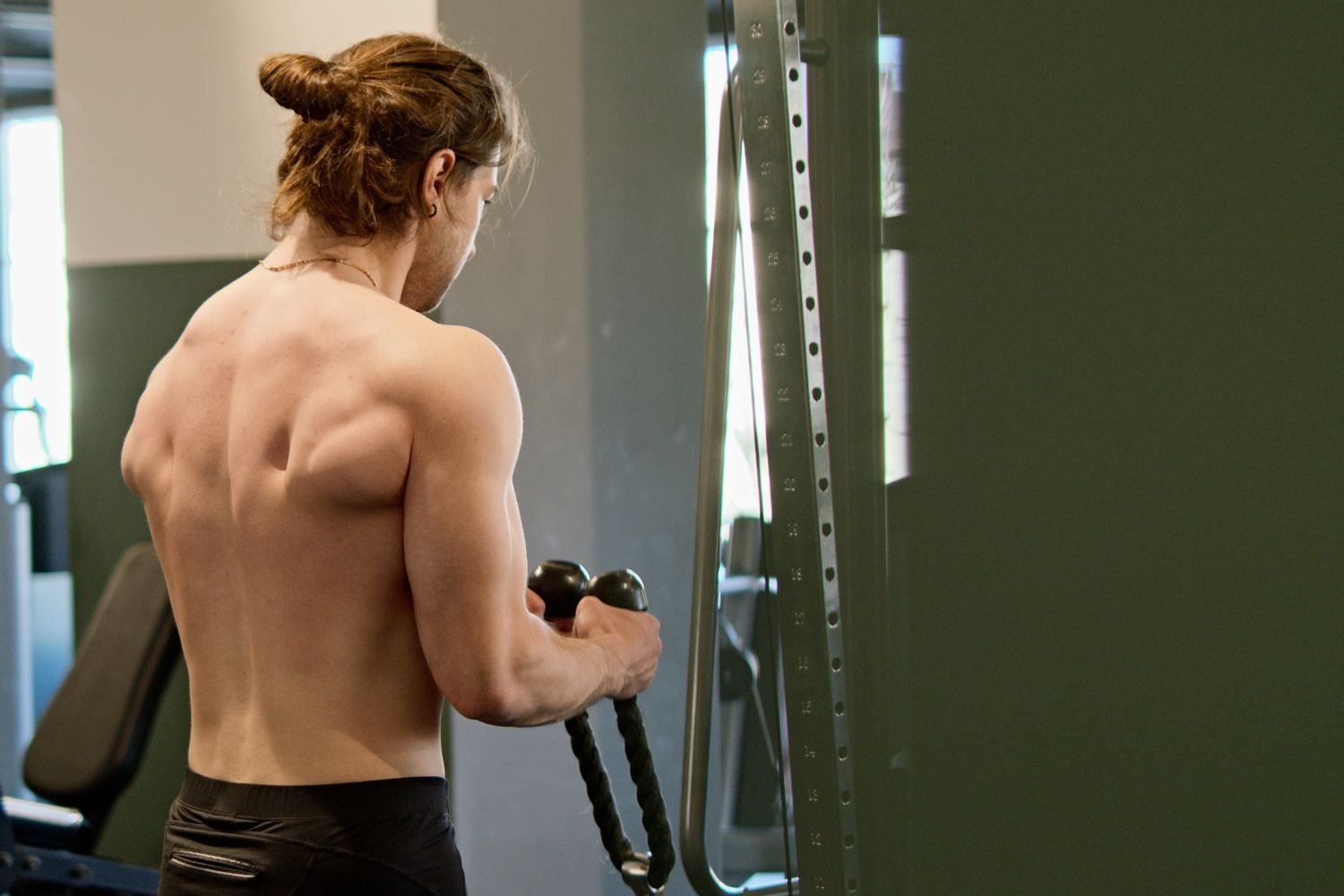
Cable back workouts use a stack machine’s constant resistance to train your lats, rhomboids, traps, and rear delts through a full range of motion, without the momentum and joint strain that heavy barbell rows and pull-ups can bring. At FitStrot we build cable-based back sessions for clients who want serious back development but train from home gyms, small apartment setups, or commercial gyms where a functional trainer or cable stack is more accessible than a full rack. The tension never drops to zero, which means your back muscles work from the first inch of the movement to the last.
Why Do Cable Machines Work So Well for Back Training?
The short answer is tension. With a barbell or dumbbell row, resistance is highest at the top of the movement and nearly disappears at the bottom when gravity stops pulling against you. A cable keeps a consistent pull on the muscle throughout the entire rep, whether your arm is fully extended or fully contracted. That constant load forces your lats and mid-back muscles to stay switched on the whole time, which is exactly what you want for hypertrophy.
Cables also let you change the angle of pull in ways free weights can’t match. You can pull from high, low, or mid-height, from the side, or straight on, hitting the back from angles a barbell simply cannot reach. For clients recovering from shoulder issues or building strength after time off, that adjustability matters. We can dial in a joint-friendly angle instead of forcing a movement pattern that aggravates something.
There’s also the stability factor. A cable machine controls the resistance path, so you can focus on squeezing your shoulder blades together and driving through your elbows rather than fighting to stabilise a free-moving barbell. That makes cables a smart entry point for people newer to structured back training, and a useful tool even for advanced lifters chasing a better mind-muscle connection.
What Are the Best Cable Exercises for Back Development?
A well-built cable back session hits three planes of pulling:
- Vertical – lat pulldown variations
- Horizontal – rows
- Extension – straight-arm pulldowns
Here’s what we rely on most with clients.
Lat Pulldown
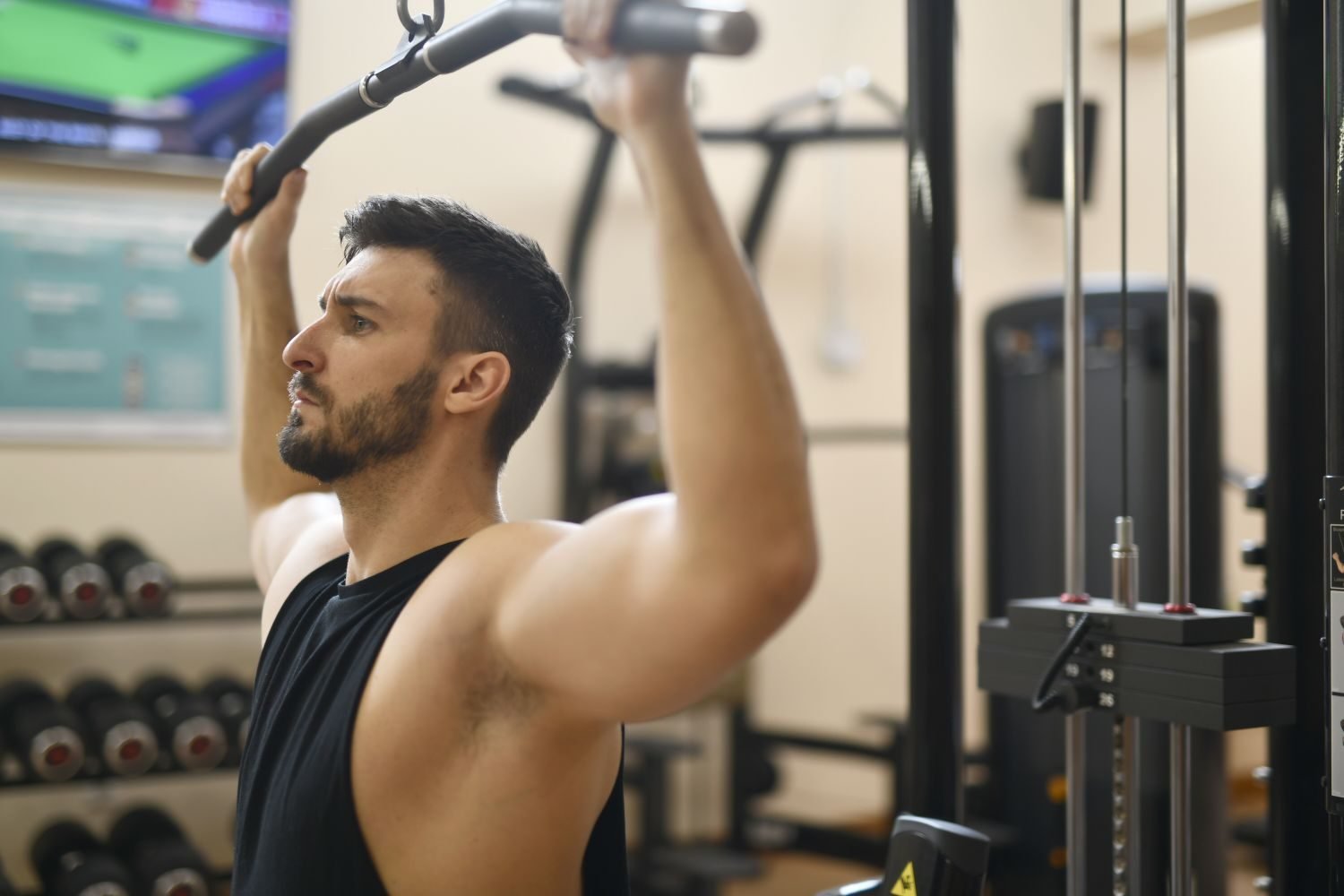
The lat pulldown is the closest cable substitute for a pull-up and the best exercise for building lat width. Sit tall, grip slightly wider than shoulder width, and pull the bar to your upper chest while keeping your torso still. Avoid leaning back excessively to move more weight. The goal is a controlled stretch at the top and a strong squeeze at the bottom.
Seated Cable Row
This is the back’s version of a horizontal press and it builds thickness in the mid-back. Keep your chest up, avoid rounding your lower back, and pull the handle toward your torso while squeezing your shoulder blades together at the finish. Don’t yank with your lower back to add reps, it just shifts tension away from where you want it.
Straight-Arm Pulldown
This one isolates the lats without much bicep involvement, which is useful because most back exercises pull in the biceps as secondary movers. Keep a slight bend in your elbows, hinge from the shoulder, and drive the bar down toward your thighs. We see clients feel their lats working here in a way they never did on pulldowns or rows, because the biceps simply can’t take over.
Single-Arm Cable Row
Training one side at a time exposes strength imbalances that a barbell row can hide. It also lets you rotate slightly at the torso to get a deeper stretch and a fuller contraction than a bilateral row allows. This is a staple in any back and biceps workout because it lets you finish each side completely before moving on.
Face Pulls
Set the pulley to face height, pull the rope toward your face while flaring your elbows out, and focus on squeezing your rear delts and upper traps. This exercise is less about size and more about shoulder health and posture, but it belongs in nearly every cable back session.
Wide-Grip Cable Pulldown to the Chest
A slightly different angle on the standard pulldown, this variation shifts more emphasis onto the outer lats. Small angle changes like this add up over months of training and are part of why we rotate variations for clients doing dedicated upper back workouts.
How Do You Structure a Full Cable-Only Back Workout?
A complete session needs a mix of vertical pulling, horizontal pulling, and a finisher for the rear delts and traps. Here’s a sample cable-only back workout we’ve used with clients who train exclusively on cable machines or functional trainers.
| Exercise | Sets | Reps | Rest |
|---|---|---|---|
| Lat Pulldown (wide grip) | 4 | 8-12 | 75 sec |
| Seated Cable Row | 4 | 10-12 | 75 sec |
| Single-Arm Cable Row | 3 | 10-12 per side | 60 sec |
| Straight-Arm Pulldown | 3 | 12-15 | 60 sec |
| Close-Grip Cable Pulldown | 3 | 10-12 | 60 sec |
| Face Pull | 3 | 15-20 | 45 sec |
Start with the lat pulldown while you’re fresh since it’s the biggest compound movement in the session. Move into rowing patterns next to build thickness, then finish with the straight-arm pulldown and face pulls, which work well as finishers because they don’t need heavy loading to be effective. If you’re short on time, you can drop this to four exercises and still get solid stimulus, but six gives you full coverage of the back’s different muscle groups.
Should You Combine Cable Back Training With Other Muscle Groups?
Yes, and how you pair it depends on your split. If you’re training three or four days a week, pairing back with biceps makes sense because the pulling motion in rows and pulldowns already recruits the biceps, so you’re not wasting energy. Our back and biceps workout guide covers how to sequence that pairing so you don’t fatigue your grip before the heavy pulling work is done. Some clients prefer pairing back with triceps instead to balance a push-pull split across the week, which we walk through in our back and tricep workout piece.
If you don’t have access to a cable machine on a given day, or you’re travelling, you can still train your back effectively with a bodyweight back workout built around rows, pull-ups, and scapular work. It won’t replicate the exact tension curve of a cable, but it keeps the muscle group trained until you’re back at a gym.
Are Cable Exercises Really Better Than Free Weights for Back Training?
Better is the wrong framing. Cables and free weights train the back differently and both have a place. Free weight rows and pull-ups build raw strength and recruit stabiliser muscles that cables don’t challenge as much, since a cable path is fixed and controlled. Cables win on tension consistency, joint-friendly angles, and the ability to isolate the back without your grip or lower back giving out first.
We program most clients with a mix of both. Early in a session when strength is highest, free weight rows or pull-ups make sense. Later in the session, when fatigue is setting in and form starts to break down under free weights, cables let you keep training the muscle safely and with full tension. If you only have access to cables, you’re not missing out on back development, you just need to program smart.
Ready to Build a Back Training Plan That Actually Fits Your Life?
Reading about the right exercises is one thing. Having someone build your split, adjust your loads week to week, and correct your form in real time is what actually moves the needle. Our 1-on-1 personal training programs are built around your equipment access, your schedule, and your specific goals, whether that’s building a wider back, fixing posture, or just training consistently for the first time in years.
Frequently Asked Questions
What are the best cable back exercises?
The lat pulldown, seated cable row, single-arm cable row, straight-arm pulldown, and face pull cover the back’s main movement patterns and muscle groups. Together they train width, thickness, and shoulder stability, which is everything you need for balanced back development.
Can you build a full back with just cables?
Yes. Cables let you train vertical pulling, horizontal pulling, and rear delt work all from one machine, which covers the full functional range of the back. You won’t lose meaningful development by training exclusively on cables as long as your program includes enough volume and variation.
Are cable exercises better than free weights for back?
Neither is strictly better. Free weights build raw strength and stabiliser recruitment, while cables offer constant tension and joint-friendly angles that are easier to control through a full range of motion. Most well-built programs use both.
How many cable exercises should be in a back workout?
Four to six exercises is enough for most people, covering one vertical pull, one or two horizontal rows, a lat isolation movement like the straight-arm pulldown, and a rear delt finisher like face pulls. More than that usually just adds junk volume without extra benefit.
Do cable back workouts help with posture?
Yes. Rowing and pulldown patterns strengthen the muscles that pull your shoulders back and down, which directly counteracts the forward-hunched posture that comes from long hours at a desk. Face pulls in particular are one of the most effective posture-focused exercises you can do on a cable machine.