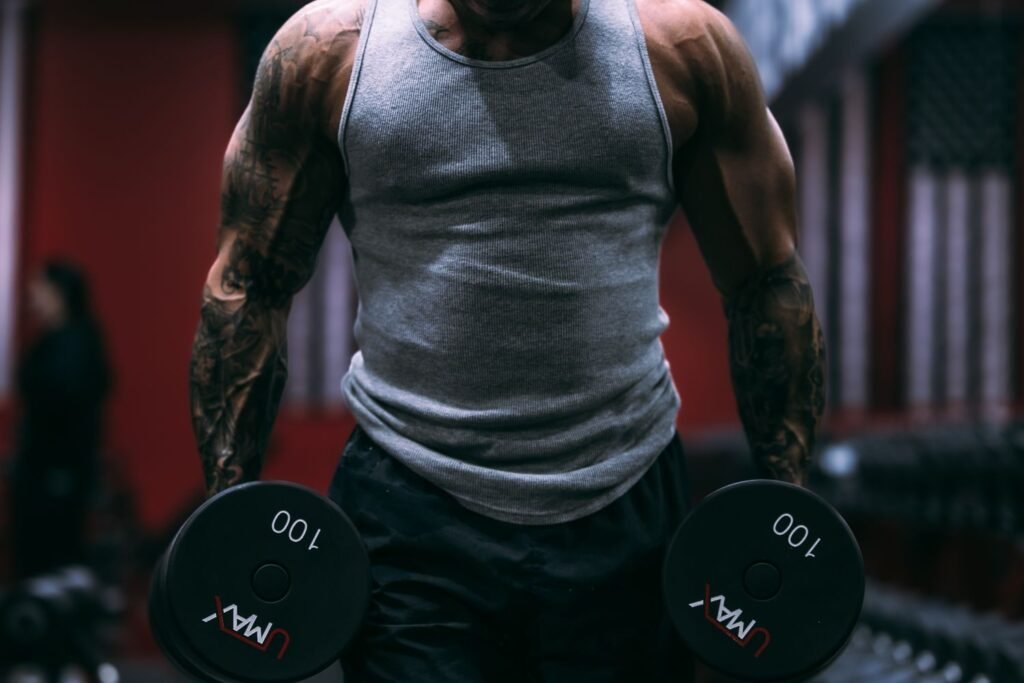
A good beginner biceps workout at the gym uses two to three exercises, focuses on strict form over heavy weight, and trains the muscle two to three times a week with at least one rest day between sessions. At FitStrot we build these sessions around a barbell or dumbbell curl, a hammer curl variation, and one isolation move, done for moderate reps with a controlled tempo. That’s it. You don’t need ten exercises or a fancy machine circuit to see your arms grow. You need consistency, decent form, and a plan you’ll actually stick to.

Why Does Biceps Training Matter for Beginners?
Your biceps do more than fill out a t-shirt sleeve. They’re the primary elbow flexors and they assist in almost every pulling movement you do, from rows to pull-ups to picking up a heavy grocery bag. When we program for a new client at FitStrot, biceps work rarely stands alone. It supports the bigger pulling muscles in the back, often as part of a broader pull day workout, and gives beginners an easy way to learn how load, tempo, and range of motion actually feel before they move on to more technical lifts.
There’s also a confidence piece here that gets ignored in most gym guides. Biceps curls are simple to learn, low risk if you start light, and give you visible feedback fast. For someone walking into a commercial gym for the first time, that combination matters. You build competence with equipment and movement patterns before you’re asked to deadlift or bench under a bar.
How Do You Warm Up Before Training Biceps?
Skip the five-minute arm-specific warmup routines you see online. Two or three minutes of light cardio to raise your heart rate, followed by one light warmup set of whatever curl you’re starting with, is enough. Use a weight you could do 20 reps with, do 10, and move on. The goal is to prime the joint and get blood into the muscle, not to pre-fatigue yourself before the real sets.
What’s a Sample Beginner Biceps Workout?
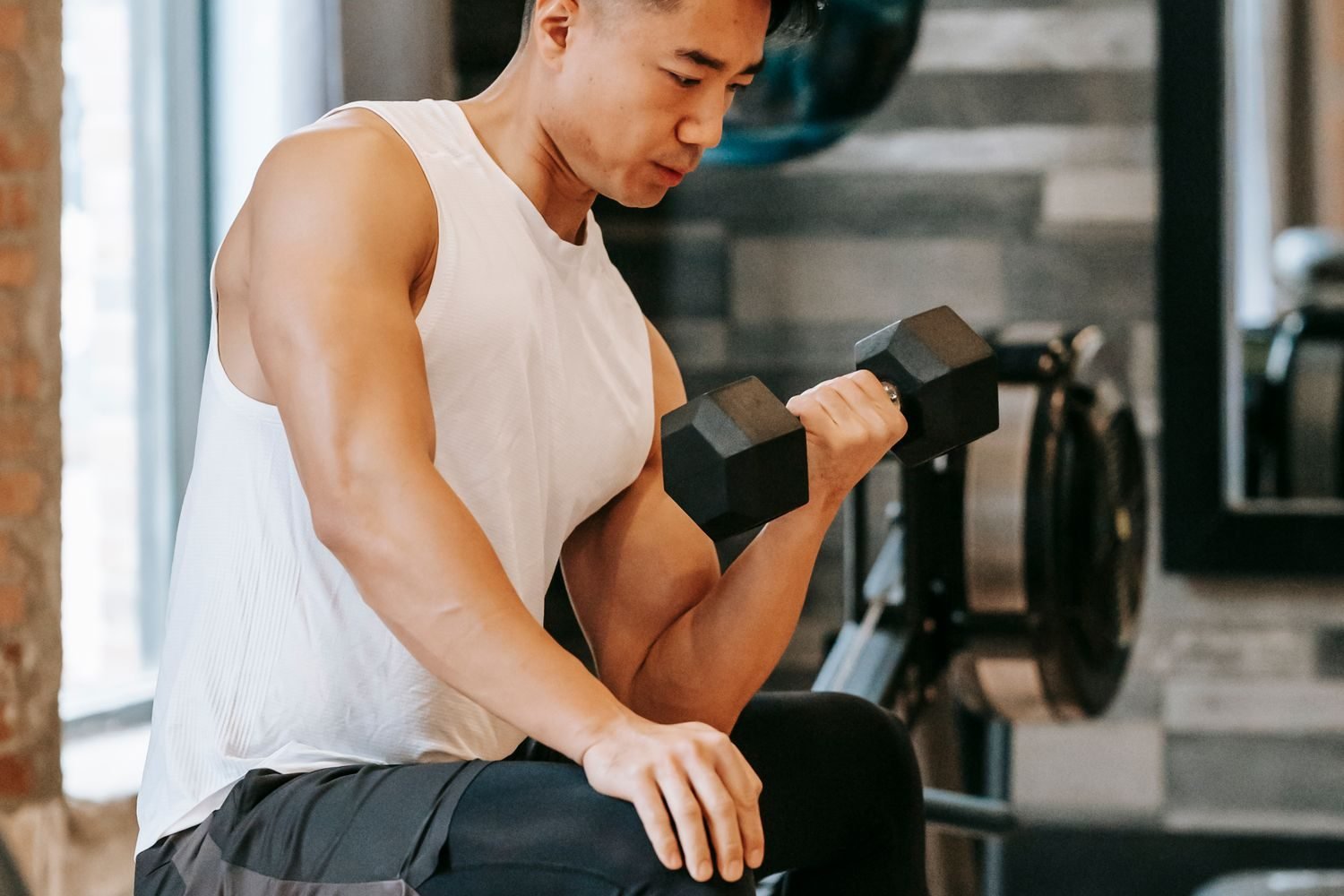
Here’s a session we’d actually hand a true beginner in their first few weeks of training. It’s short on purpose. Three exercises, moderate reps, generous rest. Learn these movements well before you add volume or complexity.
| Exercise | Sets | Reps | Rest |
|---|---|---|---|
| Dumbbell Bicep Curl | 3 | 10-12 | 60-75 seconds |
| Hammer Curl | 2 | 10-12 | 60 seconds |
| Cable or Band Curl | 2 | 12-15 | 45-60 seconds |
Pick a weight where the last two reps of each set feel genuinely hard but your form doesn’t break down. If you’re swinging the weight up with your hips or shoulders, it’s too heavy. Drop it and rebuild from there. Once you can complete every set at the top of the rep range with clean form, add weight in small increments, not big jumps.
How Should Beginners Deal with Gym Equipment and Nerves?
This is the part most workout guides skip, and it’s often the actual barrier keeping people from starting. If you don’t know how a cable machine works, that’s normal. Every regular in that gym was standing where you are at some point. A few practical habits fix most of the anxiety:
- Start with dumbbells and a flat bench area rather than machines you’ve never touched. Dumbbells are intuitive: pick them up, curl, put them down.
- Learn cable stations before loading weight. Watch how the pulley height and attachment work, or just ask a staff member. Most gyms have someone on the floor whose literal job is to help with this.
- Remember nobody’s really watching. Almost nobody in a commercial gym is paying attention to your reps. Everyone is focused on their own set, their own playlist, their own workout. The people who do notice a beginner are usually the ones most willing to help, not judge.
How Does Biceps Training Fit Into a Full Program?
Biceps work shouldn’t live in isolation for long. Once you’ve got the basic movements down, it makes more sense as part of a structured pull day workout, where curls come after your rows and pull-ups rather than before them. Training biceps after the bigger back exercises means your grip and arms aren’t already fatigued when you need them for heavier pulling.
A lot of gyms and coaches also pair biceps with back training in the same session, since both are pulling muscles and the crossover in warmup and joint prep is high. We cover exactly how to structure that pairing in our back and biceps workout guide, which is a natural next step once you’ve got a few weeks of basic curls under your belt.
What Mistakes Do Beginners Make with Biceps Training?
We see clients make the mistake of chasing the weight on the dumbbell rack instead of chasing a clean rep. They’ll grab something heavy, swing it up using momentum from their lower back and shoulders, and wonder why their arms aren’t getting bigger despite weeks of “training.” The muscle only grows when it’s actually doing the work under control. Slow the eccentric part of the curl down, stop just short of locking the elbow, and keep your upper arm still. That’s where the actual stimulus comes from, not from how much weight is on the bar.
Another common one: training biceps every single day because a few sets felt easy. The muscle needs recovery time to actually adapt. More frequency without more recovery just leads to soreness that never resolves and progress that stalls.
How Often Should Beginners Train Biceps?
Two to three sessions a week is the sweet spot for most beginners, with at least one full rest day between biceps sessions. If your biceps also get worked indirectly through rows and pull-ups on other days, like the ones in our back workout at gym for beginners, you don’t need to add extra direct sets on top of everything. Total weekly volume matters more than hitting the muscle from every angle in one workout, and a beginner’s biceps will respond well to a fairly simple weekly structure for the first several months.
What Should You Focus on in Your First Month?
Form first, weight second, variety third. In month one, your only real job is learning what a controlled curl feels like and building the habit of showing up consistently. Don’t worry about supersets, drop sets, or 21s yet. Those tools are useful later, but they solve problems you don’t have as a true beginner. Right now the problem is technique and consistency, and no advanced technique fixes either of those.
If you want a program built specifically for your goals, your schedule, and where you’re starting from, that’s what our 1-on-1 personal training is for. We build out the full picture for you, not just the arm day, so every session moves you toward the physique and strength you’re actually after.
Frequently Asked Questions
What is a good beginner biceps workout?
A good beginner biceps workout uses two to three exercises, such as a dumbbell curl, a hammer curl, and a cable or band curl, done for 10 to 15 reps per set with controlled form. Keep the weight light enough to maintain strict technique and avoid swinging or using momentum to lift.
How many biceps exercises should a beginner do?
Two to three exercises are plenty for a beginner. More exercises don’t mean faster growth, especially early on when your nervous system is still learning the movement pattern. Master a curl, a hammer curl variation, and one isolation move before adding anything else to your routine.
How often should beginners train biceps?
Most beginners do well training biceps two to three times a week, with at least one rest day between sessions. If your program already includes rows or pull-ups on other days, those indirectly work your biceps too, so you don’t need to add extra direct volume on top of that.
Can beginners build biceps without machines?
Yes. Dumbbells alone are enough to build noticeable biceps size and strength as a beginner. A barbell or resistance band adds useful variety later, but machines aren’t required. What matters far more than equipment choice is consistent training, progressive overload, and controlled form on every rep.
Should beginners train biceps before or after back exercises?
Train biceps after back exercises in the same session. Rows, pulldowns, and pull-ups need your grip and arms fresh to move heavier loads safely, while curls place less demand on the rest of your body. Doing biceps first pre-fatigues the muscle and can limit how much weight you handle on bigger back lifts.