The absolute simplest home workout for a true beginner is four bodyweight moves, done for a total of maybe 12-15 minutes, two or three days a week. Think a wall push-up, a chair-assisted squat, a slow march in place, and a standing stretch. No equipment, no jumping, no complicated sequences to remember. That’s it. If you haven’t exercised in years or the word “workout” makes you want to close the tab, this is where we’d start you, and it’s genuinely enough to build real momentum.
Why Starting Basic Beats Starting Complicated?
We get a lot of first-time clients who’ve tried to jump straight into a 45-minute YouTube routine, felt wrecked for three days, and quit. That’s not a willpower problem. It’s a starting-point problem. When the entry bar is too high, your brain files exercise under “things that hurt” instead of “things I do.” A basic workout for beginners at home flips that. It’s short enough that you can’t talk yourself out of it and light enough that you actually want to repeat it tomorrow.
There’s also a physical reason to go slow at the start. Muscles, tendons, and joints that haven’t been under load in a while need time to adapt before they can handle real volume or intensity. Skipping that adaptation phase is exactly how people end up sore, discouraged, or hurt in week one.
What Does a Truly Basic Workout Need? Just 4 Movements
You don’t need eight exercises, a warm-up routine, and a cooldown stretch sequence to get started. You need four movement patterns that cover the basics of how your body works:
- A push (wall or incline push-up)
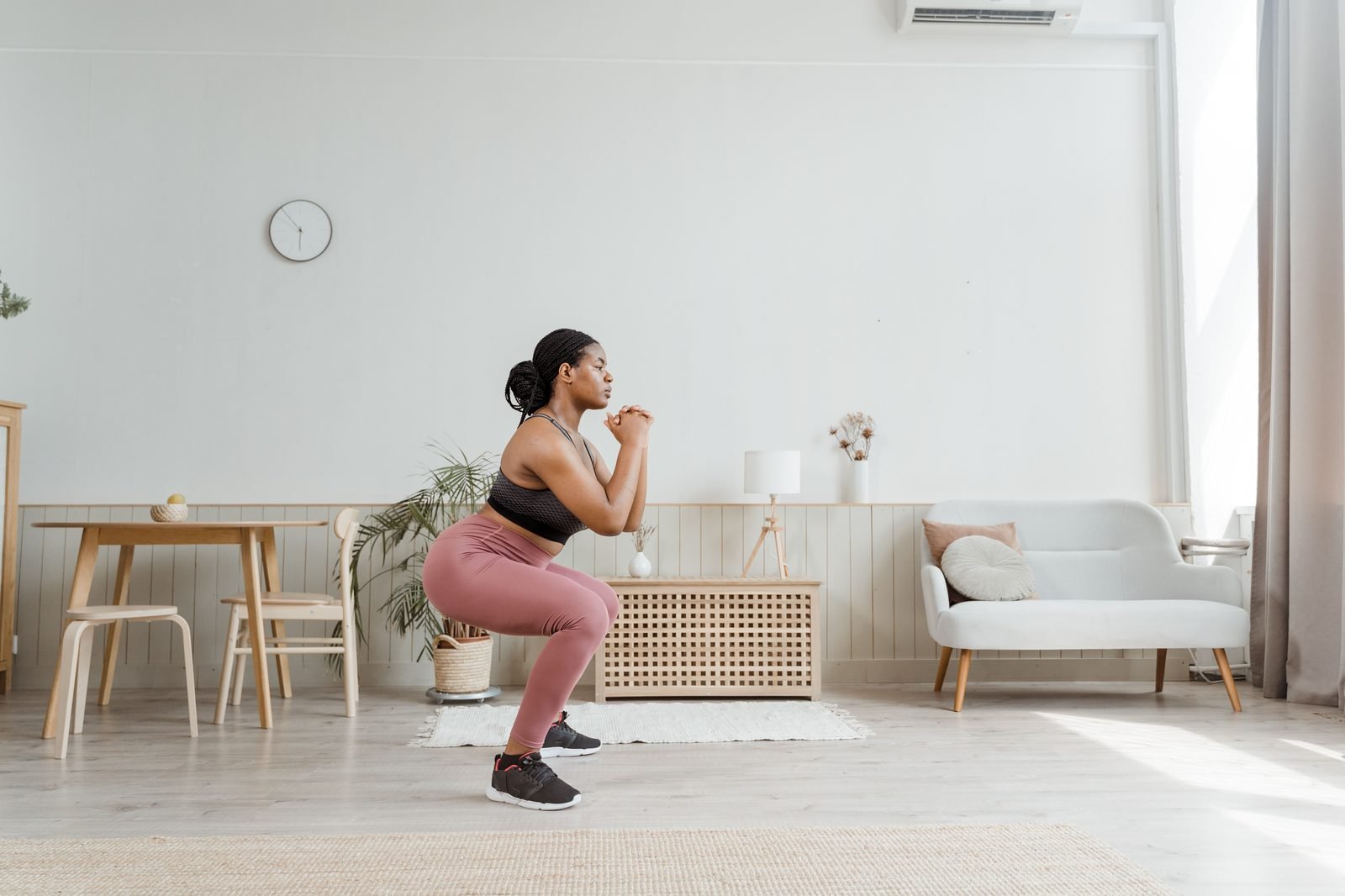
- A squat (chair-assisted or bodyweight)
- A step or march (something that gets your heart rate up gently)
- A stretch or hold (to close things out and check in with how your body feels)
That’s the whole framework. No dumbbells, no resistance bands, no floor work if your knees don’t love the floor yet. This is a basic home workout in the truest sense, and it works precisely because there’s nothing in it that requires a learning curve.
A Sample Basic Workout for Absolute Beginners
Here’s what we’d actually hand someone on day one. Do it slowly, breathe normally, and stop any exercise that causes sharp pain (mild muscle fatigue is fine, joint pain isn’t).

| Exercise | Sets | Reps |
|---|---|---|
| Wall push-up | 2 | 8-10 |
| Chair-assisted squat | 2 | 8-10 |
| Standing march in place | 2 | 30 seconds |
| Standing forward stretch hold | 1 | 20-30 seconds |
Rest for about a minute between sets. The whole thing takes 12-15 minutes, and that includes the rest breaks. If it feels too easy, good. Easy is the point right now.
How Long Should This Basic Version Last Before You Progress?
We usually keep clients here for two to three weeks, sometimes longer if life is chaotic or sleep and stress are off. You’re ready to add a bit more (extra reps, an extra set, or a fifth exercise) when the routine stops causing next-day soreness and starts feeling like something you could do in your sleep. That’s not a sign to quit, it’s the signal to add just a little more.
Progress here doesn’t mean doubling everything overnight. Add one set, or five more reps, or ten more seconds to the march. Small, boring increases beat dramatic ones every time, because dramatic increases are usually what send people back to square one.
What If Even This Feels Hard?
Then scale it down further and that’s completely fine. Push-ups can be done standing against a counter instead of a wall for less resistance. Squats can be a simple sit-to-stand from a chair, no hold at the bottom. The march can be seated if standing balance is a concern. Cut the reps to five if eight feels like too much. There’s no rule that says you have to start where the table above starts. The table is a target, not a minimum.
What matters more than the numbers is that you finish the session feeling like you could have done a little more. If you’re gasping or shaking after two sets of eight wall push-ups, you scale down, you don’t push through.
Building the Habit Before Building Intensity
The biggest mistake in beginner fitness isn’t picking the wrong exercises, it’s trying to fix intensity and consistency at the same time. Pick one first. We always tell clients to lock in the schedule before worrying about how hard the workout is. Three short sessions a week, same days if possible, for a few weeks straight, matters more than any single “perfect” workout.
Once showing up stops requiring willpower and starts being just something you do on Monday, Wednesday, and Friday, that’s when you have room to make the workout harder. Trying to build intensity before the habit exists is building on sand.
When Should You Move to a Fuller Beginner Plan?
Once the four-move basic workout feels genuinely easy for a full week and you’re not sore or fatigued the next day, you’re ready for more variety and volume. That’s the point where our guide to at home workouts for beginners becomes the right next step. It covers a fuller weekly structure with more exercises and a bit more structure around progression, and it assumes you’ve already got the basic movement patterns down, which by then you will.
From there, you can start exploring a proper home workout routine that rotates through different muscle groups, or add light resistance with a home dumbbell workout once you want more of a strength challenge. If you’d rather stick with no equipment for longer, a structured bodyweight workout is the natural next step up from what’s outlined here.
Common Mistakes People Make Going Too Hard, Too Fast
A few patterns show up again and again with new starters:
- Copying an advanced routine off social media. What works for someone who’s trained for years will flatten someone starting from zero. It’s not the same workout even if it looks simple on screen.
- Doing it every single day right away. Rest days aren’t optional at the start. Your body needs the gap between sessions to actually adapt.
- Judging progress by soreness. Feeling wrecked the next day isn’t proof the workout “worked.” It’s often just proof you did too much too soon.
- Adding exercises before the basics feel automatic. Four moves done consistently beat eight moves done once and abandoned.
- Skipping rest between sets. Rushing through sets to “get it done faster” defeats the purpose of a beginner routine, which is to build a positive relationship with movement, not to prove something.
None of these mistakes are about laziness or lack of discipline. They’re usually about enthusiasm outrunning the body’s actual readiness. Slowing down at the start is what lets you speed up safely later.
Do You Need a Coach for Something This Basic?
Honestly, no, not for the four moves above. But a lot of people who’ve been away from fitness for a long time don’t just need the exercises, they need someone checking their form, adjusting the plan as they improve, and keeping them accountable when motivation dips in week three. That’s exactly what our 1-on-1 personal training is built for. Yash Pathak and our coaching team have spent the last decade working with people at every starting point, including plenty who’d never done a structured workout in their life before day one with us.
Frequently Asked Questions
What is a good basic workout for beginners at home?
A good basic workout for beginners at home covers four movement patterns: a push, a squat, a light cardio movement like marching, and a stretch. Two sets of 8-10 reps each, done two to three times a week, is enough to start building strength and consistency without overwhelming your body or your schedule.
How do you do a basic home workout?
Pick a quiet space, do a wall push-up and chair-assisted squat for two sets each, march in place for two rounds of 30 seconds, then finish with a short stretch. Rest about a minute between sets, move slowly, and stop if anything causes sharp pain. The whole session takes roughly 12-15 minutes.
What are the benefits of a basic workout for beginners?
A basic workout builds the habit of moving regularly without the injury risk or burnout that comes from starting too intense. It improves basic strength, mobility, and cardiovascular capacity, and it gives your joints and muscles time to adapt gradually, which sets you up to progress safely into more demanding routines later.
How many days a week should a beginner work out at home?
Two to three days a week is plenty when you’re just starting out. This gives your body rest days to recover and adapt between sessions, which matters more than frequency at this stage. Once the routine feels easy and consistent, you can gradually add a fourth day.
Do I need any equipment for a basic home workout?
No. The basic workout outlined here uses only your bodyweight and a sturdy chair or wall for support. Equipment like dumbbells or resistance bands can come later once you’re ready to progress, but they’re not necessary to get started or to see real benefits in the first few weeks.