A good lunges workout trains one leg at a time through a full range of motion, mixing at least two or three variations (forward, reverse, walking, lateral) so you hit the quads, glutes, hamstrings, and stabilizers from different angles. We build ours around 3-4 sets of 8-12 reps per leg, paired with a warm-up, controlled tempo, and enough rest to keep form sharp. Done right, a leg lunges workout improves single-leg strength, balance, and hip mobility in ways a bilateral squat simply can’t match.
What Muscles Do Lunges Actually Train?
Lunges are a compound, unilateral exercise, which means they work multiple muscle groups on one leg at a time. The quadriceps drive knee extension as you push back up, the glutes fire hard through hip extension, and the hamstrings assist at the back of the movement, especially in reverse lunges. Your adductors and abductors kick in to keep your hips stable, and your core has to work overtime just to keep your torso upright while your base of support is smaller than in a squat.
That single-leg demand is what separates lunges from most other leg exercises. Because each side works independently, lunges expose strength imbalances between your left and right leg that a barbell squat can hide. Over time, that makes a lunges workout one of the better tools for building balanced, functional leg strength rather than just bigger numbers on paper.
What Are the Best Lunge Variations to Include?
Not every lunge variation trains the same thing, so a well-built lunges workout usually rotates through a few of these:
- Walking lunges: Great for building momentum and conditioning while still loading each leg. These translate well to real-world movement patterns like walking, climbing, and sprinting.
- Reverse lunges: Easier on the knees because the stepping leg doesn’t take as much shear force. We often start beginners here before progressing to forward lunges.
- Static (split squat style) lunges: Staying in one spot for all your reps forces continuous tension and is easier to load heavy with dumbbells or a barbell.
- Lateral lunges: Move you sideways instead of forward and back, which trains the adductors and abductors that forward-facing lunges mostly skip.
- Curtsy lunges: Cross one leg diagonally behind the other, hitting the glute medius hard and improving hip stability.
A smart leg lunges workout doesn’t try to cram all five into one session. Pick two or three that complement each other, such as a forward lunge for quad emphasis, a lateral lunge for the inner and outer thigh, and a reverse lunge for the glutes and hamstrings.
How Do You Do a Lunges Workout With Proper Form?
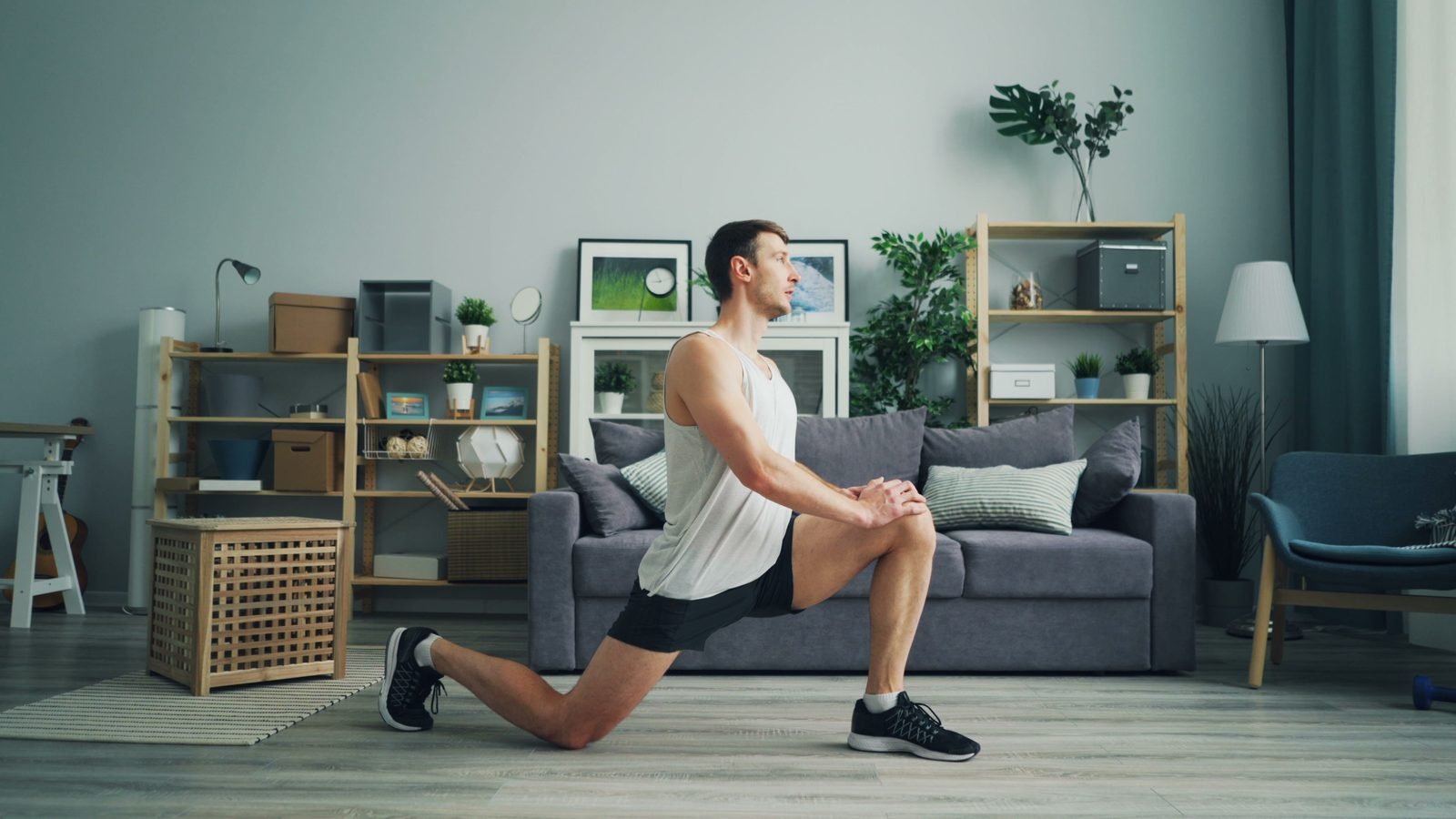
Here’s the standard forward lunge broken down step by step:
- Stand tall with feet hip-width apart and your core braced.
- Step forward with one leg, landing heel first, and lower your body until both knees are close to 90 degrees.
- Keep your front knee tracking over your foot, not caving inward or shooting past your toes.
- Push through your front heel to return to the starting position.
- Repeat on the same leg for all reps, or alternate legs, depending on the variation you’re running.
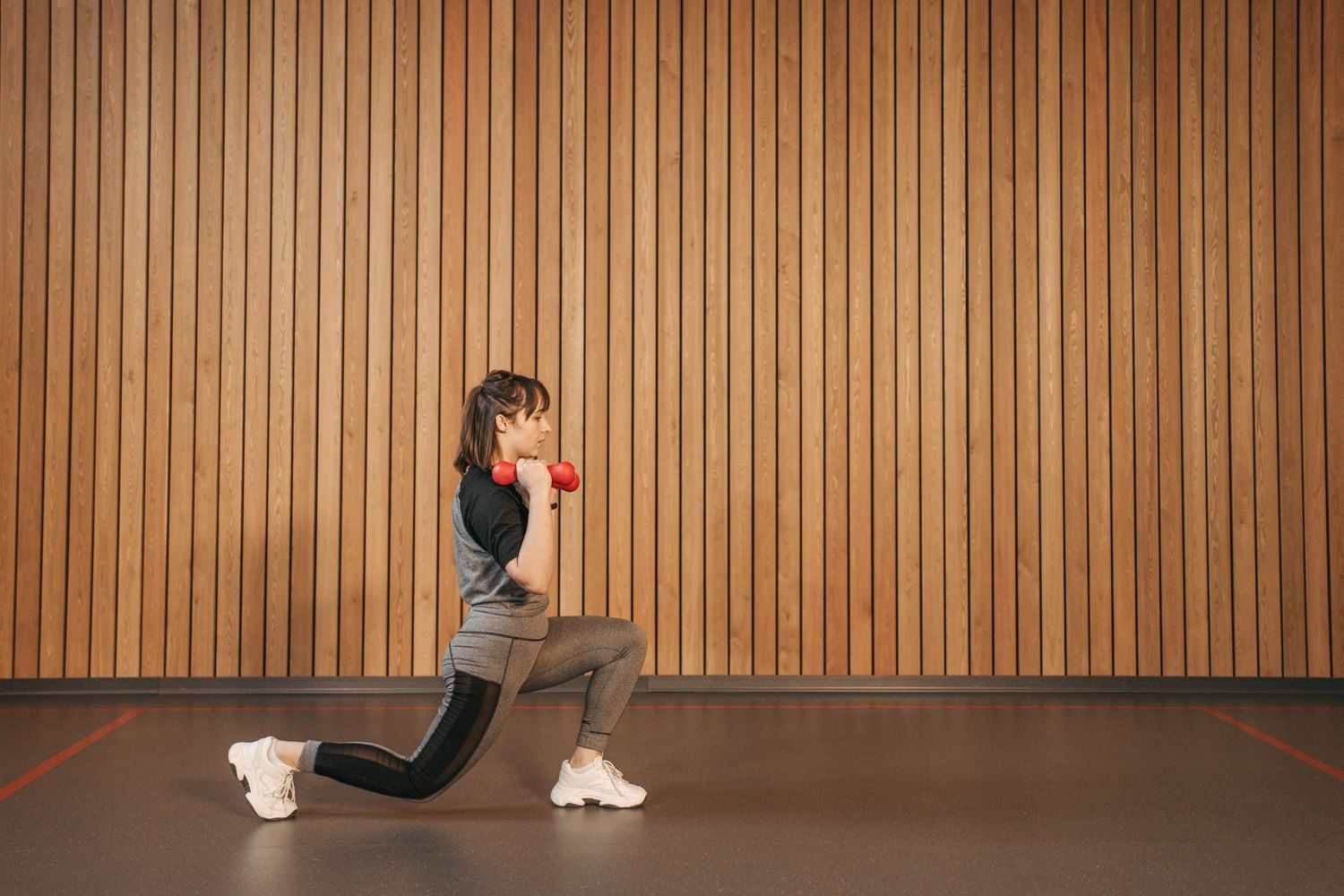
The details matter more than people think. Your torso should stay upright with a slight forward lean from the hips, not a rounded back. Your back knee should hover just above the floor rather than slamming into it. And your steps should be long enough that your front shin stays roughly vertical at the bottom of the movement. Get those three things right and most of the common lunge complaints (knee pain, wobbling, quad-only burn) tend to disappear.
What Does a Sample Lunges Leg Workout Look Like?
This is a version of the lunges workout we regularly program for clients who want stronger, more balanced legs without needing a full squat rack setup.
| Exercise | Sets | Reps | Rest |
|---|---|---|---|
| Bodyweight walking lunge (warm-up) | 2 | 10 per leg | 30 sec |
| Dumbbell reverse lunge | 4 | 10 per leg | 60-75 sec |
| Barbell forward lunge | 3 | 8 per leg | 75-90 sec |
| Dumbbell lateral lunge | 3 | 10 per leg | 60 sec |
| Bodyweight curtsy lunge | 3 | 12 per leg | 45 sec |
| Walking lunge with dumbbells (finisher) | 2 | 12 per leg | 45 sec |
This structure moves from heavier, more controlled lunges early in the session to lighter, higher-rep variations at the end, when your stabilizers are already fatigued. If you’re short on time, cut it down to three exercises and keep the rep ranges the same. The order matters more than the total exercise count.
Should You Do Lunges at Home or in the Gym?
You can build a genuinely effective lunges workout with nothing but your bodyweight and a bit of floor space, which makes lunges one of the most home-friendly leg exercises around. A pair of dumbbells or a resistance band adds progressive overload without needing a full rack. For most people training two or three times a week at home, bodyweight and dumbbell lunge variations are enough to keep making progress for months.
Where the gym has an edge is loading. A barbell lunge or a lunge off a smith machine lets you add weight in small, precise increments once bodyweight and dumbbells stop being challenging. If your goal is building serious leg strength rather than general fitness, you’ll eventually want access to a barbell. Neither setting is wrong, it just depends on where you are in your training and what equipment you can realistically access consistently.
How Do Lunges Compare to Squats?
Squats and lunges both build the quads and glutes, but they load the body differently, and neither one replaces the other. Squats let you move more total weight because both legs share the load, which makes them better for pure strength and hypertrophy in the quads. Lunges force each leg to stabilize and produce force independently, which builds balance, coordination, and corrects side-to-side imbalances that squats can mask entirely.
We see a lot of clients who squat heavy but struggle to hold a single-leg lunge steady, which is usually a sign that one leg is quietly compensating for the other during bilateral lifts. If your goal is general leg size and strength, squats can carry more of the load. If you want durable, balanced legs that hold up outside the gym (running, hiking, sports, stairs), lunges deserve equal priority. Most well-designed leg days include both rather than picking one over the other.
How Often Should You Train Lunges?
Two to three lunges workouts a week is enough for most people, with at least 48 hours between sessions to let the quads and glutes recover. Because lunges are unilateral, they’re demanding on balance and coordination as well as muscle, so cramming them in daily usually leads to sloppy form rather than faster progress. If you’re pairing lunges with squats or deadlifts in the same week, plan your split so leg-dominant days aren’t stacked back to back.
Beginners tend to do well with two sessions a week focused on form and control, while more advanced lifters can push to three, cycling through different variations to avoid overuse in any single joint pattern. A lunges workout also pairs naturally with upper body accessory work like a preacher curl workout or rotational core movements like a woodchopper workout on the same training day, since neither competes directly with leg recovery.
What Are the Most Common Lunge Mistakes?
Two mistakes account for most of the lunge form issues we correct in coaching sessions.
Knee tracking inward. When the front knee caves toward the midline instead of staying stacked over the foot, it puts uneven stress on the knee joint and usually points to weak glutes or poor hip control. Slowing the movement down and consciously pushing the knee outward as you descend fixes this faster than most people expect.
Leaning too far forward. A slight forward lean from the hips is normal, but leaning from the upper back turns the lunge into a hip-hinge and shifts load off the legs and onto the lower back. Keep your chest up and your core braced through the whole rep, and think about driving straight down rather than falling forward into the step.
Other frequent issues include taking steps that are too short (which overloads the knee) and rushing the tempo instead of controlling the eccentric portion of the lift. Both are easy to fix once you slow down and film a few reps to check your own form.
What Else Should Round Out Your Leg and Full-Body Training?
A lunges workout works best as part of a broader training plan rather than a standalone session. Rotational and anti-rotational core work, like an around the world workout, complements the stability demands of single-leg training and carries over directly into how well you hold form under fatigue during longer lunge sets. If you’re building a weekly split, think of lunges as your unilateral leg anchor, squats as your bilateral strength anchor, and core and upper body accessory work filling in the rest of the week.
If you’d rather not guess at sets, reps, and progression on your own, working with a coach removes most of the trial and error. We build these lunge variations into 1-on-1 training plans through FitStrot’s 1-on-1 personal training, where the program adjusts as your strength, mobility, and goals change instead of staying static for months.
Frequently Asked Questions
What is a good lunges workout?
A good lunges workout combines two or three variations, such as reverse, walking, and lateral lunges, across 3-4 sets of 8-12 reps per leg. It should include a brief warm-up, controlled tempo, and enough rest between sets to maintain proper knee tracking and torso position throughout.
How do you do a lunges workout?
Start with a short warm-up, then move through your chosen lunge variations with controlled steps, keeping your front knee over your foot and your torso upright. Rest 60-90 seconds between heavier sets, alternate or complete one leg at a time depending on the variation, and finish with a lighter, higher-rep lunge as a burnout.
What are the benefits of a lunges workout?
Lunges build unilateral leg strength, improve balance and hip stability, and correct left-right imbalances that bilateral lifts like squats often hide. They also strengthen the glutes, quads, and hamstrings while improving core control, since each rep demands stability that a two-legged exercise doesn’t require.
Are lunges better than squats for building leg muscle?
Neither is strictly better since they serve different purposes. Squats generally allow more total load for pure size and strength, while lunges build balance, coordination, and single-leg strength that squats can’t fully replicate. Most effective leg programs include both rather than choosing one over the other.
Can beginners do a lunges workout safely?
Yes, beginners should start with bodyweight reverse lunges since they’re gentler on the knees than forward lunges. Focus on slow, controlled reps and proper knee tracking before adding dumbbells or increasing volume. Two sessions a week is plenty while you’re still building form and balance.