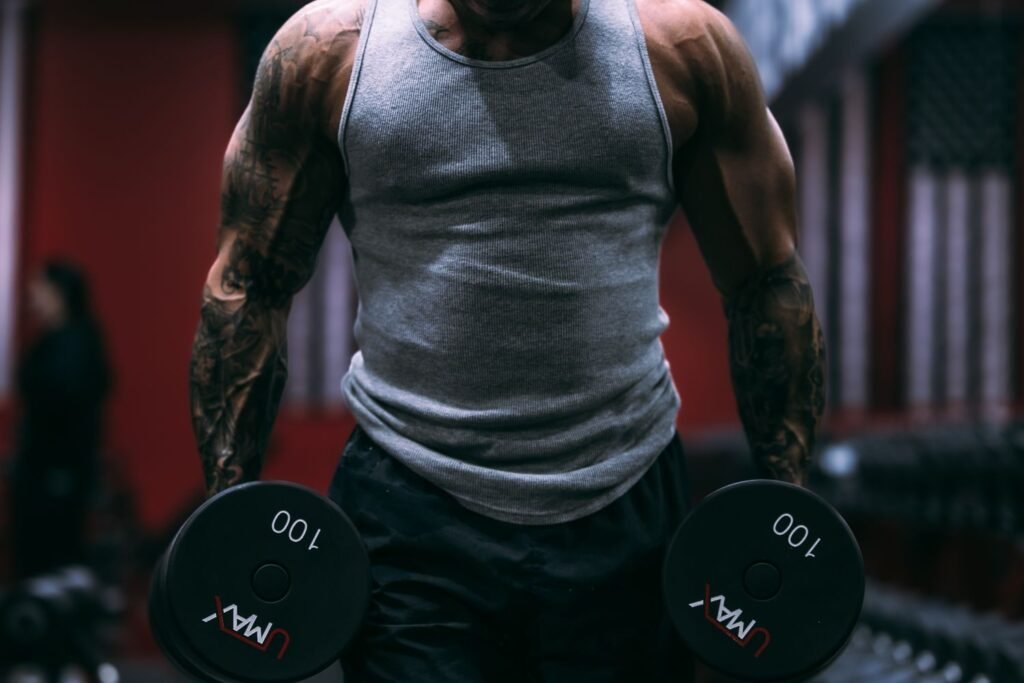
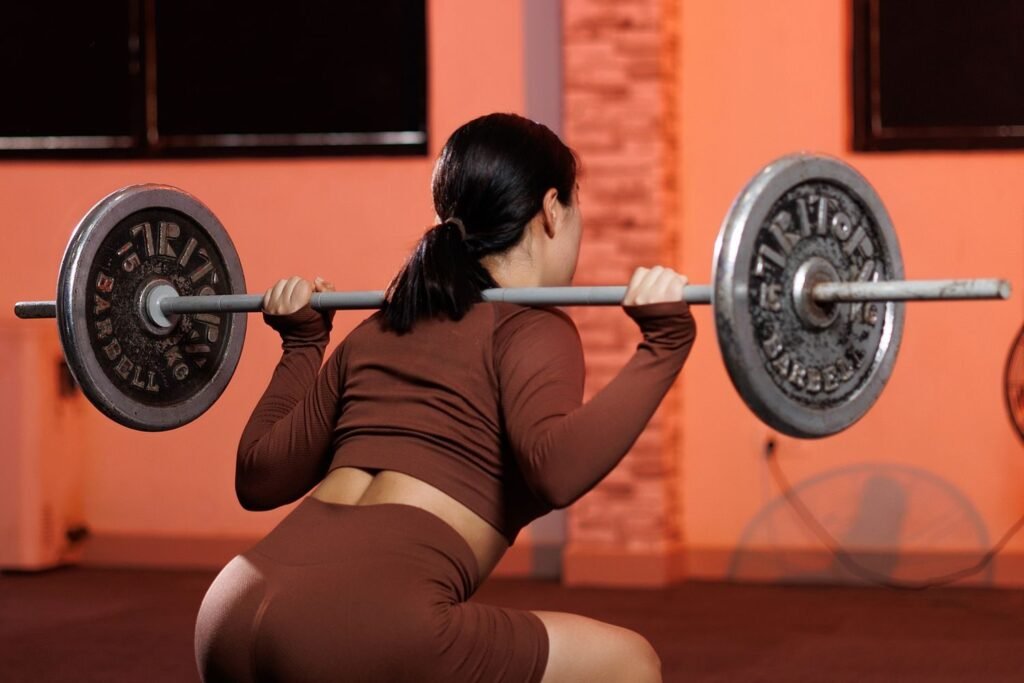
A good home dumbbell workout hits your whole body in 30 to 45 minutes using just one or two pairs of dumbbells: a push movement, a pull movement, a squat pattern, a hinge pattern, and some direct core work. You don’t need a rack of weights or a home gym. A single adjustable dumbbell set (or two fixed pairs, one light and one moderately heavy) covers almost every exercise you’ll actually use. At FitStrot we build this exact structure into the 1-on-1 plans we write for clients who train at home, and it works because it’s simple enough to repeat three or four times a week without needing a gym membership or a garage full of equipment.
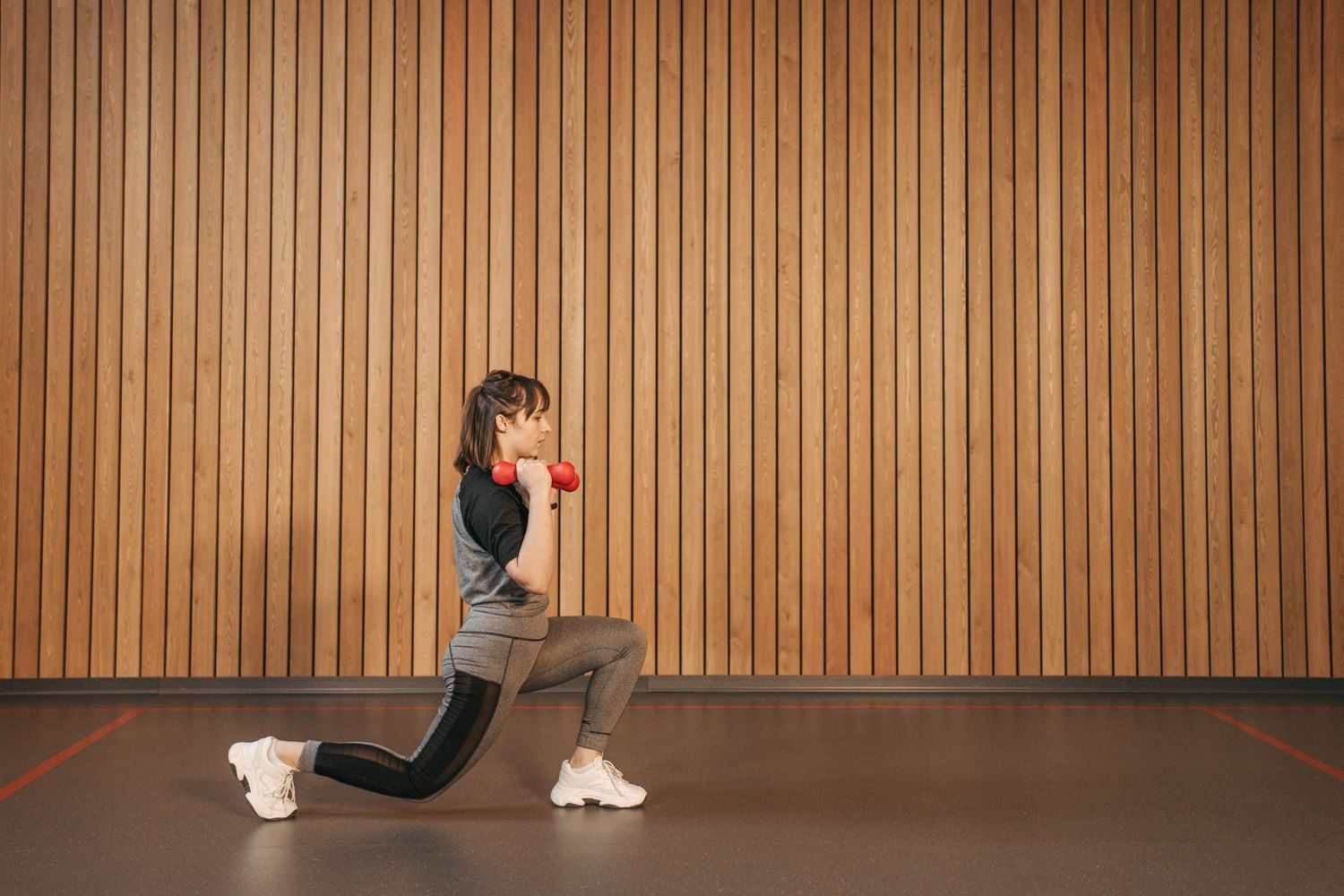
What Dumbbells Do You Actually Need to Start at Home?
Most people overbuy equipment before they’ve even tried a normal workout at home. You genuinely need less than you think. Here’s what we recommend to almost every client starting a home workout with weights:
- One adjustable dumbbell pair (2.5kg to 24kg per side) if you have the budget and floor space. This alone can carry you through a year of training.
- Two fixed pairs if adjustable sets aren’t available: a lighter pair for shoulders, arms, and core, and a heavier pair for squats, rows, and deadlifts.
- A flat bench or a sturdy chair. Not essential, but it opens up presses, rows, and step-ups.
- A yoga mat for floor-based ab and core work.
That’s it. You don’t need resistance bands, a squat rack, or a cable machine to get real results. If you’re working with almost nothing, our guide on bodyweight workout options is a solid bridge until your dumbbells arrive.
What Should a Good Full-Body Home Dumbbell Workout Cover?
A well-built session isn’t a random string of exercises. It follows a pattern, and that pattern is what separates a real training session from an “easy at home workout” that leaves you sore in the wrong places and sees no progress after a month. Every full-body dumbbell session we write covers these five buckets:
- A squat pattern (goblet squats, split squats) for quads and glutes.
- A hinge pattern (Romanian deadlifts, single-leg deadlifts) for hamstrings and lower back.
- A push movement (floor press, shoulder press) for chest, shoulders, and triceps.
- A pull movement (bent-over rows, renegade rows) for back and biceps.
- Direct core work to finish, since most compound lifts only train the core indirectly.
Cover all five and you’ve built something close to what you’d get from a proper home workout program, minus the machines. Skip one or two, and you’ll notice imbalances within a few weeks, usually a strong lower body and a weak upper back.
What Does a Sample Full-Body Home Dumbbell Workout Look Like?
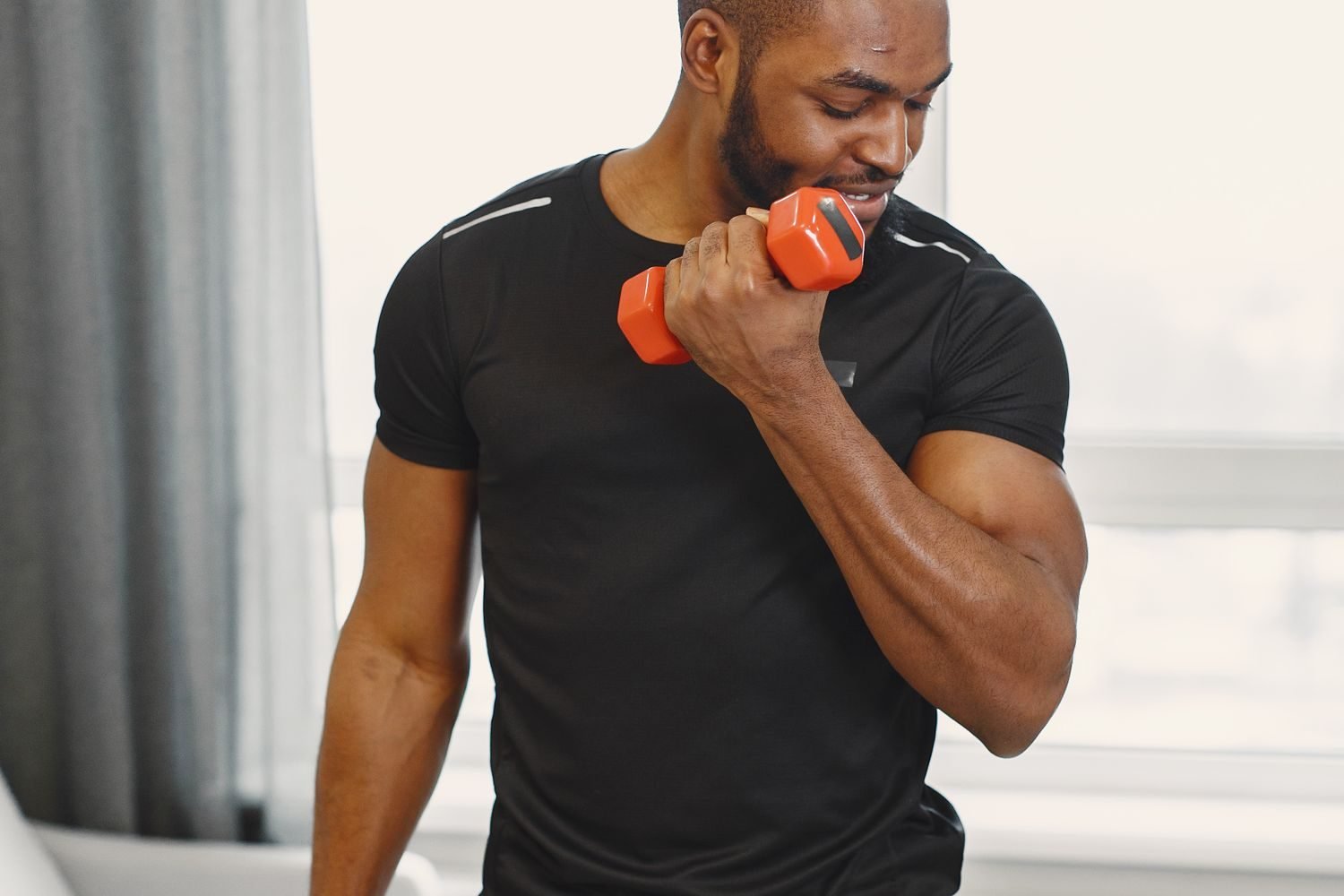
Here’s a session we actually give clients in their first few weeks of 1-on-1 coaching. It takes about 35 minutes, uses one dumbbell pair, and trains everything.
| Exercise | Sets | Reps | Rest |
|---|---|---|---|
| Goblet Squat | 3 | 10-12 | 60 sec |
| Dumbbell Romanian Deadlift | 3 | 10-12 | 60 sec |
| Dumbbell Floor Press | 3 | 10-12 | 60 sec |
| Bent-Over Dumbbell Row | 3 | 10-12 per side | 60 sec |
| Standing Dumbbell Shoulder Press | 3 | 10-12 | 45 sec |
| Dumbbell Reverse Lunge | 2 | 10 per leg | 45 sec |
| Weighted Russian Twist | 2 | 15 per side | 30 sec |
| Dumbbell Plank Row | 2 | 8 per side | 30 sec |
Run this two to three times a week, adding a rep or a small amount of weight whenever the last set of each exercise feels easy. That progression alone, without changing anything else, is what drives most of the results people notice in their first two months.
Is a Home Dumbbell Workout Different for Women?
An at home dumbbell workout for women uses the same exercises as above. Squats, rows, presses, and hinges build muscle and strength the same way regardless of who’s lifting the dumbbell. What changes is emphasis, not the exercise list. Many women we coach want more focus on glutes, hips, and posture, so we’ll add an extra set of Romanian deadlifts or lunges and bias the pulling work slightly higher to support upper back strength. We also tend to program slightly higher rep ranges (12-15) in the first month, since it builds confidence with the movement pattern before adding load. If you’ve been told women need “toning” workouts with tiny pink dumbbells and endless reps, ignore it. Heavier weight, lower reps, and progressive overload work just as well for women as they do for men.
How Do You Progress When You Only Have One or Two Dumbbell Weights?
This is the question we get most often, and it’s the reason a lot of home workout with weights routines stall out after a month. Limited weight options don’t mean limited progress if you use these levers:
- Add reps first. If 12kg goblet squats feel easy at 10 reps, push to 15 before you even think about buying a heavier dumbbell.
- Slow the tempo down. A 3-second lowering phase on a press or row makes the same weight noticeably harder.
- Reduce rest between sets. Cutting rest from 60 seconds to 40 forces your muscles to work under more fatigue.
- Switch to single-limb versions. A single-leg Romanian deadlift or a single-arm row demands far more from each side than the two-limb version, even with the same dumbbell.
- Add pause reps. A two-second pause at the bottom of a squat or the top of a row changes the exercise completely.
We see clients hit a plateau almost every time they rely only on “heavier dumbbells” as their one progression tool, then get stuck for weeks once they run out of weight options. Mixing in tempo, pauses, and unilateral work keeps the same two dumbbells useful for years, not months.
How Do You Train Abs and Core With Dumbbells at Home?
Abdominal workouts at home don’t need a machine or a mat full of gadgets. A dumbbell adds resistance to core exercises that are usually done with bodyweight alone, which speeds up strength gains considerably. A few we use regularly with clients:
- Weighted Russian twists for rotational core strength.
- Dumbbell plank rows for anti-rotation stability plus a back workout in one move.
- Dumbbell dead bugs (holding a light dumbbell in each hand) for deep core control.
- Weighted sit-ups holding a dumbbell at your chest, for straight-up rectus abdominis strength.
- Suitcase carries, walking with a heavy dumbbell in one hand, for lateral core and grip.
Two or three of these at the end of your main session, two to three times a week, is enough. You don’t need a separate ab day.
How Often Should You Train With Dumbbells at Home?
Three full-body sessions a week is the sweet spot for most beginners and intermediates. It gives each muscle group roughly 48 hours to recover before you hit it again, and it’s realistic enough that people actually stick to it. If you want to train more often, split the work into upper body and lower body days and go four times a week instead of adding volume to three already-full sessions. This is also how we build a daily workout plan at home for clients who want to train most days: heavier dumbbell sessions on three or four days, lighter mobility or core-focused days filling the gaps. Training every single day with heavy dumbbell work isn’t necessary and usually backfires through poor recovery.
What Mistakes Do We See People Make With Home Dumbbell Workouts?
A few patterns show up again and again in people who ask us how to do workout at home routines correctly after struggling on their own:
- Picking one weight and never changing it. The dumbbells that felt hard in week one should feel manageable by week six. If they don’t, something in the programming is off.
- Skipping the pull exercises. Presses and squats are more exciting, so rows and hinges get dropped first. This creates rounded shoulders and a weak posterior chain fast.
- Rushing reps for the sake of finishing. Controlled reps with a full range of motion beat sloppy fast reps every time, especially for growth and joint health.
- No rest structure. Free at home workouts pulled from random videos often skip rest periods entirely, which either wrecks your form on later sets or turns strength work into pure cardio without meaning to.
- Ignoring progression tracking. If you’re not writing down weight and reps somewhere, you’re guessing at progress instead of measuring it.
None of these mistakes are complicated to fix. Most just need a written plan and someone checking the details, which is exactly the gap our coaches fill for clients who’d rather not troubleshoot their own form and programming from scratch.
If you want a home dumbbell workout built specifically around your equipment, schedule, and goals rather than a generic template, that’s what our 1-on-1 personal training service is built for. Yash Pathak and the FitStrot coaching team have spent the last decade building exactly this kind of program for people training outside a gym.
Frequently Asked Questions
What is a good home dumbbell workout?
A good home dumbbell workout trains your whole body in one session: a squat, a hinge, a push, a pull, and core work, done for 3 sets of 8-12 reps each. Repeat it two to three times a week with slowly increasing reps or weight, and it will build real strength without any other equipment.
How do you do a workout at home with dumbbells?
Pick one exercise from each major pattern (squat, hinge, push, pull, core), do 3 sets of 10-12 reps with 45-60 seconds rest, and move through them in order. A full session takes 30-45 minutes. Warm up for five minutes first and track your weights so you know when to progress.
What are the benefits of a home dumbbell workout?
Dumbbells add resistance beyond what bodyweight training can offer, which builds strength and muscle faster. Training at home also removes commute time and gym intimidation, and dumbbell exercises train stabilizer muscles more than machines do, which carries over well to daily movement and sports.
How many dumbbells do I really need for a home gym?
One adjustable pair, or two fixed pairs (light and heavy), is enough for almost every exercise in a full-body routine. You can build a complete, progressive program around that setup for a year or more before you’d need anything heavier.
Can beginners do dumbbell workouts at home safely?
Yes, as long as you start with a weight you can control for 12-15 reps with good form and learn the basic patterns (squat, hinge, press, row) before adding load. Filming yourself or working with a coach for the first few sessions catches form issues early, before they become habits.