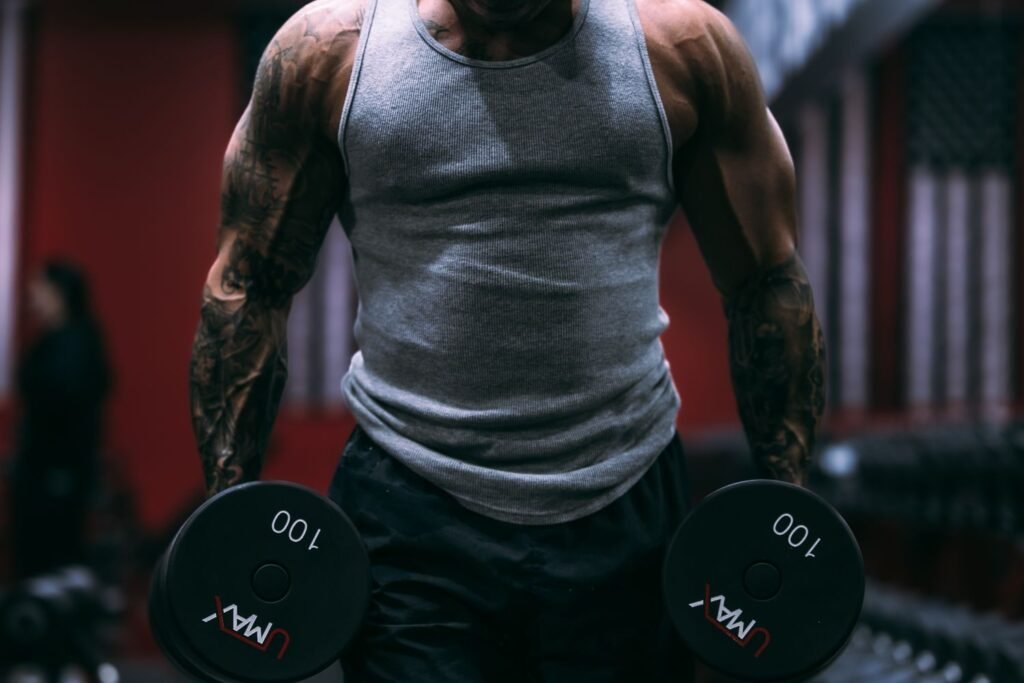
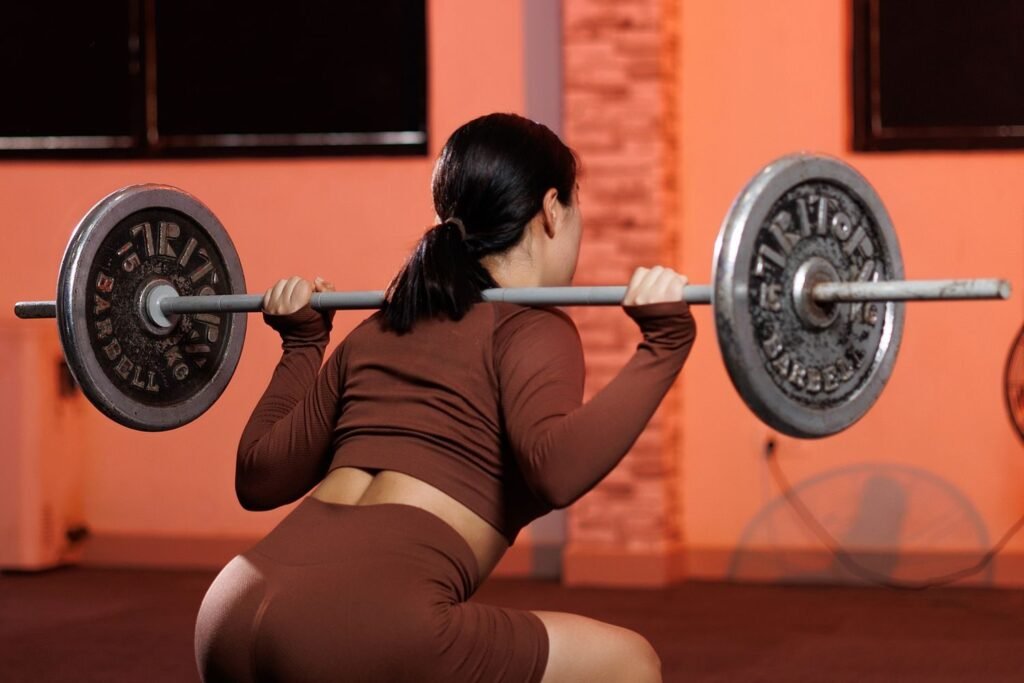
A bodyweight workout uses your own body as the resistance, no dumbbells, bands, or machines involved. Push-ups, squats, lunges, planks, and their harder variations all fall under this umbrella. The catch most people miss is that “no equipment” doesn’t mean “no progression.” You can make almost every bodyweight movement harder for months by changing leverage, slowing the tempo, working one limb at a time, or adding an explosive element. This article is built around that progression logic, not just a list of moves, so you actually know what to do once push-ups stop feeling hard.
What Exactly Counts as a Bodyweight Workout?
Any session where load comes from gravity and your own mass counts as a bodyweight workout, and it covers more ground than most people expect:
- Push-up variations
- Squat and lunge patterns
- Pull-up style rows, if you have a bar or sturdy edge
- Core work like planks and hollow holds
- Jump-based moves like broad jumps or box step-ups
It does not require a gym, a mat, or even much space. A 6×8 foot patch of floor is enough for a full session.
This is different from a general home workout, which often mixes in dumbbells, bands, or a kettlebell sitting in the corner. If you want that broader approach, our home workout guide covers it. This piece stays strictly zero-equipment.
How Do You Make Bodyweight Exercises Harder Without Adding Weight?
This is the part most people never learn, and it’s the reason so many give up on bodyweight training after a few months. You don’t need a heavier object. You need a smarter lever, a slower clock, one less limb helping you, or a burst of speed. Four levers do almost all the work.
1. Change the Leverage
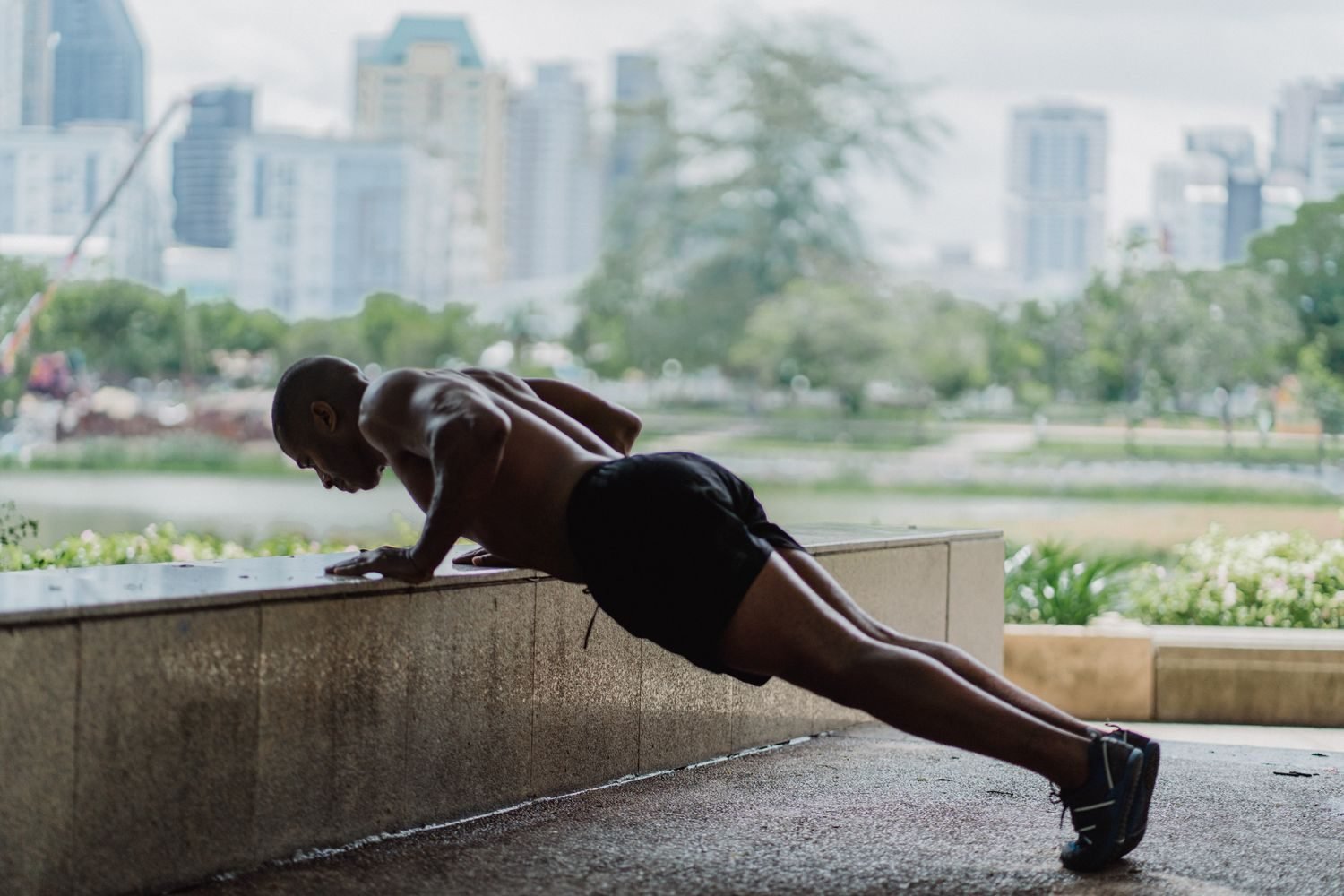
Moving your hands, feet, or torso further from the joint doing the work increases the torque it has to handle. A push-up with feet elevated on a chair is harder than one on flat ground, not because you weigh more, but because more of your body weight now sits on your hands. A pistol squat is a leverage nightmare compared to a bodyweight squat because your whole leg has to control the descent with no second leg to share the load.
2. Slow the Tempo
A 3-second lowering phase on a squat or push-up recruits far more muscle fiber than dropping fast and popping back up. Tempo work also exposes weak ranges of motion that speed hides. Try a 4-1-1 tempo, four seconds down, one second pause at the bottom, one second up, on any move you think you’ve mastered. It won’t feel mastered anymore.
3. Go Unilateral
Single-leg or single-arm variations roughly double the demand on each limb while also forcing your core and stabilizers to work overtime. Split squats, single-leg glute bridges, and archer push-ups are all unilateral upgrades of moves you already know. They’re also brutally honest about strength imbalances between your left and right side.
4. Add a Plyometric Version
Once tempo and leverage stop being enough, speed and power become the next lever. Jump squats, clap push-ups, and broad jumps ask your muscles to produce force fast instead of just holding it. This is the last stage of bodyweight progression and it’s where a lot of visible athleticism actually comes from.
We see a lot of clients hit a wall around the 20 to 25 rep mark on standard push-ups and assume they need dumbbells to keep progressing. What they actually need is a harder lever, not added load. Move to decline push-ups or archer push-ups and the strength curve starts moving again within two or three weeks.
What Does a Full Bodyweight-Only Session Look Like?
Here’s a complete session we’d give someone with no equipment and roughly 40 minutes. It hits push, pull, squat, hinge, core, and a conditioning finisher. Adjust reps up or down based on where you land on the progression scale above.
| Exercise | Sets x Reps | Rest | Progression If Too Easy |
|---|---|---|---|
| Push-ups | 4 x 12-15 | 60 sec | Decline push-ups, then archer push-ups |
| Bodyweight squats | 4 x 20 | 60 sec | Bulgarian split squats, then pistol squat progressions |
| Reverse lunges | 3 x 12 per leg | 45 sec | Slow 4-second eccentric on each rep |
| Glute bridges | 3 x 15 | 45 sec | Single-leg glute bridge |
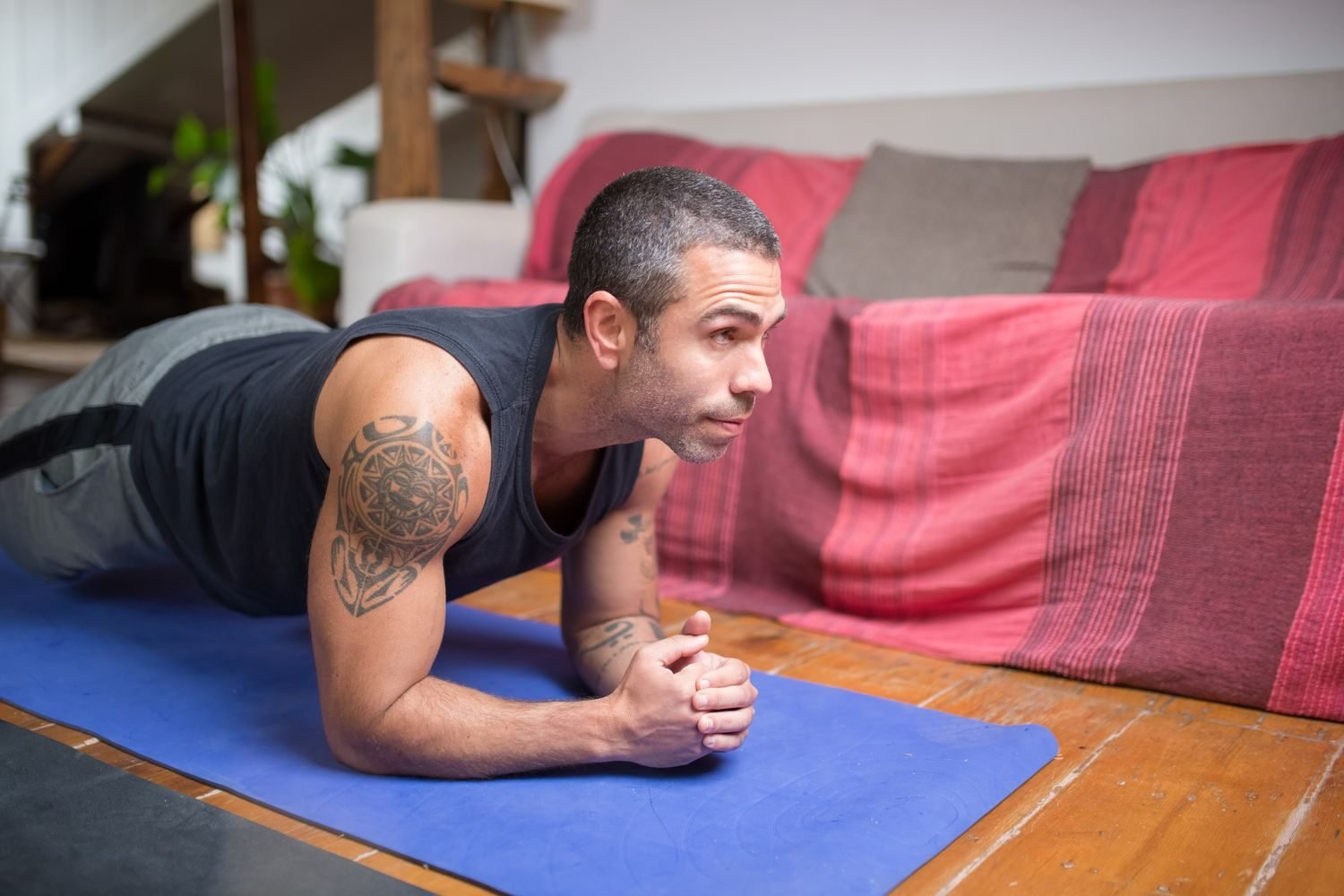
| Plank | 3 x 40 sec | 30 sec | Plank with shoulder taps, then plank to push-up |
| Mountain climbers | 3 x 30 sec | 30 sec | Increase speed, add cross-body reach |
| Jump squats (finisher) | 3 x 10 | 45 sec | Add a broad jump between reps |
Run this two or three times a week with a day of rest or light walking between sessions. If you’re specifically training for muscle and fat loss goals with dumbbells on other days, our home dumbbell workout guide pairs well as an alternating split, and men looking for a more structured weekly plan can check our home workout for men article.
How Many Days a Week Should You Train Bodyweight Only?
Three to four sessions a week works for most people, with at least one rest day between sessions that hit the same muscle groups hard. Beginners can start at three days and add a fourth once recovery is no longer an issue, usually around week four or five. Training every single day without variation in intensity is where people stall or get overuse injuries in the wrists, knees, or lower back.
Can You Really Build Muscle With Bodyweight Training Alone?
Yes, up to a point that covers most people’s goals. Muscle growth needs progressive overload, and bodyweight training delivers that through the leverage, tempo, unilateral, and plyometric progressions we covered above, not through adding kilos to a bar. Where bodyweight training genuinely runs out of road is advanced strength training for people who are already lean and well trained, where even a one-arm push-up isn’t enough stimulus anymore. For almost everyone else, especially anyone starting out or coming back after a break, bodyweight progression will keep working for a long time before it plateaus.
Frequently Asked Questions
What is a bodyweight workout?
A bodyweight workout is a training session that uses your own body weight as resistance instead of external equipment like dumbbells or machines. It includes exercises such as push-ups, squats, lunges, planks, and jumps, performed with variations in leverage, tempo, or speed to keep the training challenging over time.
How do you do a bodyweight workout properly?
Pick one push, one pull, one squat, one hinge, and one core exercise per session, and perform them in circuits or straight sets with proper form before speed. Progress by changing leverage, slowing your tempo, training one limb at a time, or adding jumps, rather than just chasing higher rep counts every week.
What are the benefits of a bodyweight workout?
Bodyweight workouts build functional strength, improve joint control, and require zero equipment or gym membership, so consistency goes up. They also teach better body awareness since you can’t hide poor form behind added weight. For most people, especially beginners, they build a strength base that transfers directly into weighted training later.
Is a bodyweight workout as good as one with weights?
For strength, mobility, and fat loss goals, a well-progressed bodyweight workout gets most people 80 to 90 percent of the way there. Weight training pulls ahead for advanced strength or size goals where you need precise, incremental load increases. For beginners and intermediates, the gap is smaller than most people assume.
How often should you do a bodyweight workout each week?
Three to four sessions a week is the sweet spot for most people, with rest or light activity on the days between. This allows enough recovery for muscles to adapt while keeping the frequency high enough to build a habit. Beginners should start at three days and add a fourth once recovery feels easy.
If you’d rather not guess at your own progressions or plateau on push-ups for the third time this year, FitStrot’s 1-on-1 personal training builds a bodyweight or hybrid plan around your actual strength level, with a coach adjusting your leverage and tempo every week instead of leaving you to figure it out alone.