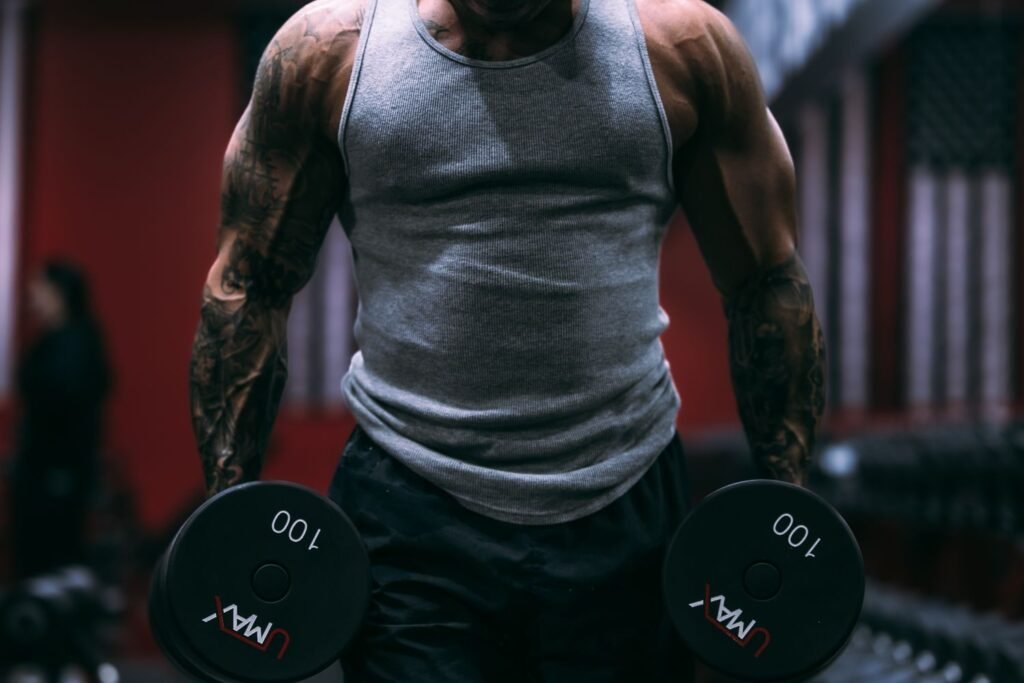
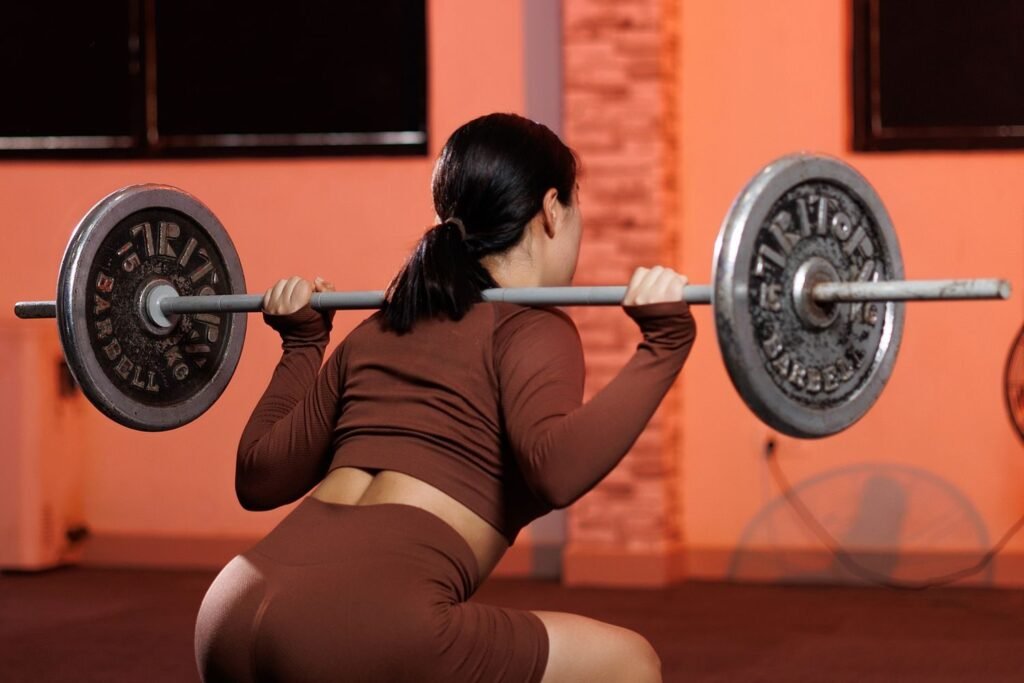
Ball workouts use weighted or inflatable balls, stability balls, slam balls, medicine balls, and wall balls, to add instability, load, or explosive power to strength and conditioning training. At FitStrot, we program ball work for clients who need better core control, more explosive power, or a change from barbell and dumbbell routines. Each type of ball trains something different: stability balls challenge balance and core bracing, medicine balls build rotational power, and slam balls let you move load fast and hard without worrying about a clean catch. Used together, they cover strength, power, and conditioning in a single session.
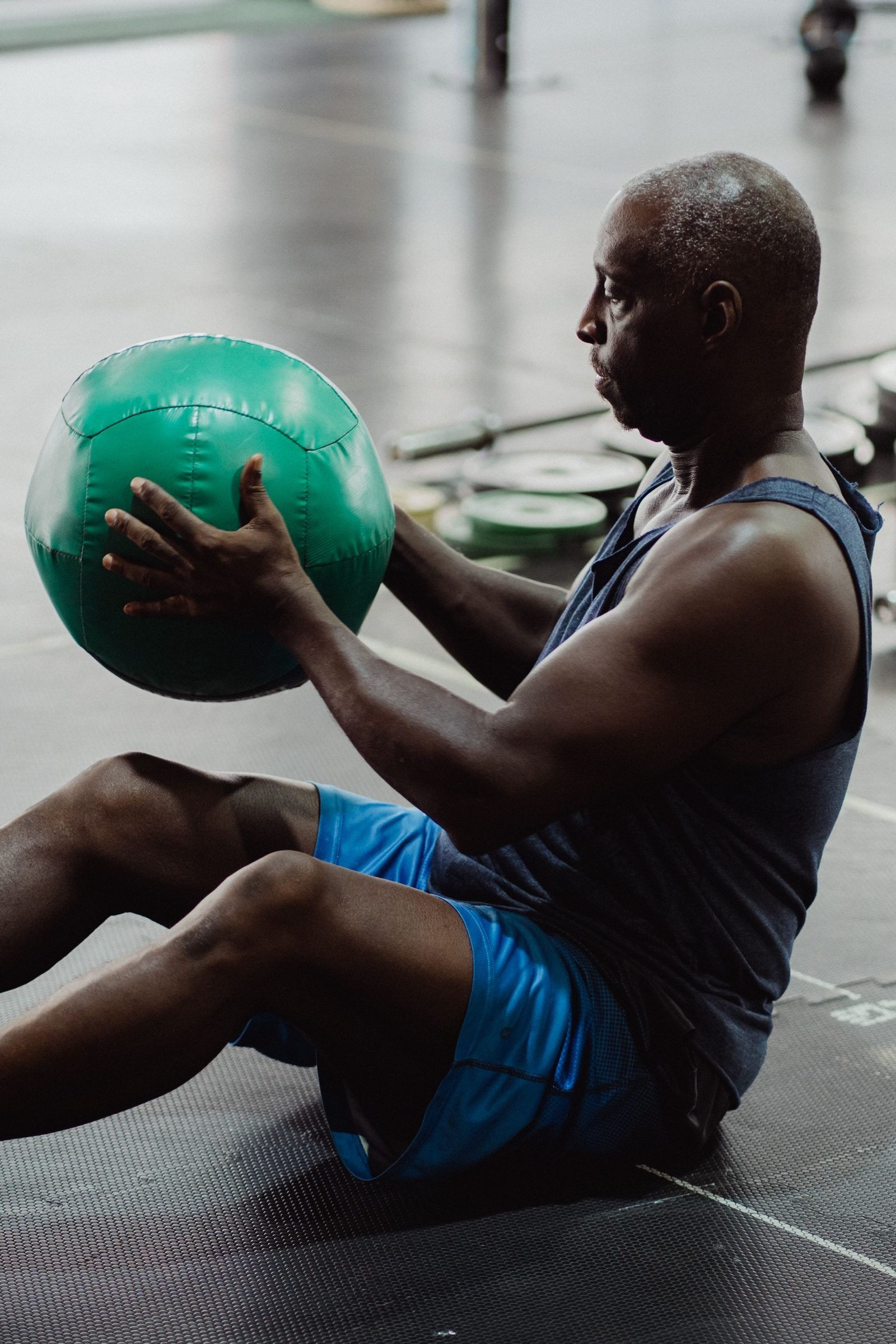
What Types of Balls Do We Use in Training?
Not all training balls do the same job, and mixing them up is one of the most common mistakes we correct with new clients. Here’s how we break them down when we’re building a program:
- Stability balls (Swiss balls) are the inflatable balls you’ll see used for planks, hamstring curls, and seated core work. They’re light on load but heavy on demand for balance, because your body has to stabilize against a moving surface. We use them mostly for core, mobility, and controlled strength work where the instability is the point.
- Medicine balls are solid, weighted balls, usually rubber or leather, that bounce or hold their shape. They range from 2 kg to 10 kg or more and work well for rotational throws, chest passes, and slams where you want a ball that returns energy. We use them for power development and for partner or wall-based conditioning drills.
- Slam balls are dense, non-bouncing balls built to be thrown straight down without rebounding into your face. They’re the go-to tool for full-body power output and for burning through frustration on a hard training day. We program slam balls when a client needs to move fast and heavy without the technical demands of a barbell lift.
- Wall balls sit somewhere between medicine balls and slam balls. They’re softer and built for repeated throws against a target, usually paired with a squat, and they show up constantly in conditioning circuits because they combine a full squat with an overhead throw in one rep.
Why Does Ball Training Matter for Strength and Conditioning?
Ball workouts matter because they train qualities that machines and even free weights don’t always hit well: rotational power, reactive core stability, and controlled instability. A barbell squat builds raw strength, but it doesn’t ask your core to stabilize against an unpredictable surface the way a stability ball plank does. A dumbbell row builds pulling strength, but it won’t teach you to generate force explosively and release it the way a slam ball does.
We also use ball work to bridge strength training and dynamic movement. It shares a lot of DNA with agility workouts, since both demand quick, coordinated firing of the core and hips rather than slow, controlled tension. A client doing rotational medicine ball throws is training the same hip-to-shoulder power transfer that shows up in a lateral cutting drill or a sprint start. If you’re already working on change of direction and reaction speed, ball training is a natural complement rather than something separate.
There’s also a joint-friendly angle here. Slams and throws let you express power without the eccentric loading that heavy barbell work puts on your joints. For clients coming back from injury, or older clients who want power without the wear and tear of maximal lifts, we lean on balls more than barbells for the explosive part of the session.
How Do You Program Ball Workouts Into a Weekly Plan?
Ball workouts work best as a layer inside a broader plan, not as the whole plan. We rarely build a program that’s ball work exclusively, because you still need progressive resistance training to build a strength base. What we do instead is use balls in three specific roles within someone’s workout plan: as a core-and-stability block after main lifts, as a power block at the start of a session before fatigue sets in, and as a conditioning finisher.
For most clients we’re coaching, that looks like two or three ball-based movements woven into a strength session, plus one dedicated conditioning day where slam balls and wall balls carry more of the volume. Power work, like rotational throws and slams, goes early in a session when the nervous system is fresh. Stability ball core work goes later, since fatigue there doesn’t compromise the quality of your main lifts.
We see clients make the mistake of doing high-rep slam ball circuits every single session because it feels like a good workout, and then wonder why their explosive power plateaus. Power training needs quality reps and real rest between sets, not just volume for the sake of feeling tired.
What Does a Sample Ball Workout Look Like?
Here’s a session we’d program for a client who wants a mix of core stability, rotational power, and conditioning in about 40 minutes. Adjust the loads based on experience level and always warm up the shoulders and hips first.
| Exercise | Ball Type | Sets | Reps | Rest |
|---|---|---|---|---|
| Stability ball plank with shoulder taps | Stability ball | 3 | 30-40 seconds | 45 sec |
| Rotational medicine ball throw (wall) | Medicine ball | 4 | 6 per side | 60 sec |
| Overhead slam ball | Slam ball | 4 | 8-10 | 60-90 sec |
| Stability ball hamstring curl | Stability ball | 3 | 12-15 | 45 sec |
| Squat to wall ball throw | Medicine/wall ball | 3 | 10 | 60 sec |
| Slam ball to sprawl | Slam ball | 3 | 8 | 60 sec |
| Stability ball dead bug | Stability ball | 3 | 10 per side | 30 sec |
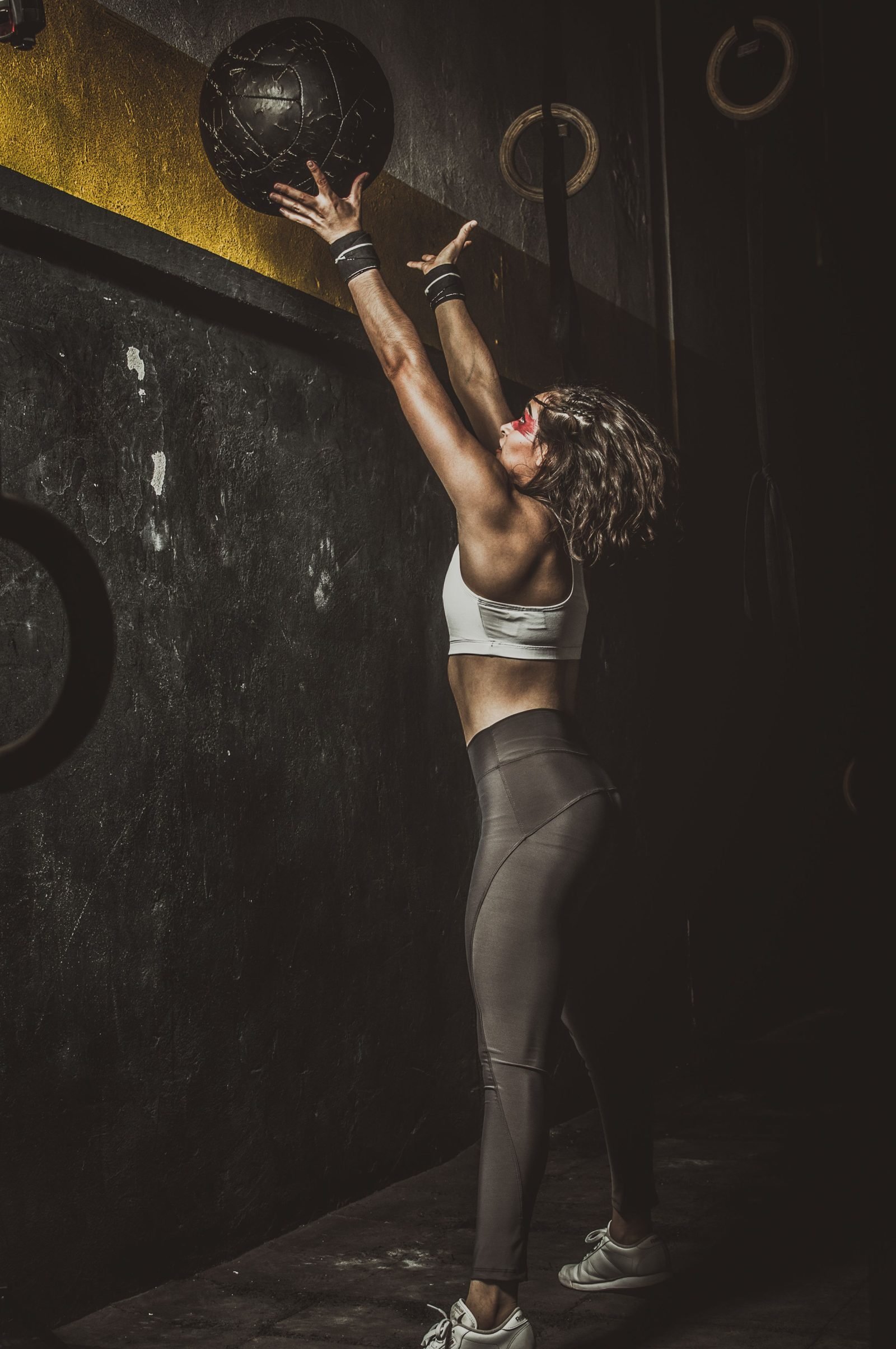
This kind of session hits core stability, rotational power, and full-body conditioning in one block. On a strength-focused day, we’d trim this down to two or three of these movements and pair them with the main lifts instead of running the full circuit.
How Do Ball Workouts Improve Conditioning?
Slam balls and wall balls are some of the most effective tools for building conditioning that doesn’t feel like generic cardio. A round of 20 slam balls done for time will spike your heart rate faster than most people expect, and it does it while still training power output instead of just burning calories. We often slot slam ball or wall ball intervals into the conditioning portion of a client’s gym cardio workout plan, usually as circuit finishers or as standalone interval blocks on lower-intensity strength days.
The advantage over running or cycling is that you’re still training movement quality under fatigue. A tired client doing wall ball squats has to keep their form together to hit the target, which carries over to real strength and coordination gains. Pure steady-state cardio doesn’t ask that of you.
Can You Do Ball Workouts Without a Gym?
Yes, and this is one of the reasons we recommend ball training for clients who train at home or don’t have access to a full rack of equipment. A stability ball, one medicine ball, and one slam ball cover an enormous range of training, from core work to power development to conditioning, and none of it needs a squat rack or a cable machine. You do need enough floor space and, for slam balls, a floor surface that can take repeated impact without damage.
That said, we still see better long-term results when ball work is paired with structured resistance training, even if that resistance training is just resistance bands or a couple of dumbbells at home. Balls are excellent at what they do, but they don’t replace loaded squats, presses, and pulls for building a strength base.
If you want a program that actually blends ball work, strength training, and conditioning around your specific goals and equipment access, that’s what our 1-on-1 personal training is built for. We design each plan around what you have available and what you’re training for, rather than handing out the same generic circuit to everyone.
Frequently Asked Questions
What are the benefits of ball workouts?
Ball workouts build core stability, rotational power, and conditioning in ways that traditional weights don’t always target. Stability balls challenge balance and bracing, medicine balls build explosive rotational strength, and slam balls develop full-body power output. They’re also joint-friendly and require minimal space, making them useful for both gym and home training.
What is a slam ball used for?
A slam ball is used for explosive, full-body power training. You lift it overhead and drive it into the floor as hard as possible, which trains the hips, core, and shoulders to generate force quickly. It’s also a strong conditioning tool, since repeated slams raise your heart rate fast while still training power rather than just fatigue.
Can you build core strength with a stability ball?
Yes, stability balls are one of the most effective tools for core strength because the unstable surface forces constant bracing. Exercises like planks, dead bugs, and hamstring curls on a stability ball recruit deep stabilizing muscles that flat-ground versions don’t challenge as much. We use them regularly with clients who need better core control before progressing to heavier lifts.
Do you need a gym for ball workouts?
No, ball workouts can be done almost anywhere with enough floor space. A stability ball, medicine ball, and slam ball together cover core work, power training, and conditioning without needing a rack or machines. The main requirement for slam balls is a durable floor surface that can handle repeated impact.
How often should you do ball workouts each week?
Most clients get strong results from two to three ball-focused sessions per week, layered into a broader strength and conditioning plan. Using them daily without adequate rest can blunt power gains and lead to overuse issues in the shoulders and lower back, so we typically program them alongside, not instead of, standard resistance training.