A good triceps workout at the gym trains all three heads of the muscle, long, lateral, and medial, using a mix of pressing and extension movements loaded across different arm positions. We build ours around 4 to 5 exercises per session: one compound press like close-grip bench or dips, one overhead extension for the long head, and two or three pushdown or extension variations for the lateral and medial heads. Do this twice a week with proper rest and your arms will grow and get stronger, without needing 90 minutes under the bar.
Why Do Most Gym Triceps Workouts Fall Short?
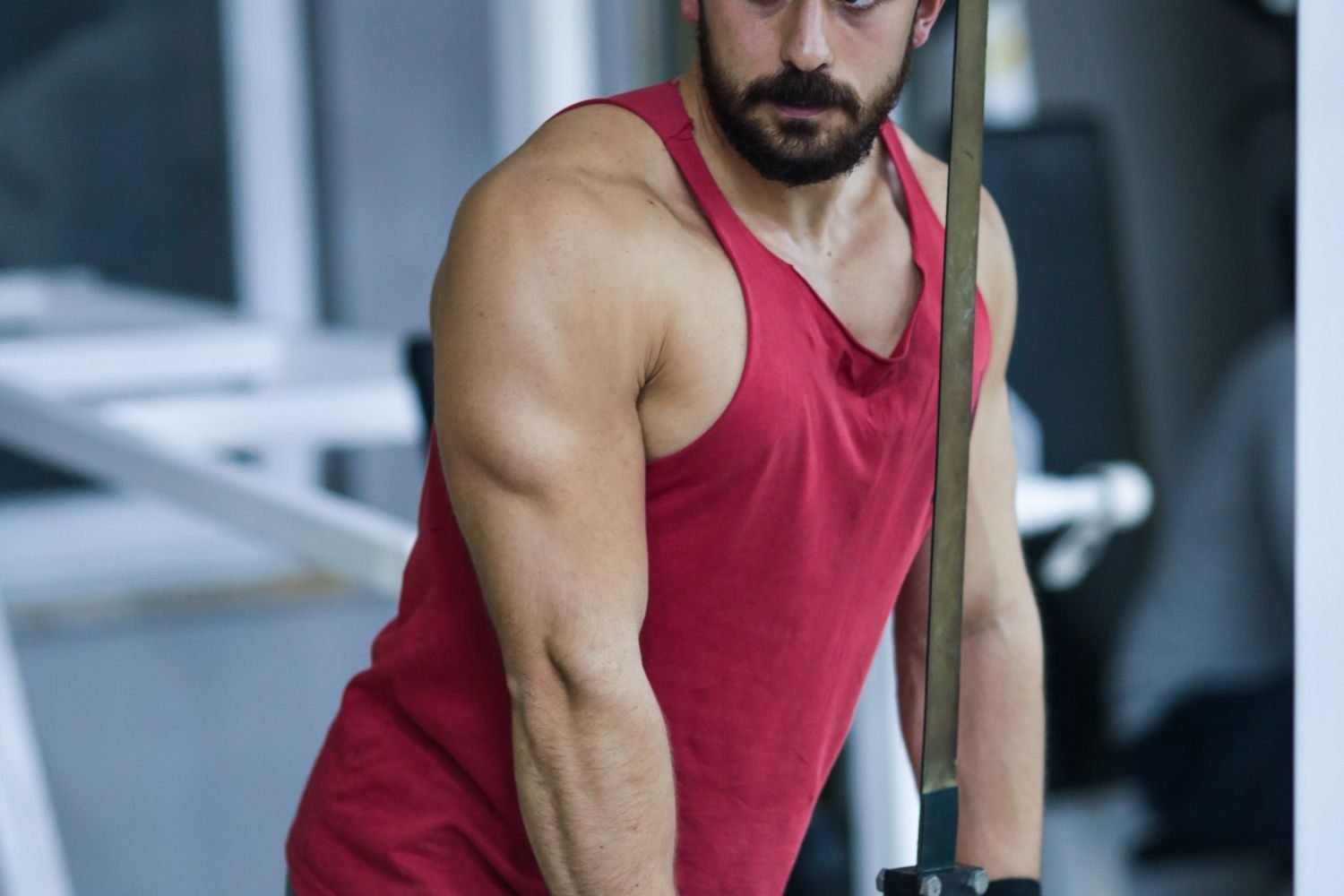
Walk into any gym on a weekday evening and you’ll see the same pattern. Someone does three sets of rope pushdowns, checks their arm in the mirror, and calls it a day. That’s not a triceps workout, that’s a warm-up. The triceps brachii is the biggest muscle group in your upper arm, bigger than your biceps, and it has three separate heads that respond differently to different angles and loads. Training only one movement pattern means you’re leaving real growth on the table.
We see this constantly with new clients who’ve been “training arms” for years but still have flat, undefined triceps. The fix isn’t more volume. It’s smarter exercise selection that actually hits the long head, the lateral head, and the medial head across a session, instead of hammering the same pushdown motion from three different machines.
What Are the Three Heads of the Triceps and Why Does It Matter?
The triceps brachii has three heads that share one job, extending the elbow, but they don’t all get the same amount of work from the same exercise.
The long head is the largest of the three and the only one that crosses the shoulder joint. That means it’s involved in shoulder extension as well as elbow extension, so it responds best to overhead movements like overhead cable extensions or dumbbell extensions, where the arm is raised above the head and the muscle is stretched under load.
The lateral head sits on the outside of the arm and is what gives the triceps that visible horseshoe shape when you flex. It’s most active in pressing movements and pushdown variations done with the arm at your side, close-grip bench press, straight-bar pushdowns, and dips all load it hard.
The medial head lies underneath the other two and is harder to isolate on its own. It’s active through almost every triceps movement and functions more as a stabiliser, but it still needs direct volume, especially from controlled, moderate-load work like reverse-grip pushdowns.
If your entire triceps session is pushdowns, you’re training the lateral head reasonably well and leaving the long head undertrained. That’s the single biggest gap we correct when we rebuild a client’s arm program.
Which Triceps Exercises Actually Belong in Your Gym Session?
Not every triceps exercise deserves a spot in your program. Here’s how we think about exercise selection, organised by what each movement is best at.
Close-grip bench press. The best compound triceps builder in the gym. It lets you load heavy and gets the lateral and medial heads working alongside the chest and front delts. If you only had one triceps exercise to keep, this would be it.
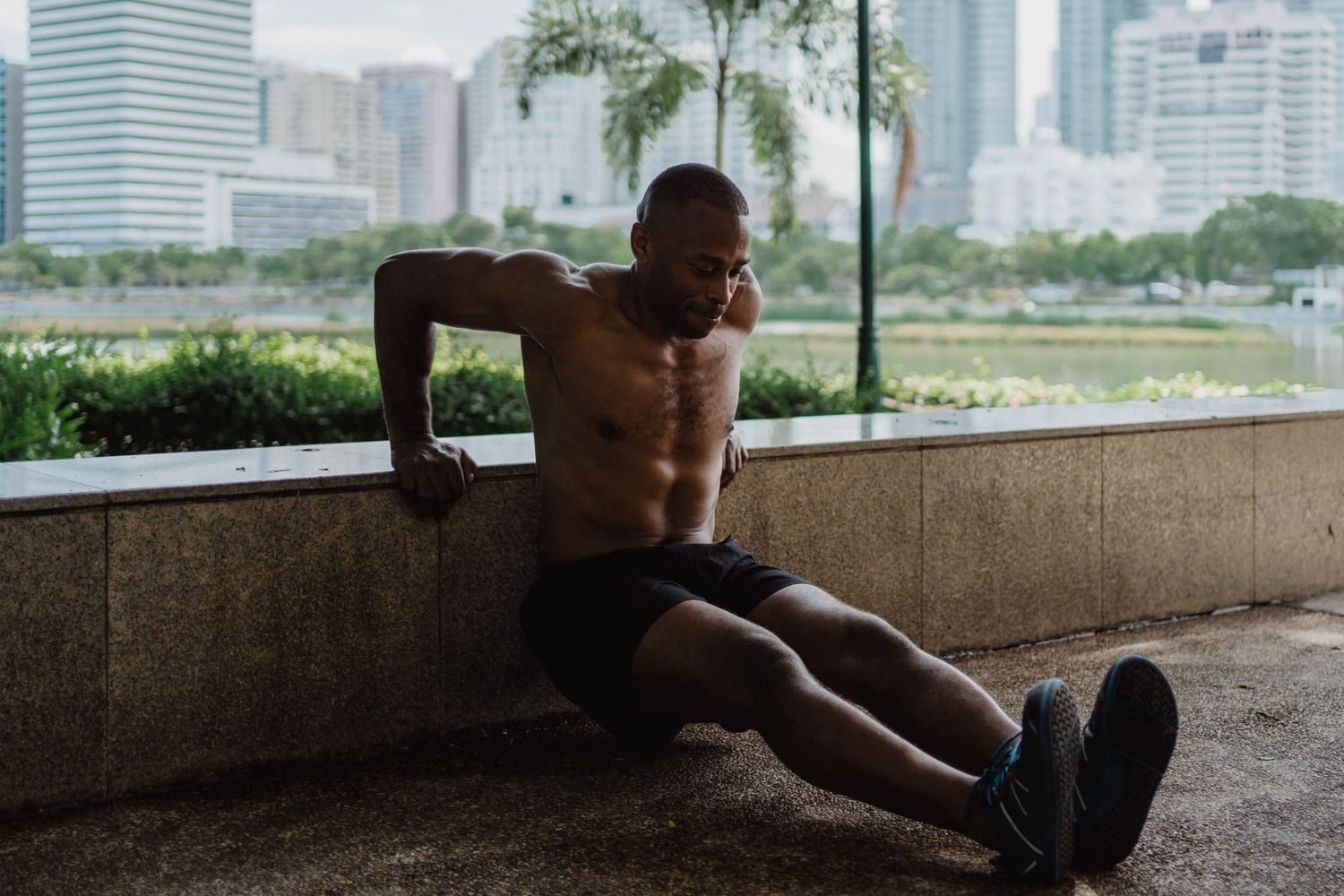
Dips. Bodyweight or weighted, dips hit the lower chest and front delts too, but an upright torso shifts the emphasis onto the triceps hard. A strong second compound movement.
Overhead triceps extension (cable or dumbbell). Non-negotiable if you want long head development. Skip this and you’re capping your arm size no matter how much pressing you do.
Rope pushdowns and straight-bar pushdowns. Reliable lateral head builders, easy to progressively overload, low joint stress. Good for higher rep work later in a session.
Skull crushers (EZ bar or dumbbell). A strong stretch-position movement for the long head when the upper arms are angled slightly back rather than straight up.
Reverse-grip pushdown. Underused, but it shifts tension onto the medial head and loads the wrists and elbows differently than a standard grip.
Diamond push-ups. A solid bodyweight option for training at home or supplementing gym sessions. Our push-up workout at home guide covers this in more depth if you want to build triceps strength without equipment.
What Does a Complete Triceps Workout Look Like at the Gym?
Here’s a full session we use with clients who train triceps as a dedicated day, or as the second half of an arm day. It hits all three heads, moves from heavy compound work to lighter isolation work, and takes about 45 minutes including warm-up sets.
| Exercise | Sets | Reps | Rest | Primary Focus |
|---|---|---|---|---|
| Close-grip bench press | 4 | 6-8 | 2 min | Lateral and medial head, overall strength |
| Weighted dips | 3 | 8-10 | 90 sec | Lateral head, compound overload |
| Overhead cable extension | 3 | 10-12 | 75 sec | Long head, stretch under load |
| Rope pushdown | 3 | 12-15 | 60 sec | Lateral head, pump and volume |
| Reverse-grip pushdown | 2 | 12-15 | 60 sec | Medial head |
| Single-arm overhead extension | 2 | 12-15 per side | 45 sec | Long head, unilateral finish |
Start heavy, finish light. Compound presses first while you’re fresh and can handle real load, then move into extensions and pushdowns to finish off each head with more targeted, controlled volume. If you’re short on time, drop the last two exercises and you still get a complete session.
How Should You Program Triceps Training for Real Growth?
Programming matters more than exercise choice once you’ve got the basics right. A few principles we stick to with clients:
- Weekly volume. Most people need somewhere between 10 and 16 working sets of triceps training per week to grow, counting both direct isolation work and the indirect volume from pressing movements. Beginners can grow on less. Advanced lifters often need to push toward the higher end.
- Rep ranges. Don’t lock yourself into one range. Heavy compound work in the 6 to 8 rep range builds strength and overall size. Isolation work in the 10 to 15 rep range builds the mind-muscle connection and adds volume without wrecking your joints. Running both in the same session, like the table above, covers both bases.
- Progressive overload. Add weight, add reps, or add a set every couple of weeks. Elbow tendons can get cranky if you jump load too fast on pushdowns and extensions, so progress these more gradually than a compound lift.
- Order matters. Compound presses before isolation work, always. Your close-grip bench press numbers will suffer if you pre-fatigue the triceps with pushdowns first.
How Often Should You Train Triceps Each Week?
Twice a week works well for most lifters who train triceps directly, with roughly 48 to 72 hours between sessions to recover. If you’re also doing heavy chest and shoulder pressing on other days, your triceps are getting indirect work then too, so factor that in rather than treating every session as a fresh start. Training triceps three times a week can work for advanced lifters with good recovery, but for most people it’s unnecessary and increases the risk of elbow tendon irritation without a proportional gain in size.
How Does Triceps Training Fit Into Your Overall Arm and Upper Body Plan?
Triceps rarely train in isolation from the rest of your upper body. If you’re building a full arm day that covers both biceps and triceps in one session, our gym arm workout guide walks through structuring both muscle groups together without one overshadowing the other. If you’re pairing triceps work with shoulders and biceps on an upper body split, our shoulder and bicep workout article covers that combination in detail.
The dedicated session in this article works best when you’re specifically prioritising arm size or strength, or when your program already covers biceps and shoulders on separate days and triceps need their own focused slot.
Ready to Build a Triceps Program That Actually Works for You?
Generic workout templates don’t account for your joint history, your current strength levels, or how your arms are responding week to week. That’s the gap we close. Through FitStrot’s 1-on-1 personal training, we build a triceps and arm program around your actual gym, your equipment, and your recovery capacity, then adjust it as you progress instead of leaving you on the same routine for months.
Frequently Asked Questions
What is the best triceps workout at the gym?
The best triceps workout combines a heavy compound press like close-grip bench or weighted dips with an overhead extension for the long head and pushdown variations for the lateral and medial heads. Training all three heads in one session, rather than relying on pushdowns alone, produces far better arm development over time.
How many triceps exercises should you do?
Four to five exercises per session is enough for most lifters. One compound movement, one overhead extension, and two or three pushdown or extension variations cover all three heads without turning the session into an endurance test. More exercises than that usually just adds fatigue without adding growth.
Do triceps need heavy weight or high reps?
Both. Heavy compound work in the 6 to 8 rep range builds strength and thickness, while lighter isolation work in the 10 to 15 rep range adds volume and improves the mind-muscle connection with lower joint stress. Using only one approach limits your results, so a good session includes both.
How often should you train triceps?
Twice a week is the sweet spot for most people, with 48 to 72 hours of recovery between direct sessions. Remember that heavy chest and shoulder pressing also loads the triceps indirectly, so factor that into your weekly total rather than treating every triceps session as your only stimulus.
Can you train triceps effectively without a gym?
Yes, to a point. Bodyweight movements like diamond push-ups and bench dips can build real triceps strength, especially for beginners. But progressive overload gets harder without added resistance, so a gym with cables and free weights will take you further once you’ve built a base level of strength.