A push up workout at home is a structured set of push up variations, like incline, standard, diamond, and decline, arranged into sets, reps, and rest periods that progressively challenge your chest, shoulders, and triceps without any equipment. Done right, it builds real pushing strength and visible upper body muscle using nothing but floor space and your own bodyweight. At FitStrot we program push up circuits for clients who travel constantly or don’t have gym access, and we’ve seen them build strength that transfers directly to bench press and overhead press once they get back under a bar, the same pressing pattern we build into a full push day workout once they’re back in the gym.

Why Does a Push Up Workout at Home Actually Work?
Push ups work because they load your chest, shoulders, and triceps through a full range of motion while also demanding core and glute stability to keep your body in a straight line. That’s a lot of muscle working at once, which is exactly why a well-structured bodyweight push session can rival a dumbbell chest day for hypertrophy, especially for beginners and intermediate lifters. The variable is intensity. A flat push up eventually gets too easy, and if you don’t change the angle, tempo, or leverage, progress stalls fast.
This is the part most home workout guides skip. They give you “do 3 sets of push ups” and call it a program. We build our push routines around progressive overload the same way we would for a barbell client, just using body angle and mechanical disadvantage instead of added plates.
What Muscles Do Push Ups Actually Train?
The primary movers are your pectoralis major (chest), anterior deltoids (front shoulders), and triceps brachii. Your core, including the rectus abdominis and obliques, works isometrically to keep your hips from sagging or piking, and your serratus anterior fires hard at the top of the rep to protract your shoulder blades. Change the hand position or torso angle and you shift the emphasis. Wide hands bias the chest a bit more, diamond hand placement shifts load toward the triceps, and decline push ups (feet elevated) increase demand on the upper chest and shoulders.
How Do You Build a Push Up Workout at Home?
We program push up sessions the same way we’d program any pushing day: start with a variation you can control for clean reps, progress toward harder leverage as strength improves, and always leave a rep or two in reserve on your working sets so form doesn’t break down. A typical FitStrot home push session runs four to five variations, moving from easier to harder, with short rest between sets so you accumulate volume without frying your shoulders.
Warm up first. Two minutes of arm circles, a few band pull-aparts if you have one, and a couple of easy incline push ups get blood into the joints before you load them. Skipping this is one of the fastest ways to aggravate a shoulder, especially if you’re going straight from a desk to the floor.
What’s a Good Progressive Push Up Table to Follow?
Here’s a sample session we use with clients who are training push ups at home with no equipment beyond a chair or step for the incline and decline variations. Rest is measured between sets, not between exercises.
| Variation | Sets | Reps | Rest | Focus |
|---|---|---|---|---|
| Incline Push Up (hands on chair/step) | 2 | 12-15 | 45 sec | Warm-up, shoulder prep |
| Standard Push Up | 3 | 8-12 | 60 sec | Chest, triceps, core |
| Diamond Push Up | 3 | 6-10 | 60 sec | Triceps emphasis |
| Archer Push Up | 2 | 4-6 per side | 75 sec | Unilateral strength |
| Decline Push Up (feet on chair/step) | 2 | 8-10 | 60 sec | Upper chest, shoulders |
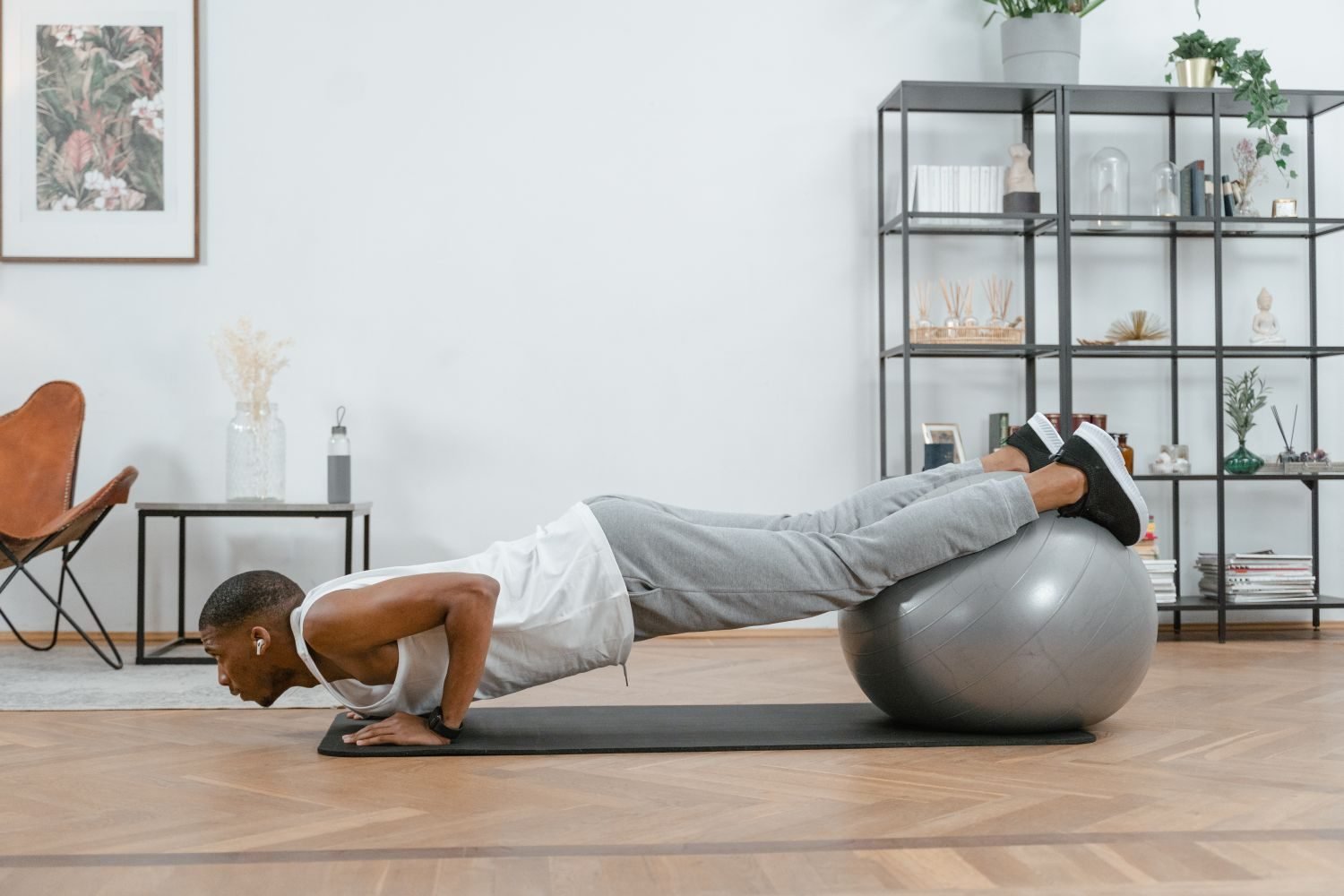
If standard push ups are still hard to get eight clean reps on, drop the diamond and archer sets for now and just build volume on incline and standard push ups. There’s no shame in staying at an easier angle for a few weeks. Strength built with good form always beats sloppy reps at a harder variation.
How Does a Push Day Fit Into a Bigger Training Split?
A push up workout at home doesn’t have to stand alone. If you’re following a push/pull/legs style split, this session slots in as your push day, hitting chest, shoulders, and triceps while your pull day workout covers back and biceps with rows and pull ups on the other days. The two complement each other. Push movements drive shoulders forward and pull movements draw them back, so training both keeps your posture and joint health in balance.
If you’re deciding how to structure your week around muscle groups rather than movement patterns, it’s worth thinking about how push training fits into your overall split too. Some clients prefer dedicating a full day to chest and another to shoulders, while others get better results from a combined push session. Both approaches work. What matters is picking one and sticking with it long enough to see progress.
What Mistakes Do People Make With Push Ups at Home?
A few form breakdowns show up again and again with home push up training:
- Chasing rep count instead of range of motion. Cranking out twenty half push ups builds less strength and worse technique than eight full ones.
- Flaring the elbows out to 90 degrees. This puts unnecessary stress on the shoulder joint. Keep your elbows at roughly a 30 to 45 degree angle from your torso and your chest should touch (or nearly touch) the floor on every rep.
- Sagging hips. If your lower back is doing the work of holding your body up instead of your core, you’re not training the muscles you think you are, and you’re setting yourself up for lower back discomfort.
Film yourself from the side once. It’s the fastest way to catch these issues before they become habits.
How Often Should You Train Push Ups at Home?
Two to three sessions per week is the sweet spot for most people, with at least one rest day between sessions so your chest, shoulders, and triceps can recover. Push ups are a compound movement and they create real fatigue, even though there’s no barbell involved. Training push ups every single day usually leads to a plateau or, worse, an overuse injury in the shoulder or elbow. We’d rather see a client do three focused sessions a week with proper progression than seven rushed sets a day that never get harder. Whether you fold this into a push/pull/legs split or a classic bro split workout, that frequency holds up well across training styles.
Track your numbers. Write down the variation, sets, and reps each session so you know when it’s time to move to a harder version. Progress on push ups isn’t always about doing more, sometimes it’s about doing the same rep count on a harder angle.
Is a Home Push Up Workout Enough on Its Own?
It’s enough to build noticeable pushing strength and some real chest and shoulder development, especially if you’re starting from a lower training age. But push ups alone won’t fully develop your back, legs, or grip strength, and eventually your bodyweight becomes the ceiling on how much load you can add. That’s fine for a season of training, less fine if your goal is long-term, well-rounded muscle growth. At some point most of our clients want a plan that goes beyond bodyweight, and that’s exactly when we start blending in pulling work, loaded carries, or resistance bands to keep progress moving.
If you want a program built specifically for your goals, whether that’s fat loss, general strength, or preparing for a specific sport, that’s what our 1-on-1 personal training is for. We assess your current strength, your equipment access, and your schedule, then build a plan around what you actually have to work with, home or gym.
Frequently Asked Questions
What muscles do push ups work?
Push ups primarily train the chest, front shoulders, and triceps as the main movers, while your core and glutes work isometrically to keep your body straight throughout the movement. Your upper back muscles also engage at the top of each rep to stabilize your shoulder blades, making push ups a genuinely full upper body exercise despite looking simple.
How many push up variations should you learn?
Five or six solid variations is plenty for most home trainees: incline, standard, diamond, decline, and archer cover chest, triceps, and unilateral strength well. Learning more than that adds complexity without much added benefit. We’d rather a client master five variations with clean form than know fifteen and execute all of them poorly.
Can you build muscle with push ups alone?
Yes, especially early in your training when your body responds strongly to any consistent resistance. Push ups can build meaningful chest, shoulder, and tricep size for months. Eventually bodyweight becomes a limiting factor for continued growth, so most people benefit from adding resistance bands, weighted vests, or other pulling and pressing tools over time.
How often should you do push up workouts?
Two to three sessions per week works well for most people, with at least a day of rest between sessions to let your chest, shoulders, and triceps recover. Training push ups daily without progression usually leads to a plateau rather than faster gains, since the muscles never get enough recovery time to actually adapt and grow stronger.
Do you need any equipment for a push up workout at home?
No, a basic push up workout needs nothing but floor space, though a sturdy chair or step is genuinely helpful for incline and decline variations. As you progress, resistance bands or a weighted backpack can add load once bodyweight alone stops being challenging, but you can train productively for months without buying anything at all.