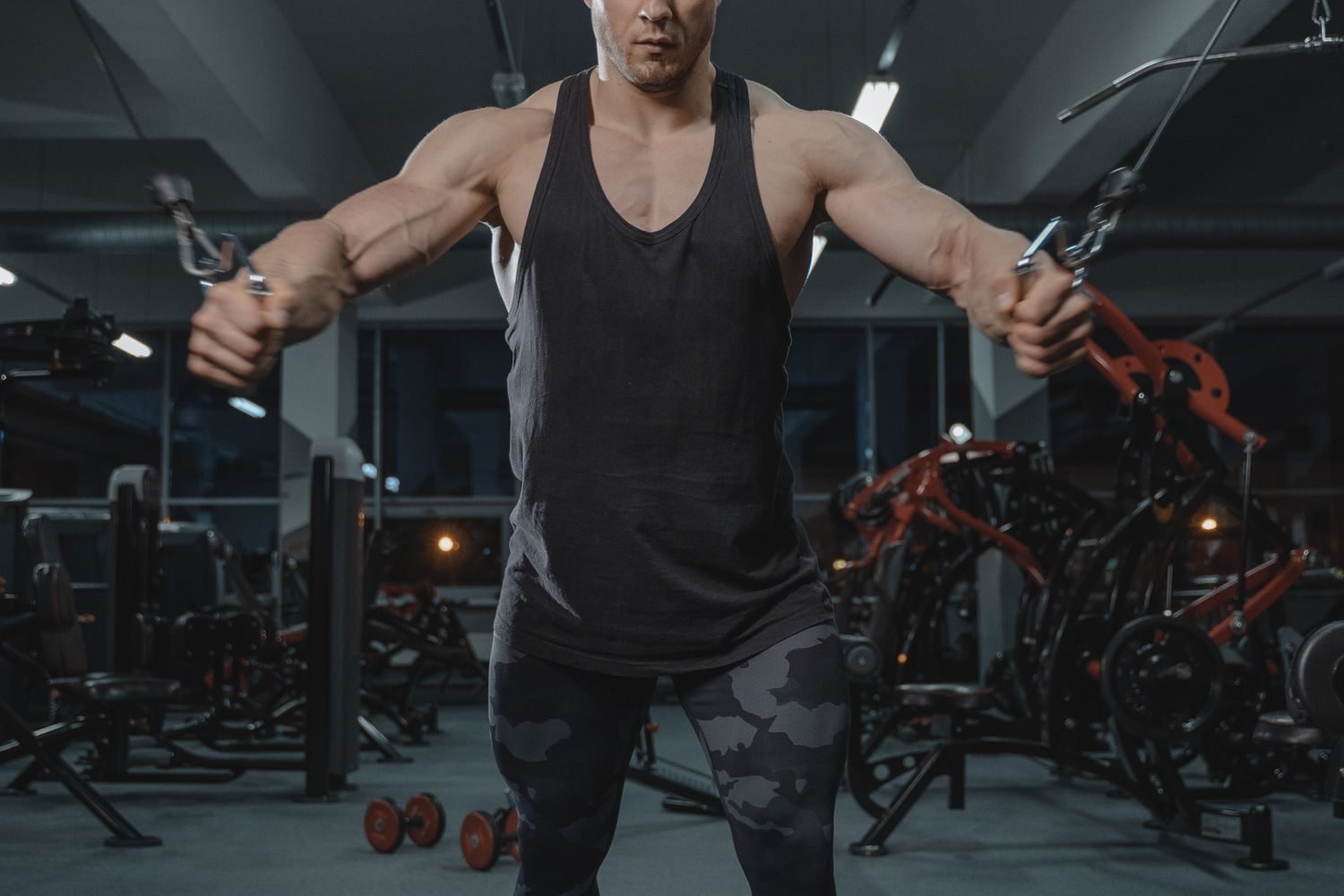
A cable crossover workout uses a dual-pulley cable machine to hit your chest through a full range of motion that a barbell or dumbbell press simply can’t match, keeping constant tension on the pecs from the stretched position all the way to full contraction. At FitStrot, we build cable crossover sessions into almost every client’s chest day because the machine lets you train the high, mid, and low fibers of the chest separately, which means better shape and better mind-muscle connection over time. If you’ve only ever pressed and never crossed over, you’re missing a tool that does something free weights can’t.
What Makes the Cable Crossover Different From a Press?
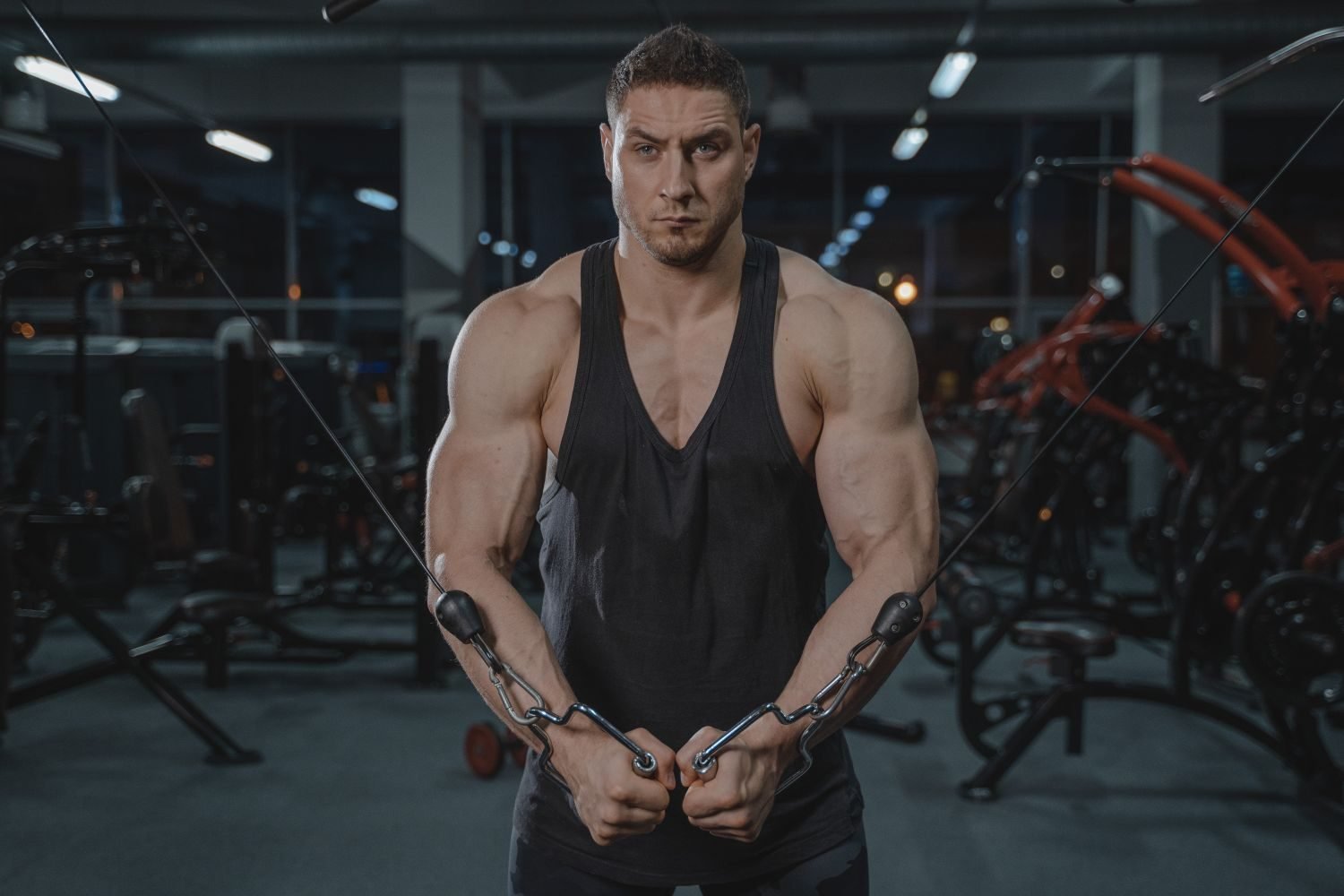
A bench press or dumbbell press loads your chest hardest at the bottom and lets tension fall off near lockout. That’s fine, but it leaves the last few inches of the movement, the part where your pecs actually squeeze together, badly undertrained. The cable crossover flips this. Because the resistance comes from two angled pulleys instead of gravity pulling straight down, your chest stays loaded through the entire arc, including that final adduction where the arms cross in front of the body.
This is why we don’t treat cable crossovers as a replacement for pressing. We treat them as the finishing move that presses can’t deliver. Pressing builds raw strength and mass. Crossovers sculpt and isolate. Used together, they cover both jobs.
What Muscles Does the Cable Crossover Work?
The primary mover is the pectoralis major, specifically the sternal (mid to lower) and clavicular (upper) fibers depending on the angle you set the pulleys at. The anterior deltoid assists heavily in every variation, and the serratus anterior and pec minor get real work during the final squeeze, especially in the low-to-high version. Your core and hip flexors also stay switched on the whole time just to keep you upright and stable in that split stance.
Because the machine lets you isolate the chest without much triceps involvement, cable crossovers are one of the cleaner ways to feel your pecs actually working, which is exactly why we lean on them with clients who say they “feel it in their shoulders” during bench press and never in their chest.
How Do You Do a High-to-Low Cable Crossover With Proper Form?
Set both pulleys above shoulder height. Grab a handle in each hand, step forward into a slight split stance, and let your arms open out to the sides with a soft bend in the elbow. From here, sweep both hands down and inward in an arc until they meet near your hip or lower abdomen, squeezing your chest hard at the bottom. Control the return, don’t let the weight yank your arms back up.
This variation targets the lower and mid chest fibers hardest. Keep your torso stacked and avoid leaning forward from the hips to “help” the movement, that just shifts load onto your shoulders and lower back.
How Do You Do a Low-to-High Cable Crossover?
Flip the setup: pulleys down near the floor, handles pulled up and across the body until your hands meet around chin or eye level. This hits the upper chest and clavicular fibers, the area most lifters neglect because barbell and dumbbell pressing rarely challenges it directly. We program this one for clients chasing a fuller, more balanced chest, particularly anyone who’s been benching for years and has a visible gap between upper and lower pec development.
Keep the elbows slightly bent throughout and drive the movement from the shoulder joint, not the wrist. Think about pulling your hands toward the opposite ear rather than just “up.”
What About the Mid (Standard) Cable Crossover?
Set both pulleys at roughly shoulder height and bring the handles straight across your body until they meet in front of your chest, palms rotating to face each other or crossing slightly at the finish. This one hits the sternal head, the meaty middle portion of the chest most people picture when they think “pecs.” It’s often the easiest variation to learn, which makes it a good starting point if you’re new to cables and want to groove the movement pattern before adding angles.
What Does a Full Cable Crossover Chest Session Look Like?
Here’s a session structure we actually use with clients who train chest twice a week. It opens with a compound movement to build strength, then uses all three crossover angles to finish off each region of the chest.
| Exercise | Sets x Reps | Focus |
|---|---|---|
| Flat barbell or dumbbell bench press | 4 x 6-8 | Overall mass and strength |
| Low-to-high cable crossover | 3 x 12-15 | Upper chest, clavicular fibers |
| Mid cable crossover | 3 x 12-15 | Sternal (mid) chest |
| High-to-low cable crossover | 3 x 12-15 | Lower chest fibers |
| Cable or dumbbell chest fly (single pulley or bench) | 2 x 15 | Stretch and burnout |
| Push-ups to failure | 2 sets, max reps | Full pec fatigue finisher |
If you train from home or a gym without a cable station, you can build a similar effect with resistance bands or a solid dumbbell workouts routine using flyes and presses, though you’ll lose the constant tension a true crossover machine gives you at the top and bottom of the rep. Cables win on isolation, dumbbells win on portability and stabilizer demand. Neither one makes the other pointless.
How Does Cable Crossover Fit Into a Balanced Pull-Push Program?
Chest work is a push movement, and it needs a pulling counterpart or your shoulders will drift forward over months of training. We usually pair crossover-heavy chest days with back work built around rows, and our seated cable row workout guide covers exactly how to structure that on the same equipment. If your gym has a dual pulley station and a seated row attachment, you can cover pushing and pulling without ever leaving the cable section.
For clients who want variety beyond cables, we also rotate in a kettlebell workout block every few weeks. It changes the stimulus, keeps things interesting, and builds rotational and grip strength that a fixed cable path doesn’t train.
What Mistakes Kill Your Cable Crossover Results?
Three mistakes account for most of the lost results we see on this exercise:
- Using too much weight. This turns the movement into a half-rep yank. If you can’t control the eccentric on the way back out, drop the load.
- Flaring the elbows too straight. This turns the exercise into a shoulder-dominant press instead of a chest-dominant squeeze. Keep a gentle bend in the elbow throughout, don’t lock out.
- Skipping the stance setup. A wide, staggered stance with one foot forward keeps you stable and stops your torso from rocking to generate momentum.
We see clients make the fastest progress on this exercise once they stop chasing heavier pin weights and start chasing a slower, harder squeeze at the point where the hands cross. That single change does more for chest development than adding five more kilos on the stack ever will.
Frequently Asked Questions
What is a cable crossover machine used for?
A cable crossover machine is used to train the chest, shoulders, and to a lesser degree the back and arms, through exercises where two adjustable pulleys create resistance from opposing angles. It’s mainly used for isolation work like crossovers and flyes, though many gyms also use the same station for cable rows, tricep pushdowns, and lat pulldowns.
What muscles does the cable crossover work?
The cable crossover primarily works the pectoralis major, hitting different fibers depending on pulley height. It also engages the anterior deltoid, serratus anterior, and pec minor as secondary movers, with your core and hip stabilizers working isometrically to keep your stance steady throughout the movement.
Is cable crossover better than dumbbell flyes?
Neither is strictly better, they solve different problems. Cable crossovers keep constant tension through the whole range, including full contraction, which dumbbell flyes lose near the top. Dumbbell flyes demand more stabilizer control and work well without a cable station. We use both, cables for tension, dumbbells for variety and portability.
How do you do a cable crossover with proper form?
Set the pulleys at your chosen height, step into a staggered stance with a slight forward lean, and keep a soft bend in your elbows throughout. Pull the handles through an arc until your hands meet in front of your body, squeeze your chest hard, then control the return slowly. Avoid locking your elbows or leaning on momentum.
How often should you train cable crossovers each week?
Most clients get solid results training crossovers twice a week as part of their chest sessions, spaced with at least 48 hours between sessions to let the muscle recover. Beginners can start with one dedicated session weekly and add a second once form and recovery are consistent.
If you want a chest program that actually accounts for your equipment, your schedule, and where your pecs are lagging, that’s the kind of detail a generic plan skips. Our coaches build it into your 1-on-1 personal training program from week one, adjusting angles, volume, and pairings as you progress instead of leaving you to guess.