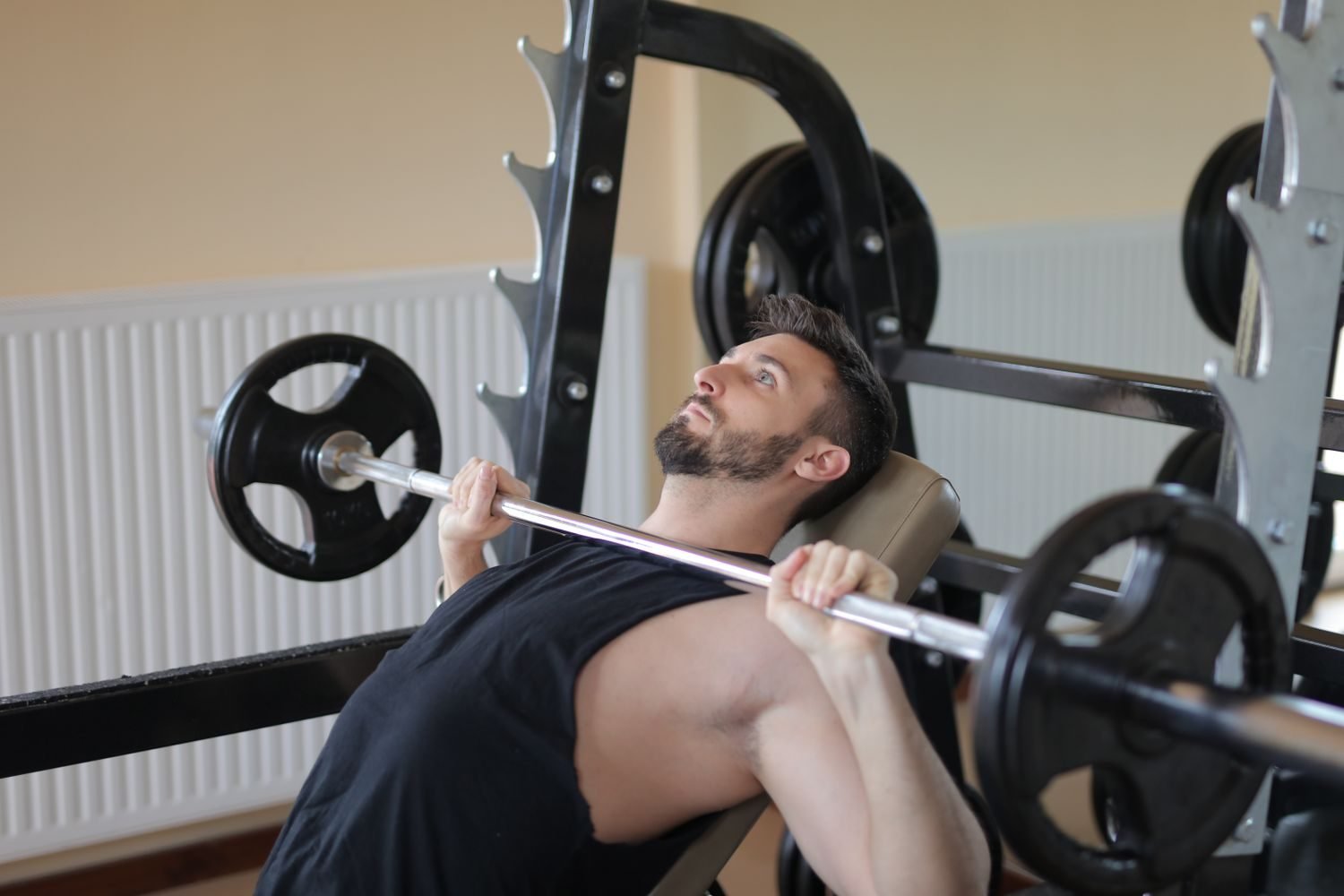
A push day workout trains every muscle group involved in pushing movements: chest, shoulders, and triceps, all in one session. It’s built around exercises like the bench press, overhead press, and dips, where the joint action pushes weight away from your body. At FitStrot, we program push day as one-third of a push/pull/legs split, and it’s usually the session our clients look forward to most because the strength gains show up fast and visibly. A well-built push day has 6 to 8 exercises, hits chest first while you’re fresh, then shoulders, then triceps, and takes 60 to 75 minutes to complete properly.
What Is a Push Day Workout?
Push day groups exercises by movement pattern rather than by single muscle. Instead of training “chest” on Monday and “shoulders” on Wednesday, you train every muscle that pushes weight away from your torso in one session. That covers the pectorals, the three heads of the deltoid, and the triceps. The logic is simple: these muscles all act as synergists during pressing movements, so they fatigue together and recover together.
This is the companion structure to a pull day workout, which trains the back and biceps using pulling patterns. Push and pull days are opposites by design. One moves weight away from you, the other brings it toward you. Pairing them across a week gives your upper body balanced volume without overlapping fatigue.
What Muscles Get Trained on Push Day?
Push day covers three major muscle groups, and a good session gives each one direct attention rather than leaving one as an afterthought.
- Chest — The pectoralis major does most of the work in flat and incline pressing. It’s the biggest muscle in the push chain, so it usually goes first when energy is highest.
- Shoulders — The deltoid has three heads: anterior, lateral, and posterior. Pressing movements hit the anterior head hard, but the lateral head needs isolation work like lateral raises to grow, since pressing alone under-trains it.
- Triceps — The triceps assist on every pressing movement already, which is why we program direct triceps work at the end of the session. They’re pre-fatigued by then, so it doesn’t take much volume to finish them off.
How Does Push Day Fit Into a Weekly Split?
Push day is one leg of the push/pull/legs system, alongside pull day and leg day. We’ve written a full breakdown of the PPL workout structure if you want the complete picture of how the three days interact across a training week.
Most of our clients run PPL twice through in six days, or spread it across the week with rest days mixed in depending on recovery and schedule. It’s not the only way to organize training. Some people do better on a bro split workout, where each muscle group gets its own dedicated day and more total volume per session. We use both structures depending on the client’s schedule, training age, and how well they recover between sessions. Neither is objectively superior. PPL tends to suit people training four to six days a week; a bro split works well for people who can only manage focused, lower-frequency sessions.
What Does a Complete Push Day Workout Look Like?
Here’s a sample push day we build for intermediate clients. It hits chest first, moves to shoulders, then finishes with triceps.
| Exercise | Sets | Reps | Target |
|---|---|---|---|
| Barbell Bench Press | 4 | 5-8 | Chest, front delts, triceps |
| Incline Dumbbell Press | 3 | 8-10 | Upper chest |
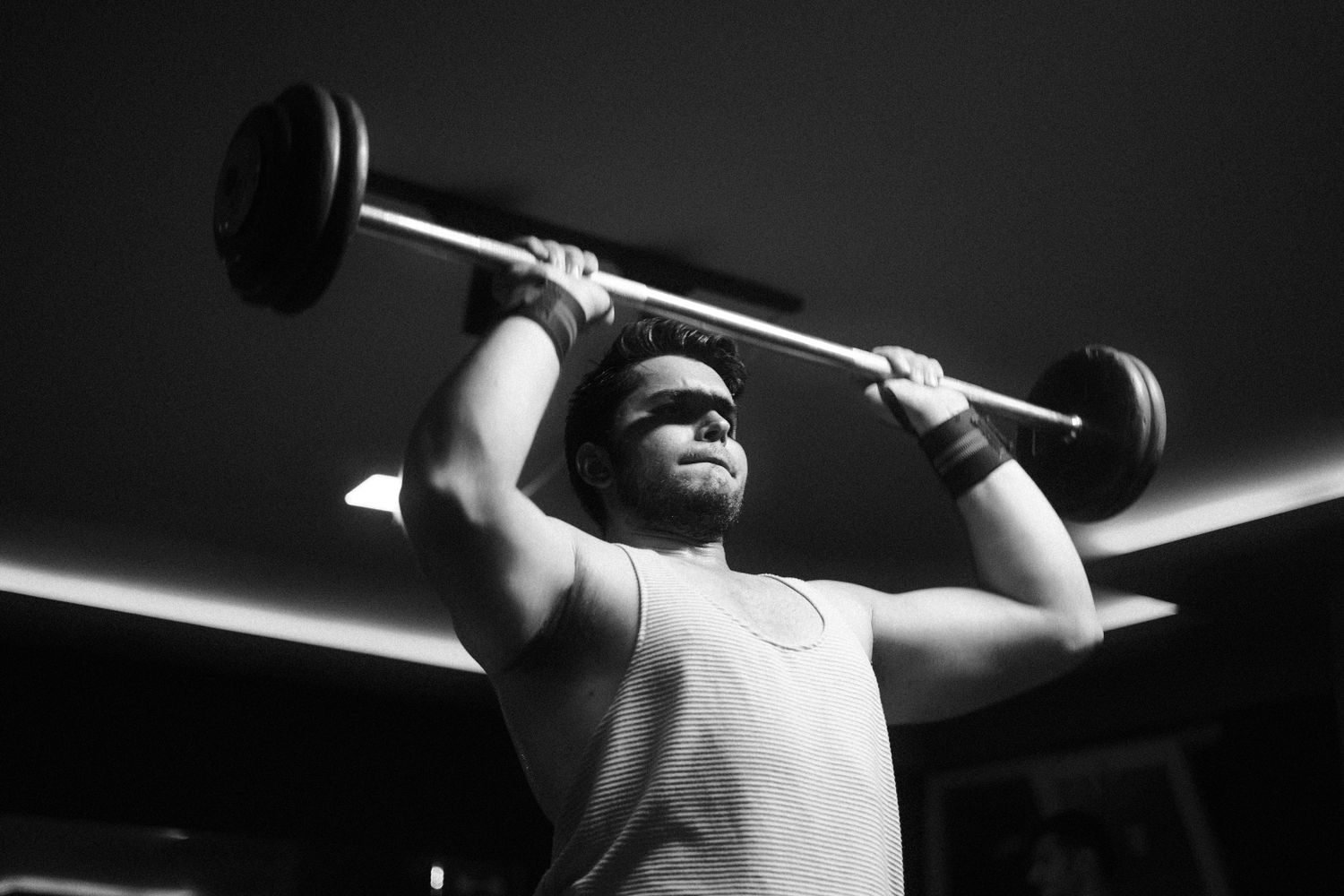
| Seated Overhead Press | 3 | 6-8 | Shoulders, triceps |
| Cable Chest Fly | 3 | 12-15 | Chest (stretch and squeeze) |
| Lateral Raise | 4 | 12-15 | Lateral deltoid |
| Dips | 3 | 8-12 | Chest, triceps |
| Triceps Rope Pushdown | 3 | 10-12 | Triceps |
That’s seven exercises, roughly 23 working sets, which sits in a solid range for a single session without tipping into junk volume. If you’re newer to training, drop the fly and one triceps exercise and you’ll still get a complete session. If you’re advanced, you can add a rear-delt exercise, though some coaches program rear delts on pull day instead since they’re a pulling muscle mechanically.
How Many Exercises and Sets Should Push Day Have?
We typically program 6 to 8 exercises for push day, landing between 18 and 24 working sets across chest, shoulders, and triceps combined. That breaks down roughly to 10-12 sets for chest, 6-8 for shoulders, and 4-6 for triceps, accounting for the fact that triceps already get indirect work from every pressing movement.
Reps depend on the goal. Heavier compound lifts like bench press and overhead press work well in the 5-8 rep range for strength. Isolation movements like lateral raises and cable flys respond better to higher reps, 12-15 or even higher, since the goal there is muscle tension and time under load rather than maximal load.
Don’t chase soreness as a measure of a good session. Soreness fades as your body adapts, and a session that leaves you unable to lift your arms for three days usually means the volume or intensity was mismanaged, not that the workout was more effective.
What Mistakes Do We See on Push Day?
We see clients front-load their session with too much shoulder isolation work before they’ve done a single heavy compound lift, which leaves the deltoids too fatigued to stabilize properly during the bench press that follows. Order matters. Compound lifts that need the most stability and the most weight go first, isolation work goes last.
Beyond that, the other common issue is treating every set like a maximal effort. Pushing every single set to failure on push day, especially on pressing movements, adds unnecessary joint stress to the shoulders and elbows without adding proportional muscle growth. We coach clients to leave one or two reps in reserve on most working sets and save true failure for the last set of an exercise, if at all.
Push Day vs Chest Day: What’s the Difference?
Chest day trains one muscle group with high volume and multiple angles: flat, incline, decline, cable work, all for the pectorals. Push day trains three muscle groups together because they share the same movement pattern and fatigue together during compound lifts.
The tradeoff is straightforward. Chest day gives you more total chest volume in a single sitting, which some bodybuilders prefer for pure hypertrophy. Push day gives you a more balanced session and lets you train chest, shoulders, and triceps twice a week instead of once, since you’re not dedicating separate days to each. For most people training three to six days a week, push day’s frequency advantage outweighs the extra volume a dedicated chest day offers.
Should You Do Push Day and Pull Day Back to Back?
You can, and plenty of programs schedule them on consecutive days. Push day and pull day don’t compete for the same muscles, so recovery isn’t really the concern. What matters more is total fatigue and how your central nervous system handles two demanding upper body sessions in a row. If you’re new to structured training, we’d rather see a rest day or a leg day between them. If you’re more experienced and recovering well, back-to-back is fine and actually keeps the training week tighter.
Ready to Build a Push Day That Actually Fits You
A generic push day template gets you started, but it won’t account for your shoulder mobility, your recovery capacity, or the fact that your bench press has been stuck for two months. That’s the part a template can’t fix and coaching can. Through FitStrot’s 1-on-1 personal training, we build your push day, pull day, and leg day around your actual body and schedule, then adjust the program every week based on how you’re recovering and progressing, not on a fixed six-week plan that ignores what’s happening with you individually.
Frequently Asked Questions
What is a push day workout?
A push day workout trains the chest, shoulders, and triceps in one session, grouped together because they all work during pushing movements like the bench press and overhead press. It’s one part of a push/pull/legs split, paired with a separate pull day for back and biceps and a leg day for the lower body.
What muscles are trained on push day?
Push day trains the pectoralis major (chest), all three heads of the deltoid (shoulders), and the triceps. Compound lifts like the bench press and overhead press hit chest, front delts, and triceps together, while isolation exercises like lateral raises and cable flys target the lateral delts and chest more specifically.
How many exercises should push day have?
We program 6 to 8 exercises for a complete push day, totaling roughly 18-24 working sets split across chest, shoulders, and triceps. Beginners can trim that to 5-6 exercises, while more advanced lifters may add an extra isolation movement, but going much beyond 8 exercises usually adds fatigue without adding results.
What’s the difference between push day and chest day?
Chest day dedicates an entire session to the pectorals alone, using multiple angles and higher total volume. Push day splits that volume across chest, shoulders, and triceps in one session, which lets you train all three muscle groups twice a week instead of training chest just once, better suited to most training frequencies.
Can beginners do a push day workout?
Yes, beginners do well on push day as long as the exercise selection stays simple. Stick to a few compound movements like the bench press, overhead press, and dips, add one or two isolation exercises for shoulders and triceps, and focus on learning proper form before adding significant weight or volume.