A good gym arm workout trains both biceps and triceps in the same session, uses six to eight exercises split roughly evenly between pulling and pushing movements, and hits each muscle group with two to three angles of tension (straight bar, rope, incline, hammer grip) rather than repeating the same curl four times. At FitStrot we build arm days around compound-adjacent movements first, isolation work second, and we always program triceps work with the same seriousness as biceps, since triceps make up close to two-thirds of upper arm mass. Do it right and you’ll walk out with both muscle groups fatigued, not just the one you like training more.
Why Does A Dedicated Arm Day Matter?
Most lifters train arms as an afterthought, tacked onto the end of a chest or back day when energy is already gone. We build dedicated arm sessions for clients who’ve plateaued on this exact pattern. When biceps and triceps get five rushed minutes at the end of a 90-minute workout, they never get the volume or intensity needed to actually grow.
A standalone arm day also lets you balance the two muscle groups properly. Triceps have three heads and respond well to overhead and press-based movements. Biceps have two heads and respond to curl variations at different arm angles. Training them together, back to back, means neither one is competing with your chest or back for recovery resources that week.
This doesn’t mean arms need their own day every week. For most of our clients, arms get folded into a broader push-pull-legs or upper-lower split, with one focused arm-heavy session and smaller doses elsewhere. We’ll get into frequency further down.
How Do You Structure A Full Arm Workout?
We build arm sessions in three blocks:
- A compound or heavy isolation movement for each muscle group while you’re fresh, close-grip bench press or weighted dips for triceps, barbell or EZ-bar curls for biceps.
- A mid-session block of two to three exercises per muscle that vary the grip and angle, think incline dumbbell curls, hammer curls, rope pushdowns, overhead extensions.
- A short finisher, usually a higher-rep isolation move taken close to failure.
Order matters less than people think, but we generally alternate biceps and triceps exercises rather than doing all of one first. This keeps blood flow moving through the whole arm and stops one muscle group from getting neglected when you run out of time or energy near the end of the session.
Rest periods should scale with the exercise. Heavier compound-style lifts like close-grip bench get 90 to 120 seconds. Isolation curls and pushdowns can run 45 to 75 seconds since you’re not taxing the nervous system as hard.
What Does A Sample Gym Arm Workout Look Like?
Here’s a session we actually program for intermediate clients who train arms once a week as a dedicated day. Adjust the load to your own strength level, but keep the structure and rep ranges intact.
| Exercise | Sets | Reps | Rest |
|---|---|---|---|
| Close-Grip Bench Press | 4 | 6-8 | 120 sec |
| Barbell or EZ-Bar Curl | 4 | 8-10 | 90 sec |
| Overhead Dumbbell Triceps Extension | 3 | 10-12 | 75 sec |
| Incline Dumbbell Curl | 3 | 10-12 | 75 sec |
| Rope Triceps Pushdown | 3 | 12-15 | 60 sec |
| Hammer Curl | 3 | 12-15 | 60 sec |
| Dips (Bodyweight or Assisted) | 2 | To near failure | 60 sec |
| Cable or Band Curl | 2 | 15-20 | 45 sec |
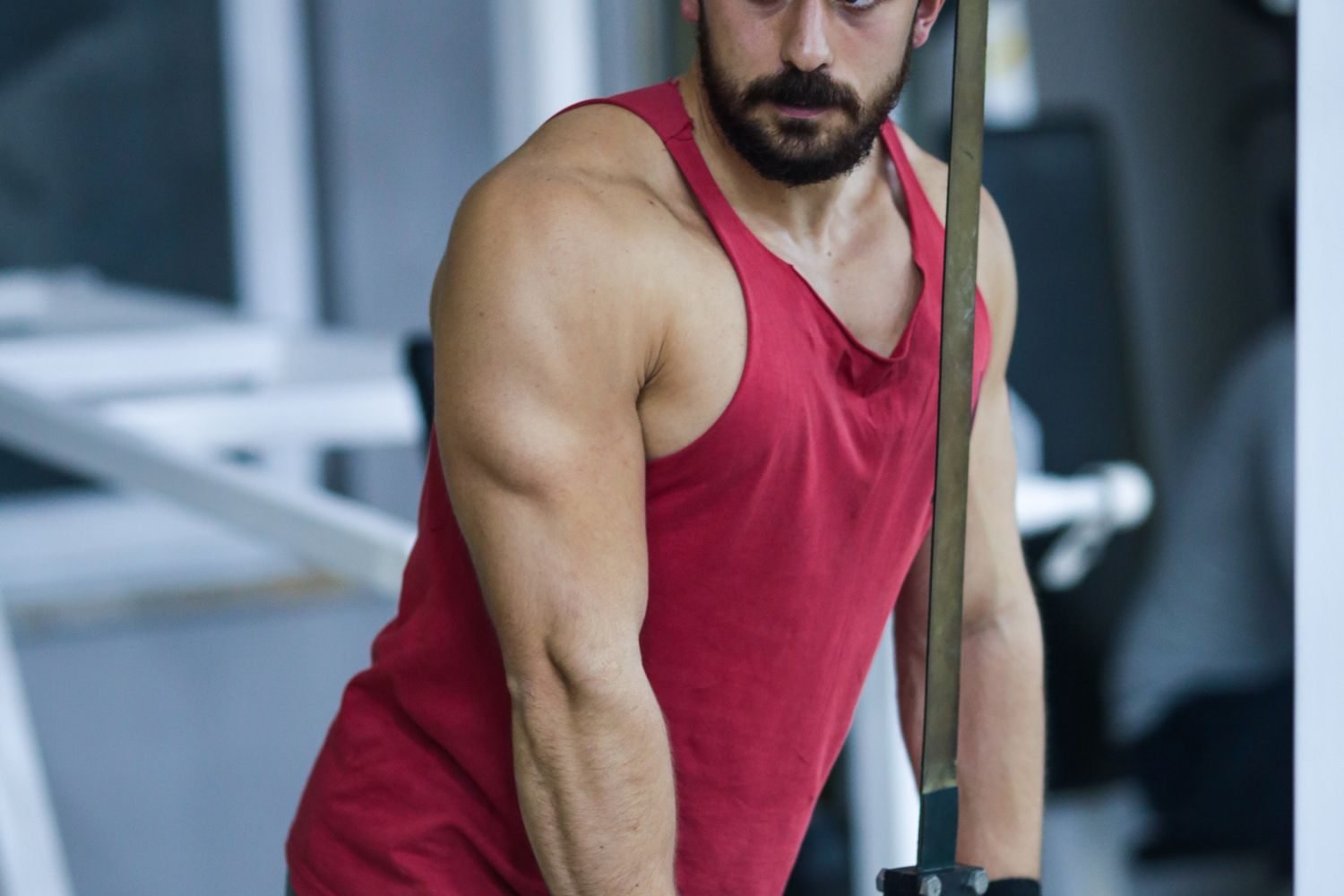
That’s eight exercises, four biceps and four triceps, running roughly 50 to 60 minutes including warm-up sets. If you’re short on time, drop the last exercise from each muscle group and you’ve still got a complete session.
Should You Train Biceps And Triceps On The Same Day?
Yes, and it’s actually the more efficient approach for most people. Biceps and triceps are antagonist muscles, meaning one flexes the elbow while the other extends it. Training them in the same session lets each muscle partially recover while its opposite is working, which is part of why supersetting curls with pushdowns is such a popular technique in serious gyms.
That said, arms don’t have to live in isolation from the rest of your program. Biceps get real work on back day too. If you’re following a pull-focused session, our back and biceps workout guide shows how to layer curls onto rows and pulldowns without overtraining the joint. Some clients also prefer pairing biceps with shoulder work instead, since both muscle groups get hit hard during pressing and pulling days anyway, which is exactly the approach we lay out in our shoulder and bicep workout piece.
The point is that a dedicated arm day like the one above is the most direct route to arm growth, but it isn’t the only valid structure. What matters is that biceps and triceps each get trained with real volume somewhere in your week, whether that’s on one combined day or spread across your push and pull sessions.
How Many Exercises Should An Arm Workout Have?
Six to eight total exercises, split close to evenly between biceps and triceps, is the range we program for most clients. Fewer than that and you’re probably not hitting enough angles to fully develop both heads of the biceps and all three heads of the triceps. More than eight and you’re usually adding junk volume that just extends the workout without adding growth stimulus.
Within that range, we care more about variety than sheer exercise count. A workout with four exercises done through a full range of motion, at appropriate loads, taken close to failure, beats an eight-exercise workout done sloppily. If you’re newer to lifting, start on the lower end of that range and focus on form before adding volume. Our beginner biceps workout guide walks through exactly how to build that foundation before layering in more advanced arm training.
How Often Should You Train Arms At The Gym?
Twice a week, directly, is the sweet spot for most people chasing visible arm growth. That might mean one dedicated arm day plus a second session where biceps or triceps get folded into a push or pull day. Training arms just once a week directly, with no indirect volume elsewhere, tends to be the slowest path to growth unless you’re already advanced and recovering well.
Arms also get indirect volume from chest, back, and shoulder training, so total weekly stimulus is usually higher than people assume just from counting direct arm days. We adjust frequency based on how a client’s arms are responding after four to six weeks. If growth stalls, we’ll often add a second, lighter arm-focused session rather than just piling more sets onto the existing one.
What Mistakes Do We See Clients Make With Arm Training?
We see clients make the mistake of chasing heavier curls at the cost of full range of motion, swinging the weight up with momentum instead of controlling it through the full stretch and contraction. That half-rep curling pattern feels productive because the number on the dumbbell goes up, but it trains the ego more than the muscle. Slowing the eccentric portion down and actually straightening the arm at the bottom of each rep does more for growth than adding five extra pounds.
Triceps get shortchanged too. A lot of lifters treat pushdowns as a five-minute afterthought instead of training them with the same intent as their curls. Since triceps are the bigger muscle group in the upper arm, neglecting them is one of the fastest ways to cap your overall arm size no matter how much bicep work you’re doing.
How Do You Make Sure Your Arm Program Actually Works?
A workout on paper is only half the equation. Progressive overload, correct exercise order, and recovery between sessions matter just as much as the exercises themselves, and that’s where a lot of generic programs fall apart. They don’t account for your current strength levels, your joint history, or how your arms are actually responding week to week.
This is the gap we built FitStrot to close. If you want a program built specifically for your goals, current experience level, and recovery capacity, that’s what our 1-on-1 personal training is for. We track your progress session by session and adjust volume, exercise selection, and frequency as you actually adapt, instead of handing you a static plan and hoping it works.
Frequently Asked Questions
What is a good gym arm workout?
A good gym arm workout trains biceps and triceps together in one session, using six to eight exercises across different angles and grips. It should include at least one heavier compound-style movement per muscle group, plus isolation work taken close to failure, with rest periods scaled to the intensity of each exercise.
Should you train biceps and triceps on the same day?
Yes, biceps and triceps are antagonist muscles, so training them together in one session is efficient and lets each recover slightly while the other works. This is why supersetting curls with pushdowns is common. You can also split them across back and shoulder days if that fits your program better.
How many exercises should an arm workout have?
Six to eight exercises split roughly evenly between biceps and triceps is the range we program for most clients. Beginners should start on the lower end and prioritize form and full range of motion over exercise count, since sloppy volume adds fatigue without adding real growth stimulus.
How often should you train arms at the gym?
Twice a week directly tends to produce the best results for most lifters, whether that’s two dedicated arm days or one arm day plus indirect volume from push and pull sessions. Training arms only once a week, with no other indirect stimulus, is usually the slowest path to visible growth.
Can you do an arm workout every day?
No, daily direct arm training doesn’t allow enough recovery time for the muscle to repair and grow, and it raises the risk of elbow and wrist overuse issues. Biceps and triceps typically need 48 hours before being trained directly again, so two to three sessions per week with rest between them works better.