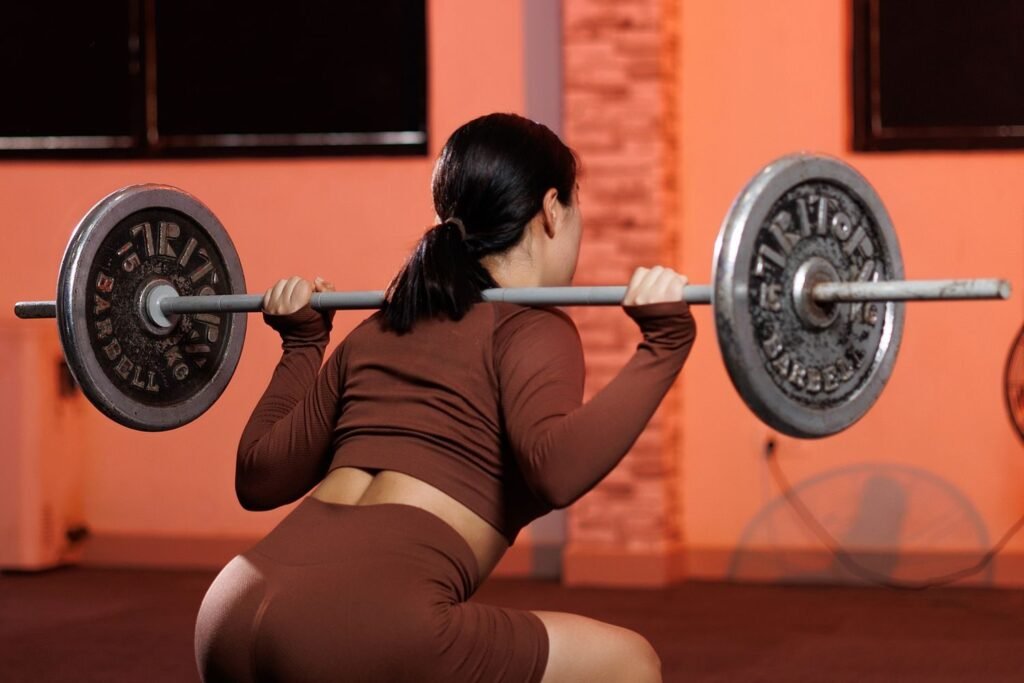
A squat workout is a training session built around the squat, the movement of sitting the hips back and down while keeping the chest up and the spine neutral, then driving back up through the heels. It’s the base of almost every good leg day because one exercise trains the quads, glutes, hamstrings, and core together. A proper squat workout isn’t just about doing squats until your legs burn. It’s correct setup, a variation that matches your goal, and enough volume to actually drive progress. Get the mechanics wrong and you stall out or end up with cranky knees. Get them right and the squat becomes the most efficient lower-body exercise you own.
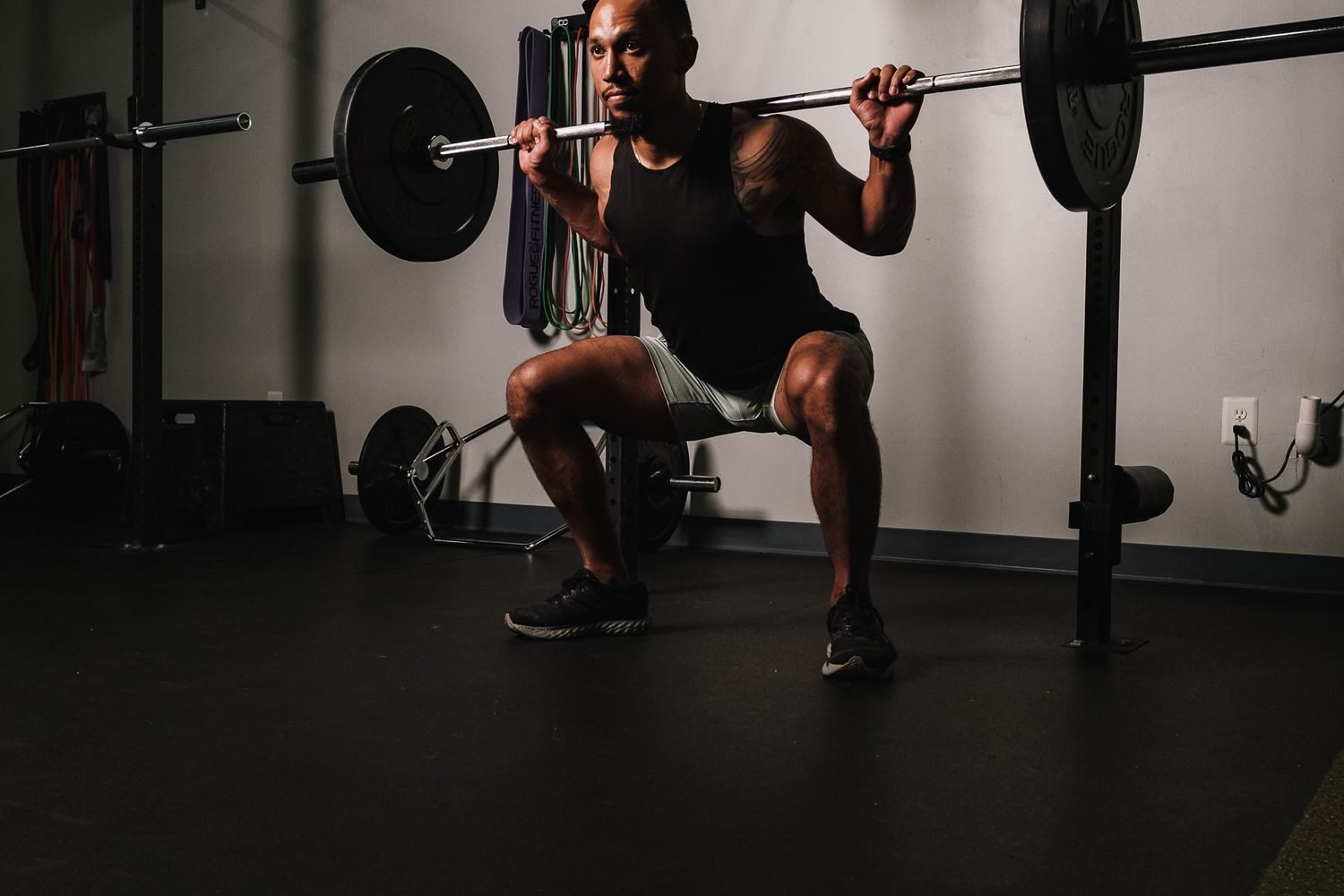
How Do You Set Up and Perform a Squat With Correct Form?
Most squat problems don’t start at the bottom of the rep, they start before the bar even leaves the rack. Nail the setup and the rest of the movement gets a lot easier to control.
Foot Placement
Stand with your feet roughly shoulder-width apart, toes turned out somewhere between 10 and 30 degrees. The exact angle depends on your hip structure, not a rule you copy from someone else. A quick way to check is to drop into your bottom position and see where your knees naturally want to track. Set your toe angle there.
Depth
Aim to get your hip crease at or below the top of your knee. That’s what most coaches call “parallel,” and it’s the depth where the squat actually trains the glutes and hamstrings, not just the quads. You don’t need to chase ass-to-grass depth unless your mobility and goals call for it. Consistent parallel squats beat inconsistent deep ones every time.
Knee Tracking
Your knees should travel in the same direction as your toes throughout the rep. They can and should move forward past your toes, that’s normal and not a knee-killer like older gym folklore claims. What you want to avoid is your knees collapsing inward toward each other, which puts uneven stress on the joint and quietly leaks power out of the lift.
Bracing
Take a breath into your belly, not your chest, and brace like someone is about to poke you in the stomach. Hold that brace through the entire rep, from the top down to the bottom and back up. A loose midsection is one of the fastest ways to lose spinal position under a loaded bar, especially as the weight gets heavier. If you want to build more rotational core strength to support that brace, a woodchopper workout is a useful addition to your training week.
What Are the Main Squat Variations and How Do They Differ?
Not every squat serves the same purpose. Some build raw strength, some are easier on the lower back, and some are better suited to beginners still learning the pattern. Here’s how the four most common versions compare.
| Variation | Bar/Load Position | Primary Focus | Best For |
|---|---|---|---|
| Back Squat | Barbell on upper back | Overall strength, glutes and hamstrings | Lifters building maximum strength and load capacity |
| Front Squat | Barbell on front shoulders | Quads, upright torso, core | Lifters who want a more upright squat with less lower-back load |
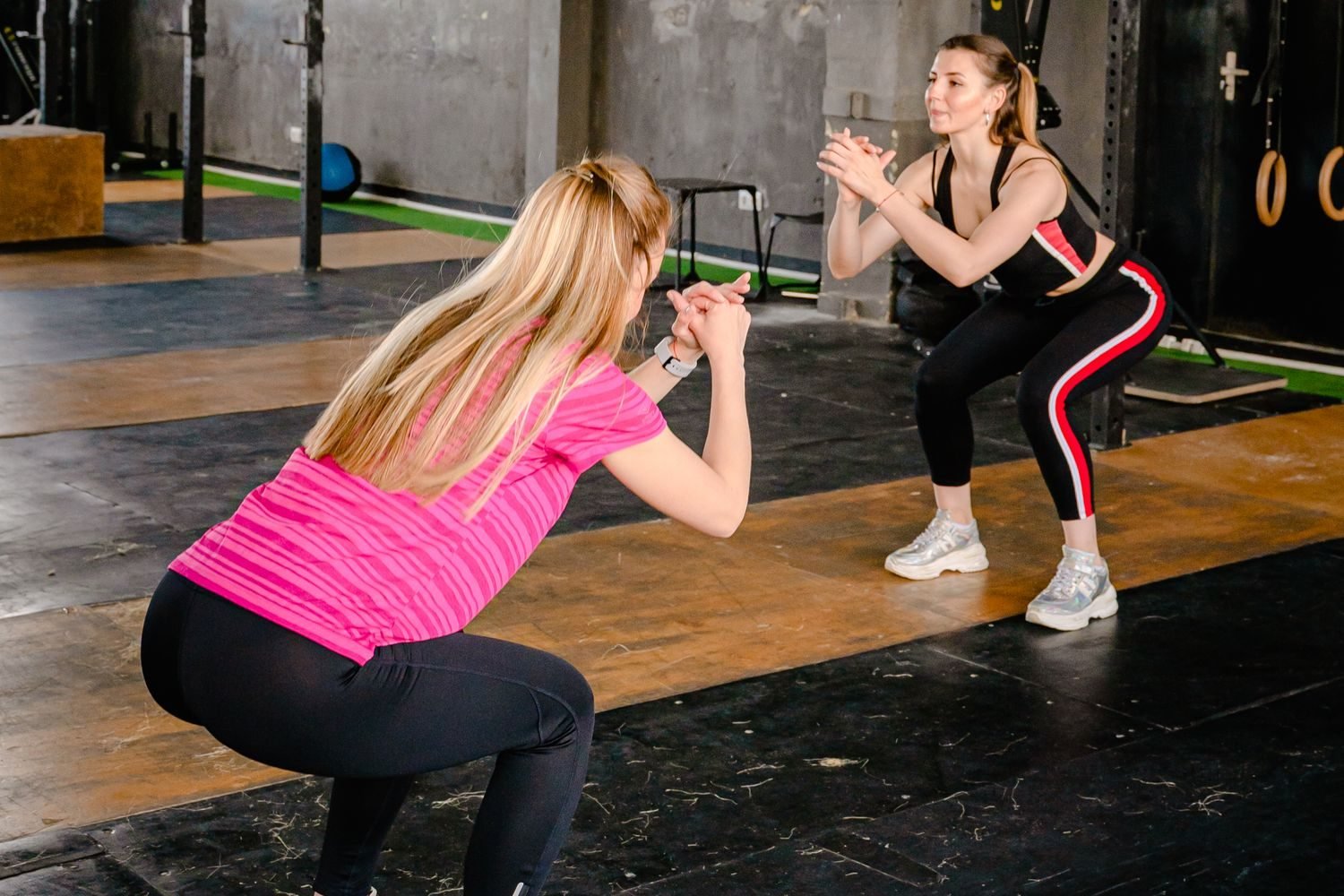
| Goblet Squat | Dumbbell or kettlebell at chest | Learning the pattern, mobility, quads | Beginners and warm-ups before heavier squat work |
| Box Squat | Barbell on upper back, squat to a box | Depth control, hip drive, breaking momentum | Lifters fixing depth issues or building explosive power off the bottom |
If you’re new to squatting, start with the goblet squat until your hips and ankles can hit depth without your form breaking down. Once that’s solid, back squats and front squats give you room to load up, and if you’re front squatting regularly, the around the world workout is a good mobility addition for shoulder health. Box squats are a great tool when you need to force honest depth or you’re coming back from a lower back tweak and want a more controlled range of motion. For the accessory work that rounds out the rest of the session, see our guide to leg workouts at the gym.
What Does a Sample Squat Workout Look Like?
Here’s a squat-focused session you can drop into a leg day. Adjust the load so the last two reps of each set feel hard but controlled.
| Exercise | Sets x Reps | Rest | Notes |
|---|---|---|---|
| Goblet Squat (warm-up) | 2 x 10 | 45 sec | Light load, focus on hitting full depth |
| Back Squat | 4 x 6 | 2-3 min | Main strength set, brace hard before each rep |
| Front Squat | 3 x 8 | 90 sec | Keep elbows high, torso upright |
| Box Squat | 3 x 10 | 90 sec | Tap the box lightly, don’t sit and relax on it |
| Walking Lunge | 3 x 12 per leg | 60 sec | Finisher, keep torso tall |
Squat two to three times a week if strength is your main goal, and give yourself at least 48 hours between heavy sessions so your legs actually recover. If you’re squatting for general fitness alongside other leg work, one dedicated squat-focused day is usually enough. Pair it with a proper deadlift workout later in the week to cover the hinge pattern this session doesn’t train.
What Are the Most Common Squat Mistakes to Fix?
Three mistakes show up more than anything else, and all three are fixable once you know what to look for.
- Heels rising off the floor. This usually means limited ankle mobility or you’re shifting your weight too far forward. Work on ankle stretches before you lift, and check that your shoes have a flat, stable sole. Elevating your heels slightly on small plates can be a short-term fix while you build mobility.
- Knees caving inward. Also called knee valgus, this happens when the glutes and hips aren’t doing their share of the work, so the knees collapse to compensate. Cue yourself to “spread the floor apart” with your feet on every rep, and add banded lateral walks or clamshells to your warm-up to wake up the hip muscles.
- Insufficient depth. Stopping a few inches above parallel is one of the most common self-inflicted mistakes we see in the gym. In our coaching sessions, we see a lot of people who can technically squat 100kg for a quarter rep but can’t control 60kg through a full range of motion, and the quarter rep isn’t building the strength they think it is. Slow the descent down, film yourself from the side, and be honest about where your hip crease actually sits relative to your knee.
How Does Squatting Fit Into a Complete Leg or Full-Body Program?
The squat is one half of the compound-lift equation. The other is the hinge pattern, and together they cover almost every major lower-body movement pattern you need, which is why a well-rounded week rarely skips either one.
A balanced week doesn’t stop at legs, though. On your pull days, isolation moves like the preacher curl workout help finish off the biceps after your compound lifts.
Programming all of this yourself gets complicated fast, especially when you’re also trying to track recovery, progressive overload, and form. That’s exactly what a coach is for. FitStrot’s 1-on-1 personal training builds your squat progression, your accessory work, and your full week around your actual body and goals, not a generic template.
Frequently Asked Questions About Squat Workouts
What is a squat workout?
A squat workout is a training session centered on the squat pattern, sitting the hips back and down under control and standing back up. It can use just bodyweight, a barbell, or dumbbells, and usually includes squat variations plus accessory moves like lunges to fully train the lower body in one session.
How do you do a squat workout?
Start with a light warm-up variation like the goblet squat to prime the pattern, then move into your main lift, such as a back or front squat, for 3 to 5 sets of 6 to 10 reps. Finish with an accessory move like walking lunges. Rest 90 seconds to 3 minutes between heavier sets.
What are the benefits of a squat workout?
Squats build strength and size in the quads, glutes, and hamstrings while also training your core and hips to stabilize under load. They carry over directly to everyday movement, like standing up from a chair or climbing stairs, and they’re one of the most efficient exercises for building total lower-body strength.
How many squats should I do a day?
There’s no universal number. For strength, 3 to 5 sets of 6 to 10 quality reps two or three times a week beats doing hundreds of squats daily. Volume matters less than consistent form and progressive load. If you’re just starting out, focus on mastering the pattern before chasing rep counts.
Can beginners do a squat workout at home?
Yes. Bodyweight squats and goblet squats with a household dumbbell or kettlebell are enough to build a solid base at home. Focus on depth and control before adding load. Once bodyweight squats feel easy for 15 to 20 reps, it’s time to add resistance or move to a gym setup.