The around the world workout is a shoulder exercise where you hold a light dumbbell or weight plate in each hand and trace a wide circle out to the sides, up overhead, and back down, moving through nearly every angle the deltoid can work through in one continuous rep. At FitStrot we program it as a warm-up primer or a light finisher because it hits the front, side, and rear delts in a single arc instead of isolating just one head like a lateral raise or front raise does.
What Is the Around The World Exercise, Exactly?
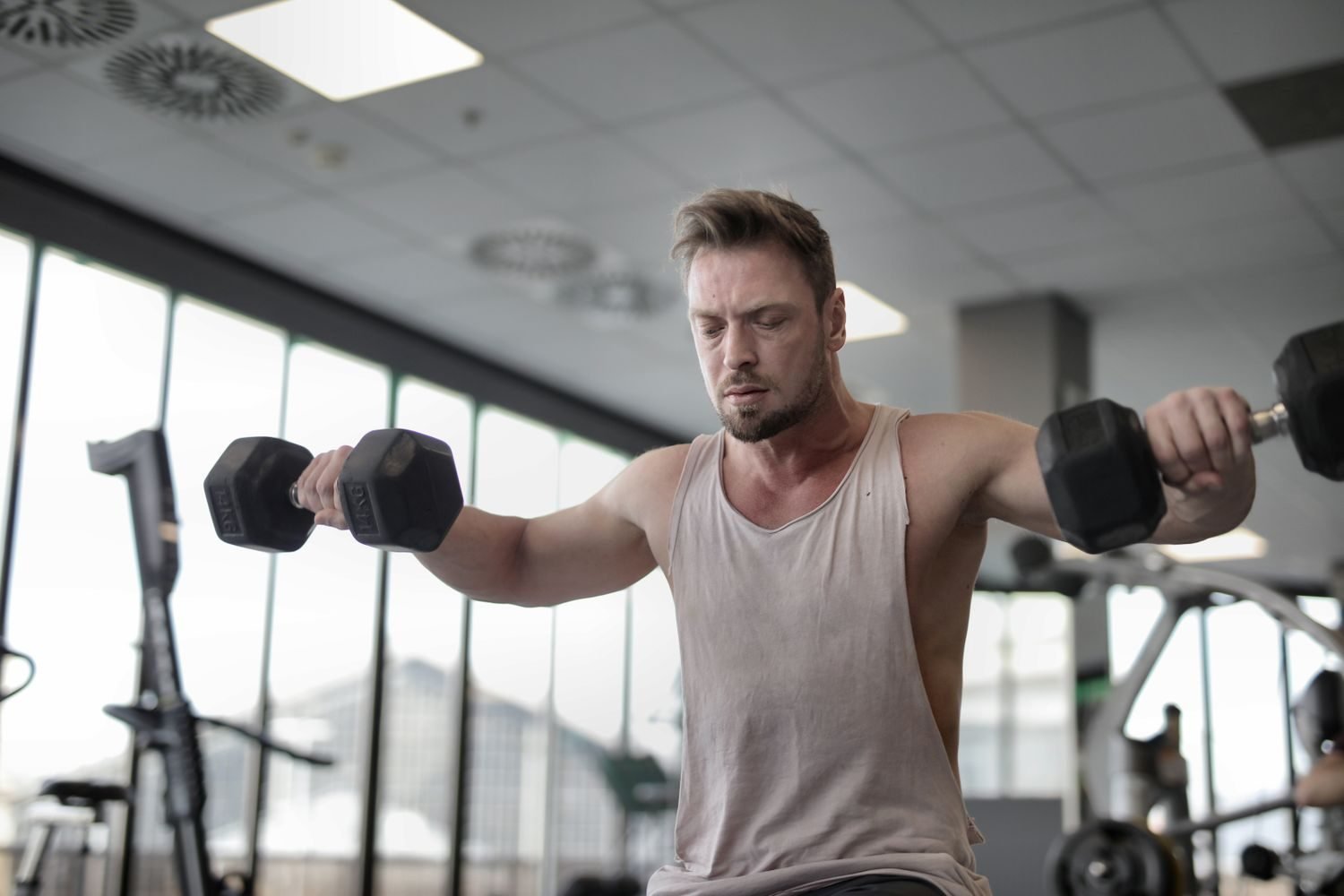
Strip away the name and it’s a circular shoulder raise. You start with the weights in front of your thighs, sweep them out to your sides at shoulder height, continue the arc up overhead until the dumbbells nearly touch above your head, then reverse the path back down. Some coaches cue it as a full circle, others prefer a half circle from the sides to overhead and back. Either version keeps constant tension on the shoulder through a wide range of motion instead of the short, stop-start path you get with standard raises.
The move works well with dumbbells, but you’ll also see it done with a single plate held at arm’s length, which changes the load distribution and forces more grip and core stability. We use both versions with clients depending on what we’re trying to train that day.
Why Does the Around The World Matter for Shoulder Training?
Most shoulder programs default to pressing and raising in straight lines. That builds strength, but it doesn’t teach the joint to control weight through rotation and changing angles, which is exactly what happens in real life when you reach overhead, swing a bag onto a shelf, or catch yourself off balance, the same kind of coordinated control we train in our agility workouts. The around the world trains the deltoid’s three heads together and asks the shoulder blade to stabilize through a moving target instead of a fixed plane.
It’s also a useful diagnostic. If a client can’t keep the arc smooth, if one side stutters near the top, or if the shoulders shrug up to compensate, that tells us something about mobility or control we wouldn’t have caught from a basic lateral raise. We treat it as both a strength tool and a screening tool.
How Do You Perform the Around The World Correctly?
Here’s the setup we walk clients through:
- Stand tall with a slight bend in the knees. Pick a light dumbbell or plate for each hand, or one plate held with both hands if you’re doing the single-implement version.
- Start with the weights at your sides or in front of your thighs. Keep your ribs down and your core braced so your lower back doesn’t arch as the weight moves overhead.
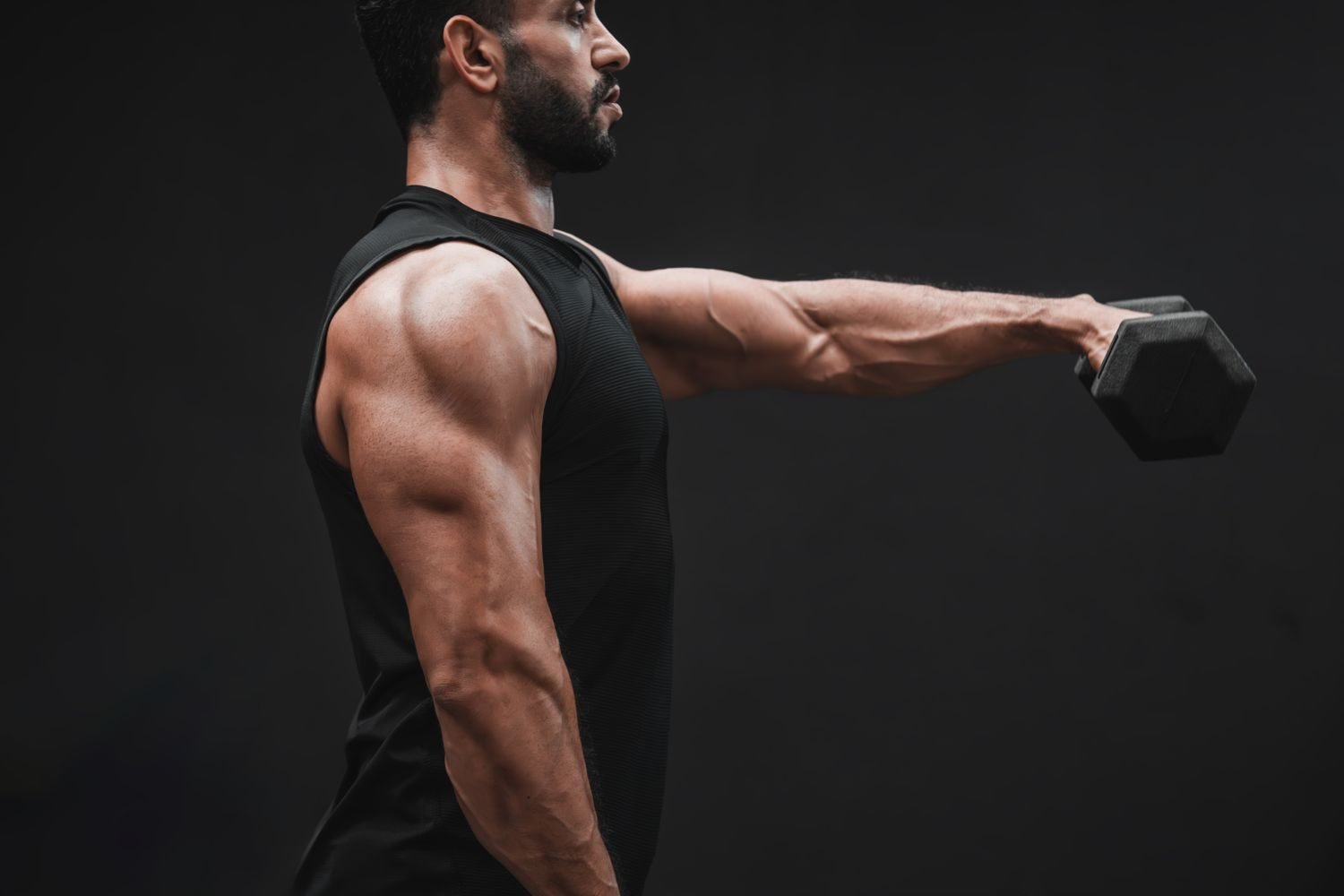
- Raise the weights out to the sides until your arms are roughly parallel to the floor, elbows soft, not locked.
- Continue the arc upward until the weights come close together above your head. Don’t let your shoulders shrug up toward your ears to get there. If you have to shrug to finish the rep, the weight is too heavy or your overhead mobility isn’t ready for a full circle yet.
- Reverse the path back down through the same arc, resisting the weight rather than letting it drop. That eccentric control is where most of the shoulder stability benefit comes from.
Breathe out as the weights rise, in as they lower, and keep the tempo slow. This isn’t a movement you rush. A rep that takes three to four seconds each way builds far more control than a fast, momentum-driven version.
What Mistakes Should You Watch For?
We see clients make the mistake of loading this exercise like a lateral raise, grabbing dumbbells that are far too heavy for a full overhead arc and then compensating with body English, hip drive, or a shrug through the top half of the movement. The around the world is a control exercise first and a load exercise a distant second. Once form breaks down, you’re just doing a sloppy shoulder press with extra steps.
Other common issues we correct: flaring the ribs and arching the lower back to help the weight overhead, rushing the descent instead of lowering with control, and doing the movement so fast that it turns into momentum rather than muscle work. Slow the tempo down before you add weight.
How Do You Program the Around The World Into a Shoulder Session?
We usually place it early in a shoulder or upper body session as an activation move, or at the end as a light finisher once the heavier pressing and rowing work is done. Here’s a sample layout we build for clients working on shoulder health and size:
| Exercise | Sets x Reps | Rest | Purpose |
|---|---|---|---|
| Around the World (dumbbell) | 3 x 8-10 each direction | 45-60 sec | Full-range deltoid activation |
| Seated Dumbbell Shoulder Press | 4 x 8 | 90 sec | Primary strength builder |
| Cable Lateral Raise | 3 x 12-15 | 45 sec | Side delt isolation |
| Face Pull | 3 x 15 | 45 sec | Rear delt and posture work |
If shoulder isolation isn’t the only thing on the day’s menu, we’ll often pair this session with an arm-focused block like our preacher curl workout for biceps, or a rotational core piece like the woodchopper workout to keep the trunk engaged the same way the shoulders were during the arcs. For clients working on general coordination and movement quality outside the weight room, we’ll also plug in dynamic drills that share that same demand for controlling the body through changing planes rather than a fixed line.
What Weight Should You Use for Around The World Exercises?
Start lighter than you think you need. Most clients, even ones who press heavy on a barbell, are surprised at how little weight it takes to make this exercise honest once you get past the halfway point of the arc. For most people that means starting with 2 to 4 kg dumbbells and adding weight only once the full circle stays smooth and shrug-free for all prescribed reps. If you’re using a single plate, a 2.5 to 5 kg plate is plenty to start.
The test we use with clients: can you complete the full range without your shoulders creeping up toward your ears or your lower back arching to help the weight overhead? If not, drop the load. This exercise rewards control, not ego lifting.
Is the Around The World Exercise Safe for Shoulders?
Done with a light load and a controlled tempo, yes, it’s a safe and useful exercise for most healthy shoulders. It actually builds the kind of rotational control that protects the joint during heavier pressing work. That said, it’s not the right first move for someone with an active shoulder impingement, a recent rotator cuff issue, or limited overhead mobility. If overhead reaching already causes pinching or pain, we’ll regress the client to a half-circle version that stops at shoulder height rather than pushing through a full overhead arc, and build mobility before adding the top half back in.
As with most shoulder work, the exercise itself isn’t inherently risky. What causes problems is loading a joint through a range it isn’t ready for yet.
Bringing It Together
The around the world workout earns its place in a shoulder program because it does something straight-line raises can’t: it trains the deltoid and the shoulder blade to work together through a full arc, not just a single plane. Keep the load light, keep the tempo slow, and treat it as a control exercise rather than a mass builder, and it becomes one of the more useful accessory moves you can add to a shoulder day.
If you want a program built specifically for your goals, mobility, and injury history rather than a generic template pulled off the internet, that’s what our 1-on-1 personal training is for. We build every shoulder block around how your joints actually move, not just what looks good on paper.
Frequently Asked Questions
What is the around the world exercise?
The around the world is a shoulder exercise performed with a dumbbell or plate in each hand, moving the weights in a wide circular arc from the sides of the body up overhead and back down. It trains the front, side, and rear deltoid through one continuous range instead of isolating a single head.
What muscles does the around the world workout target?
It primarily targets all three heads of the deltoid, front, side, and rear, along with the upper trapezius and rotator cuff muscles that stabilize the shoulder blade. Because the arc moves through so many angles, it also demands core bracing to keep the lower back from arching during the overhead portion.
What weight should you use for around the world exercises?
Start light, typically 2 to 4 kg dumbbells or a 2.5 to 5 kg plate for most people, since the exercise gets harder to control near the top of the arc. Only increase weight once you can complete the full range of motion without shrugging your shoulders or arching your lower back to compensate.
Is the around the world exercise safe for shoulders?
Yes, for most healthy shoulders it’s safe and even protective when done with light weight and a slow, controlled tempo. If you have an active impingement, a rotator cuff issue, or limited overhead mobility, stick to a half-circle version that stops at shoulder height until your mobility and control improve.
How is the around the world different from a lateral raise?
A lateral raise moves the arm through a short, fixed path out to the side and back, isolating mainly the side delt. The around the world continues that path into a full overhead circle, adding the front and rear delt and demanding more shoulder blade control through a much longer range of motion.