A preacher curl workout is a biceps-isolation session built around the preacher bench, a sloped pad that locks your upper arm in place so the biceps do all the work instead of your shoulders and back sneaking in to help. At FitStrot we program it for clients who want visible peak and thickness in the biceps without the swinging, momentum-driven curls you see in most gyms. Done right, it’s 2-4 sets of slow, controlled reps, usually paired with one or two other arm movements. Done wrong, it’s a fast way to irritate your elbows. This guide covers the setup, the form cues we actually use with clients, common mistakes, and a real sample table for slotting it into your next arm day.
What Is a Preacher Curl and Why Do We Program It?
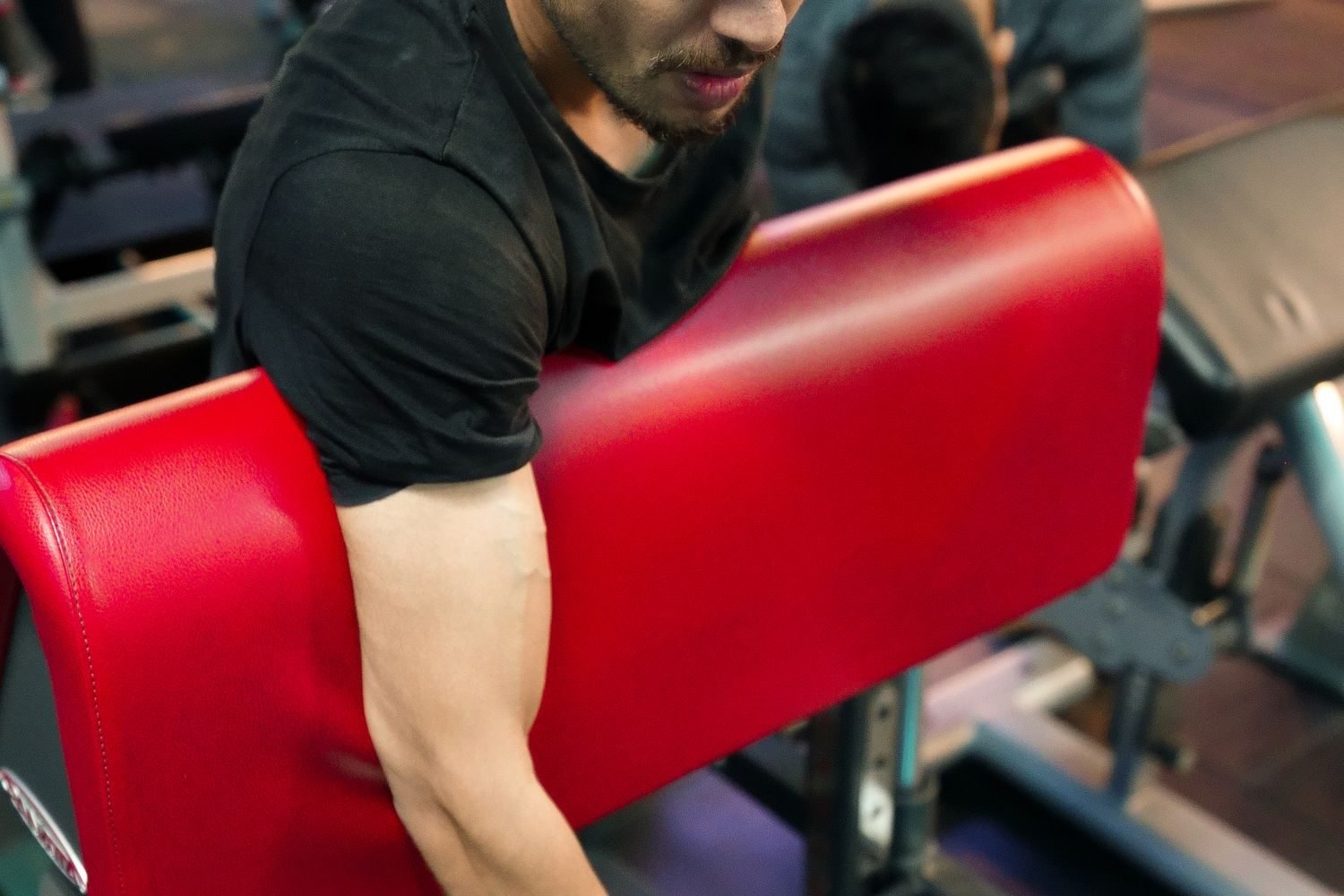
The preacher curl is a biceps exercise performed on an angled pad (the preacher bench) that pins your upper arm from shoulder to elbow. Because your arm can’t move backward or your torso can’t lean into the lift, cheating is basically off the table. That’s the whole point. You isolate the biceps brachii, hit a deep stretch at the bottom, and force the muscle to do the lifting from a dead stop.
We program preacher curls for clients at almost every level. Beginners get an easy way to learn what a strict curl actually feels like. Intermediate and advanced lifters use it to bring up a lagging biceps peak or to finish an arm session when the shoulders are too fatigued for more pressing or pulling work. It’s not a replacement for standard curls, it’s a complement to a broader program that also includes dynamic work like our agility workouts, and we’ll get into that comparison further down.
How Do You Set Up the Preacher Bench Correctly?
Most preacher curl mistakes start before the first rep, at the setup. Get this part right and the exercise nearly teaches itself.
Adjust the seat height so the top of the pad sits just below your armpit. Too low and your shoulders round forward to reach the bar. Too high and you can’t get your upper arm flush against the pad. Sit or stand so your chest presses lightly into the pad, arms draped over the top with your triceps resting on the angled surface.
Grip the bar (EZ-bar, straight bar, or a single dumbbell if your gym’s preacher station allows single-arm work) with hands shoulder-width apart. Your elbows should be roughly under your shoulders, not flared out. Before you curl a single rep, check that your upper arms aren’t lifting off the pad. If they are, the seat height is wrong.
What’s the Right Preacher Curl Form, Step by Step?
Start with your arms extended but not locked out. A full dead-hang at the bottom loads the biceps tendon hard, and for most clients we cue a soft bend rather than a total lockout, especially in the first few weeks of learning the movement.
Curl the bar up by flexing at the elbow only. Your upper arms stay glued to the pad the entire rep. Squeeze at the top, roughly where your forearm is vertical, then lower under control. The lowering phase is where most of the growth happens, so we ask clients to take at least twice as long going down as they did coming up.
Breathe out on the way up, in on the way down. Keep your wrists neutral, not curled inward or bent back. If your wrists are doing extra work, the load is usually too heavy for your current strength on this exercise.
What Mistakes Do We See Most Often?
The most common form breakdowns we correct on this exercise:
- Yanking the bar off the bottom with a quick jerk instead of a controlled pull, which shifts the load onto the elbow joint and away from the muscle. This one habit is responsible for more elbow soreness than anything else we correct on this exercise.
- Lifting the shoulders off the pad near the top of the rep.
- Using a weight so heavy that only the top half of the range gets trained.
- Rushing the eccentric, the lowering phase of the rep.
None of these are complicated fixes. They just require picking a lighter weight than your ego wants and actually controlling it.
How Should You Program Preacher Curls Into an Arm Session?
Preacher curls work best mid-session, after a compound pull or press has warmed up the arms, but before you’re too fatigued to control the tempo. Here’s a sample arm-day layout we’d give a client focused on biceps and triceps development.
| Exercise | Sets | Reps | Rest |
|---|---|---|---|
| Close-grip pull-up or lat pulldown | 3 | 8-10 | 90 sec |
| Preacher curl (EZ-bar) | 3 | 10-12 | 60 sec |
| Overhead triceps extension | 3 | 10-12 | 60 sec |
| Hammer curl | 2 | 12-15 | 45 sec |
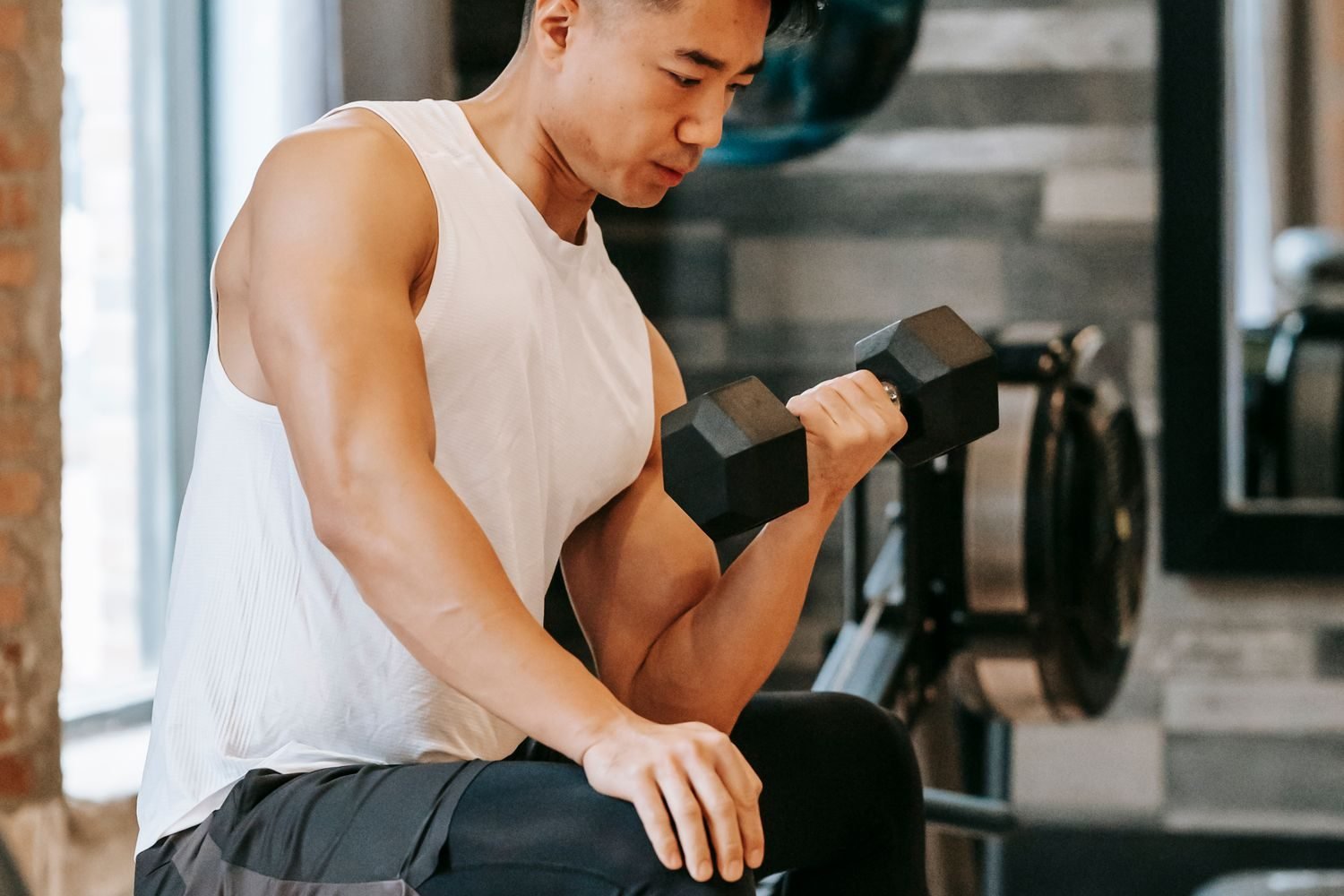
This isn’t the only way to build the session, but it’s a structure we come back to often. The compound pull first, isolation work second, and a burnout-style finisher for volume. Swap the hammer curl for cable curls if that’s what your gym has, the principle stays the same.
How Does the Preacher Curl Compare to Other Curl Variations?
Clients often ask if the preacher curl should replace their standard curls. It shouldn’t. Standard curls let you move through a longer range and recruit the front delt and back slightly for stability, which is useful when you’re trying to move heavier total weight. The preacher curl trades that range and recruitment away on purpose, in exchange for stricter isolation and a brutal stretch at the bottom.
If you’re building a well-rounded arm routine, it helps to think in terms of angles rather than picking one “best” curl. We take the same approach with rotational work like the around the world workout, which hits the shoulder girdle from angles a standard press never touches, or a woodchopper workout, which trains the core through rotation instead of just flexion and extension. Preacher curls are isolation work, plain and simple. If your program is all isolation and no dynamic, multi-joint movement, you’re leaving a lot on the table. That’s part of why we also program dynamic, reactive sessions alongside strength days. A seated, locked-in exercise like the preacher curl and a fast, reactive agility session sit at opposite ends of the training spectrum, and a good program needs both.
Frequently Asked Questions
What is a preacher curl?
A preacher curl is a biceps isolation exercise performed on an angled preacher bench that pins your upper arm in place. This removes momentum and shoulder involvement, forcing the biceps to handle the full load. It’s typically done with an EZ-bar, straight bar, or single dumbbell for 8-15 reps per set.
What muscles does the preacher curl work?
The preacher curl primarily targets the biceps brachii, particularly the long head and lower portion near the elbow, which is why it’s known for building peak. The brachialis, a muscle underneath the biceps, and the brachioradialis in the forearm also assist, especially with a slightly wider or neutral grip.
Is the preacher curl better than a regular bicep curl?
Neither is strictly better, they do different jobs. The preacher curl offers stricter isolation and a deeper stretch, which many lifters find builds better peak. The regular curl allows a longer range of motion and heavier loading. We program both across a training block rather than picking one over the other.
What weight should you use for preacher curls?
Start lighter than you would for a standard curl, since the strict form removes any momentum to help you. A good test is picking a weight you can control for 10-12 reps with a slow lowering phase and no shoulder lift at the top. If your form breaks down before rep eight, drop the weight.
How often should you train preacher curls in a week?
Once or twice a week is enough for most people. The biceps are a small muscle group that recovers quickly, but the preacher curl’s locked position puts real stress on the elbow tendons, so we don’t recommend hammering it more than twice weekly unless volume elsewhere is low.
Getting the setup, tempo, and programming right on an exercise this specific is exactly the kind of detail that’s hard to self-correct from a mirror or a video. If you want a coach watching your elbow position and adjusting your loading week to week instead of guessing, that’s what our 1-on-1 personal training is built for. We’ve spent ten years refining exactly this kind of exercise-level coaching, and it’s usually the small corrections that make the biggest difference in how your arms actually develop.