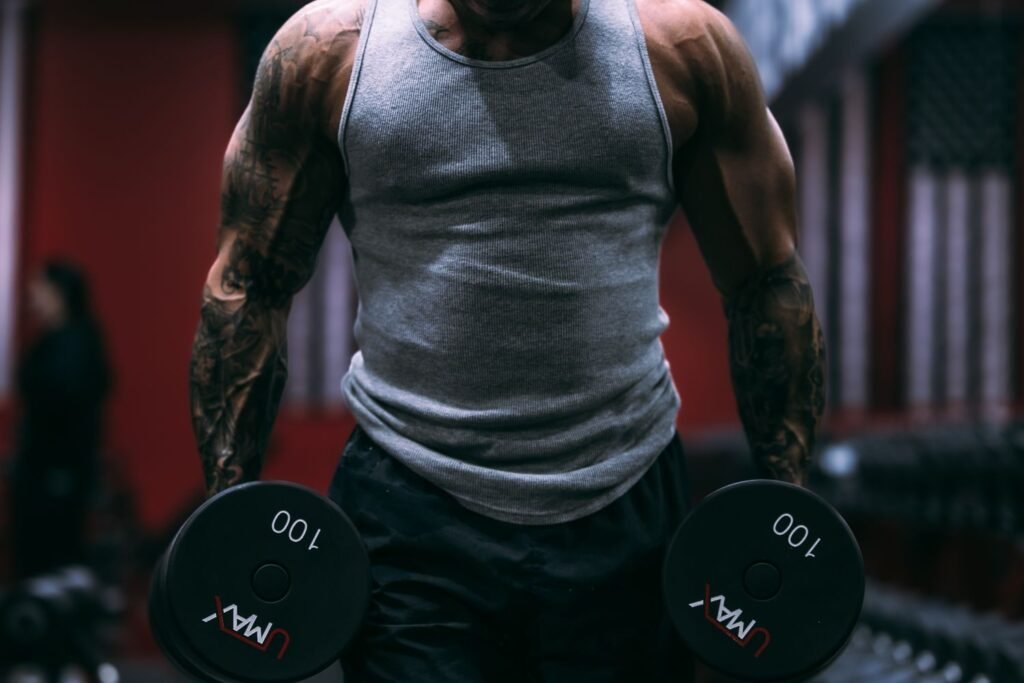
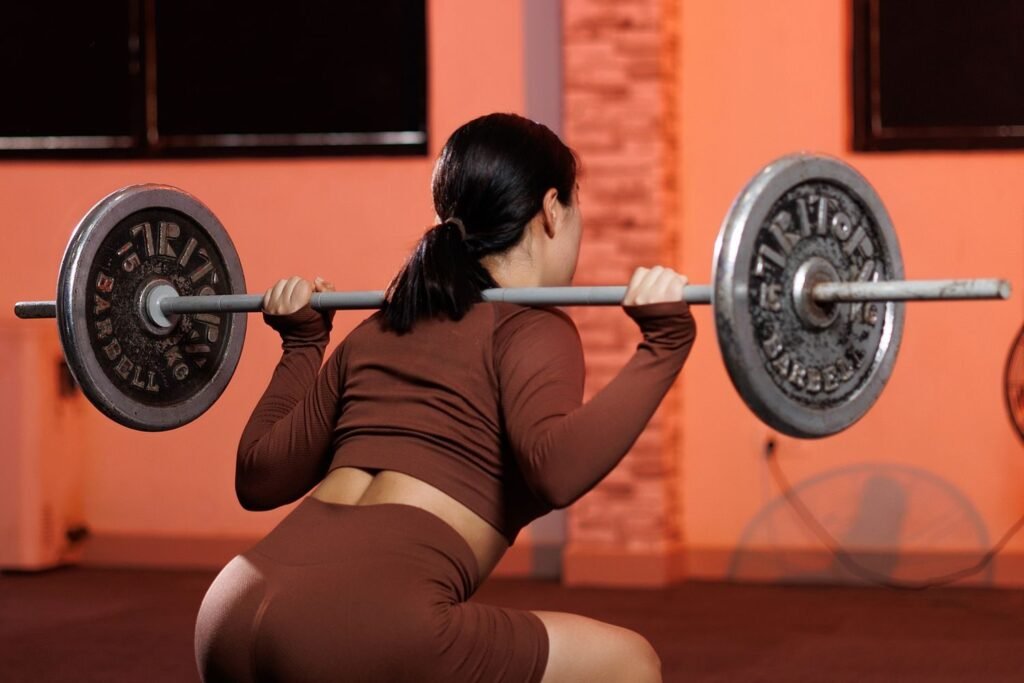
A solid leg workout at the gym hits four things every time: a squat-pattern compound lift for overall quad and glute strength, a hip-hinge movement like a Romanian deadlift for your hamstrings, at least one isolation exercise for quads and one for glutes, and dedicated calf work at the end. Do that consistently, in the 6-15 rep range with weight that actually challenges you, and your legs will grow. Skip any one of those four pieces for months and you’ll feel it: quads that show up in photos but hamstrings and glutes that never quite catch up.
We say this a lot to new clients: leg day gets treated like the stepson of the workout split. People will chase a bigger bench for years and then do twenty minutes of half-hearted leg extensions because their legs are “fine under jeans.” They’re not fine. Undertrained legs cap your squat, your deadlift, your sprint speed, and honestly your overall physique balance. This guide walks through what an actual, complete leg session at the gym looks like, muscle by muscle, with a full workout you can walk in and do today.
What should a leg workout at the gym actually include?
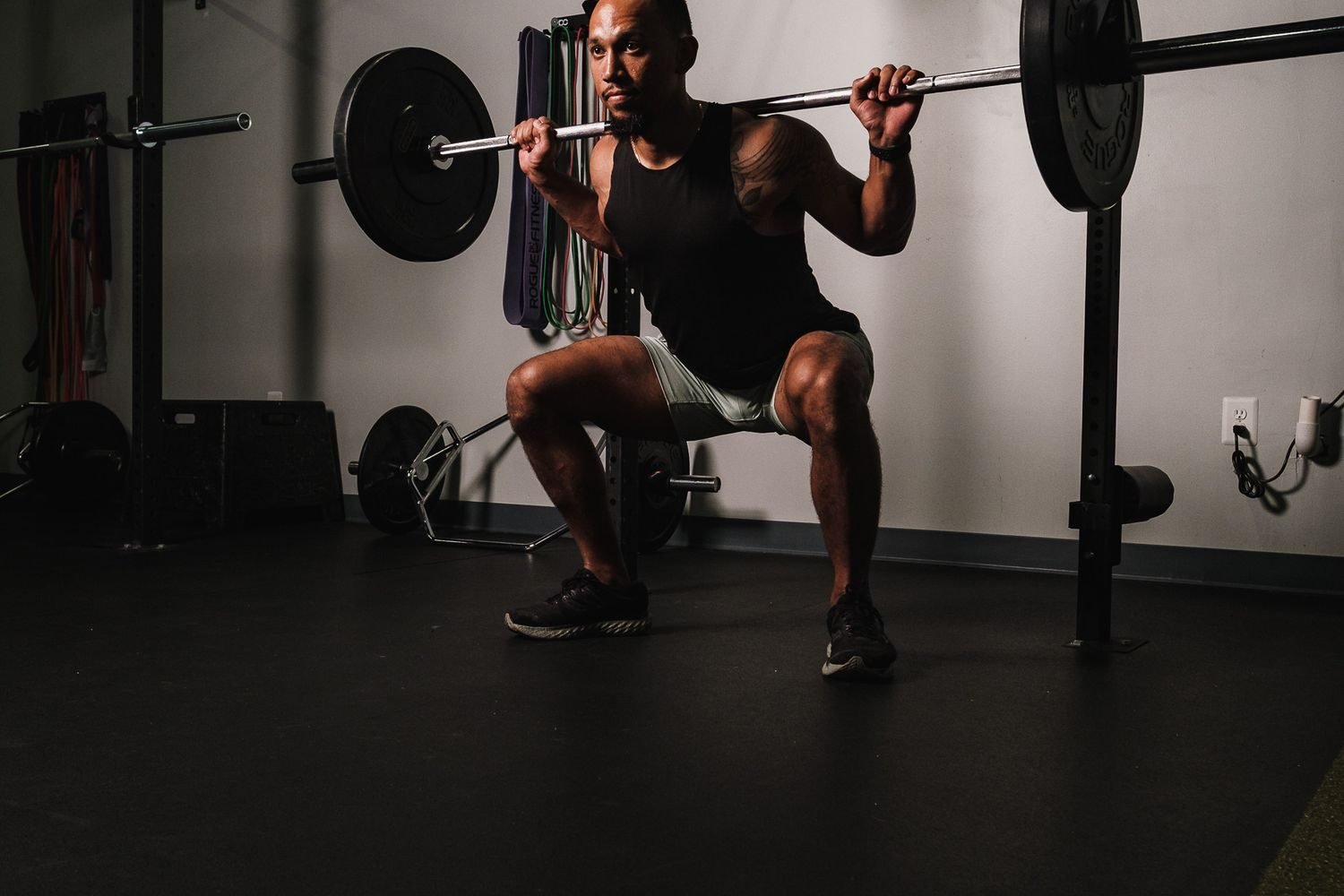
At minimum, you want one compound squat-pattern movement, one hip-hinge or hamstring-focused movement, one quad isolation exercise, one glute-focused exercise, and calf raises. That’s five categories. You don’t need ten exercises to cover them, you need the right five to seven picked with intent.
The order matters too. Compound lifts like the barbell squat or leg press go first while your central nervous system and stabilizing muscles are fresh. Isolation work like leg extensions, leg curls, and calf raises go later, when you’re using them to finish off a muscle rather than lift heavy, technical weight. Most gym-goers do this backwards: they warm up on machines and save squats for when they’re already gassed. Flip that.
Why do so many lifters skip or half-ass leg day?
Three reasons, honestly. Squats and RDLs are harder to learn than a bicep curl, so people avoid the learning curve. Leg day is genuinely more fatiguing systemically than an arm or chest day, so it gets pushed to “next time.” And legs are covered by clothes, so the feedback loop that keeps people showing up for upper body (mirror, tight t-shirt) doesn’t exist in the same way for legs.
In our coaching sessions, the pattern we see most often isn’t that clients skip leg day outright. It’s that they show up, do a light squat set or two, and then load every other muscle group in their program much harder relative to their strength. A client benching close to their bodyweight for reps might be squatting the empty bar plus two plates when they should be well past that. The fix is simple even if it’s uncomfortable: track your leg lift numbers the same way you track upper body, and stop letting leg day be the session you “get through.”
Sample leg workout at the gym
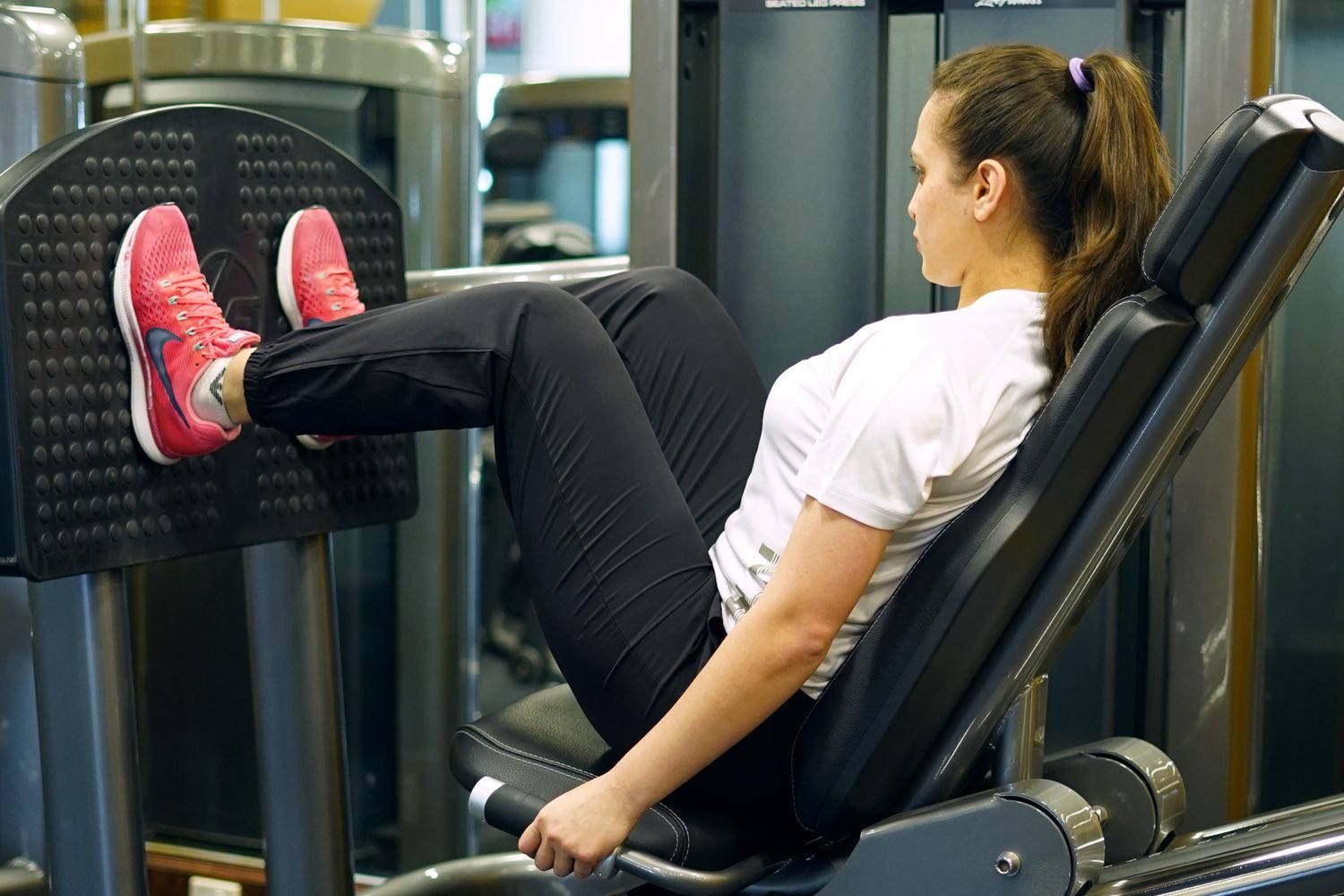
Here’s a complete session covering every major leg muscle group. It takes 50-70 minutes depending on rest periods and how busy the gym is. Warm up with 5-10 minutes of light cardio and a couple of bodyweight squat sets before loading the bar.
| Exercise | Muscle Focus | Sets | Reps |
|---|---|---|---|
| Barbell Back Squat | Quads, glutes, core | 4 | 6-8 |
| Romanian Deadlift | Hamstrings, glutes, lower back | 3 | 8-10 |
| Leg Press | Quads, glutes | 3 | 10-12 |
| Walking Lunges (dumbbells) | Quads, glutes, balance/stability | 3 | 10-12 per leg |
| Leg Extension | Quads (isolation) | 3 | 12-15 |
| Seated or Lying Leg Curl | Hamstrings (isolation) | 3 | 12-15 |
| Hip Thrust or Glute Bridge | Glutes | 3 | 10-12 |
| Standing Calf Raise | Calves (gastrocnemius) | 4 | 12-15 |
| Seated Calf Raise | Calves (soleus) | 3 | 15-20 |
If your gym is packed and the squat rack has a line, swap the order: hit leg press or lunges first, then come back for squats once the rack frees up. The lift matters more than the exact sequence, though doing your heaviest compound first is still the goal whenever you can manage it.
How do you train quads properly at the gym?
Squats and leg press cover most of the work, but they’re knee-and-hip movements, meaning your glutes and hamstrings are helping out too. If you want quads to grow on their own timeline, add a true isolation move like leg extensions or a front-loaded variation like the goblet squat or front squat, which shifts more of the load onto the quads specifically. Leg extensions get a bad reputation online as “not functional,” but for pure quad hypertrophy and for pre-exhausting the muscle before compounds, they work well. Use them.
How do you train hamstrings and glutes without neglecting them?
This is the group that suffers most from a quad-dominant leg day. Squats and leg press bias the quads. If your only “hamstring work” is what your squat happens to hit, you’re under-training the back of your legs. Romanian deadlifts, leg curls, and hip thrusts are the fix. RDLs also double as one of the better lower-back and posterior chain builders in the gym, so they’re worth prioritizing even on a busy day when you have to cut exercises.
Hip thrusts specifically deserve more attention than most lifters give them. They isolate the glutes better than squats do, and stronger glutes translate directly into a stronger squat and deadlift lockout. Don’t treat this as an accessory you do if there’s time left. It should be a fixed line item on your leg day.
What about calves? Do they need their own day?
No, but they do need consistent direct work. Calves respond to volume and frequency more than to any single “perfect” exercise, so 2-3 sets each of standing and seated calf raises, done at the end of every leg session, is enough for most people. Standing calf raises hit the gastrocnemius, seated calf raises hit the soleus underneath it, and training both gives you complete lower-leg development rather than lopsided calf growth.
How often should you train legs each week?
Twice a week works well for most people who want visible progress without wrecking recovery. One heavier, lower-rep session and one slightly lighter, higher-rep session covers both strength and hypertrophy goals. If you’re only training legs once a week, that’s still workable, but make that one session count using the full structure above rather than rushing through it.
Some lifters prefer to structure their whole week around a push, pull, and legs split, where leg day becomes one of three recurring sessions. If that’s the approach you’re considering, we cover the full push/pull/legs workout split in detail, including how to divide muscle groups and schedule your week around it. This guide focuses specifically on what to do once you’re standing in the gym on leg day, regardless of which split gets you there.
If you’re building a broader weekly plan and want to see how leg day fits alongside upper body and full-body sessions, our gym workout plan guide lays out a complete weekly structure you can adapt.
Does this workout work for women too?
The exercises and general structure in this guide apply to anyone training legs at the gym. That said, goals and emphasis can differ. If you’re specifically looking for a leg day built around glute and lower-body shaping goals that many women prioritize, our leg workout guide for women goes into that in more depth. And if gym access is the issue rather than the workout itself, our home leg workout guide covers how to train legs effectively without machines or a barbell.
Common mistakes to avoid on leg day
- Ego lifting on squats. Cutting depth to move more weight trains a smaller range of motion and a different muscle emphasis than a full squat, and it’s how knees start complaining. Go lighter and go deep before you go heavy and go half-way.
- Skipping the hip hinge. Lifters who only squat and press end up with strong quads and underdeveloped hamstrings, which is a recipe for strain injuries, especially in anything involving sprinting or sudden direction changes. Round out the session with an RDL or leg curl every single time, not just when you remember.
- Rushing calves. Most people do calf raises for two sets at the very end, half-focused, phone in hand between sets. Calves are stubborn muscle, they need consistent volume over months to respond. Treat the last ten minutes of leg day with the same intent as the first ten.
FAQ: Leg Workouts at the Gym
What is the best leg workout at the gym?
The best leg workout combines a squat-pattern compound lift, a hip-hinge movement like an RDL, quad and glute isolation exercises, and calf raises. Squats, RDLs, leg press, lunges, hip thrusts, and calf raises together cover quads, hamstrings, glutes, and calves in one balanced session.
How do you do leg workouts at the gym properly?
Warm up with light cardio and bodyweight squats, then train your heaviest compound lift first while you’re fresh, typically a barbell squat. Follow with a hip-hinge movement, then isolation exercises for quads and glutes, and finish with calf raises. Use full range of motion and controlled form over maximum weight.
What are the benefits of leg workouts at the gym?
Training legs builds lower-body strength, improves your squat and deadlift numbers in other lifts, and supports better balance, mobility, and injury resistance in daily life. It also triggers a strong hormonal response from working large muscle groups, which supports muscle growth throughout the body, not just in your legs.
How many exercises should a leg day have?
Five to seven exercises is enough to properly cover quads, hamstrings, glutes, and calves without the session running past 70-90 minutes. More exercises than that usually means each one gets too few working sets to matter, which is a common mistake we see in longer, less effective leg sessions.
Can beginners do a full leg day at the gym?
Yes, but form should come before load. Beginners should learn the squat and RDL pattern with light weight or just a bar first, focusing on depth and control. Machines like leg press and leg extension are a reasonable place to build confidence before progressing to heavier free-weight compound lifts.
Getting leg day right, consistently
The exercises in this guide aren’t complicated. Squats, RDLs, leg press, lunges, hip thrusts, calf raises, most gyms have all of it. What actually separates people who build strong, balanced legs from people who don’t is consistency and structure, showing up for leg day with the same seriousness as any other session, and not letting it quietly become the workout you cut short.
If you’d rather not guess at your sets, reps, and progression on your own, that’s exactly what personal coaching is for. Our 1-on-1 personal training programs build your leg training, and your entire weekly split, around your actual goals, current strength levels, and any joint or mobility considerations, with a coach adjusting the plan as you progress rather than leaving you to figure it out from a template alone.