An ab day workout is a training session built entirely around core exercises, usually split into upper abs, lower abs, and obliques, done as its own dedicated day rather than tacked on after a leg or push session. At FitStrot we build these for clients who want more definition and better core control, and the honest answer on whether you need one is: it depends on your goals, not your motivation levels. For most people, core work as accessory training is enough. For a smaller group chasing visible separation or specific strength goals, a dedicated ab day earns its place in the week.
Do you actually need a dedicated ab day?
Let’s be direct about this. Your abs get worked every time you squat, deadlift, carry something heavy, or do a plank variation during a warm-up. They’re stabilizer muscles first and a “show” muscle second. So if your goal is general fitness or fat loss, three sets of core work tacked onto two other training days will usually cover you.
Where a dedicated ab day earns its keep is when you want to train the core with the same intent and volume you’d give chest or legs. Athletes who need rotational power, people rehabbing a weak core after an injury, and clients chasing that last bit of visible muscle separation all benefit from a focused session. We program dedicated ab days for clients in these categories, not as a default for everyone who signs up for a 1-on-1 personal training plan.
How do you build an ab day workout that actually works?
A good ab day isn’t just crunches until your neck hurts. You need to hit three functional patterns:
- Flexion – crunching the spine, which hits upper abs more.
- Hip flexion – lifting the legs toward the torso, which hits lower abs more.
- Rotation or anti-rotation – trains the obliques and deep core stabilizers.
Skip one of these and you’ll end up with an imbalanced session that overworks whatever’s easiest.
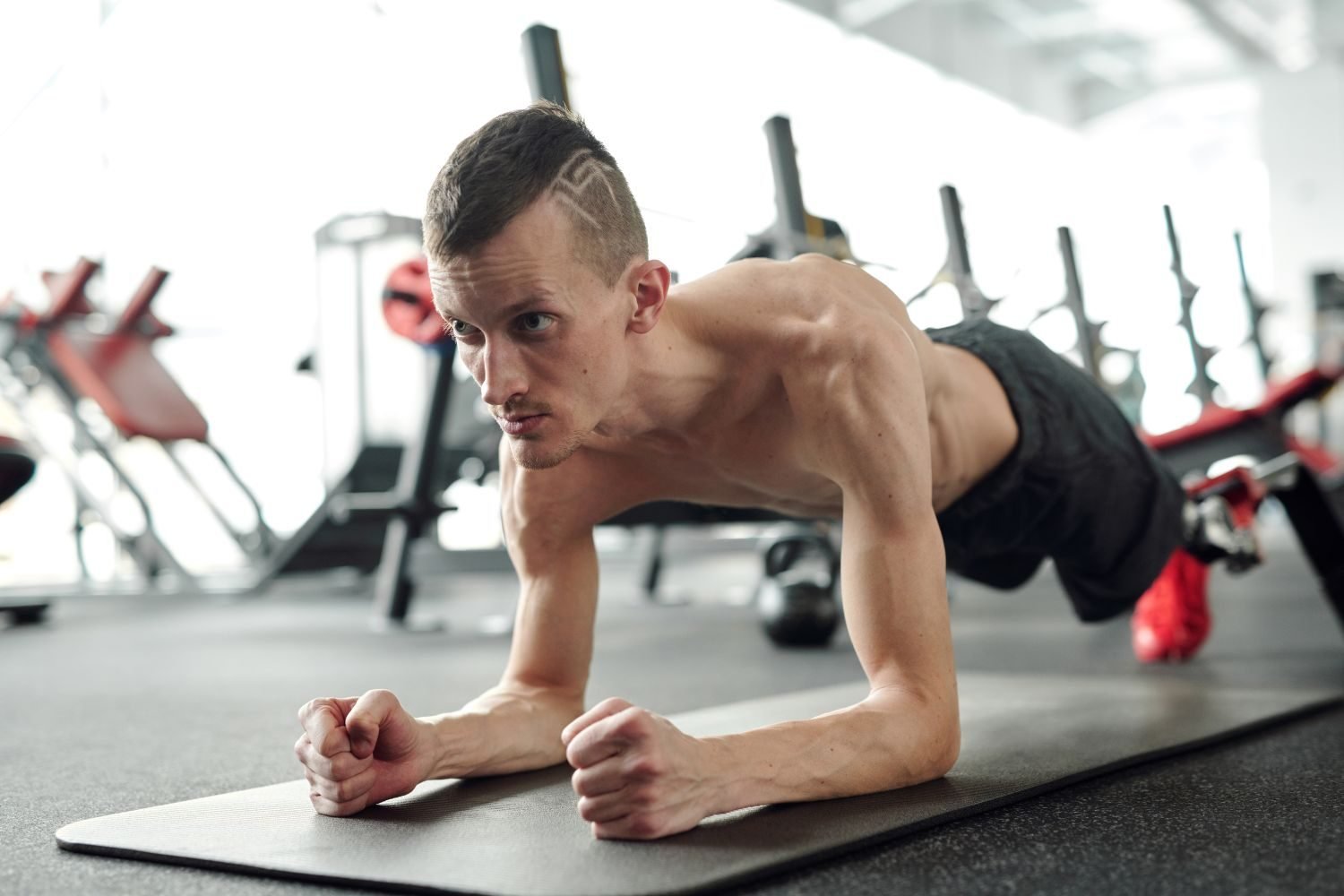
We also program a mix of dynamic movement and static holds. Dynamic exercises like leg raises build strength through a range of motion. Static holds like planks build endurance and teach your core to resist movement, which matters more than people think for lower back health. A session that’s all crunches and no holds misses half the picture.
What are the best exercises for upper abs, lower abs, and obliques?
Upper abs respond best to exercises where your ribcage curls toward your pelvis. Crunches, cable crunches, and decline sit-ups all do this well. The cable crunch in particular lets you add resistance progressively, which regular crunches don’t allow once bodyweight stops being challenging.
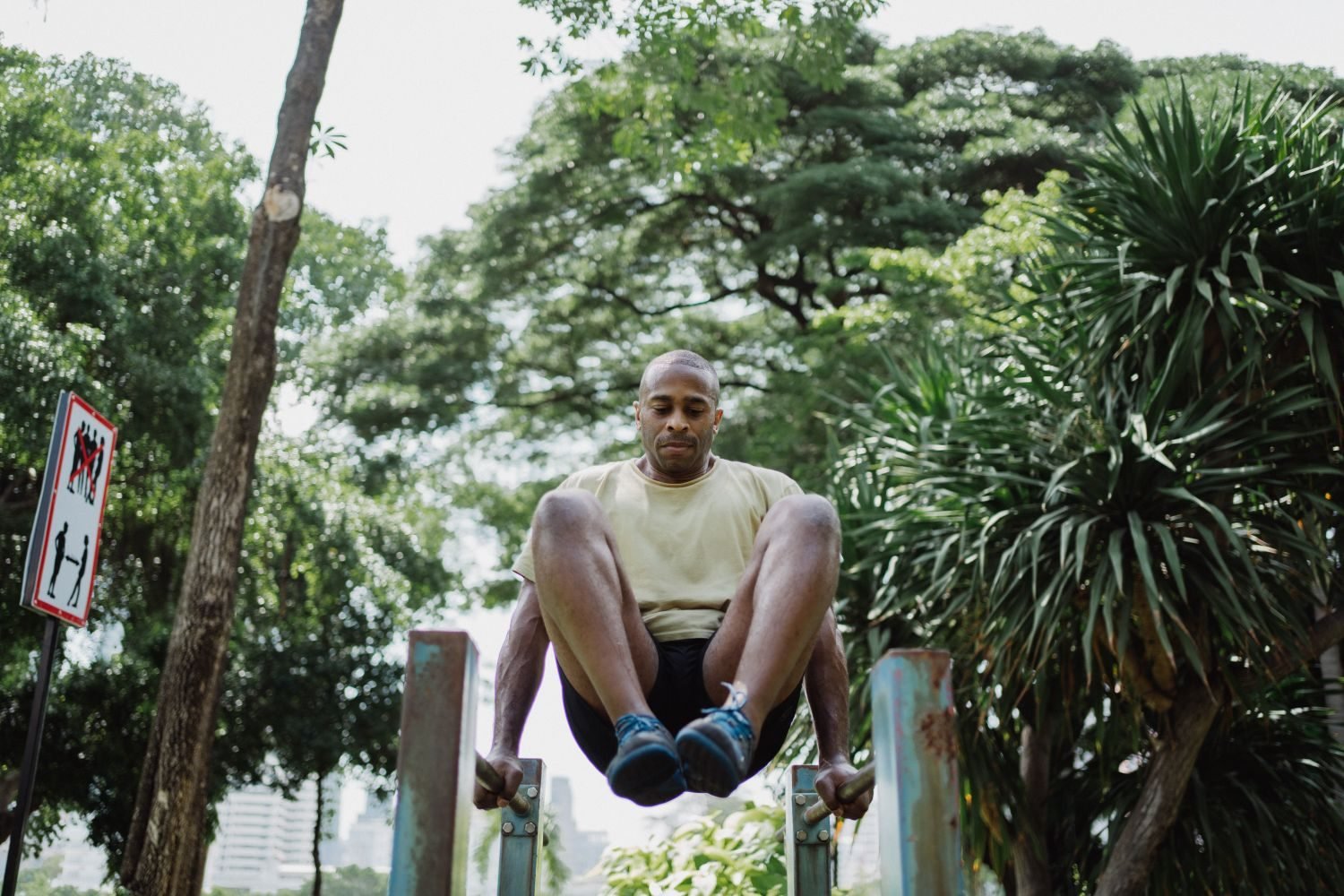
Lower abs get more targeted work from movements where your pelvis tilts toward your ribcage instead. Hanging leg raises, reverse crunches, and lying leg raises all fall into this category. Hanging leg raises are tough for beginners, so we usually regress clients to lying knee tucks or captain’s chair raises first and build up from there.
Obliques need rotation or side-bending work. Russian twists, side planks, woodchoppers, and bicycle crunches all train this area. Bicycle crunches actually do double duty since they combine rotation with hip flexion, which is why they show up in almost every ab program we write.
If you’re also training legs on the same day, our legs and abs workout guide breaks down how to pair lower body strength work with core training without one interfering with the other.
What does a full ab day workout look like?
Here’s a sample ab day we’ve used with clients who train core as its own session twice a week. It runs through all three regions and mixes dynamic reps with static holds.
| Exercise | Sets | Reps | Rest |
|---|---|---|---|
| Cable Crunch | 4 | 12-15 | 45 sec |
| Hanging Leg Raise | 4 | 8-12 | 60 sec |
| Russian Twist (weighted) | 3 | 16-20 (total) | 45 sec |
| Reverse Crunch | 3 | 12-15 | 45 sec |
| Side Plank | 3 | 30-45 sec per side | 30 sec |
| Bicycle Crunch | 3 | 20-24 (total) | 30 sec |
| Plank (standard) | 2 | Hold to near failure | 45 sec |
That’s seven exercises across upper abs, lower abs, and obliques, with the two toughest movements (cable crunch and hanging leg raise) placed first while you’re still fresh. If seven feels like too much when you’re starting out, cut it to five and add exercises back in as your recovery and technique improve.
Will an ab day workout give you visible abs?
No, not on its own, and anyone telling you otherwise is selling something. Ab exercises build and strengthen the muscle underneath, but whether you can see that muscle comes down almost entirely to body fat percentage. You can have a genuinely strong, well-developed core and still not see a six pack if your body fat is sitting too high for that muscle to show through. This is diet and overall training volume territory, not a “do more crunches” problem.
What ab training does give you, regardless of how visible your abs are, is a stronger, more stable trunk. That translates to better lifts, less lower back strain, and improved posture. If visible abs are the actual goal, an ab day workout needs to sit inside a broader plan that includes a calorie deficit and consistent full-body training. Our workout plan resource walks through how to structure that bigger picture so your ab work isn’t fighting an uphill battle against your diet.
How does ab day fit into your weekly training split?
Most clients don’t need core as a standalone day every single week. A common approach we use is one dedicated ab day plus light core accessory work folded into two other sessions, so the muscle group gets trained three times a week without dominating the schedule. If you’re following a push-pull-legs or upper-lower split, ab day usually slots in on a lower-intensity day or right after a lighter cardio session, since it doesn’t tax your nervous system the way a heavy squat day does.
If you’re newer to structured training and not sure how core work should sit alongside strength and conditioning days, our best workout routine article covers how to sequence muscle groups across the week so nothing gets neglected or overtrained.
Ready to build an ab day that actually fits your goals?
Yash Pathak and the FitStrot coaching team have spent a decade building training programs for people who want a plan that matches their actual life, not a generic template pulled off the internet. If you want an ab day, a full split, or a program that folds core work in around your other goals, our 1-on-1 personal training service builds it around you specifically, with a coach checking your form and adjusting the plan as you progress.
Frequently Asked Questions
What is a good ab day workout?
A good ab day workout covers all three core regions in one session: upper abs (crunches, cable crunches), lower abs (leg raises, reverse crunches), and obliques (twists, side planks). It should mix dynamic reps with static holds and run five to seven exercises so no single pattern gets neglected.
How often should you train abs?
Two to three times a week works for most people, whether that’s through a dedicated ab day or accessory work tacked onto other sessions. Training abs every single day usually isn’t necessary since they’re smaller muscles that recover fairly quickly, but they still need rest between hard sessions like any other muscle group.
Do ab workouts actually give you a six pack?
Ab workouts build and strengthen the muscle, but seeing it depends on your body fat percentage, which comes down to diet and overall calorie balance. You can train abs hard and still not see them if your body fat is too high. Ab exercises are necessary for a strong core but not sufficient on their own for visible abs.
How many exercises should an ab day have?
Five to seven exercises is a solid range for a dedicated ab day, covering upper abs, lower abs, and obliques with at least one static hold included. Beginners can start with four or five and add more as recovery and technique improve.
Can you do an ab day and a leg day together?
Yes, and it’s actually a common pairing since core work doesn’t compete much with leg strength for recovery. Just place the heavier compound leg lifts first while you’re fresh, then finish with your ab circuit so fatigue in your core doesn’t compromise your squat or deadlift form.