
A good shoulder workout routine trains all three heads of the deltoid, front, side, and rear, along with the rotator cuff and upper traps, using a mix of pressing and raising movements two to three times a week. At FitStrot we build these routines around compound presses first, then isolation work for the side and rear delts, because most people already overwork their front delts through chest pressing and neglect the other two heads. The result is rounded, capped shoulders instead of the “front-delt only” look you see in a lot of home gyms.
How Do You Structure a Shoulder Workout Routine?
We structure every shoulder session the same way for our clients, regardless of their experience level. Start heavy and compound, move into unilateral or machine-based pressing, then finish with high-rep isolation for the side and rear delts. This order matters because the side delts and rear delts are smaller muscles that fatigue fast and respond better to volume than to heavy loading. If you hit them first, your pressing strength drops and the whole session suffers.
A session usually runs 45 to 60 minutes and covers four to six exercises. You don’t need more than that. We’ve seen clients try to cram eight or nine shoulder exercises into one workout and end up with sore joints and no strength gains to show for it. Quality of execution beats the number of exercises on the sheet every time.
Which Muscles Make Up the Shoulder and Why Does Each One Matter?
The deltoid has three heads. The anterior (front) delt drives overhead and forward pressing. The lateral (side) delt is what gives shoulders their width and is usually the most underdeveloped head in people who only bench and press. The posterior (rear) delt supports pulling movements and posture, and it’s the one most likely to get skipped entirely in a typical gym routine.
Ignore any one of these and you end up with imbalances. Weak rear delts pull your shoulders forward and contribute to rounded posture, especially if you sit at a desk all day. Underdeveloped side delts leave your shoulders looking narrow no matter how big your chest gets. This is exactly why we treat all three heads as separate training priorities rather than lumping “shoulders” into one generic category, the same principle we apply when programming deltoid workouts for clients chasing a fuller, more balanced look.
What Are the Best Shoulder Exercises for Mass?
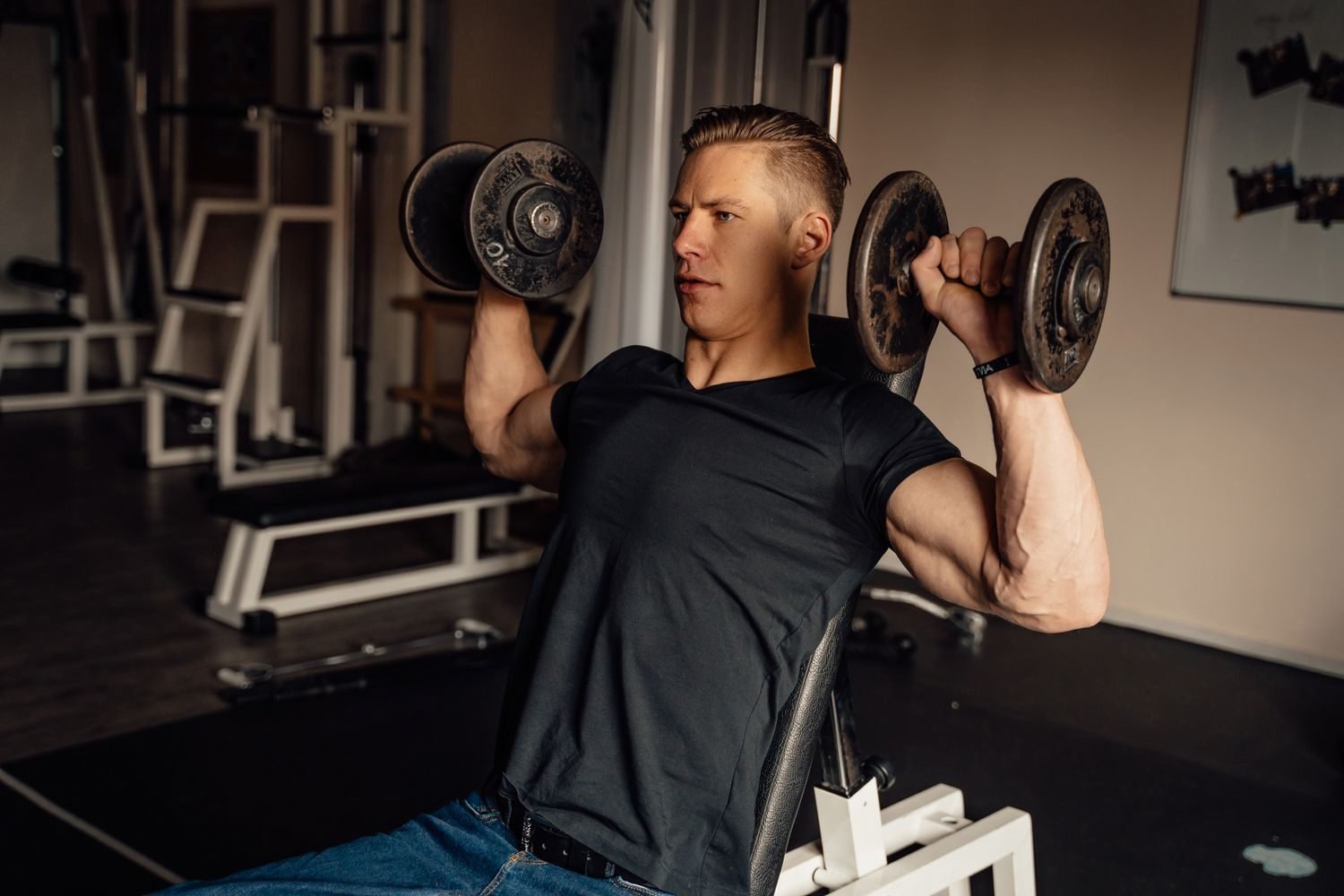
For the front delts, the overhead press and seated dumbbell press are hard to beat. They let you move real weight and build the base strength that carries over to every other pushing movement. The Arnold press is another one we rely on often because the rotating path hits the front and side delts through a slightly different arc than a standard press, which keeps the shoulder joint working through more range without adding extra exercises to the session.
For the side delts, lateral raises are non-negotiable. Cable lateral raises or leaning dumbbell raises tend to build more consistent tension than the standing dumbbell version, where momentum sneaks in once your arms fatigue. Keep the weight light enough that you can control the top and bottom of the movement instead of swinging it up.
For the rear delts, reverse pec deck flyes, face pulls, and bent-over rear delt raises all work well. Face pulls deserve a permanent spot in your routine because they train the rear delts and external rotators together, which helps protect the shoulder joint during heavier pressing work. If you’re also pairing shoulder day with arm training, a well-built shoulder and bicep workout lets you finish the session with some direct arm volume without overloading the joint further.
None of this requires a fully stocked gym. Dumbbells, a resistance band, and a bit of floor space are enough to run an effective shoulder workout at home, and we program these often for clients who train remotely with us and don’t have access to cable machines.
What Does a Complete Shoulder Workout Look Like?
Here’s a sample routine we use with clients who train shoulders twice a week and want balanced development across all three heads. Adjust the load so the last two reps of each set feel genuinely hard.
| Exercise | Sets | Reps | Rest |
|---|---|---|---|
| Seated Dumbbell Shoulder Press | 4 | 6-10 | 90 sec |
| Arnold Press | 3 | 8-12 | 75 sec |
| Cable Lateral Raise | 4 | 12-15 | 60 sec |
| Bent-Over Rear Delt Raise | 3 | 12-15 | 60 sec |
| Face Pull | 3 | 15-20 | 45 sec |
| Front Plate Raise | 2 | 12-15 | 45 sec |
This isn’t the only way to organize a shoulder session, but it covers the front, side, and rear delts in one sitting without any head getting left out. If your second weekly session is more about recovery and volume, you can drop the loading slightly and add an extra set of lateral and rear delt work instead.
How Often Should You Train Shoulders Each Week?
Twice a week is the sweet spot for most people. That gives you enough frequency to build strength and size without leaving so much time between sessions that you lose momentum. If you’re also pressing heavily on chest day, your front delts are getting indirect work there too, so your dedicated shoulder sessions can lean a bit more toward side and rear delt volume.
Beginners can often get away with one focused session a week since their recovery capacity and technique are still catching up. More advanced lifters sometimes split shoulders into a heavy day and a lighter, higher-volume day, which is closer to what we program for clients who’ve been training with us for a year or more and need more stimulus to keep progressing.
Can You Train Shoulders Every Day?
Technically you can, but we wouldn’t recommend it and we don’t program it for clients. The deltoids are small muscles compared to your legs or back, and they also get worked indirectly during chest and back training. Hitting them directly every day doesn’t leave enough recovery time for the muscle fibers to repair and grow, and it raises your risk of shoulder joint irritation, especially around the rotator cuff.
What you can do daily, if you want, is light mobility work, banded pull-aparts, or a few sets of face pulls to support posture and joint health. That’s maintenance, not training, and it won’t interfere with recovery from your actual shoulder sessions.
What Mistakes Wreck Shoulder Progress?
- Overtraining the front delts. Between bench pressing, incline pressing, and overhead pressing, most lifters get plenty of front delt work without even trying. If lateral raises and rear delt work aren’t a deliberate part of your plan, they simply won’t happen.
- Using too much weight on lateral raises. Overloading turns the movement into a shrugging motion. The traps take over, the side delts barely engage, and you walk away with sore traps instead of bigger shoulders. Drop the ego, slow the tempo, and feel the muscle working.
- Skipping warm-up sets before heavy pressing. Shoulders are one of the more injury-prone joints in the body because of how much range of motion they allow. A couple of light ramp-up sets before your working weight goes a long way toward keeping you training consistently instead of nursing an injury.
Build Your Shoulder Routine With a Coach Who Knows Your Body
Reading about sets and reps only gets you so far. What actually moves the needle is a program built around your current strength, your joint history, and how your body responds week to week, adjusted by someone who’s watching your form and progress in real time. That’s exactly what our 1-on-1 personal training is built for. Yash Pathak and our coaching team have spent a decade working with clients across India to build shoulder routines that actually deliver results instead of generic templates copied from the internet.
What is a good shoulder workout routine?
A good shoulder workout routine trains all three deltoid heads, front, side, and rear, in the same session or across the week, using a mix of compound presses and isolation raises. It should also include some rear delt and rotator cuff work to keep the joint healthy over the long run.
How often should you train shoulders?
Most people get the best results training shoulders twice a week, with enough recovery time between sessions for the muscle to repair. Beginners can start with once a week, while more advanced lifters sometimes add a second, lighter session focused on volume.
What are the best shoulder exercises for mass?
The seated dumbbell press and overhead barbell press build the base strength and size for the front delts. Lateral raises are the most effective exercise for side delt width, and face pulls or rear delt raises are essential for filling out the back of the shoulder.
Can you train shoulders every day?
You can, but it’s not a good idea for most people. Daily direct shoulder training doesn’t leave enough recovery time and increases the risk of joint irritation. Light mobility and band work can be done daily, but heavy pressing and raises should be limited to two or three sessions a week.
Do shoulder workouts help with posture?
Yes, especially rear delt training. Strengthening the rear delts and upper back helps pull the shoulders back and counteracts the forward rounding that comes from sitting and desk work, which is why we rarely program a shoulder session without some form of rear delt or face pull work.