A middle chest workout is a training session built around flat pressing and flat flye movements that load the sternal head of the pectoralis major, the thick central slab of muscle that gives your chest width and that “full” look from the front. Flat barbell or dumbbell presses, flat dumbbell flyes, and flat cable presses all belong here. At FitStrot, we build this into every client’s chest day because the middle chest is the anchor point that ties the upper and lower fibers together visually and strength-wise. Skip it and your chest ends up looking split into two unrelated halves.
What Exactly Is the Middle Chest, and Why Does It Need Its Own Focus?
The pectoralis major is one muscle, but it has distinct fiber orientations that respond differently depending on the angle of the movement. The clavicular head (upper chest) runs from the collarbone down to the humerus and gets hit hardest by incline pressing. The sternal head, which most people mean when they say “middle chest,” runs from the sternum and ribs across to the upper arm, and it responds best to flat and slightly declined pressing angles.
We train clients who show up with a chest that looks fine from the side but flat and narrow from the front. Almost every time, the fix is more flat-angle volume, not more incline work. The sternal head is the biggest chunk of pec tissue on most people, so under-training it leaves visible strength and size on the table.
What Is a Good Middle Chest Workout?
A good middle chest workout leads with a heavy flat press, follows with a flat flye or cable movement for stretch and squeeze, and finishes with a pump-focused isolation exercise. You don’t need ten exercises. Three or four done with real intent and full range of motion beat a long list of movements rushed through with sloppy form.
Here’s the structure we default to with clients who want to bring up their middle chest specifically:
- One heavy compound press (barbell or dumbbell, flat)
- One flye or cable variation for the stretch position
- One machine or cable finisher for a controlled pump
That’s it. It’s simple on paper, but the execution is where most people leave gains on the table, which is why coaching cues matter more than exercise selection here.
What Exercises Target the Middle Chest Best?
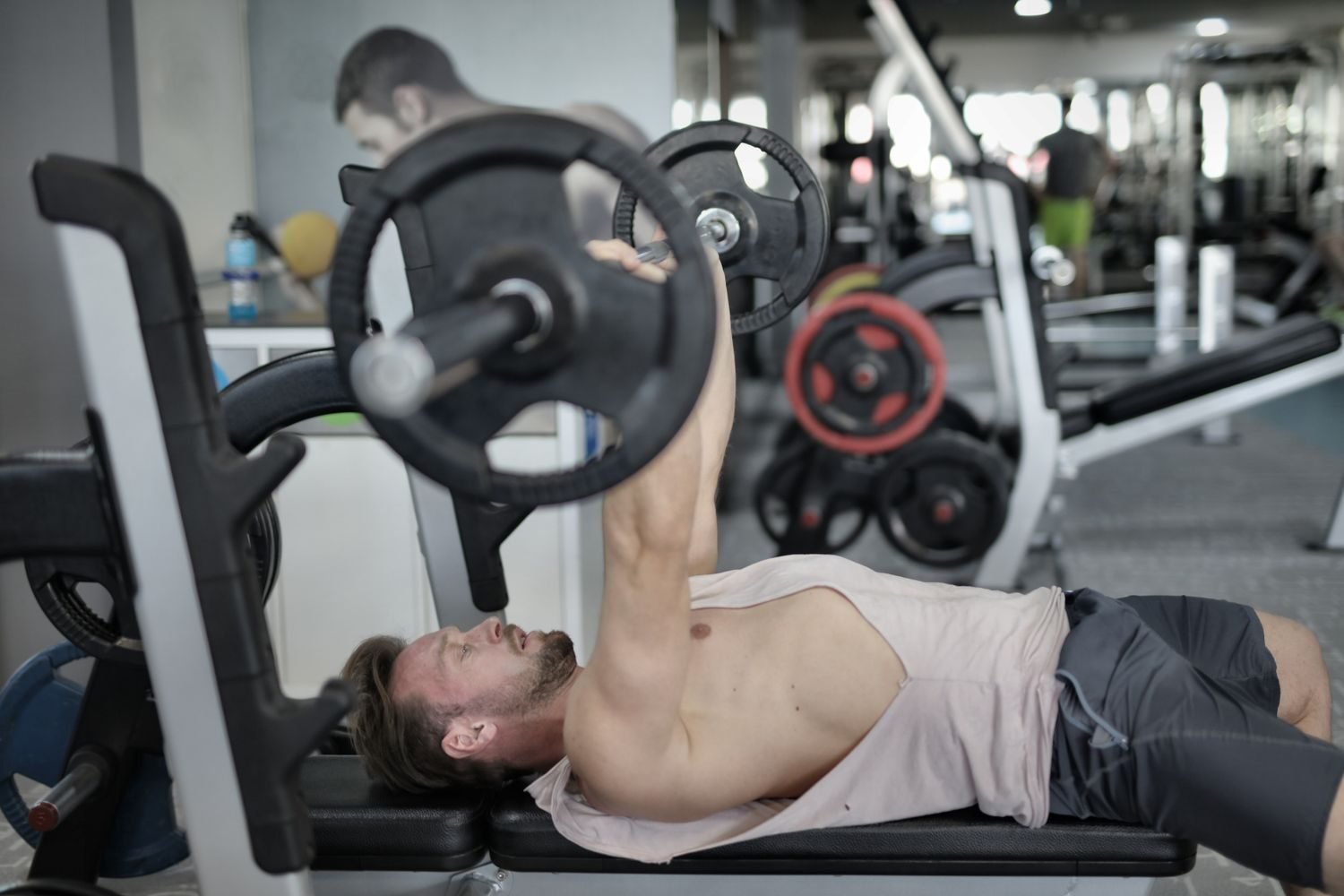
Flat barbell bench press is still the king for raw strength and overall sternal chest development. It lets you load the heaviest weight and it builds the thickness that shows up in every other pressing movement you do. Flat dumbbell press comes second. It costs you a bit of load compared to the barbell, but you get a longer range of motion and each side has to work independently, which fixes strength imbalances fast.
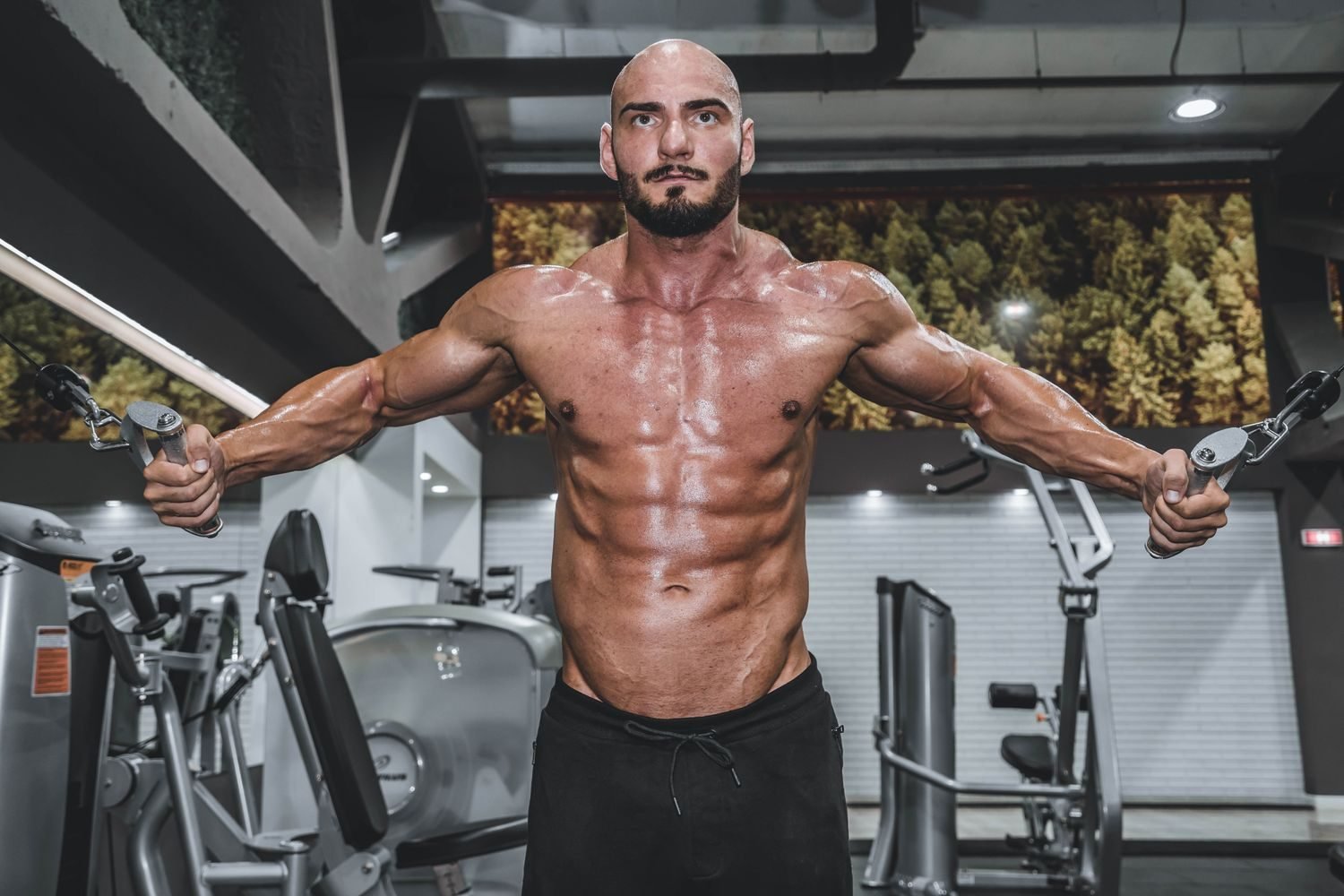
Flat dumbbell flyes are the best isolation option for the middle chest. They stretch the pec across a wide arc without any triceps or shoulder assistance, so the muscle actually has to do the work. Flat cable flyes or cable crossovers set at chest height are a close second and they keep tension on the muscle through the entire rep, including the lockout, which dumbbells can’t do.
Machine chest press and the pec deck round out the list well as finishers. They’re not glamorous, but they let you push close to failure without worrying about stabilizing a free weight, which is exactly what you want on your last set of the day.
If you want the full picture of how these fit alongside incline and decline movements, our chest workouts guide breaks down the whole muscle group angle by angle.
How Do You Build the Technique for Flat Pressing and Flyes?
Technique is where a middle chest workout actually gets won or lost. On the flat press, keep your shoulder blades pulled back and pinned to the bench before you unrack the bar. Your chest should stay up and slightly arched, not flat against the bench. Lower the bar to the lower part of your chest, not your neck, and press it back up in a slight arc rather than a straight vertical line. That arc keeps the tension on the pec instead of shifting it to the front delts.
On flyes, the biggest mistake we correct constantly is turning the movement into a press by bending the elbows too much. Keep a soft, fixed bend in your elbow throughout the rep and think about hugging a barrel rather than pressing a weight. Lower until you feel a real stretch across your chest, not your shoulder joint, and squeeze at the top like you’re trying to touch your palms together over your chest without letting the dumbbells actually collide.
Rep speed matters too. Slow the eccentric down on both movements. A one-second lowering phase is not enough time for the muscle fibers to actually load properly, and rushing it is one of the most common reasons people plateau on chest size despite training it every week.
Is Flat Bench Press Enough for Middle Chest?
No, and this is one of the more common mistakes we see in home programs. Flat bench press alone builds strength and a decent base of thickness, but it doesn’t fully stretch or isolate the sternal fibers the way a flye or crossover movement does. Pressing movements are dominated by triceps and front delts once the weight gets heavy, especially in the last third of the rep, which means the pec isn’t getting maximum stimulus through its full range.
Pairing a press with a flye movement gives you both worlds: heavy overload from the press and a deep stretch-to-squeeze range from the flye. We program both in the same session for almost every client because relying on pressing alone tends to plateau chest growth around the same point, usually once someone’s press strength outpaces their ability to feel the muscle working.
Where Does Middle Chest Fit Into a Complete Chest Routine?
The middle chest should be the priority in a balanced routine, not an afterthought squeezed in after upper and lower chest work. Since the sternal head is the largest portion of the pec, we usually put the heaviest flat press first in the session while energy and strength are highest, then move to upper chest incline work, and finish with isolation movements for whichever area needs the most attention that week.
A full week of chest training usually splits attention across all three regions rather than hammering one angle every session. If you’re building out a complete chest day workout plan, the middle chest exercises above should form the backbone, with incline work added for the upper chest workout portion and cable work added in for the lower chest cable workout portion. Middle chest gets the flat angles, upper chest gets the incline, lower chest gets the decline and downward cable pulls. Mixing all three angles across a week is what actually builds a full, proportional chest instead of one dominant section.
What Does a Full Middle Chest Workout Look Like?
This is a session we regularly build for clients who specifically want to bring up their middle chest without neglecting recovery for upper and lower chest work later in the week.
| Exercise | Sets | Reps | Rest |
|---|---|---|---|
| Flat Barbell Bench Press | 4 | 6-8 | 2-3 min |
| Flat Dumbbell Press | 3 | 8-10 | 90 sec |
| Flat Dumbbell Flye | 3 | 10-12 | 60-75 sec |
| Flat Cable Crossover | 3 | 12-15 | 45-60 sec |
| Machine Chest Press (finisher) | 2 | 15-20 | 45 sec |
Start with the barbell press while you’re fresh and strong. Drop the load slightly for dumbbells so you can chase the extra range of motion. By the time you get to the flyes and crossovers, you’re not trying to move heavy weight anymore, you’re trying to feel every rep in the chest and control the stretch. The machine finisher at the end is meant to burn, not build maximal strength, so don’t be afraid to push those last sets close to failure.
How Often Should You Train Middle Chest?
Twice a week works well for most people who are training chest as part of a normal split, with at least 48 hours between sessions to let the muscle recover. If you’re doing a dedicated push day or full upper body day, one flat pressing movement and one flye variation per session is usually enough. Training it more than twice a week without adjusting volume down tends to interfere with recovery and actually slows progress rather than speeding it up.
What matters more than frequency is progressive overload. Add weight, add a rep, or slow the tempo down every few weeks. A middle chest workout done at the same weight for months straight isn’t going to change the muscle no matter how often you show up.
If you want a program built specifically around your current strength level, recovery capacity, and goals, that’s exactly what FitStrot’s 1-on-1 personal training service is built for. Yash Pathak and the coaching team design chest programming (and everything else) around your actual body and schedule instead of a generic template.
Frequently Asked Questions
What is a good middle chest workout?
A good middle chest workout combines one heavy flat press, one flye or cable movement for stretch and squeeze, and one isolation finisher. Four exercises done with strict form and full range of motion will build more middle chest size than a long list of exercises rushed through with poor technique.
What exercises target the middle chest?
Flat barbell bench press, flat dumbbell press, flat dumbbell flyes, and flat cable crossovers are the core middle chest exercises. Machine chest press and the pec deck work well as finishers once your strength drops on the free weight movements.
Is flat bench press enough for middle chest?
Not on its own. Flat bench press builds strength and base thickness, but the triceps and front delts take over in the top portion of the lift once the weight gets heavy. Pairing it with a flye or cable crossover gives the sternal fibers the stretch and isolation work they need on top of raw pressing strength.
How often should you train middle chest?
Twice a week is enough for most lifters, as long as you leave at least 48 hours between sessions. What drives progress is adding weight, reps, or better control over time, not training the muscle more often than it can recover from.
Should beginners train middle chest differently than advanced lifters?
Beginners should focus almost entirely on the flat barbell or dumbbell press and learn to feel the chest working before adding isolation movements. Advanced lifters get more out of adding flye variations and cable work because their pressing strength has already outpaced their ability to isolate the muscle through feel alone.