A lower chest cable workout uses adjustable pulley machines set at shoulder height or above to create a high-to-low pressing or pulling angle, which shifts more of the workload onto the sternocostal (lower) fibers of the pectoralis major. Unlike flat bench pressing, which hits the chest fairly evenly, cables let you control the exact angle of resistance. At FitStrot, we program these sessions for clients who want a fuller, more defined lower chest line, especially those chasing that visible shelf under the pec where it meets the upper abs.
Why Does Lower Chest Deserve Its Own Cable Session?
Most people train chest with flat and incline pressing and call it done. The lower chest gets some indirect work from dips and flat bench, but it rarely gets targeted volume on its own. That’s a problem if you want balanced development, because an underdeveloped lower chest makes the whole chest look flat or square instead of having that natural taper.
Cables solve this better than free weights because the line of resistance stays constant through the entire range of motion. With a barbell or dumbbell, resistance drops off at the top of a press. With cables set high and pulling down and across the body, tension stays on the lower pec fibers from start to finish. That’s why we build dedicated lower chest cable blocks into client programs as part of a broader chest day workout plan, rather than just hoping incline and flat work fill the gap.
What Are the Best Cable Exercises for Lower Chest?
Here’s what we actually program with clients, in order of how often we reach for them.
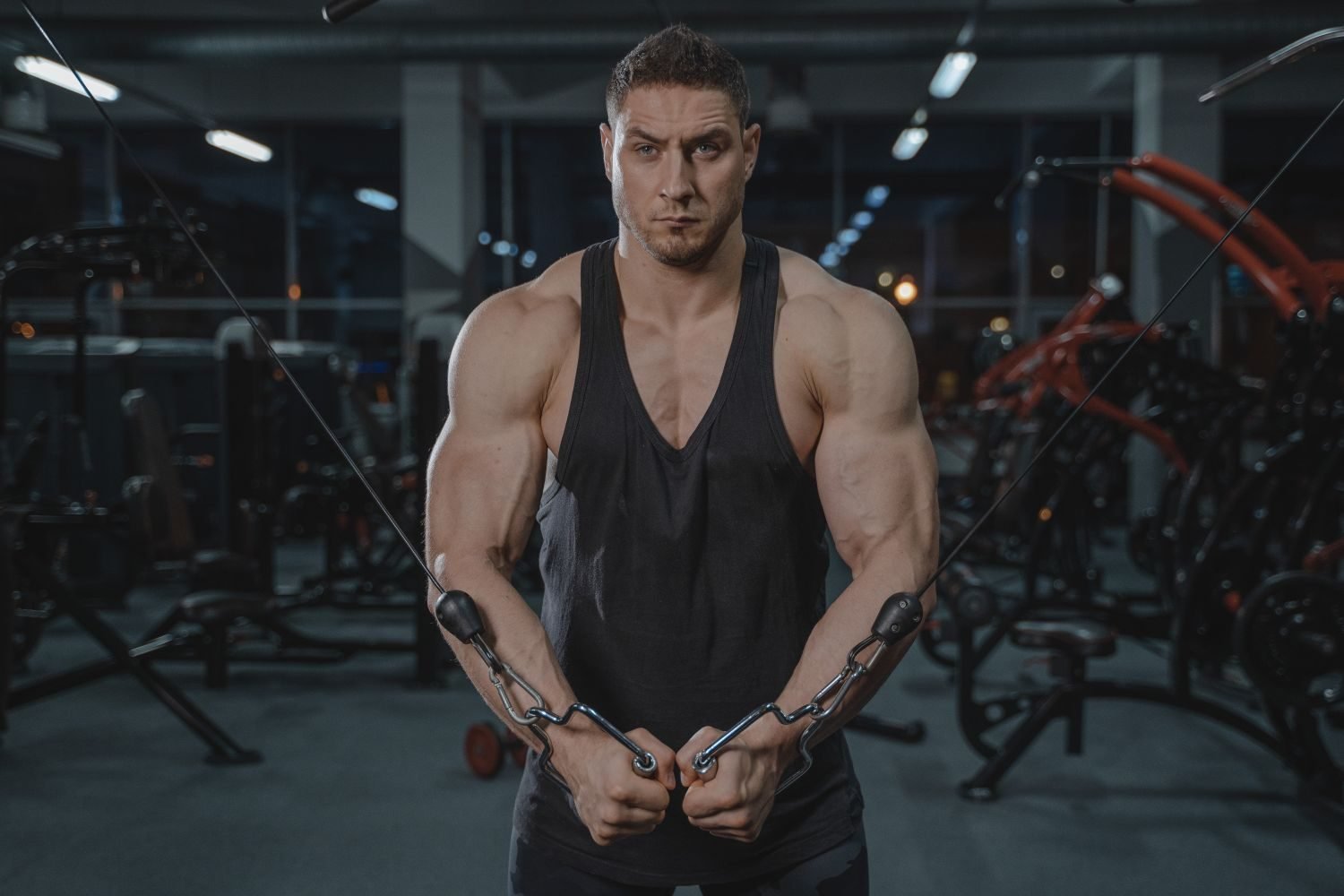
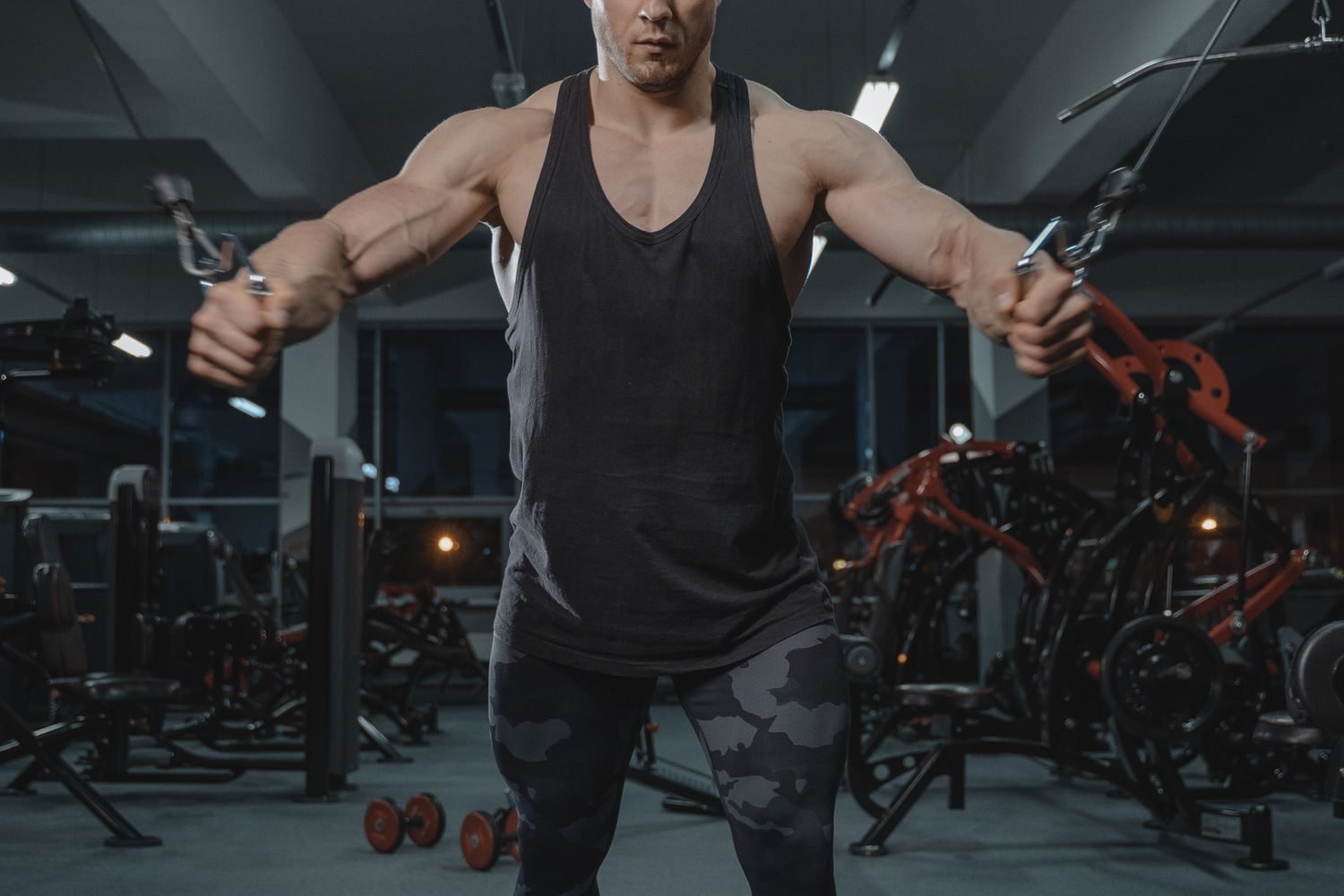
- High-to-low cable crossover. Set both pulleys above shoulder height, step forward, and bring the handles down and across your body in an arc, finishing with your hands near your hips. This is the single most direct lower chest cable movement and it belongs in nearly every program.
- Single-arm cross-body cable fly. Same high-to-low path but one arm at a time, pulling across your body toward the opposite hip. Working unilaterally lets you focus on squeezing the working side without the stronger arm compensating, and it forces some core stability too.
- Decline cable press. If your gym has a decline bench near a low pulley, this gives you a pressing movement (not just a fly) that biases the lower chest. Presses let you load heavier than flys, which matters if strength and size are both goals.
- Standing low-to-high cable pullover. This one leans more into the lower pec and serratus together and works well as a finisher because it’s hard to cheat the movement with momentum.
You don’t need all four in one session. We usually pick two, one press-style movement and one fly-style movement, and build the rest of the session around them.
How Do You Program a Lower Chest Cable Workout?
Below is a sample session we’d give a client who trains chest twice a week and wants lower chest as the priority. Adjust load so the last two reps of each set are genuinely hard, not just uncomfortable.
| Exercise | Sets | Reps | Rest |
|---|---|---|---|
| Decline cable press | 4 | 8-10 | 90 sec |
| High-to-low cable crossover | 3 | 12-15 | 60 sec |
| Single-arm cross-body cable fly | 3 | 12 per side | 45 sec |
| Standing low-to-high cable pullover | 3 | 15 | 45 sec |
| Cable squeeze press (hold at peak contraction) | 2 | 15-20 | 30 sec |
Notice the rep ranges climb as you move down the list. We load heavier and rest longer on the press early in the session when you’re fresh, then use shorter rest and higher reps on the isolation work to chase the pump and finish the muscle. That ordering isn’t arbitrary. It’s the same logic we apply across most of our pushing days.
How Does This Fit Into a Full Chest Day?
A lower chest cable block rarely stands alone in a well-built program. Most of our clients run it as the back half of a broader chest day workout plan that opens with flat or incline pressing for overall mass and closes with the cable work above for shape and detail. If you’re short on training days, it also pairs well in a session that combines pushing and pulling muscle groups, which is why some of our clients run lower chest cable work inside a chest and bicep workout instead of a chest-only day.
If your goal is a fuller upper chest rather than lower, the exercise selection and cable angles flip entirely. We’ve laid out that approach separately in our middle chest workout guide, which is worth reading alongside this one if you’re trying to figure out where your own chest actually needs the most work.
What Mistakes Do We See Clients Make?
We see clients make the mistake of setting the pulleys too low or standing too close to the machine, which turns a lower chest exercise into a shoulder-dominant press with almost no pec involvement. The angle is the entire point of these exercises. If the cable isn’t traveling from high to low across your body, you’re not training lower chest, you’re just moving weight.
The other common issue is going too heavy on flys and using momentum to swing the handles together. Flys work because of the stretch and squeeze, not because of how much weight is stacked. Drop the load, slow down, and actually feel the contraction at the bottom of each rep before you add more plates.
How Should You Build This Into Your Week?
Two lower chest focused sessions a week is enough for almost everyone, spaced at least 48 hours apart. Cramming more in doesn’t speed up growth, it just adds fatigue you’ll pay for on your pressing days. Consistency across weeks matters far more than volume in any single session.
If you’re training on your own and not sure whether your chest actually needs this kind of targeted work, or you keep doing the same three exercises out of habit, that’s exactly the gap our coaches close. We assess where your chest development is uneven, build the cable and pressing work around that, and adjust the plan as you progress. If you want a program built specifically for your goals, that’s what our 1-on-1 personal training is for.
Frequently Asked Questions
What is the best cable exercise for lower chest?
The high-to-low cable crossover is the most direct option because it keeps constant tension on the lower pec fibers through the full range of motion. Set both pulleys above shoulder height, step forward, and pull the handles down and across your body toward your hips, squeezing at the bottom.
Can you build lower chest with cables only?
Yes, cables can build meaningful lower chest size and definition on their own, since they allow heavy pressing variations like the decline cable press alongside isolation flys. Most of our clients combine cables with some flat or incline pressing for overall mass, but cables alone are enough for shape and detail work.
How often should you train lower chest?
Two dedicated sessions per week, spaced at least 48 hours apart, is enough for most people to see steady progress. Training it more often usually just adds recovery demand without speeding up results. What matters more than frequency is consistent progressive overload across weeks and months.
What’s the difference between lower chest and upper chest training?
Lower chest work uses high-to-low cable angles or decline pressing to target the sternocostal fibers near the bottom of the pec. Upper chest training flips that, using incline pressing or low-to-high cable angles to hit the clavicular head. Both angles need direct work for balanced, full chest development.
Is it normal for one side of the chest to be stronger during cable flys?
Yes, minor left-right strength differences are common and usually come down to hand dominance or training history. Single-arm cross-body cable flys are a good way to address this because each side has to work independently. If the gap feels large or is getting worse, it’s worth having a coach take a look.