An upper chest workout at home means training the clavicular head of your pectoralis major using incline pressing angles and elevated-feet push-up variations instead of a flat bench, since a flat surface alone won’t emphasize the upper fibers. At FitStrot we build these sessions around a couch, a sturdy chair, and a pair of adjustable dumbbells (or resistance bands if that’s what a client has). You don’t need a gym to build a fuller, more balanced chest. You need the right angle, and you need to load it consistently.
Why Does Upper Chest Training Matter?
Most people who train chest at home default to flat or slightly-declined push-ups because they’re the easiest movement to fall back on. The problem is that flat pressing biases the middle and lower fibers of the pec, and over months that shows up as a chest that looks flat or “sunken” right below the collarbone. We build upper chest work into almost every home program because it fills that gap and also pulls in the front deltoid, which helps shoulder stability for pressing movements in general.
There’s a real aesthetic reason too. A well-developed upper chest is what gives the chest a rounded, three-dimensional look in a t-shirt. Neglect it and your whole chest can look underdeveloped even if your overall pressing strength is fine. If you’re already training the lower chest with cable work, pairing it with dedicated upper chest sessions is what actually rounds out the muscle, something we cover in more depth in our lower chest cable workout guide.
What Muscles Make Up the Upper Chest?
The upper chest is the clavicular head of the pectoralis major, the portion that originates near your collarbone and runs down to the upper arm. It’s activated most when you press at an incline, roughly 30 to 45 degrees, because that angle changes the line of pull toward the shoulder rather than straight across the torso. The front deltoid assists heavily in every upper chest movement, which is normal and expected. You can’t fully isolate the clavicular head without some shoulder involvement, and you shouldn’t try to.
How Do You Train Upper Chest Without a Bench?
You replicate the incline angle using furniture you already own. The key rule we give clients: the steeper the incline, the more shoulder takes over and the less chest does. A moderate 30 to 45 degree angle is the sweet spot. Here’s what that looks like in practice:
- Couch cushion behind your back. Lying back against an inclined couch cushion and pressing dumbbells straight up gives you a genuine incline dumbbell press, just without the gym bench.
- A stable dining chair. Prop your torso against it for pressing, or use the seat to elevate your feet for push-up variations.
- A stair step. Raises your feet above your hands for a steeper push-up angle when you don’t have a chair handy.
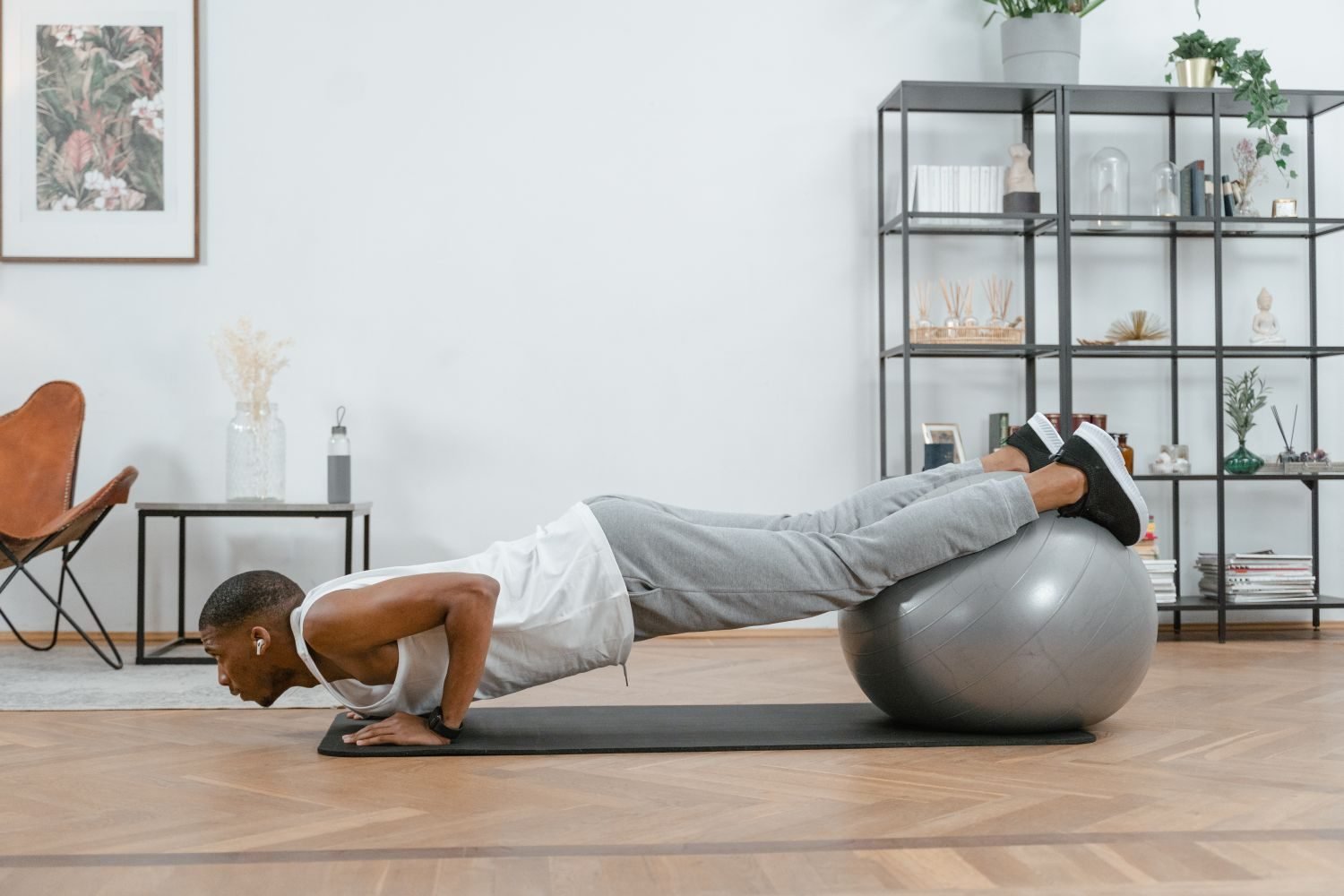
- Feet-elevated push-ups. Elevating your feet on a chair or low couch shifts more bodyweight load onto the upper chest and shoulders compared to a standard flat push-up, and it’s a simple substitution that requires no equipment at all.
What’s a Sample Upper Chest Workout You Can Do at Home?
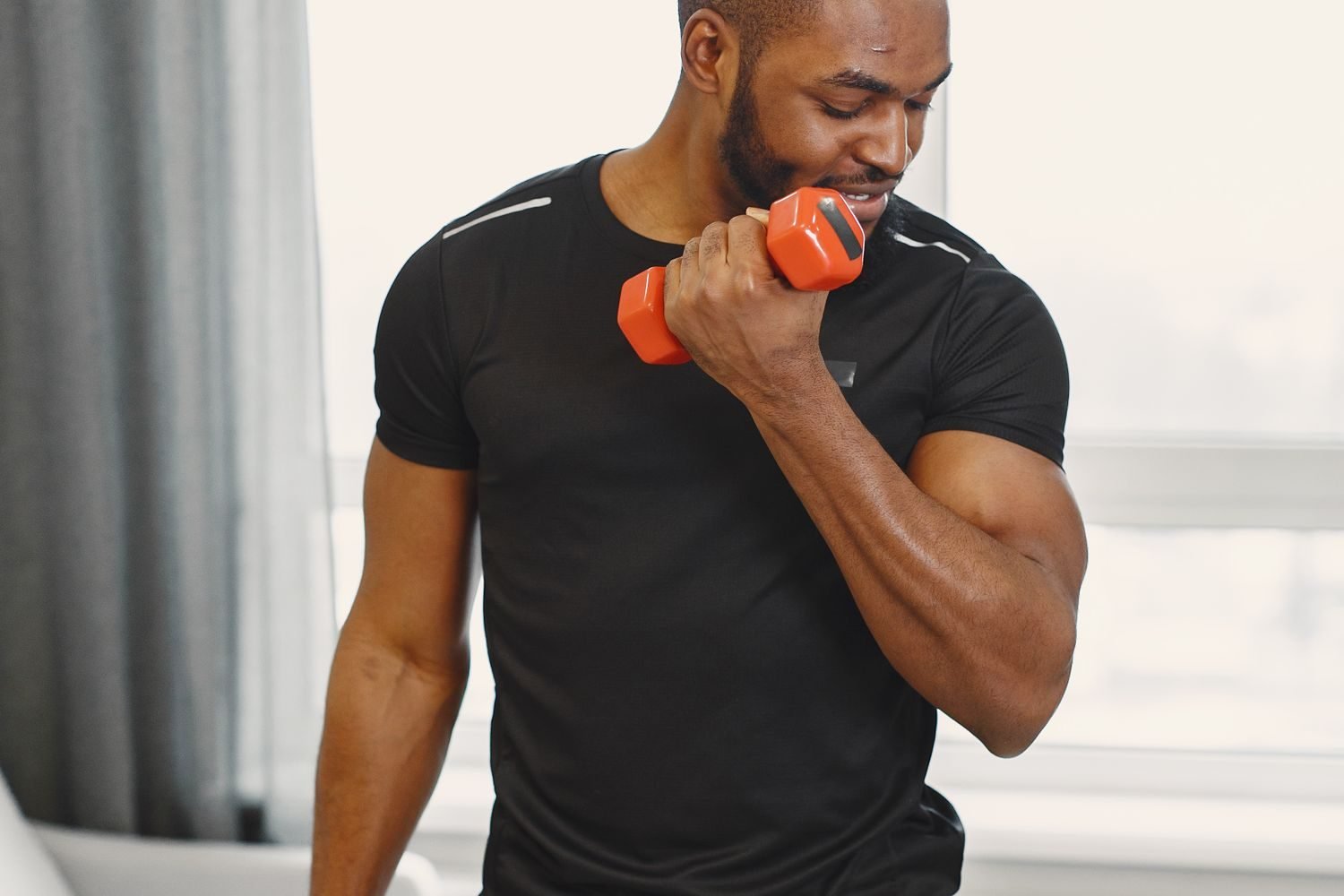
Here’s a session we actually program for clients who train in living rooms and small apartments. It uses one pair of adjustable dumbbells and a couch or sturdy chair. Adjust the incline angle by how many cushions or pillows you stack behind your back.
| Exercise | Sets | Reps | Rest |
|---|---|---|---|
| Incline Dumbbell Press (couch-supported) | 4 | 8-12 | 90 sec |
| Feet-Elevated Push-Ups (feet on chair) | 3 | 12-15 | 60 sec |
| Incline Dumbbell Flyes | 3 | 12-15 | 60 sec |
| Single-Arm Incline Press | 3 | 10 per side | 60 sec |
| Slow-Eccentric Push-Ups (3 sec down) | 2 | To near-failure | 60 sec |
Start with the dumbbell press while you’re freshest since it’s the heaviest load on the upper chest. Push-ups and flyes come after to finish off the muscle with higher reps. If you want this folded into a complete session that also hits mid and lower chest, our chest day workout plan shows how we sequence a full push session around a structure like this.
How Many Sets and Reps Should You Do?
For most clients we program 12 to 16 total working sets for chest per week, split across two sessions if upper chest is a priority. Within a single upper chest session, 3 to 4 sets per exercise in the 8 to 15 rep range covers both strength and hypertrophy without needing heavier equipment than a home setup allows. Push-up variations can go higher in reps, sometimes 15 to 20, since bodyweight alone often isn’t enough resistance to keep you in a lower rep range.
Progression matters more than the exact number. If you’re doing 12 reps of incline dumbbell press with ease, add weight or slow the tempo down before adding more sets. Volume without progressive overload just gets you tired, not stronger.
What Mistakes Do People Make Training Upper Chest at Home?
We see clients make the mistake of setting their incline too steep, essentially turning every “chest” exercise into a shoulder press. When the couch back is nearly vertical, you’re not training upper chest anymore, you’re training front delts with your chest as a minor assistant. Keep the angle closer to 30-45 degrees and you’ll actually feel the difference in your upper pec the next day.
Another common issue is skipping the mind-muscle connection on flye movements. People rush through incline flyes using momentum instead of a controlled stretch and squeeze, which turns a chest isolation exercise into a sloppy half-rep press. Slow down, especially on the way down.
Do You Need Different Exercises for Upper vs Lower Chest?
Yes, and this is a distinction we’re strict about with clients. Upper chest responds to incline angles where your hands or torso are positioned above your hips. Lower chest responds better to decline angles or cable movements pulling from high to low. Training only flat movements leaves both ends underdeveloped. If your current routine is mostly cable-based lower chest work, adding the incline patterns from this article balances things out, and it’s worth reading both approaches side by side since they use nearly opposite joint angles to hit the same muscle group.
Can You Combine This With Shoulder Training?
Given how much the front delt contributes to every incline press, it makes sense to program upper chest and shoulders in the same training block rather than treating them as unrelated. We often pair this session with the movements in our shoulder workout at home guide, since both use the same minimal equipment setup and complement each other without overtraining the front delt on back-to-back days.
How Do You Know If Your Program Is Actually Working?
Track two things over six to eight weeks: how much weight or resistance you’re using at the same rep count, and how your chest looks in a mirror straight on, not just from the side. Strength progress and visible upper chest fill-in should move together. If neither is moving after two months of consistent training, the issue is usually inconsistent progression or an incline angle that’s drifted too vertical over time.
A lot of clients get this far on their own and then hit a plateau because a generic template doesn’t account for their joint mobility, current strength levels, or how their body actually responds to volume. That’s normal, and it’s exactly the kind of thing we adjust for individually. If you want a program built specifically for your goals, that’s what our 1-on-1 personal training is for, whether you’re training at home, in a gym, or some mix of both.
Frequently Asked Questions
Can you build upper chest at home without a bench?
Yes. A couch, a stack of cushions, or a sturdy chair can create the 30 to 45 degree incline angle that a bench provides. What matters is the angle of your torso or feet relative to your hands, not the specific piece of furniture. Consistent progressive overload on that angle builds upper chest just as effectively as a gym bench does.
What is the best upper chest exercise at home?
Incline dumbbell press using a couch or inclined cushion setup is usually the most effective, since it lets you load the movement directly and progress the weight over time. If you don’t have dumbbells, feet-elevated push-ups are the best bodyweight substitute, shifting more load onto the upper chest and front shoulders than a flat push-up.
Do push-ups work the upper chest?
Standard flat push-ups mostly target the mid and lower chest. To shift emphasis toward the upper chest, elevate your feet on a chair or low couch, which changes the pressing angle to mimic an incline press. This single adjustment makes push-ups a genuinely effective upper chest exercise rather than a general chest movement.
What equipment do you need for an upper chest workout at home?
At minimum, nothing but your bodyweight and a chair or couch to elevate your feet for push-up variations. Adding one pair of adjustable dumbbells opens up incline presses and flyes, which let you progress load more precisely over time. Resistance bands are a solid substitute if dumbbells aren’t available.
How long before you see upper chest results training at home?
Most clients notice strength improvements within three to four weeks and visible changes in chest shape around eight to twelve weeks, assuming consistent training and progressive overload. Results depend heavily on training frequency, nutrition, and how well the incline angle is maintained across sessions, not just how many workouts you complete.