A good chest day workout plan trains the chest through three angles (upper, mid, and lower), pairs a heavy compound press with an incline movement and finishes with isolation work like flyes or cable crossovers. Most people need 4 to 6 exercises, done for 3 to 4 sets each, with rep ranges between 6 and 15. We build our clients’ chest days around pressing strength first, then chase the pump with isolation work once the heavy lifting is done. That order matters more than most people realize.
How Do You Structure a Chest Day for Maximum Growth?
We structure every chest day around one principle: train the chest from a different angle in each major lift so no part of the muscle gets ignored. The chest isn’t one uniform slab of tissue. It has upper fibers (clavicular head), mid fibers (sternal head), and lower fibers, and each responds better to a specific bar or bench angle. A workout that’s all flat bench presses builds a chest that looks flat and undeveloped up top, which is one of the most common complaints we hear from new clients.
The fix is simple on paper. Open with a compound movement that lets you lift the most weight, move to a second compound or heavy machine movement at a different angle, then close with two or three isolation exercises that stretch and squeeze the muscle under lighter load. This is the same framework we use whether someone trains chest alone or pairs it with another muscle group, like in a chest triceps workout or a chest and bicep workout.
Which Exercises Should You Pick for Upper, Mid, and Lower Chest?
For the upper chest, incline presses work best, whether you use a barbell, dumbbells, or a Smith machine. Set the bench between 15 and 30 degrees. Go steeper than that and you start recruiting more shoulder than chest. Incline dumbbell press and low-to-high cable flyes are the two moves we lean on most for upper chest development, and they’re the backbone of the routines we write for people doing an upper chest workout without a full gym setup.
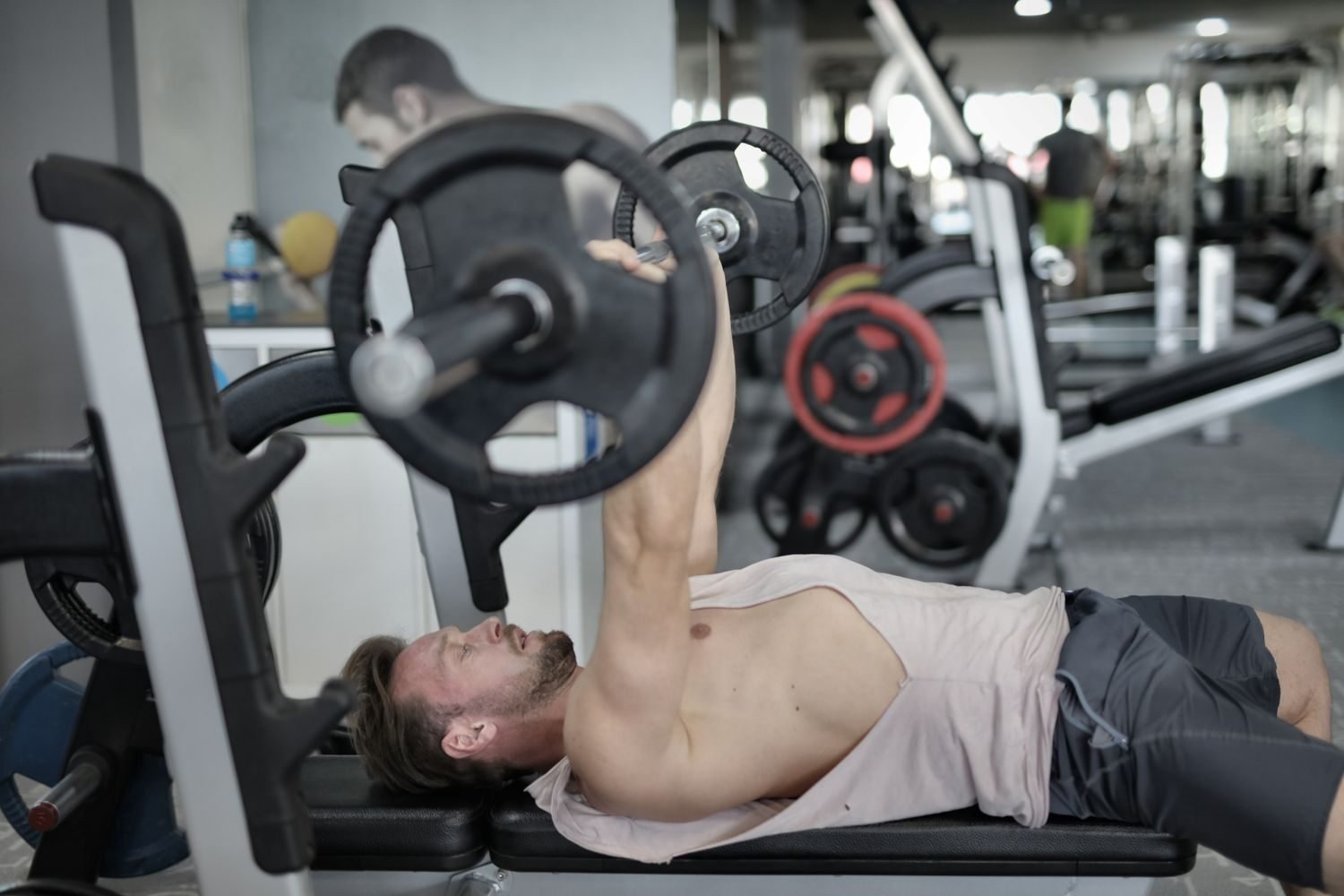
For the mid chest, flat barbell press, flat dumbbell press, and dips (leaning forward) all do the job. This is where most people already have decent strength, since flat pressing is the default exercise everyone learns first.
Lower chest responds well to decline presses and high-to-low cable flyes. Dips also hit the lower chest hard if you keep your torso angled forward instead of upright. You don’t need decline work in every single session, but it earns a spot on the days when you want a fuller, more complete look.
Quick reference for the three regions and the exercises that hit them best:
- Upper chest: incline barbell or dumbbell press, low-to-high cable flyes (bench angled 15-30 degrees)
- Mid chest: flat barbell press, flat dumbbell press, dips (torso leaning forward)
- Lower chest: decline press, high-to-low cable flyes, dips (torso angled forward)
If you want a deeper breakdown of exercise variations by equipment and experience level, our full guide on chest workouts covers that in more detail.
What Order Should You Do Chest Exercises In?
Train the weakest or most lagging area first, while you’re fresh and strong. For most people that’s the upper chest, so we usually open with an incline press. After that, move to a flat or mid-chest compound movement, then finish with isolation work such as flyes, cable crossovers, or a machine press.
Compounds always come before isolation. Pressing movements demand stabilizer strength from your shoulders and triceps, and that fatigues fast. If you burn out your triceps on flyes and pec deck first, your bench numbers drop and you shortchange the exercise that builds the most overall muscle. Save the single-joint stuff for last, when your joints are warm and your central nervous system doesn’t need to be fresh anymore.
How Many Sets and Reps Does Chest Actually Need?
Somewhere between 12 and 20 total working sets per week is the range we program for most intermediate lifters, split across one or two chest sessions. On a single dedicated chest day, that usually lands as 4 to 6 exercises done for 3 to 4 sets apiece.
Rep ranges should vary across the session instead of staying fixed. Heavy compound lifts like barbell press work well in the 6 to 10 rep range, where you’re lifting close to your limit and building raw strength alongside size. Isolation movements like flyes and cable crossovers respond better to 10 to 15 reps, since the muscle gets more time under tension without joint stress piling up.
Rest periods matter just as much as the sets and reps. Compound lifts need 90 seconds to 3 minutes of rest so you can actually recover enough to lift heavy again. Isolation work only needs 45 to 60 seconds, since the loads are lighter and the goal is a burn, not a new personal record.
What Does a Full Chest Day Workout Look Like?
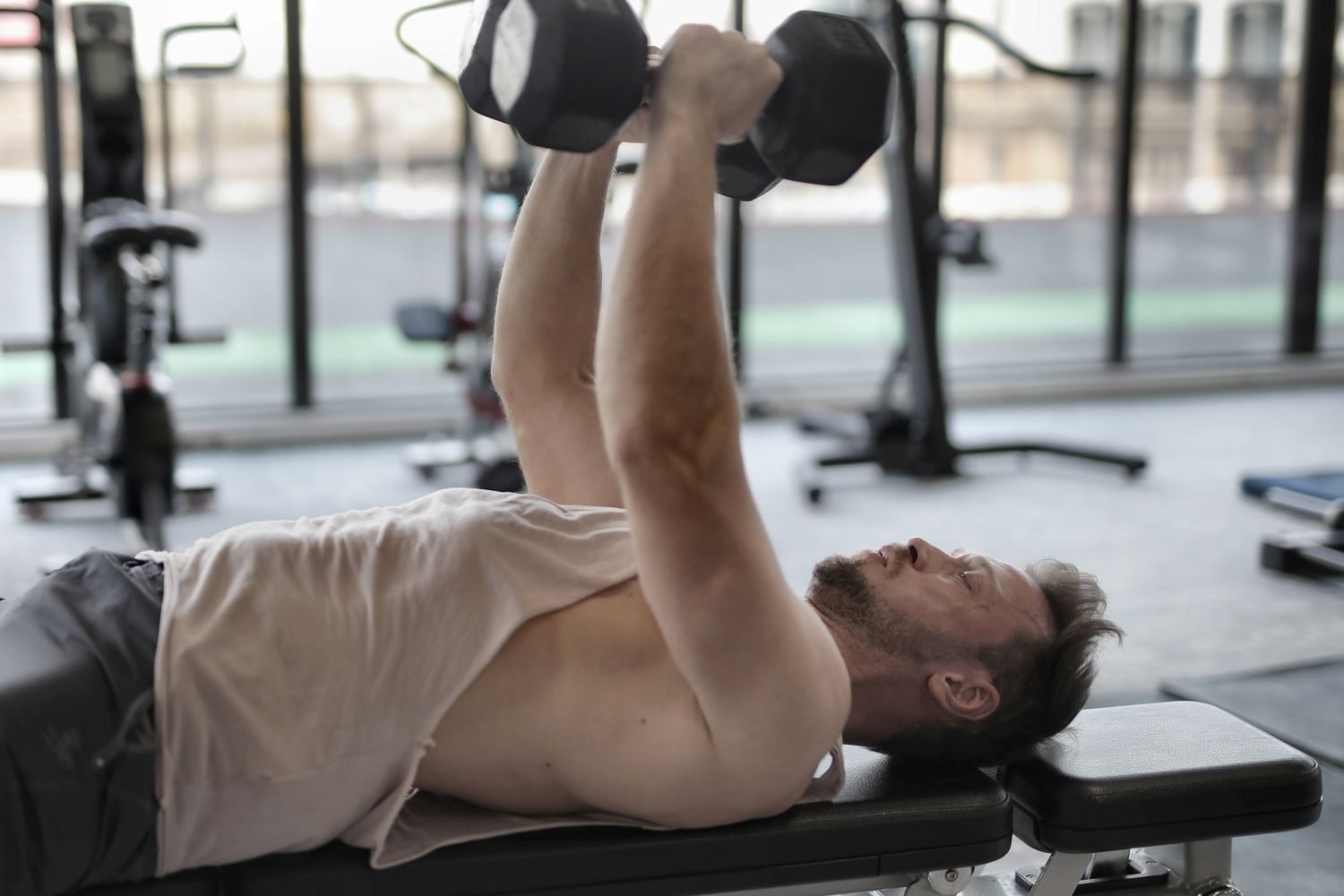
Here’s a complete session we’d hand to a client with a year or two of consistent training behind them. Adjust the loads to your own strength level, but keep the exercise order and rep ranges intact.
| Exercise | Sets | Reps | Rest |
|---|---|---|---|
| Incline Barbell Press | 4 | 6-8 | 2-3 min |
| Flat Dumbbell Press | 3 | 8-10 | 90 sec – 2 min |
| Weighted Dips (torso leaned forward) | 3 | 8-12 | 90 sec |
| Low-to-High Cable Flye | 3 | 12-15 | 60 sec |
| Flat Cable or Pec Deck Flye | 3 | 12-15 | 45-60 sec |
This session hits all three chest regions, starts with the heaviest lift when you’re freshest, and closes with two isolation exercises that stretch the muscle at different angles. If you’re short on time, you can drop the last flye and still get a solid, complete workout out of the first four movements.
How Do You Know You’re Progressing on Chest Day?
Track your top set weight and reps for the incline press and flat press every session. If those numbers are climbing over a few weeks, even slowly, you’re doing something right. Bodyweight scales and mirror checks are unreliable in the short term, but a logbook doesn’t lie.
We see a lot of people plateau on chest not because their program is wrong, but because they never push their working sets close enough to failure on the isolation exercises. Flyes and cable crossovers only work if the last rep or two genuinely feels hard. If you can breeze through 15 reps and stop early because a set “counts,” you’re leaving growth on the table.
If your chest development has stalled and you’re not sure whether it’s the exercise selection, the volume, or your effort level that’s off, working with a coach who can watch your form and adjust the plan in real time makes the difference. That’s exactly what we do inside FitStrot’s 1-on-1 personal training, where every chest day gets built around your current strength, your equipment, and the specific area of your chest that needs the most attention.
What is a good chest day workout plan?
A good chest day plan combines a heavy compound press, a second pressing movement at a different bench angle, and two or three isolation exercises like flyes or cable crossovers. It should train the upper, mid, and lower chest across the session rather than repeating the same angle five times.
How many exercises should be in a chest workout?
Four to six exercises is the sweet spot for most people. Fewer than that and you risk missing an entire region of the chest. More than six and the extra volume usually just adds fatigue without adding results, especially once your working sets are already close to failure.
How often should you train chest?
Once or twice a week works for most lifters, depending on your total weekly volume and recovery. If you’re only training chest once a week, that single session needs to include enough sets, generally in the 12 to 20 range weekly, to actually stimulate growth. Splitting it into two lighter sessions can work just as well if your schedule allows it.
What’s the best exercise for upper chest?
Incline dumbbell press is the exercise we come back to most often for upper chest development, with incline barbell press as a close second for building raw strength. Keep the bench angle between 15 and 30 degrees. Anything steeper shifts the work onto your front delts instead of your chest.