A high protein Indian diet plan works best when you stop guessing and start following a structured, day-by-day chart built around foods you already eat — dal, paneer, eggs, curd, roti, and rice — rearranged in the right portions to hit a real gram target. Most people following “high protein” advice online never actually calculate how much protein they need, so they either fall short by 30-40 grams a day or overcomplicate things with supplements they don’t need. This guide gives you the number, the logic behind it, and a full 7-day Indian meal plan (vegetarian and non-vegetarian versions) you can start tomorrow morning.
How much protein counts as “high protein” for you?
Before picking meals, you need a personal gram target — not a generic “eat more protein” instruction. The baseline RDA set by the USDA is just 0.8 g of protein per kg of body weight per day, which is the minimum to prevent deficiency, not the amount that supports muscle building, fat loss, or satiety. Research reviewed by the International Society of Sports Nutrition (Jäger et al., 2017) found that 1.4-2.0 g of protein per kg body weight daily is sufficient for most exercising individuals to build and maintain muscle mass. A commonly cited practical range for general high-protein goals is 1.2-1.6 g/kg, which is enough to notice better satiety, improved body composition, and easier recovery without needing an athlete-level intake.
To calculate your own target:
- Convert your weight to kilograms (divide pounds by 2.2 if needed).
- Multiply by 1.2 for a moderate high-protein target, or by 1.6 if you strength train regularly and want visible muscle-building results.
- That number is your daily protein target in grams.
Example: a 65 kg person aiming for a general high-protein diet needs roughly 78-104 g of protein a day (65 × 1.2 to 65 × 1.6). Someone lifting weights 4-5 times a week could lean toward the higher end, or even up to 2.0 g/kg per the ISSN range, especially during a calorie deficit when preserving muscle matters more. For a deeper breakdown of protein quality, digestibility, and why the source of protein matters as much as the quantity, see our guide on the nutritional value of protein.
What does a high protein Indian diet plan actually look like?
It looks less like a restrictive diet and more like your regular thali with the ratios flipped — more dal, paneer, egg, curd, and sprouts, less refined rice and maida. The plan below is built for a 65-70 kg adult targeting roughly 90-110 g of protein a day (the 1.4-1.6 g/kg range), split across four meals plus one snack. If your weight or target differs, scale portions up or down using the calculation above rather than following the grams literally.
Each day includes a vegetarian primary option with a non-vegetarian swap noted where relevant, so you can use this as one plan regardless of dietary preference.
What is the 7-day high protein Indian meal plan?
This chart gives approximate protein content per meal using standard Indian home-cooking portions. Values are rounded estimates based on typical ingredient quantities, not lab-tested figures, so treat them as a planning guide rather than an exact count.
| Day | Breakfast | Lunch | Snack | Dinner | Approx. Total Protein |
|---|---|---|---|---|---|
| Day 1 | Moong dal chilla (2) with mint chutney | 2 roti + rajma curry + cucumber salad | Roasted chana (30g) | Grilled paneer tikka + 1 roti + salad | ~95 g |
| Day 2 | 3 egg-white + 1 whole egg bhurji with onion, tomato | Rice + chicken curry (150g chicken) + salad | Greek-style hung curd with flax seeds | 2 roti + egg curry + sautéed spinach | ~105 g |
| Day 3 | Sprouts and peanut chaat with lemon | 2 roti + soya chunk curry + curd | Handful of almonds and walnuts | Paneer bhurji + 1 roti + dal | ~92 g |
| Day 4 | Besan (chickpea flour) cheela with paneer stuffing | Rice + fish curry (150g fish) + beans sabzi | Boiled egg (1-2) | 2 roti + moong dal + bhindi sabzi | ~98 g |
| Day 5 | Oats cooked in milk with peanut butter and banana | 2 roti + chana masala + salad | Buttermilk (masala chaas) with roasted seeds | Tofu or paneer stir-fry + 1 roti | ~90 g |
| Day 6 | 2-egg omelette with vegetables + 1 slice multigrain toast | Rice + egg curry or chicken curry + dal | Sprouted moong salad | Paneer/soya curry + 1 roti + curd | ~100 g |
| Day 7 | Besan chilla with curd on the side | 2 roti + mixed dal (toor + moong) + sabzi + curd | Roasted makhana with a boiled egg | Grilled fish or paneer + sautéed vegetables | ~93 g |
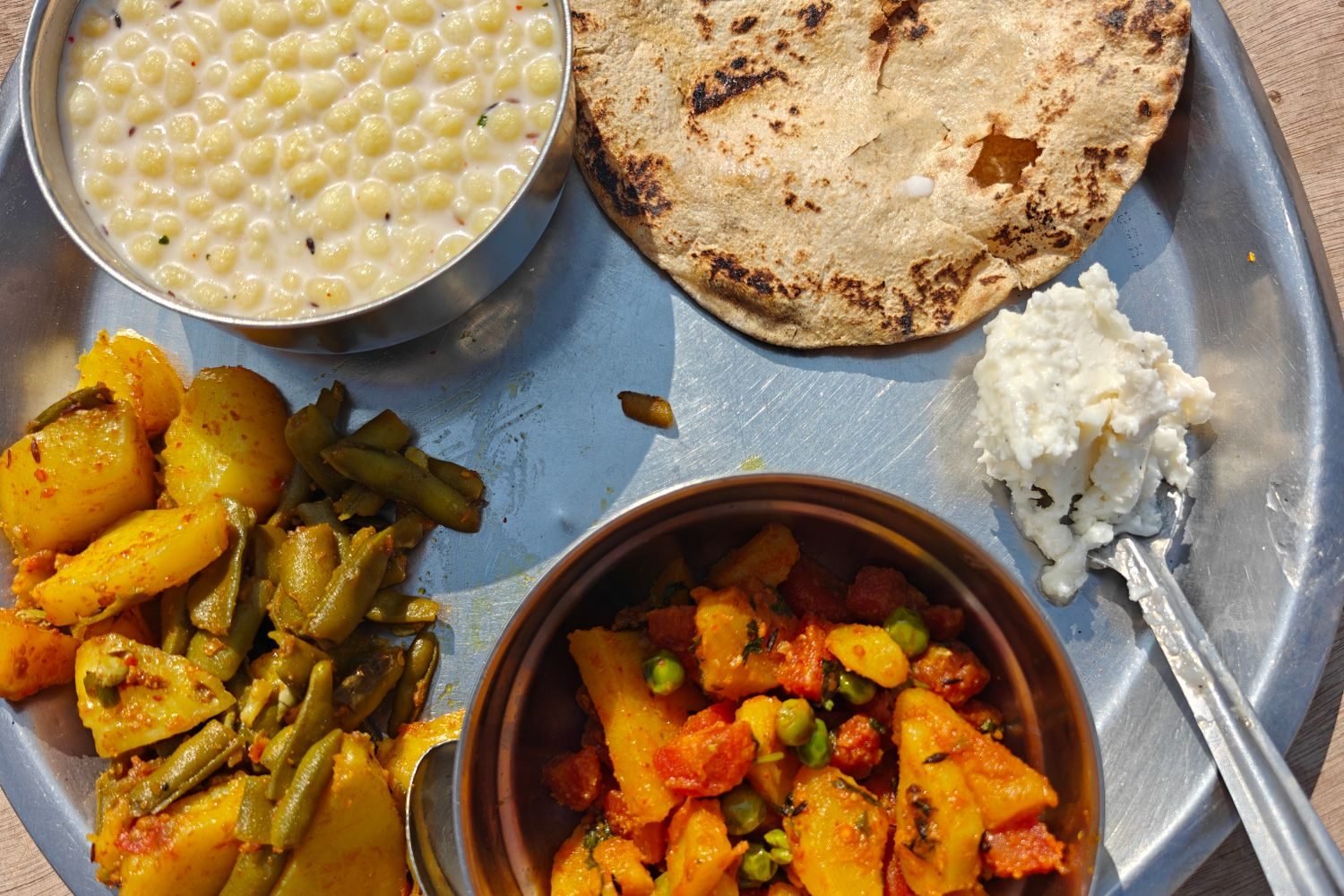
Notice the pattern: every meal carries at least one concentrated protein source (dal, paneer, egg, chicken, fish, or soya) rather than relying on roti and rice alone. That’s the entire mechanic of a high protein Indian diet plan — you’re not eliminating carbs, you’re just never letting a meal go by without a protein anchor. For more vegetarian-specific protein sources to rotate into this chart, check our high protein vegetarian foods list.
How do you build a vegetarian version that still hits the target?
Pure vegetarian and vegan versions of this plan lean harder on dal, paneer, curd, soya chunks, tofu, sprouts, and nuts since you’re removing egg, chicken, and fish. The trick is combining sources within the same meal — for instance, dal plus rice together provides a more complete amino acid profile than either eaten alone, because cereals and legumes fill in each other’s limiting amino acids. Practical swaps for the chart above:
- Replace egg bhurji with paneer or tofu bhurji using the same spice base.
- Replace chicken/fish curry with soya chunk curry or rajma/chana curry, increasing the lentil quantity by about 30%.
- Add a glass of milk or a cup of curd to lunch and dinner if you’re consistently falling short — dairy is one of the easiest ways vegetarians close the protein gap without extra cooking.
- Use paneer or hung curd (Greek-yogurt style) as the snack anchor instead of boiled eggs.
Done consistently, a vegetarian Indian diet can comfortably reach 1.2-1.6 g/kg — it just requires slightly larger portions of dal and paneer than a non-vegetarian plan needs of chicken or fish, since plant proteins are typically less protein-dense by weight.
What mistakes derail most high protein Indian diet plans?
The most common failure isn’t lack of willpower — it’s structural mistakes in how the plan is built. Watch for these:
- Front-loading protein at dinner only. Spreading 25-35 g across each of 4 meals is more effective for muscle protein synthesis than eating most of your protein in one sitting.
- Skipping breakfast protein. A carb-only breakfast (poha, plain paratha, tea-biscuits) leaves you 20-25 g behind before lunch even starts, which is hard to make up later in the day. Our high protein breakfast ideas piece has ready options if mornings are your weak point.
- Underestimating dal portions. A thin, watery dal serving has far less protein than a thick, ladle-and-a-half portion — density matters as much as frequency.
- Ignoring total calories. Protein grams matter, but if overall intake is too low, your body will still struggle to preserve muscle. Pair this plan with your broader calorie needs, especially if your goal is muscle building — see our nutrition diet plan for muscle building for the full calorie-and-training context.
- Relying only on protein powder. Supplements can fill small gaps, but whole-food Indian staples like dal, paneer, and eggs are more filling and sustainable long-term for most people.
How do you adjust the plan for weight loss versus muscle gain?
The same 7-day framework works for both goals — you’re adjusting calories and portion sizes around it, not the protein structure itself. For weight loss, keep the protein target at the higher end of your range (closer to 1.6 g/kg) while trimming rice and roti portions slightly, since higher protein intake during a calorie deficit is specifically linked to better preservation of lean muscle mass. For muscle gain, keep protein steady at 1.4-1.6 g/kg but increase overall calories through more rice, ghee, nuts, and healthy fats rather than adding more protein than your body can use in a day. Piling on protein far beyond your calculated target doesn’t accelerate muscle growth — the extra simply gets used for energy or excreted, which is why calculating your actual number at the start matters more than “eating as much protein as possible.”
How do you make this plan sustainable long-term?
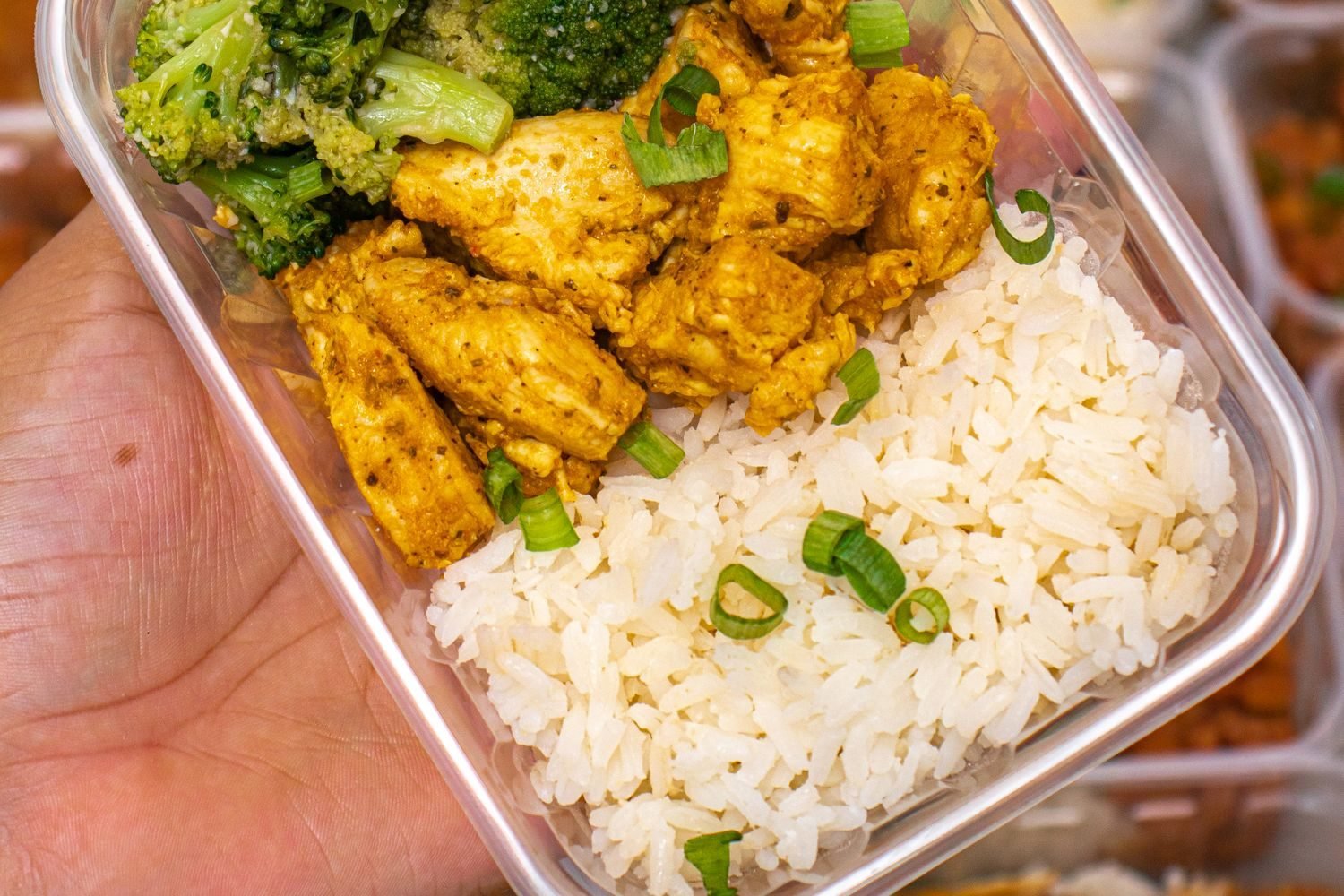
Sustainability comes down to batch-cooking the protein anchors, not reinventing meals daily. Cook a large batch of dal, boil a dozen eggs, or pan-fry paneer cubes once every 2-3 days, then rotate them across breakfast, lunch, and dinner with different masalas and vegetables so it doesn’t feel repetitive. Keep roasted chana, makhana, or nuts on hand for snacking instead of packaged high-carb snacks, and don’t be afraid to repeat the same 3-4 breakfast options on rotation — variety matters less than consistency when it comes to hitting a daily gram target. If you want a broader look at how protein fits into overall nutrition strategy beyond this one plan, our protein and nutrition guide covers the fundamentals in more depth.
Frequently Asked Questions
Is a high protein Indian diet plan safe for daily long-term use?
Yes, for most healthy adults, intakes in the 1.2-2.0 g/kg range used in this plan are well within safety ranges studied in sports nutrition research. If you have kidney disease or another condition affecting protein metabolism, consult a doctor or an online nutritionist consultation before increasing intake significantly.
Can I follow this plan without eating eggs, chicken, or fish?
Yes, the vegetarian swap section above replaces every non-veg meal with a dal, paneer, tofu, or soya-based equivalent. You may need slightly larger portions since plant sources are generally less protein-dense by weight than animal sources.
How much protein is actually in one roti or one cup of dal?
A regular wheat roti has around 3 g of protein, while a cup of cooked toor or moong dal has roughly 7-9 g depending on thickness and preparation. This is why dal, paneer, or egg additions are necessary to reach a genuine high-protein total, rather than roti and rice alone.
Do I need protein powder to follow this plan?
No, the entire chart is built on whole Indian foods and doesn’t require supplements. Protein powder can be a convenient add-on if you’re consistently 15-20 g short by evening, but it isn’t a requirement to hit the targets shown here.
How long before I see results on a high protein Indian diet?
Improved satiety and reduced snacking are often noticeable within the first 1-2 weeks, while visible changes in body composition typically take 6-8 weeks of consistent intake combined with adequate calories and, ideally, resistance training.
Ready to personalize this plan to your exact weight, goals, and food preferences? Book an online nutritionist consultation and get a protein target and meal chart built specifically around your body and routine.