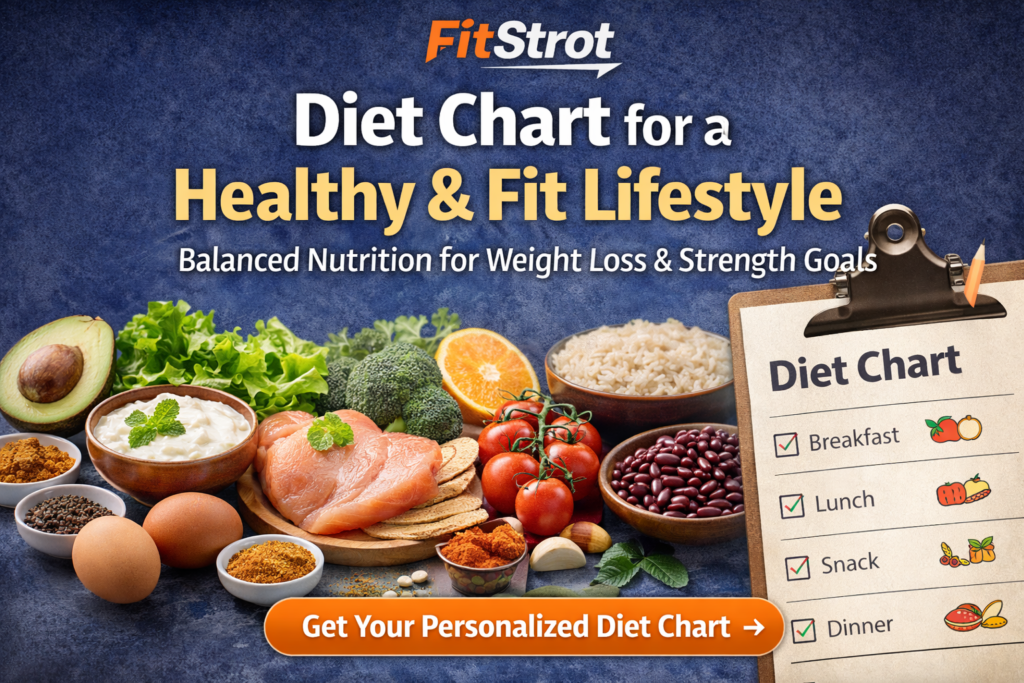
The nutritional value of protein isn’t just about how many grams are on the label — it’s about how much of that protein your body can actually absorb and use. A 100-gram serving of wheat gluten and a 100-gram serving of eggs can both say “high in protein,” but your body treats them very differently. The real measure of quality comes from two lab-tested scores, PDCAAS and DIAAS, combined with the raw protein density of the food itself. Once you understand both, comparing eggs, dairy, meat, fish, soy, lentils, and quinoa becomes a lot less confusing.
This guide breaks down what protein quality scores actually mean, shows a side-by-side comparison of protein content and quality across the foods people eat most, and explains how to use that information to build a plate that actually delivers on its protein promise. For the basics of daily protein targets and where to source them, see our guide on protein and nutrition.
What determines the nutritional value of protein in a food?
Three things determine whether a protein source is nutritionally valuable: how much protein it contains per serving, which amino acids it supplies, and how digestible it is. A food can be protein-dense and still score poorly on quality if it’s missing key amino acids or if the body can’t break it down efficiently.
Protein is built from 20 amino acids, nine of which are “essential” — your body can’t make them, so they have to come from food. A protein source that supplies all nine in roughly the proportions the human body needs is called a complete protein. Most animal foods qualify automatically; most plant foods fall short in at least one essential amino acid, usually lysine (in grains) or methionine (in legumes). For a deeper dive into what these amino acids do, read our piece on nutritionally essential amino acids.
Digestibility is the piece people overlook. Two foods can have identical amino acid profiles on paper, but if one is harder to break down in the gut, less of it actually reaches your bloodstream. That’s exactly what protein quality scoring systems were built to measure.
What are PDCAAS and DIAAS, and why do they matter?
PDCAAS (Protein Digestibility-Corrected Amino Acid Score) and DIAAS (Digestible Indispensable Amino Acid Score) are the two main systems scientists use to rate how “usable” a protein actually is, not just how much of it exists in a food.
PDCAAS: the older, still-common standard
PDCAAS compares a food’s essential amino acid content to a reference pattern of what the body needs, then adjusts for digestibility measured at the fecal level. Scores are capped at 1.0, meaning a food can’t score “better than perfect” even if it technically has surplus amino acids. Whey protein isolate, eggs, and casein all score at or near 1.0. Soy protein isolate scores about 0.98. This is still the method used for protein claims on U.S. and Canadian food labels.
DIAAS: the newer, more precise standard
The Food and Agriculture Organization (FAO) now recommends DIAAS instead. It measures digestibility at the end of the small intestine rather than in fecal matter, which more accurately reflects what the body actually absorbs before gut bacteria interfere with the numbers. DIAAS also isn’t capped at 1.0, so it can distinguish between two “excellent” proteins instead of lumping them together. Under DIAAS, whey isolate scores around 1.09, whole milk around 1.14, and whole eggs around 1.13 — all genuinely excellent. Soy protein isolate lands around 0.90, and quinoa around 0.83. The FAO considers anything at or above 0.75 “good to excellent” quality.
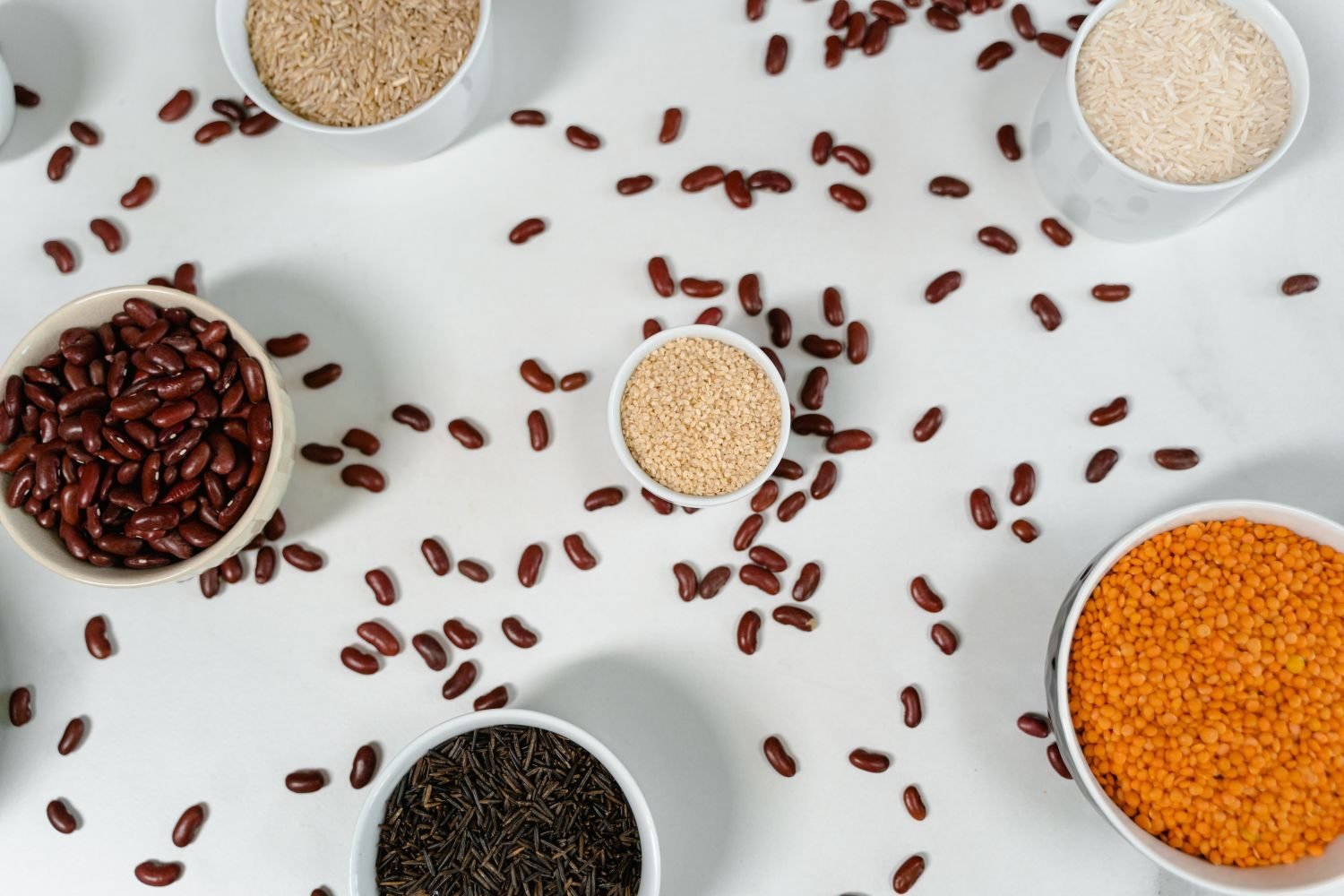
Practically: a food scoring close to or above 1.0 delivers essentially all its amino acids in a usable form. A food scoring 0.6–0.7 still contributes useful protein, it’s just less complete on its own — which is where pairing foods (rice with beans, for example) becomes genuinely useful rather than a nutrition myth.
How do common protein foods compare, gram for gram?
Below is a comparison of protein content per 100 grams (cooked/edible portion, unless noted) alongside typical protein quality scores. Quality scores can vary slightly between studies depending on processing and reference population, so treat these as representative ranges rather than fixed constants.
| Food (100g, cooked unless noted) | Protein (g) | Protein quality score | Complete protein? |
|---|---|---|---|
| Egg, whole | ~13g | DIAAS ~1.13 / PDCAAS ~1.0 | Yes |
| Chicken breast, cooked | ~31g | DIAAS ~0.95–1.08 | Yes |
| Beef, lean, cooked | ~26–27g | DIAAS ~0.98–1.14 | Yes |
| Salmon, cooked | ~25g | DIAAS ~0.9–1.0 (est.) | Yes |
| Greek yogurt, plain | ~10g | DIAAS ~1.0+ (milk protein) | Yes |
| Cow’s milk, whole | ~3.4g | DIAAS ~1.14 | Yes |
| Cottage cheese | ~11g | DIAAS ~1.0+ (milk protein) | Yes |
| Tofu, firm | ~8g | DIAAS ~0.90 (soy isolate benchmark) | Yes |
| Edamame, cooked | ~11g | DIAAS ~0.85–0.90 (est.) | Yes |
| Lentils, cooked | ~9g | DIAAS ~0.63 | No (low in methionine) |
| Chickpeas, cooked | ~9g | DIAAS ~0.76 | Borderline |
| Quinoa, cooked | ~4.4g | DIAAS ~0.83 | Yes |
A few patterns jump out. Chicken and beef pack the most protein per 100 grams because cooking concentrates them (water cooks off, protein stays). Eggs and dairy have lower gram-for-gram totals but extremely high quality scores, meaning almost every gram counts. Lentils and chickpeas are protein-dense compared to most vegetables, but their DIAAS scores sit below the “excellent” threshold because they run low in the amino acid methionine — pairing them with rice or a grain closes that gap. Quinoa is the standout among plant staples specifically because it’s a genuinely complete protein, even though its gram-for-gram content is modest.

Does higher protein quality actually matter for everyday eating?
It matters most when total protein intake is on the lower end, when eating a fully plant-based diet, or when actively trying to build or preserve muscle. If you’re already eating 1.6–2.2g of protein per kilogram of bodyweight from a mix of sources, small differences in individual food quality scores mostly wash out over the day.
Where it matters more concretely:
- Muscle building and recovery: Higher-DIAAS proteins deliver more usable leucine and other branched-chain amino acids per gram, which is why they show up so often in post-training meals. See our nutrition diet plan for muscle building for how to structure this around training days.
- Plant-based diets: Because most single plant proteins score lower individually, variety across the day (legumes, grains, soy, nuts) does more work than it would on an omnivorous diet.
- Athletes and high-output training: Timing and quality both influence recovery speed — our sports nutrition guide covers how protein quality intersects with training load.
- Older adults: Digestibility and completeness matter more as the body’s muscle-protein-synthesis response becomes less efficient with age, so higher-quality sources are often prioritized in that population.
For general health and adequate intake, though, the total amount of protein across your day and the overall variety of your diet still outweigh obsessing over any single food’s exact quality score.
How can you use protein quality scores when building meals?
You don’t need to calculate DIAAS at the dinner table. A few practical rules cover most of what the science says.
Anchor meals around at least one high-quality source
Eggs, dairy, poultry, fish, beef, and soy all score close to or above the “excellent” threshold. Building a meal around one of these means you don’t have to think much further about completeness.
Pair incomplete plant proteins deliberately
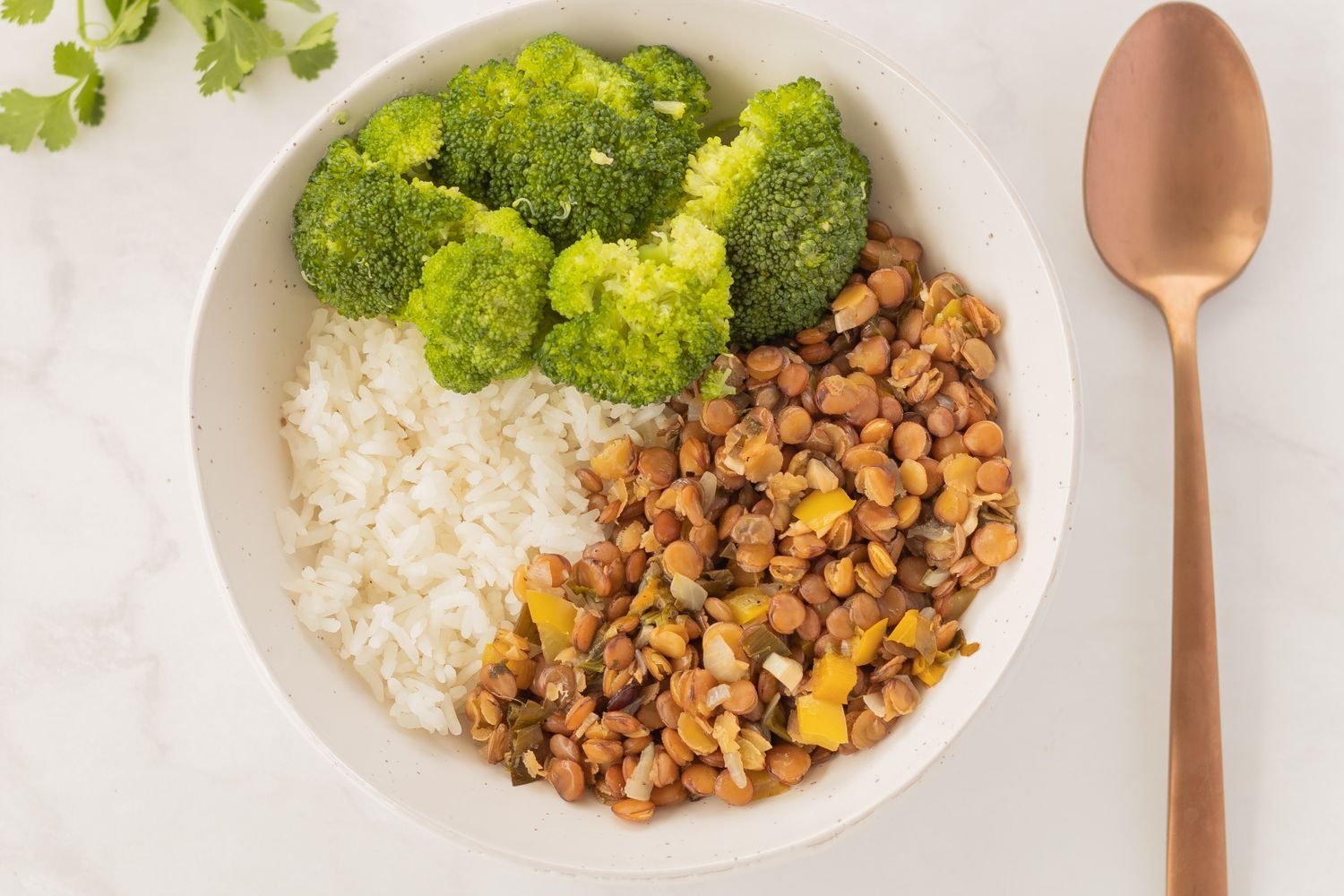
Grains tend to be low in lysine; legumes tend to be low in methionine. Put them together — rice and beans, hummus and pita, lentils and quinoa — and the combined amino acid profile becomes far more complete than either food alone. You don’t need to eat them in the same sitting; the same day is enough for the body to pool amino acids effectively.
Don’t ignore quantity for the sake of quality
A high DIAAS score on a food you eat 20 grams of contributes less than a moderate score on a food you eat 150 grams of. Total grams across the day still matters more than perfecting any single meal. If you’re unsure how much you personally need, our protein and nutrition article walks through daily targets by activity level and goal.
Use variety as your default strategy
Rotating between animal and plant sources across a week, rather than relying on one “perfect” protein, tends to cover both quality gaps and micronutrient gaps (iron, B12, zinc, fiber) a single-source diet can miss. This matters most in structured plans like those covered in bodybuilding nutrition, where both total intake and food variety are managed deliberately.
What’s the difference between protein “content” and protein “quality” in practice?
Protein content tells you how many grams are in a serving. Protein quality tells you how many of those grams your body can actually put to use. A food can be high in one and average in the other — peanuts, for example, have decent protein content but a comparatively low quality score, while egg whites have moderate content but score near the top of both PDCAAS and DIAAS scales. Reading both numbers together, rather than protein grams alone, gives a much more accurate picture of what a food is contributing to your diet.
Frequently asked questions
What is considered a “good” DIAAS score for a protein food?
The FAO classifies a DIAAS of 0.75 or higher as “good to excellent,” and 1.0 or higher as “excellent.” Most animal proteins and soy isolate fall in this range, while many legumes on their own score between 0.5 and 0.8, which is still meaningfully useful, just not complete alone.
Why does PDCAAS cap at 1.0 while DIAAS doesn’t?
PDCAAS was designed only to confirm whether a protein meets human amino acid requirements, so anything above “meets the need” was truncated to 1.0. DIAAS removes that cap so researchers can distinguish between two proteins that both exceed requirements, which is more useful for comparing high-quality foods like milk and eggs.
Can combining plant proteins really match animal protein quality?
Yes, in most practical cases. Pairing a grain with a legume — rice and lentils, for example — supplies the amino acids each is individually low in, pushing the combined profile close to that of a complete animal protein. The combination doesn’t need to happen in the same meal, just generally the same day.
Is quinoa actually a “complete” protein compared to other grains?
Yes. Quinoa is one of the few plant foods that naturally contains all nine essential amino acids in usable proportions, with a DIAAS around 0.83. Most other grains, like rice and wheat, are low in lysine and aren’t considered complete on their own.
Does cooking affect the protein quality score of a food?
It can, in both directions. Moderate cooking generally improves digestibility for foods like legumes and eggs by breaking down anti-nutrients and denaturing proteins. Excessive high-heat cooking, however, can damage certain amino acids like lysine and slightly reduce a food’s effective score.
Understanding the nutritional value of protein — not just the grams on a label, but how usable those grams actually are — makes it much easier to build a diet that actually meets your goals, whether that’s muscle growth, general health, or simply eating smarter within a plant-forward diet. If you want a plan built around your specific numbers, goals, and food preferences, an online nutritionist consultation can turn these comparisons into a plate that works for you.