A rear delt workout targets the posterior deltoid, the back-facing portion of the shoulder muscle that pulls your arm backward and helps stabilize your shoulder blade during pulling movements. At FitStrot we build rear delt work around horizontal pulling and pulling-apart patterns, think face pulls, reverse flyes, and rear delt rows, because this muscle responds to horizontal abduction and external rotation, not the vertical pressing that dominates most shoulder programs. If your shoulders look flat from the side or round forward when you’re standing relaxed, underdeveloped rear delts are usually part of the picture, and they’re one of the easiest weak points to fix once you know what to program.
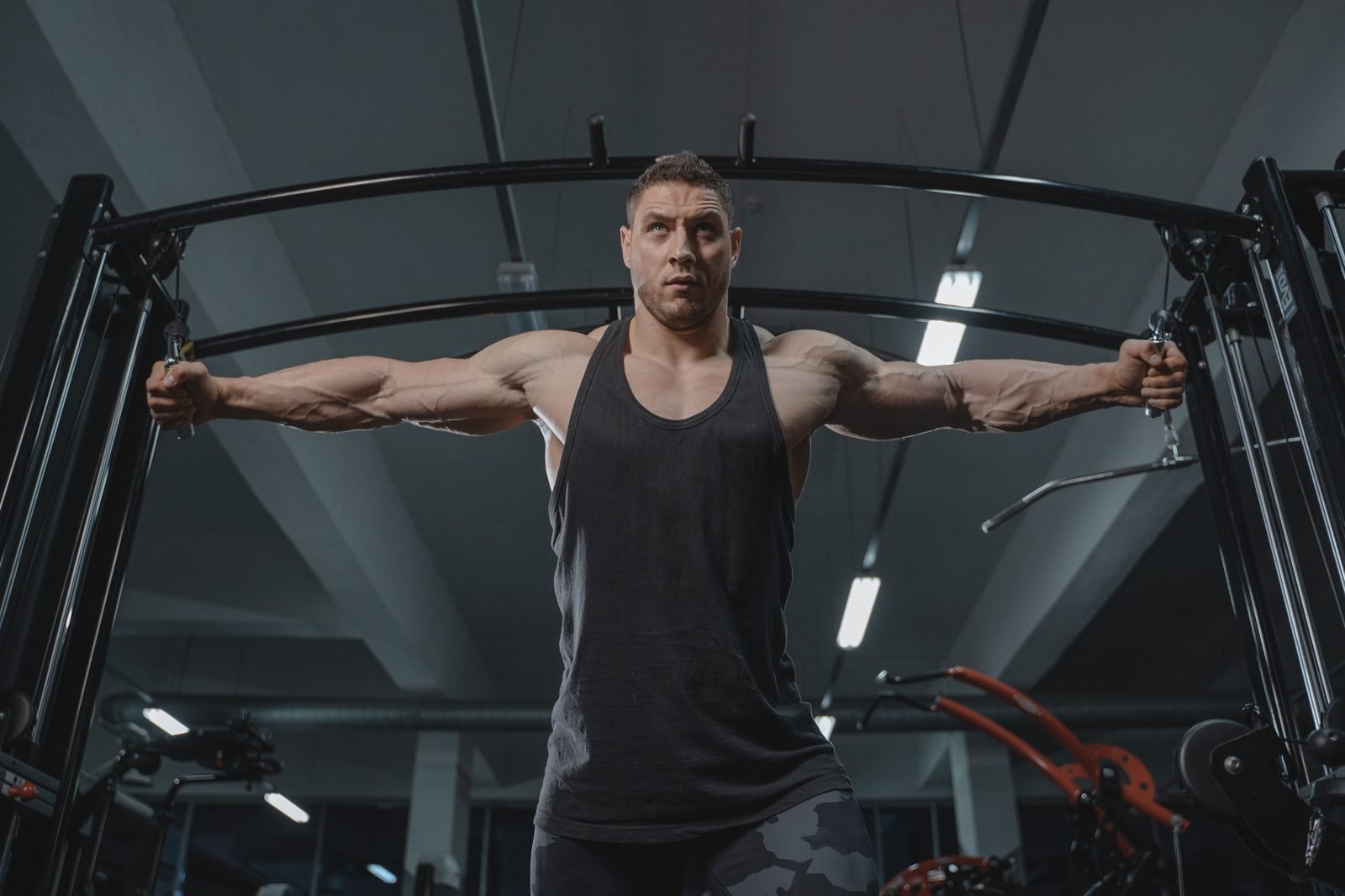
Why Do Rear Delts Matter for Shoulder Health and Posture?
The deltoid has three heads: front, side, and rear. We’ve covered all three in detail in our deltoid workouts guide, but the rear head deserves its own conversation because it behaves so differently from the other two. Most gym-goers press, push, and bench far more than they row or pull apart, which means the front delts get hammered week after week while the rear delts sit undertrained. That imbalance shows up as rounded shoulders, a forward head position, and a flat, two-dimensional look to the shoulders even when someone has decent size up front.
Strong rear delts pull your shoulder blades back and down, which gives your upper back the tension it needs to keep your shoulder joint centered during pressing and pulling. Weak rear delts, on the other hand, let the shoulder joint drift forward, which is a common contributor to shoulder impingement in people who bench and overhead press regularly. We program rear delt work for almost every client who lifts more than twice a week, not as an afterthought but as a structural requirement.
Why Are Rear Delts So Hard to Grow?
Rear delts are small, they work at a mechanical disadvantage compared to your lats and rear traps, and most people simply can’t feel them working. When someone does a bent over reverse flye with too much weight, the movement turns into a shrug or a lower trap exercise because those bigger, stronger muscles take over the second the load gets heavy. The rear delt gets a free ride.
The fix is counterintuitive for most lifters. You need lighter weight, stricter form, and a genuine mind-muscle connection before you add load. We ask clients to slow the eccentric down, pause briefly at the top of the movement, and focus on driving through the elbows rather than the hands. It feels almost too easy in the first few sessions. That’s usually a sign it’s being done correctly, because the rear delt fatigues fast even under moderate loads once it’s actually doing the work.
What’s the Best Rear Delt Exercise?
Face pulls are the single best rear delt exercise for most people, and we default to them with nearly every client. Done on a cable machine with a rope attachment, pulled toward the face with the elbows high, face pulls train horizontal abduction and external rotation in the same movement, which means they hit the rear delt and the rotator cuff together. They also overlap heavily with upper back and trap training, which is why we cover the relationship in more depth in our traps muscle workout guide. If you only have time for one rear delt movement in a session, make it this one.
Beyond face pulls, a few other exercises earn a regular spot in our programming:
- Chest supported reverse flyes remove momentum entirely because your torso is locked against a bench, which forces the rear delt to do the work without help from your lower back.
- Cable reverse flyes let you keep constant tension on the muscle through the full range, unlike dumbbells, which lose tension at the top and bottom.
- Bent over dumbbell reverse flyes are the most accessible version and work fine as long as you resist the urge to load up heavy plates.
- Rear delt rows, essentially a wide grip row with the elbows flared out, also build the muscle while adding some upper back thickness.
How Do You Program a Rear Delt Workout?
Rear delts respond well to higher rep ranges and higher training frequency than most other muscle groups. Because the loads involved are light and the movement is low fatigue on your central nervous system, you can train rear delts two to three times a week without it eating into recovery from your bigger lifts. We typically program rear delt isolation work in the 15 to 20 rep range, with a slower tempo and shorter rest periods than a compound lift would call for.
Here’s a sample rear delt focused session we use with clients who need to bring this muscle up:
| Exercise | Sets | Reps | Rest |
|---|---|---|---|
| Face Pulls (cable, rope attachment) | 4 | 15-20 | 45 sec |
| Chest Supported Reverse Flye | 3 | 12-15 | 60 sec |
| Cable Reverse Flye (single arm) | 3 | 15 each side | 45 sec |
| Bent Over Dumbbell Reverse Flye | 3 | 15-20 | 45 sec |
| Rear Delt Row (wide grip) | 3 | 10-12 | 60 sec |

This session takes about 30 to 35 minutes and works well as a standalone finisher after a push day, or as the backbone of a dedicated shoulder and upper back session.
How Does Rear Delt Training Fit Into a Full Shoulder or Back Day?
You don’t need to train rear delts in isolation forever. Once the muscle responds and you’ve built a real connection to it, the goal is folding it into a complete training week. In our full shoulder workout routine, we place rear delt work either at the end of a push day or at the start of a pull day, depending on how a client’s shoulders are holding up under their pressing volume. Placing it after heavy pressing lets the front delts and chest do their job first without interference, while placing it before pulling primes the upper back for rowing movements.
Rear delts also share real estate with your traps, particularly the mid and lower trap fibers that control shoulder blade movement. A lot of what looks like “rear delt work” is really working both muscle groups at once, which is exactly why we treat trap and rear delt training as connected rather than separate boxes to check.
What Mistakes Do People Make Training Rear Delts?
We see clients make the mistake of chasing heavier dumbbells on reverse flyes long before their form can handle it, which turns the exercise into a lower back and trap movement instead of a rear delt one. The weight goes up on paper, but the muscle you’re trying to train barely gets touched. Dropping the load by 30 to 40 percent and slowing the tempo down almost always produces a better burn and better growth over time.
Another common error is treating rear delts as an afterthought, tacked onto the very end of a workout when energy and focus are already gone. Because this muscle needs precise form to grow, it deserves a spot when you’re still fresh, at least once a week. Skipping direct rear delt work entirely and hoping rows and pulldowns will cover it doesn’t hold up either. Those exercises hit the rear delt a little, but nowhere near enough to build it on their own.
If you’re dealing with rounded shoulders, a shoulder that nags during pressing, or you just want your shoulders to look three-dimensional from every angle, a generic program off the internet usually won’t get you there. That’s what our 1-on-1 personal training is for, a program built around your specific posture, training history, and goals, with the exercise selection and volume adjusted as you progress instead of staying static for months.
Frequently Asked Questions
What is the best rear delt exercise?
Face pulls are generally the best rear delt exercise because they combine horizontal abduction with external rotation, training the rear delt and rotator cuff together. They’re easy to load progressively on a cable machine and hard to cheat compared to dumbbell variations, which makes them a reliable staple in almost any shoulder program.
Why are rear delts hard to grow?
Rear delts are small and work at a mechanical disadvantage, so bigger muscles like the traps and lats tend to take over as soon as the weight gets heavy. Most people also struggle to feel the rear delt working at all. Lighter loads, stricter form, and a real mind-muscle connection solve this in most cases.
Can you train rear delts every day?
You can train rear delts more frequently than most muscle groups, up to three or four times a week, because isolation work at light loads causes minimal systemic fatigue. We still recommend at least one full rest day for the muscle each week rather than training it literally every single day without a break.
Do face pulls work the rear delts?
Yes, face pulls are one of the most effective rear delt exercises available. They also recruit the rotator cuff and mid trap muscles, which makes them useful for shoulder health as well as pure rear delt growth. Most lifters can feel this exercise working within the first few sessions once form is dialed in.
Should you train rear delts on shoulder day or back day?
Either works, and the right choice depends on your split. Rear delts respond to horizontal pulling, so they fit naturally at the end of a push or shoulder day, or at the start of a back and pulling day. What matters most is that the work happens consistently, not which day it’s attached to.