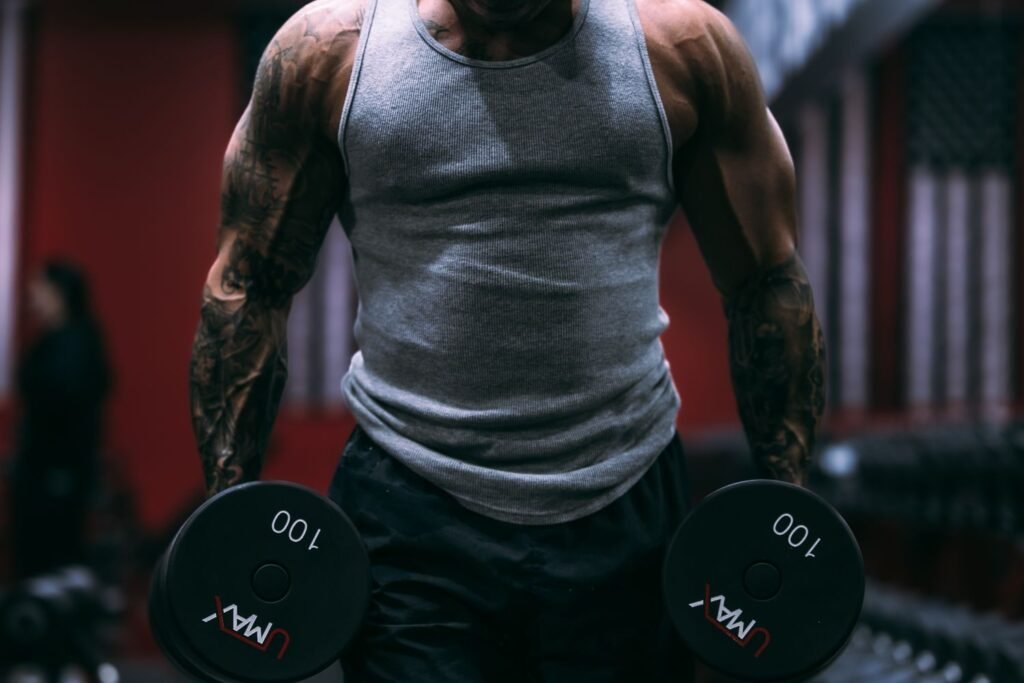
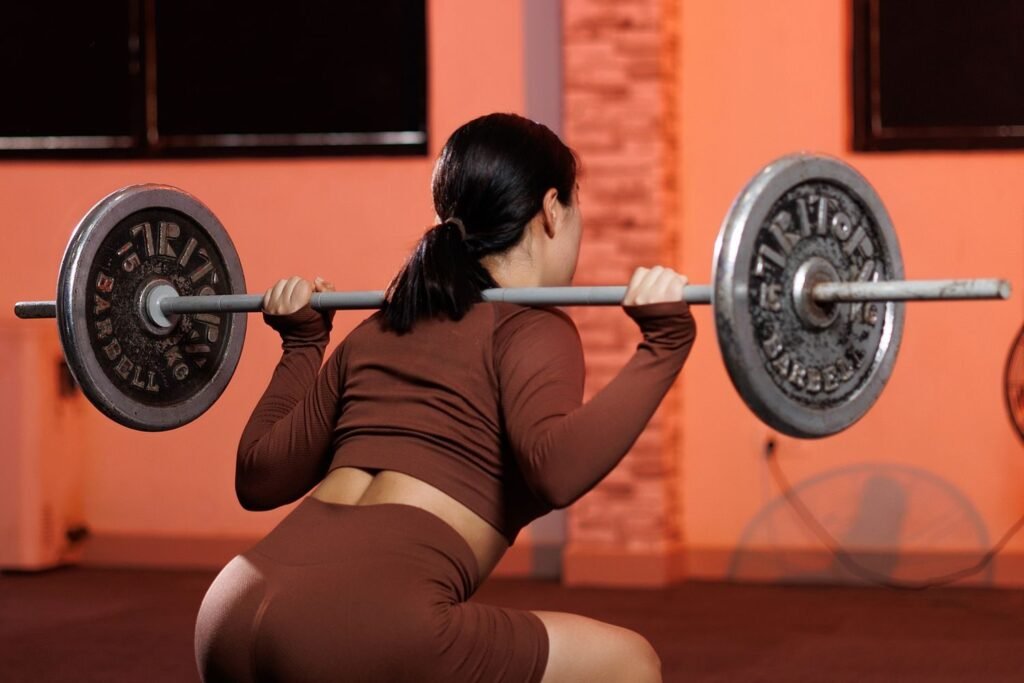
Dumbbell workouts are strength training sessions built entirely around dumbbells instead of barbells or machines, and they work for a simple reason: dumbbells force each side of your body to lift, stabilize, and control the weight independently. That single feature is what makes them so useful for home training. You don’t need a rack, a spotter, or eight feet of clearance behind a barbell. You need a pair of dumbbells, a bit of floor space, and a plan. Because each arm and leg works on its own, dumbbells also do something a barbell can’t do as well: they expose and fix left-right strength imbalances, and they let your shoulders, elbows, and wrists move through a more natural path instead of being locked into a fixed bar.
We’ve built out entire home programs for online coaching clients using nothing but adjustable dumbbells, and the results hold up fine against gym-based training when the plan is structured properly. This guide covers why dumbbells deserve more credit than they get, a full-body workout you can start this week, and the questions we hear most often from people setting up a home routine.
What Makes Dumbbell Workouts Different From Barbell Training?
The biggest difference is unilateral loading. When you bench press a barbell, your stronger side can quietly take over and hide a weak side for years. A dumbbell press won’t let that happen, because each arm is holding its own weight and has to control it through the full range on its own. Research and coaching consensus on this is pretty consistent: unilateral dumbbell work improves stabilization, activates more of the smaller supporting muscles around a joint, and does a better job correcting side-to-side imbalances than bilateral barbell lifts.
Barbells still win on raw loading. If your only goal is moving the most possible weight on a squat or deadlift, a barbell is the better tool because it’s more stable and lets two limbs share the load. But most people training at home aren’t chasing a one-rep max. They’re trying to build muscle, move better, and stay consistent, and for that goal dumbbells hold up extremely well. A lot of the strongest arguments for dumbbell training also come down to joint comfort. A barbell bench press locks your wrists and shoulders into one fixed path. A dumbbell press lets your hands rotate and find the angle that doesn’t aggravate a cranky shoulder, which matters a lot once you’re a few years into training.
Why Are Dumbbell Workouts So Effective for Home Training?
Space and cost are the obvious reasons, but the real reason dumbbells work so well at home is versatility. A single pair of adjustable dumbbells can cover pressing, rowing, squatting, lunging, curling, and overhead work. You’re not buying a cable stack or bolting a rack to the floor. Swap the plates, and you’ve got a completely different exercise.
The other underrated reason is carryover. Dumbbell pressing, rowing, and squatting patterns transfer directly into gym-based training if you ever go back to a commercial gym, and they pair naturally with other minimal-equipment tools. If you’ve also got a kettlebell around, our kettlebell workout guide is a good next step for adding swings and carries into the same home setup. And if you do have access to a cable station or plan to add one later, exercises like the seated cable row and cable crossover hit similar muscle groups with constant tension, which is a nice complement once dumbbells stop being your only tool.
A Full-Body Dumbbell Workout That Covers Everything
This is the session we come back to most often with clients who train at home. It hits chest, back, shoulders, legs, and arms in one workout, using compound lifts first and isolation work to finish. Run it two to three times a week with at least one rest day between sessions, and add weight once you can complete every set at the top of the rep range with clean form.
| Exercise | Sets | Reps |
|---|---|---|
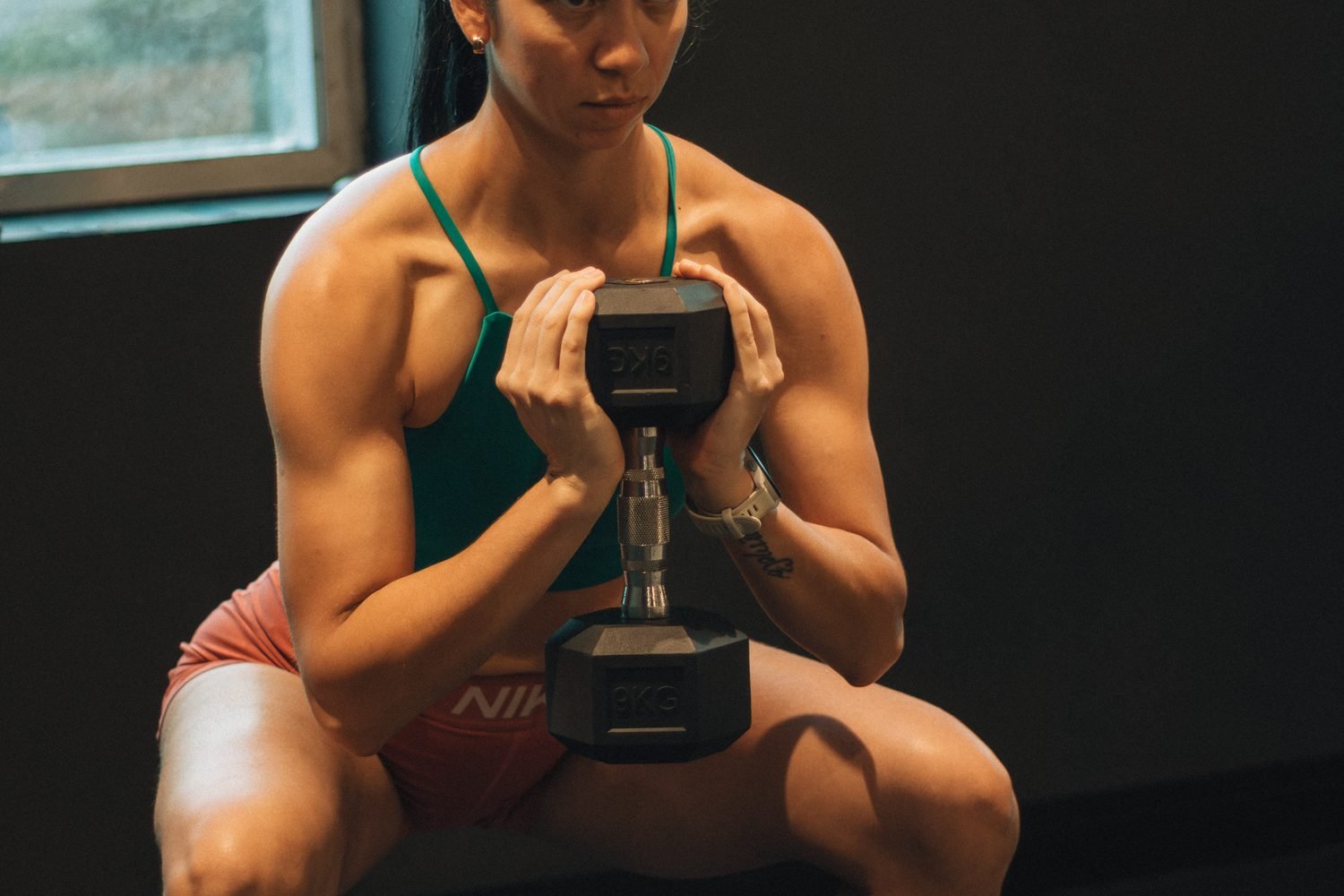
| Dumbbell Goblet Squat | 3 | 10-12 |
| Dumbbell Bench or Floor Press | 3 | 8-10 |
| Single-Arm Dumbbell Row | 3 | 10-12 per side |
| Dumbbell Walking Lunge | 3 | 10-12 per leg |
| Dumbbell Overhead Press | 3 | 8-10 |
| Dumbbell Lateral Raise | 3 | 12-15 |
| Dumbbell Bicep Curl | 2 | 10-12 |
| Dumbbell Overhead Tricep Extension | 2 | 10-12 |
Keep rest between 60-90 seconds on the compound lifts and closer to 45-60 seconds on the isolation moves at the end. If you only own one pair of dumbbells, pick a weight that lets you hit the lower end of the rep range on the hardest exercise (usually the press or squat) and accept lighter sets on lateral raises and curls. That’s normal and it still works.
How Do You Progress a Dumbbell Workout Over Time?
Progression with dumbbells looks a little different than with a barbell, mostly because plate jumps are bigger. Going from a 12kg to a 14kg dumbbell is a much bigger percentage jump than adding 2.5kg to each side of a barbell. A few ways we handle that with coaching clients:
- Add reps before you add weight. Push toward the top of your rep range before jumping to a heavier dumbbell.
- Slow the tempo down on the lowering phase. A controlled 3-4 second eccentric adds difficulty without changing the load.
- Add a second set to a lift before bumping the load. More volume at the same weight is progress too.
Adjustable dumbbells with small increment plates solve this cleanly if you’re buying gear for a home setup.
The other piece people skip is exercise order. Do your squats and presses first, while you’re fresh and your stabilizer muscles haven’t been fatigued by isolation work. Lateral raises and curls should always come after the compound lifts, not before.
Do You Need Anything Besides Dumbbells to Build Muscle at Home?
Not really, at least not at the start. A pair of adjustable dumbbells and an adjustable bench cover the vast majority of what most people need for a year or more of consistent training. A bench opens up flat and incline pressing angles and makes single-arm rows easier to load properly. Beyond that, the equipment matters far less than the plan behind it, which is exactly where a lot of home training goes sideways. People buy the dumbbells, do random exercises for a few weeks, and stall out because there’s no structure or progression built in.
This is the gap we see most often with clients who come to us already training at home. They’ve got decent equipment and decent effort, but no actual program tying it together. If that sounds familiar, our 1-on-1 personal training is built for exactly this. A lot of our online coaching clients train with nothing more than a set of dumbbells, and we build the entire progression, exercise selection, and load increases around whatever equipment they actually have. For anyone curious how dumbbell pressing fits into a bigger, structured split, our bulking workout plan guide shows how incline dumbbell press slots into a full 4-day upper body volume day.
Frequently Asked Questions
What are dumbbell workouts?
Dumbbell workouts are strength training routines built around dumbbells instead of barbells or machines. Each dumbbell is a separate, unfixed weight, so every exercise becomes unilateral or at least independently controlled per side. That makes dumbbells especially useful for home training, injury-friendly pressing angles, and fixing left-right strength imbalances that barbell training tends to hide.
How do you do dumbbell workouts properly?
Start with compound lifts like squats, presses, and rows while you’re fresh, then move to isolation work like curls and lateral raises. Pick a weight that challenges you within the target rep range, usually 8-12 reps for most goals, and rest 60-90 seconds between sets on the bigger lifts. Progress by adding reps first, then weight once form stays clean at the top of the range.
What are the benefits of dumbbell workouts?
Dumbbells build unilateral strength, meaning each side of your body works independently instead of letting a dominant side compensate. They also allow a more natural, joint-friendly range of motion than a fixed barbell, activate more stabilizer muscles, and let you train a full body at home with minimal space and equipment.
Can you build real muscle with dumbbells only?
Yes. Muscle growth depends on progressive overload and enough training volume, not on the specific tool used to create resistance. Dumbbells can load every major muscle group effectively, and adjustable sets let you keep increasing weight over months of training, which is what actually drives muscle growth.
How often should you do dumbbell workouts each week?
Two to three full-body dumbbell sessions per week works well for most people, with at least one rest day between sessions for recovery. If you split the workout into upper and lower days instead, four sessions a week is reasonable as long as the same muscle group isn’t trained on back-to-back days.