Online workouts are any form of fitness training delivered remotely instead of in a gym with a trainer standing next to you. That covers three very different things: a fitness app that hands you a generic plan, a pre-recorded video program you follow along to, and 1:1 online personal training where a real coach builds your program, watches your form on video, and adjusts your plan every week based on how you’re actually responding.
People search “online workouts” expecting one answer, but the category is broader than most articles admit. Some online workouts are little more than a YouTube playlist with a subscription fee. Others are closer to hiring a trainer who happens to coach you through your phone instead of in person. The results you get depend almost entirely on which one you pick, not on whether “online” works as a concept.

Here’s a breakdown of the three main models, an honest comparison of what each one actually delivers, and why we think 1:1 online coaching is the only version of “online workouts” built to get you real, lasting results.
What Counts as an Online Workout?
Broadly, three models get called “online workouts,” and they’re not interchangeable.
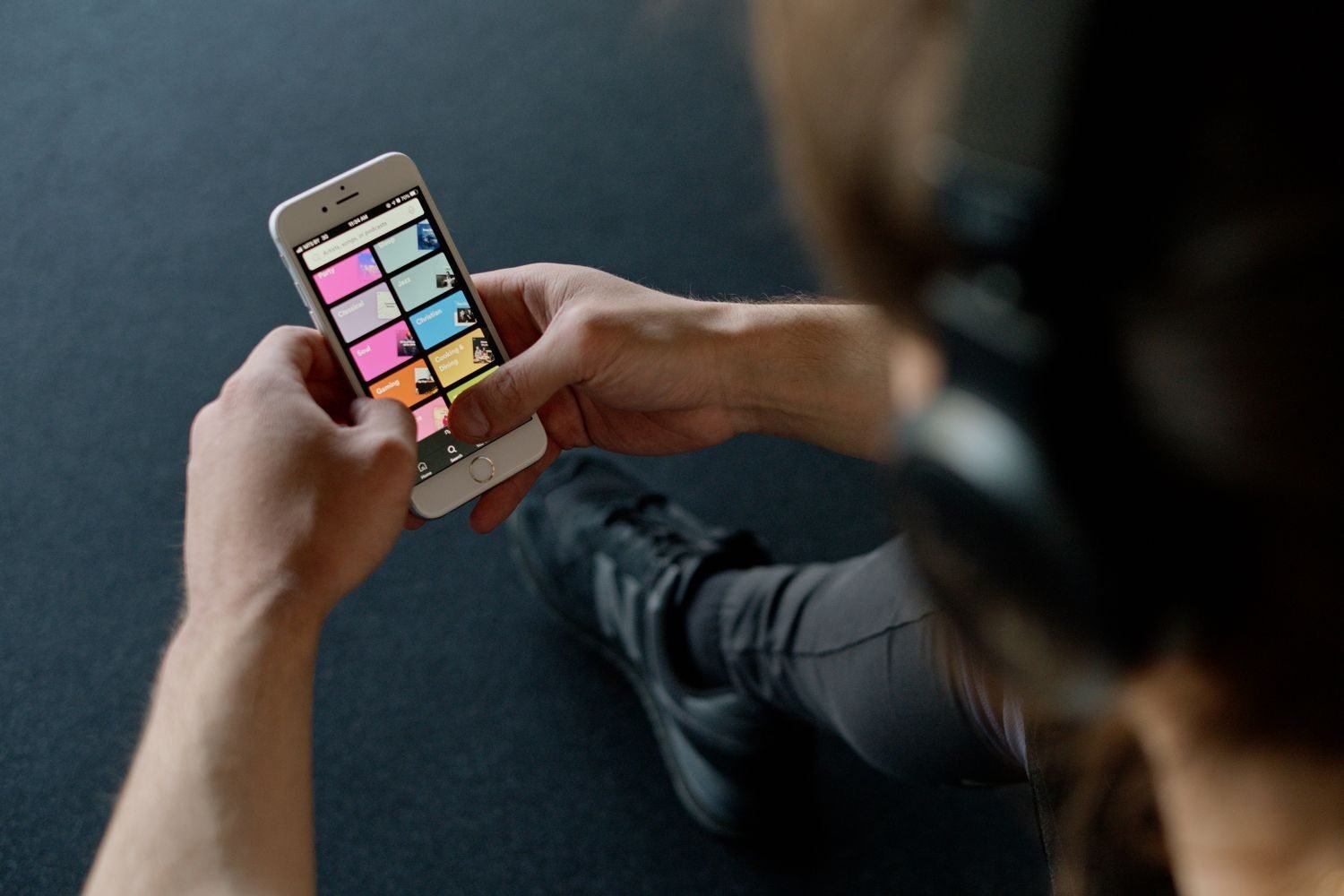
- Self-guided fitness apps. You download an app, answer a few questions about your goals and equipment, and get an algorithm-generated plan. No human ever looks at your form or your progress. Popular examples log your sets and reps and adjust weight suggestions based on what you enter.
- Pre-recorded video programs. A trainer films a set of workout videos once, sells access to thousands of people, and you follow along. Think of it as a fitness DVD that lives on an app instead of a shelf. The workouts are often well produced. They’re also identical for everyone who buys them.
- 1:1 online personal training. A real coach builds your program around your goals, your equipment, your injury history, and your schedule, then checks in with you regularly, reviews videos of your lifts, and changes the plan as you progress. This is the closest thing to in-person personal training you can get without being in the same room.
Search volume around “online workouts” is decent, but the phrase hides a huge range of quality. Knowing which model you’re actually looking for saves you months of wasted effort.
Self-Guided Apps vs Pre-Recorded Programs vs 1:1 Online Coaching
We get asked constantly why we don’t just sell a library of pre-recorded workouts like a lot of online fitness brands do. The honest answer is in this table.
| Factor | Self-Guided App | Pre-Recorded Program | 1:1 Online Coaching |
|---|---|---|---|
| Personalization | Algorithm-based, generic | None, same plan for everyone | Built around your body and goals |
| Form correction | Rarely, if ever | None | Video review by a real coach |
| Accountability | Push notifications | None built in | Weekly check-ins with a person |
| Plan adjusts as you progress | Limited, rule-based | No, fixed program | Yes, every week based on your data |
| Cost | Low, ₹200–800/month | Low to moderate, one-time or monthly | Higher, but priced like a service |
| Best for | Confident, experienced trainees | Beginners who just want structure | Anyone serious about a specific result |
None of these are “bad.” An app is fine if you already know how to train and just want a log. A pre-recorded program can work if your only goal is to move more and you’re not chasing a specific number on the scale or the bar. But if you have a real goal, a deadline, or a body that hasn’t responded to generic plans before, the gap between the three options stops being theoretical.
Is Online Personal Training as Effective as In-Person?
This is the question we get most, and the honest answer is: it depends far more on the coach than on the format. Effectiveness comes down to the quality of coaching and the consistency of communication, not whether you’re standing in the same room. A trainer who reviews your squat video carefully and gives specific feedback can correct your form almost as well as one standing next to you. A trainer who barely checks in can’t help you much either way, in person or not.
What online coaching does better than most in-person setups is accountability between sessions. In-person training usually means you’re accountable for one or two hours a week and left alone the rest of the time. Online coaching, done properly, means daily contact through messaging, habit tracking, and weekly reviews, so the accountability doesn’t disappear the moment you leave the gym.
What in-person training still does better is instant, hands-on correction. If a trainer can physically adjust your hip position mid-set, that’s faster than a coach reviewing your video after the fact. It’s a real trade-off, and we won’t pretend otherwise. For most people juggling a job, a commute, and irregular gym hours, the convenience of online coaching wins that trade-off in practice, because the plan that actually gets followed beats the plan that’s theoretically more precise. That’s exactly the philosophy behind our personalized 1-on-1 training program.
Why We Build FitStrot Around 1:1 Coaching, Not a Video Library
We could have built FitStrot as a pre-recorded workout library. It’s easier to scale and cheaper to run. We didn’t, because we kept seeing the same pattern with clients who came to us after trying generic online programs first: they followed the workouts, sometimes for months, and still weren’t seeing the changes they wanted. Not because they lacked discipline, but because a plan built for a stranger’s body doesn’t fit theirs.
Our 1-on-1 personal training program runs on a 12-week structure with weekly check-ins, WhatsApp support between sessions, and form correction through video so you’re not guessing whether your deadlift setup is actually safe. Coaching happens in regional Indian languages too, which matters more than people expect when you’re trying to explain how a movement should feel, not just how it should look.
That’s the actual difference between “an online workout” and online coaching. A workout is content. Coaching is a relationship with someone tracking your progress and changing course when something isn’t working.
How to Choose the Right Online Workout Model for You
A few honest filters, based on what we see work and not work for people:
If you’ve trained for years and just need structure, a solid app or a well-designed pre-recorded program can genuinely be enough. You already know what good form feels like and you can self-correct.
If you’re newer to training, coming back after a long break, or working around an injury, generic plans are where things usually go wrong. You don’t yet have the experience to tell whether a program is right for your body, and by the time something feels off, you’ve often already built the compensation pattern into your movement.
If you have a specific goal with a real timeline, a wedding, a physique goal, a strength number, a fat loss target tied to a health marker, generic content rarely gets you there on schedule. Programs built for the average person are, by definition, not built for your specific starting point.
That last group is exactly who our personalized 1-on-1 training program is built for, and it’s worth reading how the actual weekly structure works before you decide which model fits you.
What Does a Week of 1:1 Online Coaching Actually Look Like?
It’s less complicated than people expect. You get a training plan built around your equipment, whether that’s a full home gym or nothing but resistance bands and a mat. You train on your own schedule and log or film your sessions. Your coach reviews your lifts, adjusts weights and volume, and checks in on how recovery, sleep, and nutrition are tracking. Once a week, you get a proper review of the last seven days and a plan for the next seven.
That cadence is closer to how our one-to-one resistance training sessions run in practice than most people assume “online” would allow. The video calls, the check-ins, and the plan updates are the actual work. The workout itself is just where you execute what the coaching produced.
Frequently Asked Questions
What are online workouts?
Online workouts are fitness training programs delivered remotely rather than in person, ranging from generic app-based plans and pre-recorded video programs to 1:1 online personal training with a real coach. The term covers a wide quality range, so it’s worth knowing which model you’re actually signing up for.
How do you do online workouts properly?
Pick a model that matches your experience level, set a fixed weekly schedule so sessions don’t slide, and track your lifts or sessions so progress is visible. If you’re a beginner or chasing a specific goal, working with a coach who reviews your form on video and adjusts your plan weekly gets you further than following a fixed program alone.
What are the benefits of online workouts?
Online workouts save commute time, let you train on your own schedule, and usually cost less than in-person sessions. With a real coach attached, you also get daily accountability through messaging and check-ins, which often outperforms the once-a-week accountability of a traditional gym session.
Is online personal training as good as going to a gym with a trainer?
It can be, and for accountability between sessions it’s often better, since check-ins and messaging happen daily instead of just during your gym visit. The one real trade-off is that in-person trainers can physically adjust your form mid-set, while online coaches correct it through video review after.
Do online workouts actually work for weight loss?
Yes, weight loss depends on consistent training and calorie management, not on where the coaching happens. Online workouts work as well as in-person ones when the plan is personalized and someone is actually reviewing your progress and adjusting it, which is the part generic apps and pre-recorded programs usually skip.