A good kettlebell workout combines a hip-hinge movement like the swing, a squat pattern like the goblet squat, a carry or press for the upper body, and a core stabiliser like the Turkish get-up, done for 20 to 40 minutes, two to four times a week. That single combination trains strength, conditioning and core control at the same time, which is why we build most of our online coaching programs around it. You don’t need a rack of dumbbells or a full gym floor. One or two kettlebells and a bit of floor space is enough to get a real training effect, whether your goal is fat loss, muscle tone, or just moving better.
What Makes a Kettlebell Workout Different From Dumbbell Training?
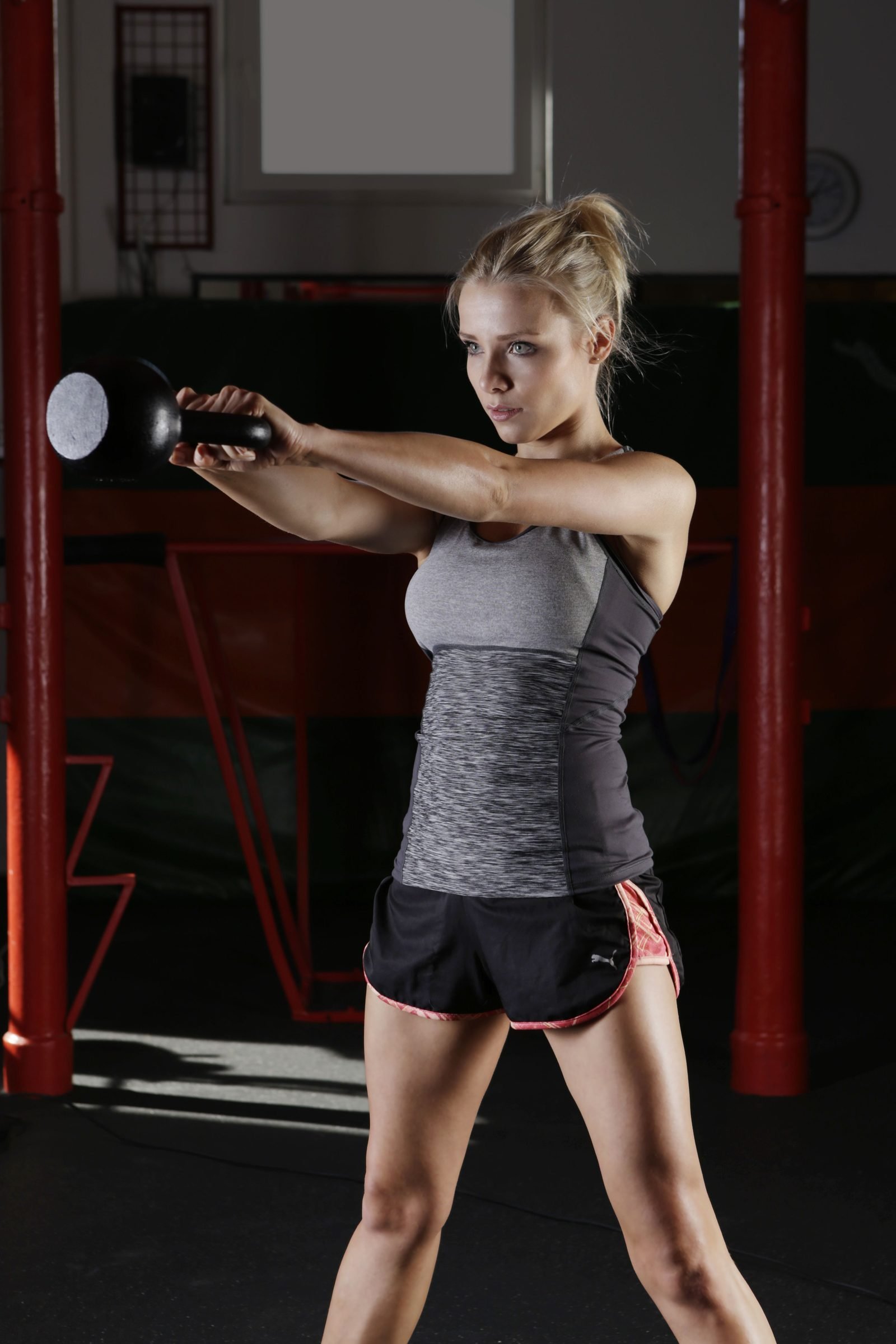
A kettlebell’s weight sits below and away from the handle, not centred like a dumbbell. That offset changes everything about how you have to control it. Swing a kettlebell and the load wants to pull your shoulder out of position unless your hips, core and grip work together to manage it. Dumbbells are more forgiving because the weight is balanced in your hand, which makes them better for isolated strength work like presses, curls and rows.
We’re not anti-dumbbell. If you want to compare the two directly, our guide to dumbbell workouts covers where dumbbells do a better job, especially for unilateral strength and hypertrophy work. But kettlebells win on ballistic movements (swings, snatches, cleans) because the offset load lets you generate power and then absorb it in a way a dumbbell simply can’t replicate safely. That’s the core difference: dumbbells build strength through a controlled range, kettlebells build power, grip and hip drive through momentum you have to own.
What Are the Key Kettlebell Exercises You Need to Know?
You don’t need twenty different kettlebell moves. Four exercises cover almost everything most people need.
Kettlebell swing. The engine of most kettlebell workout programming. It’s a hip-hinge, not a squat and not a front raise. Power comes from snapping your hips forward, the arms are just along for the ride. A kettlebell swing workout built around this one move, done in intervals, will spike your heart rate faster than almost anything else you can do with a single piece of equipment.
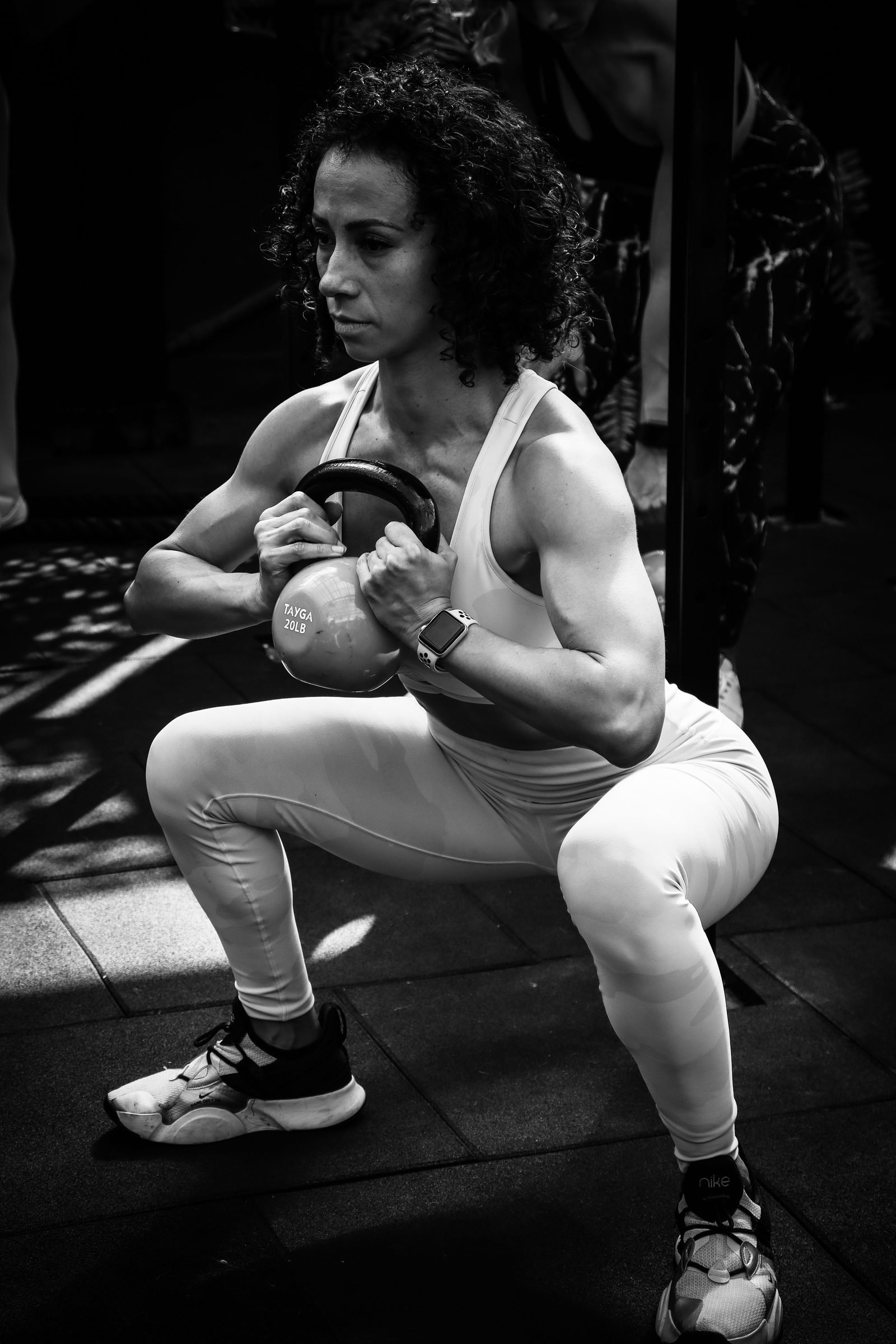
Goblet squat. Hold the kettlebell by the horns at chest height and squat. It’s one of the easiest ways to teach someone to squat with good posture because the weight in front counterbalances you and keeps your torso upright.
Turkish get-up. A slow, multi-step movement from lying on the floor to standing, kettlebell locked out overhead the entire time. It looks complicated the first time you see it, but it builds shoulder stability and total-body coordination better than almost any other single exercise. Start light. This is not a move to rush.
Kettlebell clean. The bridge between the swing and the overhead press. You bring the bell from the floor or a hang position up to your shoulder (“racked” position) in one fluid motion. It looks simple, it’s not, and a sloppy clean will bruise your forearm before it teaches you anything useful. Take the time to learn it slow.
What Are the Real Benefits of a Kettlebell Workout?
Kettlebell workout benefits get oversold online, so let’s be straight about what you actually get. First, conditioning. Swings, cleans and snatches done in intervals raise your heart rate and keep it there, which builds cardiovascular fitness alongside strength, something a treadmill session alone won’t do. Second, grip and posterior chain strength. Your hamstrings, glutes and lower back all fire hard on every swing, and your forearms get worked just holding onto the handle for reps. Third, efficiency. A 30-minute kettlebell session can hit strength, conditioning and core work in one go, which matters if you’re training around a full-time job.
What kettlebells won’t do is spot-reduce fat, fix a bad diet, or replace dedicated strength training if your main goal is building a lot of muscle. They’re a tool, a very good one, but they work best as part of a broader plan rather than the whole plan.
What Does a Basic Full-Body Kettlebell Workout Look Like?
Here’s a basic kettlebell workout we actually give to clients who are new to kettlebell training. It hits the hips, legs, core and shoulders in under 35 minutes.
| Exercise | Sets | Reps | Rest |
|---|---|---|---|
| Kettlebell swing | 4 | 15 | 45 sec |
| Goblet squat | 3 | 10-12 | 60 sec |
| Single-arm kettlebell row | 3 | 10 per side | 45 sec |
| Kettlebell clean and press | 3 | 6-8 per side | 60 sec |
| Turkish get-up | 2 | 3 per side | 60 sec |
| Kettlebell deadlift | 3 | 10 | 45 sec |
Run this two to three times a week with a day of rest or light cardio in between. Once it feels manageable, add a fifth round to the swings or move to a heavier bell rather than adding more exercises.
Are Kettlebell Workouts Different for Women and Men?
Not really, and this is worth saying plainly because a lot of marketing suggests otherwise. A kettlebell workout for women and a kettlebell workout for men use the same core exercises: swings, squats, presses, get-ups, rows. The hip hinge that makes a swing effective doesn’t change based on gender, and neither does the mechanics of a goblet squat.
The real variable is starting strength and experience, not sex. We see women who’ve done years of yoga or Pilates pick up the hip-hinge pattern of the swing faster than men who’ve only ever bench pressed, simply because they already have better body awareness. Load, volume and progression should be set based on where each person is starting from, not a generic “for women” or “for men” template. If you’re newer to lifting, start lighter and focus on form before you worry about the weight on the bell.
How Do You Build a Kettlebell Abdominal Workout?
A kettlebell abdominal workout doesn’t need crunches. Kettlebells are better used for anti-rotation and anti-extension core work, which builds a stronger, more stable trunk than endless sit-ups ever will.
- Kettlebell halo: circle the bell around your head slowly, keeping your ribs stacked over your hips. Works rotational control through the shoulders and core.
- Suitcase carry: hold a kettlebell in one hand and walk. Your obliques on the opposite side have to fire hard to stop you tipping over.
- Kettlebell dead bug: lie on your back holding the bell overhead in both hands, extend opposite arm and leg while keeping your lower back pressed to the floor.
- Windmill: a more advanced move that combines a hip hinge with overhead stability. Learn the Turkish get-up properly first.
Two or three of these, done for 3 sets each at the end of your main workout, is plenty. Core training doesn’t need to be its own hour-long session.
Can Kettlebells Really Help With Fat Loss and Weight Loss?
Here’s the honest answer. A kettlebell workout for fat loss or a kettlebell workout for weight loss can absolutely be part of the plan, but the kettlebell itself isn’t burning the fat off you. Swings and cleans done in intervals burn a meaningful amount of calories per session and build the kind of conditioning that makes everyday activity easier, which helps with total daily movement too. That’s genuinely useful.
But fat loss comes down to a sustained calorie deficit over time. You can do the best kettlebell swing workout in the world four times a week and still not lose fat if your eating doesn’t match your goal. We tell clients this upfront because it saves frustration later. Use kettlebell training to build strength and conditioning, and get your nutrition in order to actually shift body composition. Treat the workout as one input, not a magic fix.
How Do You Pick the Right Kettlebell Weight?
Most beginners overthink this. For women new to kettlebell training, an 8kg to 12kg bell is a sensible starting point for swings and squats, moving up as the movement pattern gets solid. For men, 12kg to 16kg is a common starting range. These aren’t hard rules, just reasonable defaults.
A quick test: if you can do 15 clean swings with good form and the last few reps don’t feel shaky, you’re probably ready to size up. If your lower back rounds or you’re using your arms to muscle the bell up instead of your hips, drop the weight regardless of what number feels respectable. Ego lifting with a kettlebell shows up fast, usually in your lower back the next morning.
What Are the Most Common Kettlebell Mistakes (Especially With the Swing)?
The swing causes more bad form than any other kettlebell move, so it deserves its own section.
- Squatting the swing instead of hinging. If your knees are bending a lot and your hips aren’t driving back, you’re turning a hip hinge into a squat with a weight swinging dangerously in front of you.
- Using your arms to lift the bell. The arms should stay relatively passive. If your shoulders are doing the work, you’ll fatigue fast and lose power.
- Overextending at the top. Locking out into a hard back bend at the top of the swing strains your lower back. Stop at a strong, tall standing position, don’t lean back past it.
- Rushing the Turkish get-up. This move rewards patience. Rushing it defeats the point and increases injury risk with a weight overhead.
- Going too heavy too soon. A kettlebell that’s too heavy turns every movement into a fight for control rather than a clean, powerful rep.
If you’re building strength elsewhere in your program too, movements like a seated cable row workout or a cable crossover workout pair well with kettlebell days, giving your back and chest controlled, cable-resisted work to balance out the more ballistic kettlebell movements.
If you’d rather not guess your way through form corrections and weight progressions on your own, our coaches at FitStrot build kettlebell programming into full 1-on-1 personal training plans, with actual feedback on your swing and squat rather than a generic PDF. It’s the fastest way to fix the mistakes above before they become habits.
Frequently Asked Questions
What is a good kettlebell workout?
A good kettlebell workout combines a hip-hinge move like the swing, a squat pattern, a pull or press, and a core move like the get-up, done in 3-4 sets each across 25-35 minutes, two to four times a week for steady progress.
How do you do a kettlebell workout?
Warm up your hips and shoulders, start with a hinge movement like the swing to raise your heart rate, move to squats and presses for strength, finish with core work, and rest 45-60 seconds between sets depending on the exercise’s intensity.
What are the benefits of a kettlebell workout?
Kettlebell training builds cardiovascular conditioning, posterior chain and grip strength, and core stability in one session. It’s efficient and requires minimal equipment, though it doesn’t replace a calorie deficit for fat loss or dedicated lifting for pure muscle size.
Can beginners start with kettlebell training?
Yes, but form matters more than weight at the start. Beginners should learn the hip hinge and goblet squat with a light bell before progressing to swings, cleans or the Turkish get-up, ideally with someone checking their technique.
How often should you do kettlebell workouts?
Two to four sessions a week works well for most people, with at least one rest or light activity day between sessions that include heavy swings or cleans, since the posterior chain needs time to recover.