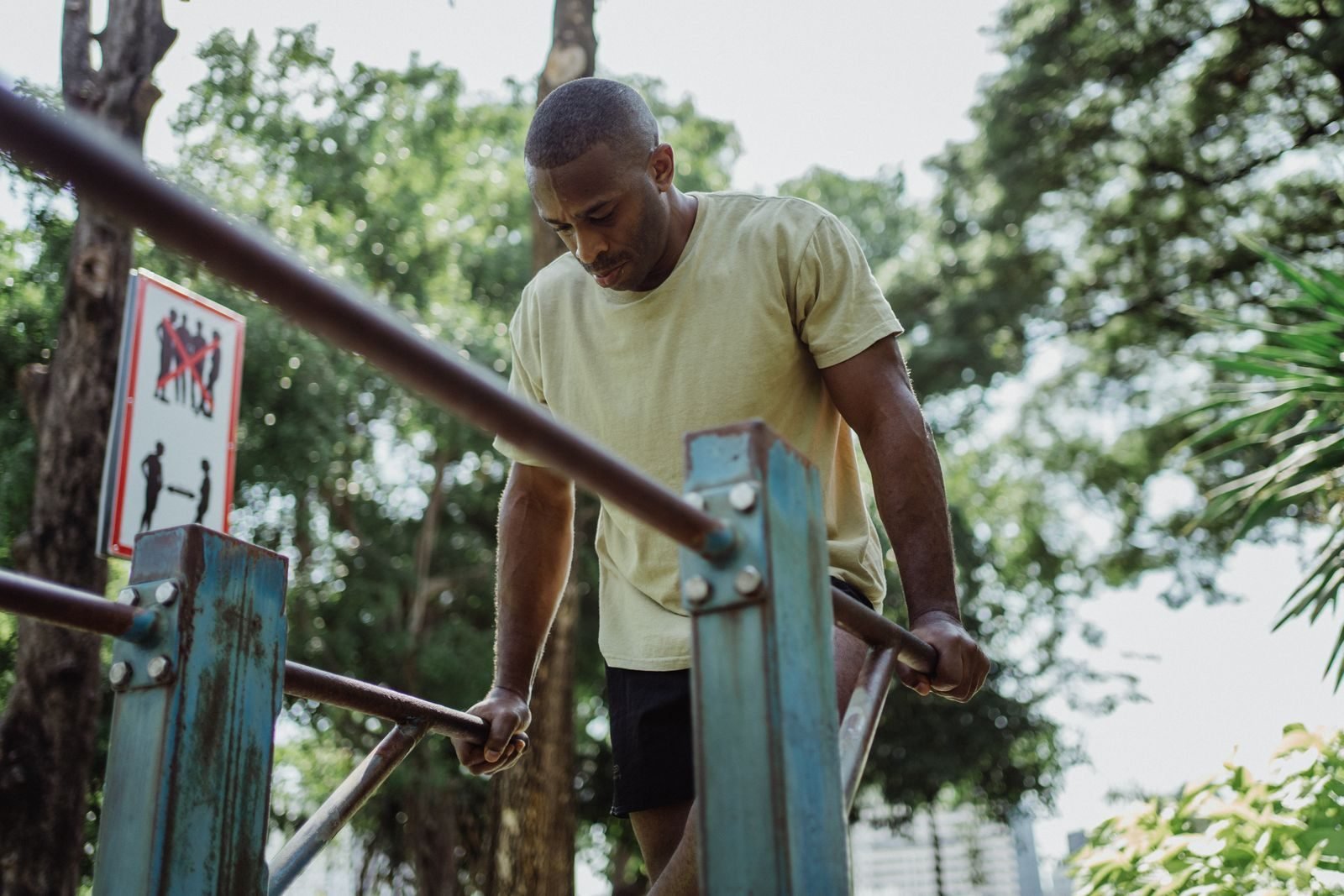
A dip is a compound bodyweight pressing exercise where you lower and raise your body between two parallel bars (or a bench) using your arms, working your chest, triceps, and front shoulders through a deep range of motion. A proper dips workout builds pressing strength and upper-body size without any equipment beyond a bar, a sturdy chair, or even the edge of your bed. We program dips for almost every client who wants a bigger chest or stronger arms, because few exercises load that much muscle with so little gear.

What Exactly Is a Dips Workout?
A dips workout is a training session built around dip variations, usually paired with other pressing or pulling moves to round out the upper body. At its core, the dip is you gripping two parallel handles, arms locked out, then bending your elbows to lower your torso until your shoulders drop below your elbows, and pressing back up. That’s it. No barbell, no machine, just your own bodyweight and gravity doing the work.
What makes dips valuable is how much they ask of your shoulders, chest, and triceps at once. You’re not isolating a muscle, you’re teaching your whole upper body to push together, which is exactly the kind of pattern that carries over to real strength and to other lifts like bench press and overhead press.
Chest Dips vs Triceps Dips: Does Torso Lean Really Matter?
Yes, and this is the detail most people get wrong. Your torso angle decides which muscle group takes the brunt of the work.
For a chest dips workout, lean your torso forward, let your elbows flare out slightly, and aim your chest toward your hands as you descend. This shifts load onto your pectorals and front delts, similar to a dip version of a decline press.
For a triceps workout dips variation, keep your torso upright, elbows tucked close to your ribs, and drive straight down and up. This keeps tension on the triceps and takes the chest mostly out of the equation.
Neither version is “correct” and the other “wrong.” They’re two tools. If your goal is chest size, lean forward. If you want triceps strength for lockout power on bench or overhead pressing, stay upright. Most lifters benefit from rotating both into their week, especially when paired with a broader chest and triceps workout split.
Which Muscles Do Dips Actually Work?
Dips are a compound movement, so several muscle groups fire together rather than one at a time:
- Triceps brachii, the primary mover on upright dips and a major contributor on chest-focused dips too
- Pectoralis major, especially the lower fibers when you lean forward
- Anterior deltoids, the front of your shoulder, which help control the descent and drive the press
- Serratus anterior and core, stabilizing your torso and shoulder blades through the whole rep
Because dips hit chest, shoulders, and arms in one movement, they’re an efficient way to train a lot of upper-body mass in a short session, which is part of why we lean on them so heavily for clients short on gym time.
How Do You Do Dips Correctly?
Good dip form protects your shoulders and makes the exercise actually do what it’s supposed to. Here’s the sequence we teach every client on day one:
- Grip and set up. Jump or step up onto the bars, arms fully locked out, shoulders pulled down away from your ears.
- Pick your lean. Forward lean for chest emphasis, upright torso for triceps emphasis.
- Lower with control. Bend your elbows and descend slowly until your upper arm is roughly parallel to the floor, or until you feel a stretch in your chest or shoulder without pain.
- Stop before it hurts. Going lower than that puts your shoulder joint in a vulnerable position for little extra benefit.
- Press back up. Push through your palms, straighten your arms fully, and squeeze at the top without shrugging your shoulders up.
- Breathe on rhythm. Inhale on the way down, exhale as you press up.
Move at a pace you control in both directions. Dropping fast and bouncing out of the bottom is how shoulders get hurt, not how muscle gets built.
How Do You Do a Dips Workout at Home Without Parallel Bars?
You don’t need a dip station to get a real dips workout at home. Two simple substitutes cover almost everyone:
Bench dips. Sit on the edge of a sturdy bench or chair, hands gripping the edge beside your hips, legs extended out in front of you. Slide your hips off the edge and lower your body by bending your elbows, then press back up. This is a triceps-dominant variation and a great starting point if you don’t trust your shoulders on a full dip yet.
Chair dips. Same setup as bench dips but using two sturdy chairs placed shoulder-width apart, which lets your legs hang free and more closely mimics a real parallel bar dip. Make sure the chairs won’t slide before you load your full bodyweight onto them.
Both options let you train chest and triceps at home with furniture you already own. The trade-off is range of motion and stability compared to a proper dip bar, so keep reps controlled and don’t rush depth.
What If You Can’t Do a Full Dip Yet?
This is one of the most common questions we get, and it’s a completely normal place to start. Dips ask a lot of pressing strength relative to bodyweight, so here’s a progression that actually works:
- Bench or chair dips to build baseline triceps and shoulder strength.
- Assisted dips using a resistance band looped over the bar and under your knees or feet, or a dip-assist machine if your gym has one. Reduce the assistance gradually over a few weeks.
- Negative dips where you jump or step to the top position and lower yourself as slowly as possible, even if you can’t press back up yet. Negatives build the eccentric strength that unlocks full reps faster than almost anything else.
- Full bodyweight dips, starting with singles or doubles and building volume from there.
We see beginners jump straight to full dips, fail the first few reps, and get discouraged before they’ve built the base strength to succeed. Spend two or three weeks on assisted and negative work first and the full dip comes much faster with far less frustration. This progression mirrors how we build any bodyweight workout from scratch: assisted, then negative, then full reps.
What Mistakes Wreck a Dips Workout?
A few errors show up constantly, and most of them come down to ego or rushing:
- Going too deep. Dropping until your shoulders are well below your elbows stretches the front of the shoulder joint past where it’s stable. Stop at upper arm parallel to the floor.
- Flaring elbows out wide on triceps dips. This shifts strain onto the shoulder instead of the arm. Keep elbows tracking back, not out.
- Shrugging shoulders at the top. Letting your shoulders creep up toward your ears at lockout takes tension off your chest and triceps and loads the joint instead.
- Adding weight before form is solid. Weighted dips are a great progression, but only once bodyweight reps are clean and pain-free.
- Skipping the warm-up. Cold shoulders and a dip bar don’t mix well. A few minutes of shoulder mobility work, similar to what you’d use before an around the world workout, goes a long way toward keeping the joint happy under load.
How Should You Program Dips Into Your Week?
Dips work best as a primary or secondary pressing movement, not an afterthought at the end of a session. A few guidelines we give clients:
- Train dips 2 to 3 times a week if chest or triceps size is a priority, with at least one rest day between sessions.
- Use 3 to 4 sets of 6 to 12 reps for muscle growth, or lower reps with added weight if you’re chasing strength.
- Pair chest-leaning dips with pressing work like bench or push-ups, and pair upright dips with isolation triceps moves.
- Round out arm day with a pulling or curling movement, like a preacher curl workout, to keep biceps and triceps development balanced.
- If you’re training full-body or doing a rotational conditioning day, a woodchopper workout pairs well on a separate day to hit core and rotational strength that dips don’t touch.
Sample Chest and Triceps Session With Dips
Here’s a real session structure we use with clients who want dips to be the centerpiece of chest and triceps day:
| Order | Exercise | Sets x Reps | Notes |
|---|---|---|---|
| 1 | Chest dips (forward lean) | 4 x 8-10 | Primary lift, control the descent, rest 90 sec |
| 2 | Flat dumbbell bench press | 3 x 10 | Full range, moderate weight |
| 3 | Incline push-ups | 3 x 12-15 | Slow tempo, squeeze at top |
| 4 | Triceps dips (upright torso) | 3 x 10-12 | Elbows tucked, stop shy of full depth |
| 5 | Overhead triceps extension | 3 x 12 | Light to moderate weight, full stretch |
| 6 | Cable or band chest fly | 2 x 15 | Finisher, focus on the squeeze |
Beginner note: if you can’t yet perform bodyweight dips, swap the two dip entries above for bench dips and assisted dips at the same sets and reps. Progress toward full dips over 4 to 6 weeks as your pressing strength catches up, then slot them back into this exact structure.
Ready to Build Your Own Dips Program?
Reading about form is one thing, having someone watch your elbow path and adjust your depth in real time is another. If you want a coach checking your technique, adjusting your progression week to week, and building a full program around your goals, our 1-on-1 personal training service pairs you directly with a coach who does exactly that, no guesswork required.
Frequently Asked Questions
What is a dips workout?
A dips workout is a training session built around dip variations, an exercise where you lower and press your bodyweight between parallel bars or a bench. It primarily trains the chest, triceps, and front shoulders, and can be done at the gym on a dip station or at home using a chair or bench.
How do you do dips correctly?
Lock your arms out at the top, choose a forward lean for chest or upright torso for triceps, then lower with control until your upper arm is roughly parallel to the floor. Press back up without shrugging your shoulders. Avoid dropping too deep or letting your elbows flare wide.
What are the benefits of dips workouts?
Dips build pressing strength and size in the chest, triceps, and shoulders using only bodyweight, making them ideal for home workouts. They also improve shoulder stability and carry over to other pressing lifts like bench press, since the movement pattern and muscles overlap closely.
Can beginners do a dips workout at home?
Yes. Start with bench dips or chair dips, which reduce the load and range of motion compared to full parallel bar dips. Build strength for a few weeks before progressing to assisted or negative dips, and you’ll work toward full bodyweight dips without needing any gym equipment.
How many dips should a beginner do?
Most beginners do well starting with 3 sets of 5 to 8 reps of an assisted or bench dip variation, resting 60 to 90 seconds between sets. Focus on clean form and full lockout rather than chasing rep count, and add reps or reduce assistance gradually as strength builds.