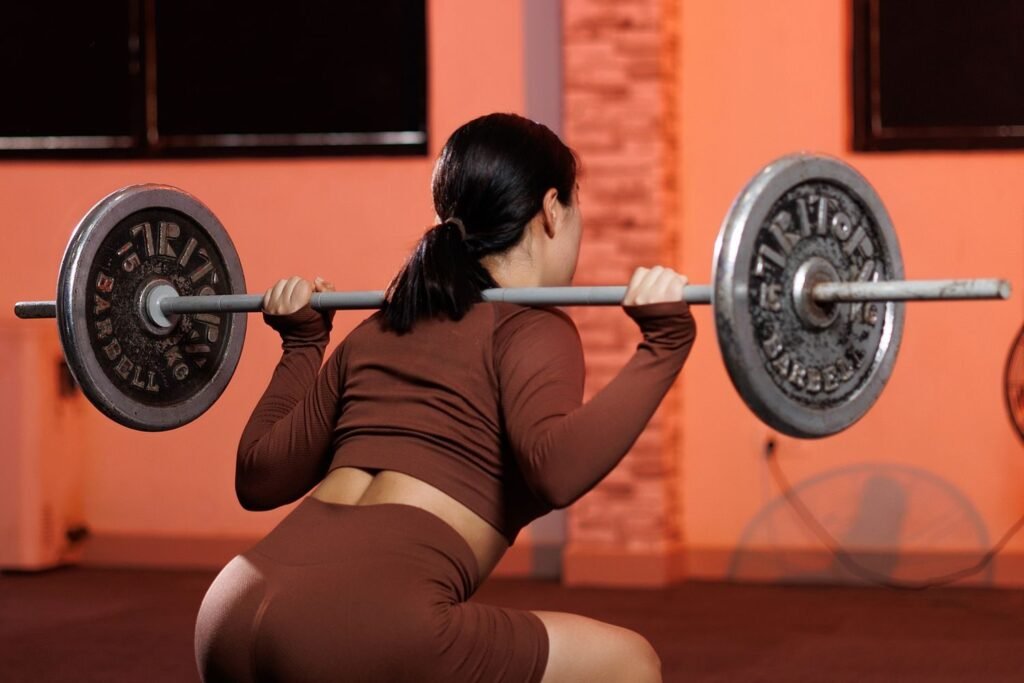
CrossFit workouts at home are scaled-down versions of the constantly varied, high-intensity functional training you’d find in a CrossFit box, done with minimal equipment like kettlebells, dumbbells, a jump rope, or just your bodyweight. You keep the core format, short intense circuits, timed rounds, and mixed movement patterns, but swap barbell lifts and rig work for exercises that fit a living room or small terrace. At FitStrot, we build these home versions for clients who want that CrossFit intensity without a gym membership.

What Is a CrossFit Workout, Really?
CrossFit workout meaning, at its core, is simple: constantly varied, functional movements performed at high intensity. You’re not doing the same bicep curl routine every Monday. You’re doing squats one day, a mix of rowing and burpees the next, then a heavy deadlift and box jump combo after that. The idea is to train your body to handle whatever comes at it, not just get good at one lift.
The workouts themselves go by a few names you’ll hear thrown around a lot. A WOD is simply the “workout of the day.” A metcon (short for metabolic conditioning) is a workout designed to spike your heart rate and burn through your energy systems fast, usually 10 to 20 minutes of near-continuous effort. An AMRAP means “as many rounds as possible” in a set time cap. These formats are what separate crossfit metcon workouts from a standard gym session where you rest two minutes between sets and scroll your phone.
If you’re wondering what is crossfit workout beyond the jargon, think of it as strength training and cardio conditioning fused into one session, usually 20 to 45 minutes, with a scoreboard element (time, reps, or rounds) that keeps you honest about effort.
Can You Actually Do CrossFit Workouts at Home?
Yes, and a lot of the format translates better than people expect. CrossFit workouts at gym settings rely heavily on a rig, barbells, and Olympic lifting platforms, but the programming principles behind them (varied movement, high intensity, time-based scoring) don’t require any of that. What makes a WOD effective isn’t the barbell, it’s the intensity and the variety.
Where home training genuinely struggles is with heavy barbell work: cleans, snatches, and heavy back squats need a rack and bumper plates for safety. We won’t pretend otherwise. But for a huge chunk of programming, especially the conditioning-heavy metcons, a kettlebell, a pair of dumbbells, and some open floor space get you 80% of the way there.
What Equipment Do You Need for CrossFit Workouts at Home?
You don’t need a fully kitted-out box. Here’s what actually moves the needle for home training:
- Kettlebell or dumbbells: substitute for barbell swings, cleans, presses, and thrusters. A single 12-16kg kettlebell covers most beginner and intermediate work.
- Jump rope: replaces rowing or running intervals for cardio conditioning between strength movements.
- Pull-up bar (doorway type): lets you keep pulling movements in the mix instead of skipping them entirely.
- Bodyweight circuits: burpees, air squats, push-ups, mountain climbers, and lunges fill in for rig-based gymnastics work.
- A timer app or phone stopwatch: non-negotiable, since the time pressure is what makes it a CrossFit-style session rather than a regular workout.
If you’re also mixing in general strength days, a lot of these same tools double up for a full body workout on your non-metcon days, so the equipment list doesn’t go to waste.
What Does a Beginner CrossFit Workout Plan Look Like?
For beginner crossfit workouts, we don’t start clients with 20-minute AMRAPs. That’s a fast way to get hurt or quit within two weeks. A sensible crossfit workout schedule for someone new looks more like three sessions a week, with a full rest or light mobility day between each one.
A realistic four-week crossfit workout plan for a beginner might run:
- Week 1-2: Short 10-12 minute circuits, lower rep ranges, longer rest between rounds. Focus on learning movement patterns cleanly.
- Week 3-4: Extend to 15-18 minute sessions, shorten rest, add a second round of the core movements.
The goal in the early weeks isn’t to hit an exhausting pace. It’s to build the movement competency so intensity later doesn’t wreck your form. We see beginners try to match “gym crossfit” pace on day one and burn out within three sessions because they skipped that foundation entirely.
What’s a Sample At-Home CrossFit WOD?
Here’s a simple 15-minute AMRAP-style metcon we use with clients who have just a kettlebell, a jump rope, and floor space. It hits legs, pull, push, and core in rotation, which is the whole point of varied programming.

| Movement | Reps | Equipment | Beginner Modification |
|---|---|---|---|
| Kettlebell swings | 15 | Kettlebell or dumbbell | Reduce weight, focus on hip drive |
| Push-ups | 10 | Bodyweight | Perform from knees |
| Jump rope | 30 seconds | Skipping rope | Step-in-place if no rope |
| Air squats | 20 | Bodyweight | Squat to a chair for depth cue |
| Mountain climbers | 20 | Bodyweight | Slow the tempo, no jump |
Set a 15-minute timer and cycle through the rounds as many times as you can with good form. Log your total rounds, and try to beat that number in two weeks. That’s the entire scoring system behind most crossfit workouts, simple, trackable, and repeatable.
Home CrossFit vs a Proper CrossFit Box: What’s the Real Difference?
We’ll be straight about this rather than sell you a fantasy. A proper CrossFit box gives you three things home training can’t fully replicate: a barbell and bumper plates for heavy Olympic lifts, a rig for muscle-ups and rope climbs, and a coach standing next to you correcting your form on a 100kg deadlift in real time. If your goal is competing or chasing serious strength numbers, you eventually need that setup.
What home training gives you instead is consistency and zero friction. No commute, no waiting for equipment, no class schedule to work around. For most people chasing general fitness, fat loss, and conditioning rather than competition-level Olympic lifting, that trade-off works fine. A well-programmed home session sits closer to a boot camp style workout than a full competitive box session, and that’s not a downgrade, it’s just a different tool for a different goal.
The honest middle ground: use home WODs for your conditioning and bodyweight strength days, and if you want the barbell lifts, either find a gym with a rack twice a week or work with a coach who can build those movements into a hybrid plan around your equipment.
What Are the Real Benefits of CrossFit Workouts at Home?
Crossfit workout benefits don’t disappear just because you’re training in a spare room instead of a warehouse gym. You still get the conditioning, strength, and mobility gains that come from varied, intense training. A few specific wins for home-based CrossFit:
- Time efficiency: most sessions run 15-25 minutes, which fits around a workday far easier than a 90-minute gym trip.
- Cardio and strength in one session: crossfit cardio workouts built around kettlebell and bodyweight circuits raise your heart rate while still loading muscle, so you’re not choosing between a cardio day and a lifting day.
- Adaptability: low on time or energy? Scale the reps down. Feeling strong? Add a round. The format bends around your day.
- No equipment excuse: once you own a kettlebell and a jump rope, missed sessions stop being about access and start being about discipline.
If you want the conditioning side pushed even harder on certain days, pairing this style with dedicated HIIT workouts at home sessions gives you variety without needing new equipment.
Frequently Asked Questions
What are crossfit workouts at home?
They’re scaled versions of CrossFit’s varied, high-intensity training style, done with basic equipment like kettlebells, dumbbells, or just bodyweight instead of a fully rigged gym. You keep the WOD format, timed circuits and mixed movements, while substituting barbell and rig-based exercises for ones that fit a home space.
What is a crossfit workout?
A CrossFit workout combines constantly varied functional movements, like squats, presses, and rowing, performed at high intensity within a set time frame. Sessions are often scored by rounds, reps, or completion time, which is what separates them from standard gym routines that don’t track intensity or pace this closely.
How do you do crossfit workouts at home?
Pick 4-5 movements that hit different muscle groups (a swing, a push, a pull, a squat, and a cardio burst), set a timer for 12-20 minutes, and cycle through them as many rounds as possible with good form. Use a kettlebell, dumbbells, or bodyweight, and log your rounds to track progress week to week.
What are the benefits of crossfit workouts at home?
You get strength and cardio conditioning in one short session, usually 15-25 minutes, without a commute or class schedule. The format adapts to your energy that day, requires minimal equipment, and builds the same varied movement competency as box training, just without access to heavy barbell lifts or rig-based gymnastics.
Building a home CrossFit routine that actually progresses week over week, without plateauing or risking bad form, is where most people get stuck on their own. If you’d rather have someone build the WODs, track your progress, and adjust the plan as you get stronger, FitStrot’s coaches can put that structure together for you through our 1-on-1 personal training program, built around your equipment, your space, and your schedule.