A double bar workout is a bodyweight training session done on parallel bars, the twin waist-to-chest-high rails you see in almost every Indian park and outdoor gym. On these bars you train dips, L-sits, leg raises, and support holds that build pushing strength, core control, and shoulder stability all in one place. It’s one of the most accessible strength workouts in India because the equipment is free, outdoors, and already sitting in your neighborhood park.
What Exactly Are Double Bars, and Where Do You Find Them?
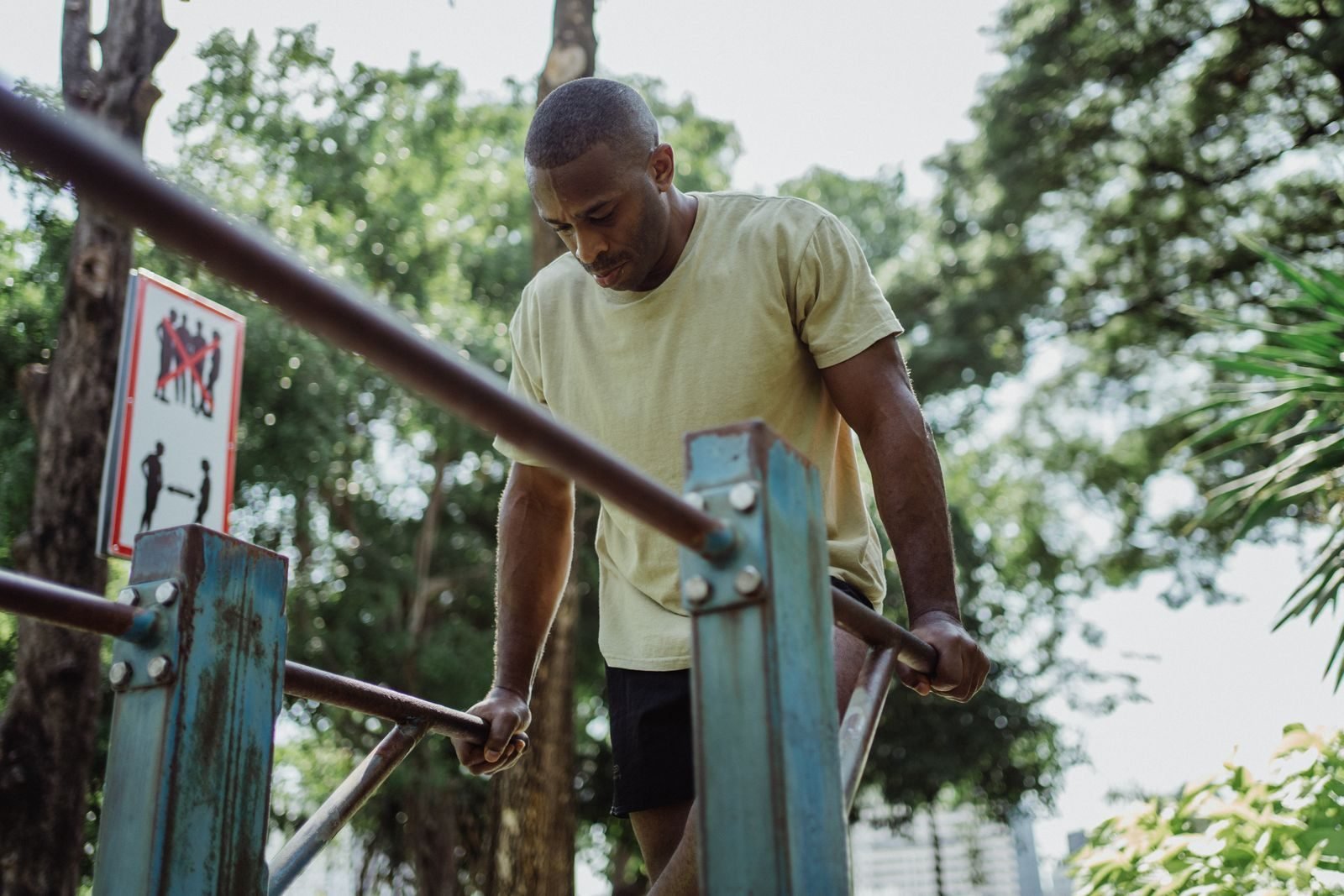
Double bars, also called parallel bars or dip bars, are two parallel rails set at roughly hip to chest height, spaced a bit wider than shoulder width. Walk into any RWA park, government fitness zone, or outdoor calisthenics corner in Mumbai, Delhi, Bengaluru, or Pune and you’ll spot a set painted yellow or green next to the pull-up bar and the sit-up bench. They’re built to take body weight, which means you don’t need a gym membership or fancy equipment to get a genuinely hard workout.
We build a lot of our beginner strength programs around exactly this kind of equipment because it’s what our clients actually have access to. If you’ve got a park with double bars within walking distance, you already own a full upper body and core gym.
What Exercises Can You Do on Double Bars?
Parallel bars are more versatile than people give them credit for. Once you’re comfortable holding your body weight between the rails, you can build an entire routine around these movements:
- Bar dips for chest, triceps, and front shoulders. This is the foundational double bar movement and the one most people start with.
- L-sits where you support your body on straight arms and lift your legs parallel to the ground. Brutal on the core and hip flexors.
- Straight bar dips, a slower, more controlled version of a regular dip that keeps the torso upright and shifts more load onto the triceps.
- Leg raises in the support position, which build the same hanging strength you’d use for toes to bar work.
- Straddle planche progressions, an advanced skill where you lean forward on straight arms until your feet leave the ground entirely. Most people spend months building toward this.
- Support holds and shoulder taps, simple but effective for building the stability you need before attempting the harder skills above.
None of these need added weight. Your body is the resistance, and you regulate difficulty by changing your lever length, your tempo, or how much of your body weight you’re supporting.
How Is a Double Bar Workout Different from a Single Bar Workout?
A single bar workout centers on one raised bar and is built around pulling: pull-ups, chin-ups, hanging leg raises, and skills like muscle-ups. A double bar workout flips that emphasis toward pushing and stabilizing, with dips and L-sits doing most of the work. The two aren’t competing, they’re complementary. If you only train the single bar, you’ll build a strong back and biceps but leave your chest, triceps, and core support strength underdeveloped. Train both and you cover pushing, pulling, and core stability in one outdoor session.
Most parks put a pull-up bar and a set of double bars within a few meters of each other, which makes it easy to superset a pulling movement with a pushing one. We often tell clients to treat the two stations as one workout rather than two separate visits.
What Is Toes to Bar, and How Does It Fit In?
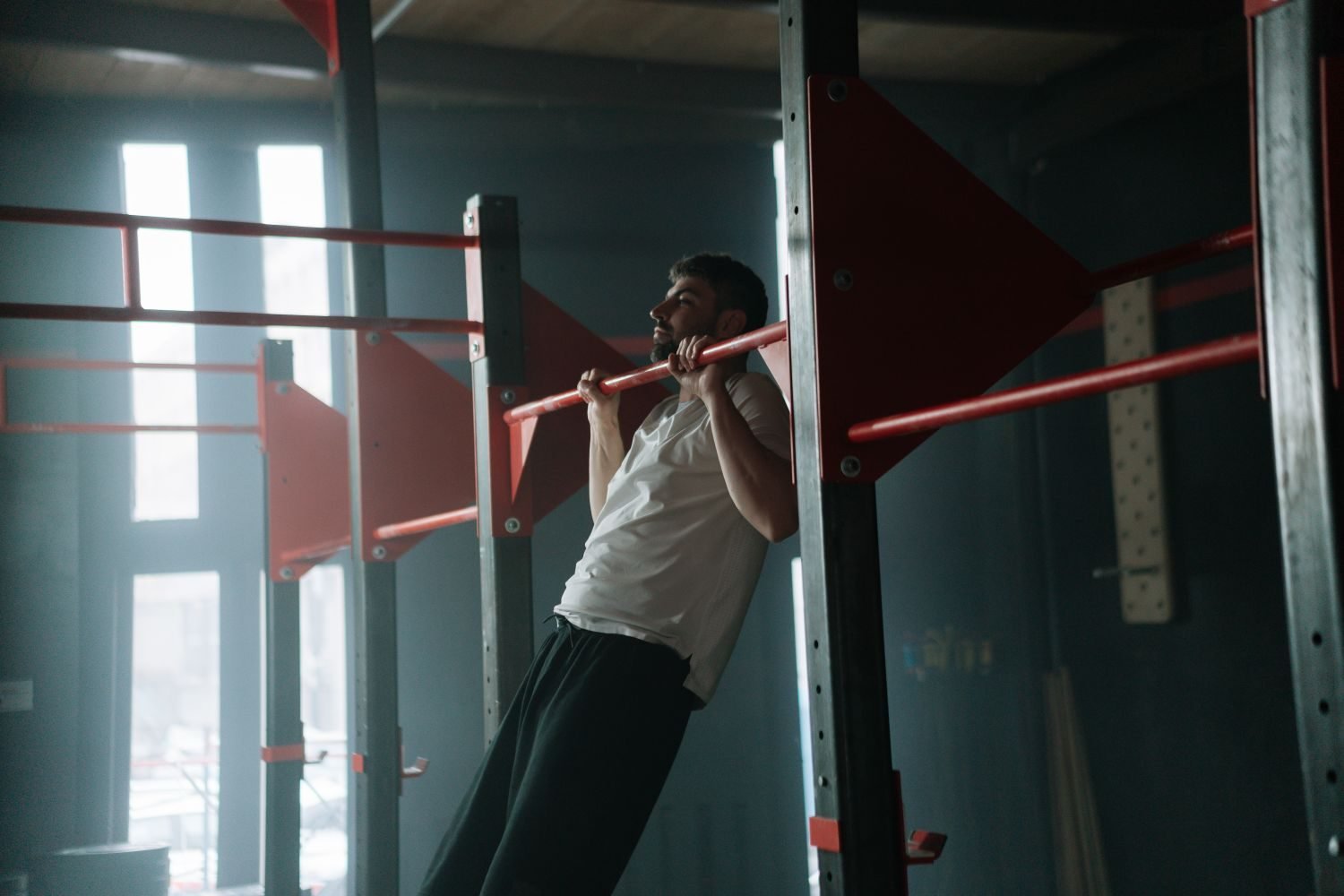
Toes to bar is usually done hanging from a single bar, where you raise your straight legs until your toes touch the bar overhead. It’s a demanding progression that builds on the leg raise strength you develop doing L-sits and leg raises on double bars. A toes to bar workout asks for grip endurance, lat engagement, and hip flexor strength working together, and it’s a natural next step once basic hanging leg raises stop feeling hard.
We usually sequence it this way with clients: support holds and knee raises on the double bars first, then hanging knee raises on the single bar, then full hanging leg raises, and only then toes to bar. Skipping steps here is where people strain their lower back or shoulders, so patience matters more than speed.
What About a T Bar Workout?
If you’ve searched around and landed on the term “t bar workout,” it’s worth clarifying that this usually refers to a gym exercise done on a T-bar row machine or landmine attachment, a completely different piece of equipment used for back training with a loaded barbell. It has nothing to do with the parallel double bars we’re covering here. If your goal is training on outdoor park equipment with just your body weight, the double bar and single bar combination is what you want, not a T-bar row setup.
What Does a Sample Double Bar Workout Routine Look Like?
Below is a routine we use as a starting template with clients who are new to bar work, along with progressions for those already comfortable with basic dips. Rest 60 to 90 seconds between sets, and don’t chase the volume numbers if your form starts to break down.
| Exercise | Level | Sets x Reps / Time | Notes |
|---|---|---|---|
| Support hold on bars | Beginner | 3 x 20-30 sec | Arms locked, shoulders down, builds base stability |
| Bar dips (assisted or partial range) | Beginner | 4 x 5-8 reps | Lower only as far as control allows |
| Knee raises on bars | Beginner | 3 x 8-10 reps | Slow and controlled, no swinging |
| Full range bar dips | Intermediate | 4 x 10-12 reps | Chest slightly forward to protect the shoulders |
| L-sit hold | Intermediate | 3 x 10-15 sec | Bend knees first if a straight-leg hold isn’t there yet |
| Straight bar dips | Intermediate | 3 x 6-10 reps | Slower tempo, upright torso, triceps-focused |
| Straddle planche lean | Advanced | 3 x 8-10 sec | Lean forward on straight arms, feet stay light on the ground |
Pair this with a calisthenics workout plan that includes single bar pulling work on the days in between, and you’ve got a balanced, equipment-free strength routine that covers your whole upper body and core.
How Do You Progress from Beginner to Intermediate on Double Bars?
Progress on double bars comes from three levers: range of motion, hold time, and rep quality, not from adding weight you don’t have access to outdoors. Start with support holds and partial dips until your shoulders feel stable through the full range. Once you can do 8 to 10 clean full-range dips, start layering in L-sit holds and knee raises. Only move to straight bar dips and planche leans once the basics feel controlled rather than shaky.
We see a lot of people jump straight into deep dips or try an L-sit on day one, get shoulder pain within a few sessions, and give up on bar training altogether. Building the support hold and partial range work first almost always solves this.
What Mistakes Should You Avoid on Double Bars?
Flaring the elbows too wide on dips is the most common one, and it puts unnecessary strain on the front of the shoulder. Keep elbows tracking slightly back rather than out to the sides. Another frequent issue is dropping too fast into the bottom of a dip without control, which is where most bar-related shoulder tweaks happen. Rushing straight into toes to bar without building leg raise strength first is a close third. Slow down, own the full range, and the progressions will come faster than trying to force them.
Frequently Asked Questions
What is a double bar workout?
A double bar workout is a bodyweight training session performed on parallel bars, using movements like dips, L-sits, and leg raises. It’s a common outdoor calisthenics workout found in Indian parks and gyms, requiring no added weight, just control over your own body across a fixed pair of rails.
How do you do a double bar workout?
Start with support holds and partial dips to build shoulder stability, then progress to full-range dips, knee raises, and L-sit holds. Train 2 to 3 times a week, rest 60 to 90 seconds between sets, and only move to advanced skills like straight bar dips or planche leans once the basics feel controlled.
What are the benefits of a double bar workout?
Double bar training builds pushing strength in the chest, triceps, and shoulders, along with core and hip stability from holds like the L-sit. It requires no equipment beyond what’s already in most parks, making it a practical, free way to build real strength while working toward advanced skills like toes to bar.
Ready to Build Bar Strength the Right Way?
Double bars reward patience more than intensity. Get the fundamentals right and the harder skills, straddle planche, straight bar dips, toes to bar, all start to feel achievable instead of out of reach. If you’d rather have someone build the progression around your current strength level and correct your form in real time, our coaches at FitStrot design that kind of plan every day. You can start with a 1-on-1 personal training session and we’ll map out exactly where to begin, whether that’s your local park’s double bars or a full strength program built around them.